Category: Uncategorized

  • 7 Actionable Legacy System Modernization Strategies for 2025

    7 Actionable Legacy System Modernization Strategies for 2025

    Legacy systems, once the bedrock of an organization, often become a significant drain on resources, hindering innovation and agility. They accrue technical debt, increase operational costs, and expose businesses to security risks. However, the path forward is not always a complete overhaul. Effective legacy system modernization strategies are not one-size-fits-all; they require a nuanced approach tailored to specific business goals, technical constraints, and risk tolerance.

    This guide provides a deep, technical dive into seven distinct strategies for modernizing your applications and infrastructure. We will analyze the specific implementation steps, technical considerations, pros, cons, and real-world scenarios for each, empowering you to make informed decisions. Moving beyond theoretical concepts, this article offers actionable blueprints you can adapt for your own technology stack.

    You will learn about methods ranging from a simple 'Lift and Shift' (Rehosting) to the incremental 'Strangler Fig' pattern. We will cover:

    • Rehosting
    • Refactoring
    • Replatforming
    • Repurchasing (SaaS)
    • Retiring
    • Retaining
    • The Strangler Fig Pattern

    Our goal is to equip you with the knowledge to build a robust roadmap for your digital transformation journey, ensuring scalability, security, and long-term performance.

    1. Lift and Shift (Rehosting)

    The Lift and Shift strategy, also known as Rehosting, is one of the most direct legacy system modernization strategies available. It involves moving an application from its existing on-premise or legacy hosting environment to a modern infrastructure, typically a public or private cloud, with minimal to no changes to the application's core architecture or code. This approach prioritizes speed and cost-efficiency for the initial migration, essentially running the same system on a new, more capable platform.

    A classic example is GE's massive migration of over 9,000 applications to AWS, where rehosting was a primary strategy to exit data centers quickly and realize immediate infrastructure savings. This allowed them to shut down 30 of their 34 data centers, demonstrating the strategy's power for rapid, large-scale infrastructure transformation.

    When to Use This Approach

    Lift and Shift is ideal when the primary goal is to quickly exit a physical data center due to a lease expiring, a merger, or a desire to reduce infrastructure management overhead. It's also a pragmatic first step for organizations new to the cloud, allowing them to gain operational experience before undertaking more complex modernization efforts like refactoring or rebuilding. If an application is a "black box" with lost source code or specialized knowledge, rehosting may be the only viable option to move it to a more stable environment.

    This infographic summarizes the key characteristics of a rehosting project.

    Infographic showing key data about Lift and Shift (Rehosting)

    As the data shows, the primary benefit is speed and minimal disruption, making it a low-risk entry into cloud adoption.

    Implementation Considerations

    Successful rehosting requires meticulous planning. Before the move, you must conduct thorough dependency mapping to identify all interconnected systems, databases, and network configurations. When considering the 'Lift and Shift' approach, moving existing on-premise systems can be streamlined with a comprehensive data center migration checklist to ensure no critical components are overlooked.

    Key implementation tips include:

    • Utilize Automated Tools: Employ tools like AWS Application Discovery Service, Azure Migrate, or Google Cloud's StratoZone to automatically map servers, dependencies, and performance baselines. Use migration services like AWS Server Migration Service (SMS) or Azure Site Recovery to replicate and move VMs with minimal downtime.
    • Plan for Post-Migration Optimization: Treat rehosting as phase one. Budget and plan for subsequent optimization phases to right-size instances using cloud provider cost explorers and trusted advisor tools. The goal is to move from a static, on-premise capacity model to a dynamic, cloud-based one by implementing auto-scaling groups and load balancers.
    • Implement Robust Testing: Create a detailed testing plan that validates functionality, performance, and security in the new cloud environment before decommissioning the legacy system. This should include integration tests, load testing with tools like JMeter or Gatling to match on-premise performance baselines, and security penetration testing against the new cloud network configuration.

    2. Refactoring (Re-architecting)

    Refactoring, also known as Re-architecting, is one of the more intensive legacy system modernization strategies. It involves significant code restructuring and optimization to align a legacy application with modern, cloud-native principles without altering its external behavior or core business logic. This approach goes beyond a simple migration, aiming to improve non-functional attributes like performance, scalability, and maintainability by fundamentally changing the internal structure of the code.

    A prominent example is Spotify's journey from a monolithic architecture to a microservices model hosted on Google Cloud. This strategic re-architecture allowed their development teams to work independently and deploy features more rapidly, enabling the platform to scale and innovate at a massive pace. The move was crucial for handling their explosive user growth and complex feature set.

    When to Use This Approach

    Refactoring is the best choice when the core business logic of an application is still valuable, but the underlying technology is creating significant bottlenecks, incurring high maintenance costs, or hindering new feature development. This strategy is ideal for mission-critical applications where performance and scalability are paramount. You should consider refactoring when a simple lift and shift won't solve underlying architectural problems, but a full rewrite is too risky or expensive. It allows you to incrementally improve the system while it remains operational.

    This approach is fundamentally about paying down technical debt. Addressing these underlying issues is a key part of successful modernization, and you can learn more about how to manage technical debt to ensure long-term system health.

    Implementation Considerations

    A successful refactoring project requires a deep understanding of the existing codebase and a clear vision for the target architecture. It's a significant engineering effort that demands meticulous planning and execution.

    Key implementation tips include:

    • Start with an Application Assessment: Begin with a thorough code audit and dependency analysis. Use static analysis tools like SonarQube to identify complex, tightly coupled modules ("hotspots") and calculate cyclomatic complexity. This data-driven approach helps prioritize which parts of the monolith to break down first.
    • Adopt an Incremental Strategy: Avoid a "big bang" refactor. Use techniques like the Strangler Fig Pattern to gradually route traffic to new, refactored services. Decouple components by introducing message queues (e.g., RabbitMQ, Kafka) between services instead of direct API calls, de-risking the process and ensuring business continuity.
    • Invest in Comprehensive Testing: Since you are changing the internal code structure, a robust automated testing suite is non-negotiable. Implement a testing pyramid: a strong base of unit tests (using frameworks like JUnit or PyTest), a layer of service integration tests, and a focused set of end-to-end tests to verify that the refactored code maintains functional parity.
    • Integrate DevOps Practices: Use refactoring as an opportunity to introduce or enhance CI/CD pipelines using tools like Jenkins, GitLab CI, or GitHub Actions. Containerize the refactored services with Docker and manage them with an orchestrator like Kubernetes to achieve true deployment automation and scalability.

    3. Replatforming (Lift-Tinker-Shift)

    Replatforming, often called "Lift-Tinker-Shift," represents a strategic middle ground among legacy system modernization strategies. It goes beyond a simple rehost by incorporating targeted, high-value optimizations to the application while migrating it to a new platform. This approach allows an organization to start realizing cloud benefits, such as improved performance or reduced operational costs, without the significant time and expense of a complete architectural overhaul (refactoring or rebuilding).

    This strategy involves making specific, contained changes to the application to better leverage cloud-native capabilities. For instance, a common replatforming move is migrating a self-managed, on-premise Oracle database to a managed cloud database service like Amazon RDS for PostgreSQL or Azure SQL Database. This swap reduces administrative overhead and improves scalability, delivering tangible benefits with minimal code modification.

    Replatforming (Lift-Tinker-Shift)

    As shown, replatforming offers a balanced approach, gaining cloud advantages without the full commitment of a rewrite.

    When to Use This Approach

    Replatforming is the ideal strategy when the core application architecture is fundamentally sound, but the organization wants to achieve measurable benefits from a cloud migration beyond infrastructure cost savings. It's perfect for situations where a full refactor is too costly or risky in the short term, but a simple lift-and-shift offers insufficient value. If your team has identified clear performance bottlenecks, such as database management or inefficient caching, replatforming allows you to address these "low-hanging fruit" during the migration process. It's a pragmatic step that unlocks immediate ROI while setting the stage for future, more in-depth modernization efforts.

    Implementation Considerations

    A successful replatforming project hinges on identifying the right components to "tinker" with. The goal is to maximize impact while minimizing the scope of change to prevent scope creep. When a key part of your replatforming initiative involves moving databases, a structured approach is critical. You can learn more about this by reviewing database migration best practices to ensure a smooth transition.

    Key implementation tips include:

    • Focus on High-Impact Optimizations First: Prioritize changes that deliver the most significant value. For example, replace a file-system-based session state with a distributed cache like Redis or Memcached. Swap a custom messaging queue with a managed cloud service like AWS SQS or Azure Service Bus. Implement auto-scaling groups to handle variable traffic instead of static server capacity.
    • Leverage Platform-as-a-Service (PaaS): Actively seek opportunities to replace self-managed infrastructure components with managed PaaS offerings. This offloads operational burdens like patching, backups, and high availability to the cloud provider, freeing up engineering time for value-added work.
    • Implement Cloud-Native Observability: Swap legacy monitoring and logging tools (e.g., Nagios, on-prem Splunk) for cloud-native solutions like Amazon CloudWatch, Azure Monitor, or Datadog. This provides deeper insights into application performance and health through integrated metrics, logs, and traces in the new environment.
    • Document All Changes: Meticulously document every modification made during the replatforming process, including changes to connection strings, environment variables, and infrastructure configurations. Store this information in a version-controlled repository (e.g., Git) alongside your infrastructure-as-code scripts.

    4. Repurchasing (Replace with SaaS)

    Repurchasing, often referred to as Replace, is a legacy system modernization strategy that involves completely retiring a legacy application and replacing it with a third-party Software-as-a-Service (SaaS) or Commercial-Off-The-Shelf (COTS) solution. Instead of trying to fix or migrate custom-built software, this approach opts for adopting a market-proven, vendor-supported platform that delivers the required business functionality out of the box. This shifts the burden of development, maintenance, and infrastructure management to the SaaS provider, allowing the organization to focus on its core business.

    Repurchasing (Replace with SaaS)

    Prominent examples include replacing a custom-built sales tracking system with Salesforce CRM, swapping a clunky on-premise HR platform for Workday, or modernizing an aging IT helpdesk with ServiceNow. The key is to find a commercial product whose functionality closely aligns with the organization's business processes, making it a powerful choice among legacy system modernization strategies.

    When to Use This Approach

    Repurchasing is the best strategy when a legacy application supports a common business function, such as finance, HR, or customer relationship management, for which robust SaaS solutions already exist. If an application is overly expensive to maintain, built on obsolete technology, or no longer provides a competitive advantage, replacing it is often more strategic than investing further resources into it. For certain functions like customer support, replacing legacy systems by repurchasing a modern SaaS offering, such as various virtual assistant solutions for customer service, can be a highly effective modernization path.

    Implementation Considerations

    A successful replacement project hinges on rigorous due diligence and change management. The focus shifts from technical development to vendor evaluation, data migration, and process re-engineering to fit the new system.

    Key implementation tips include:

    • Conduct Thorough Requirements Analysis: Develop a detailed requirements-gathering document (RGD) and use it to create a scoring matrix. Evaluate potential vendors against technical criteria (API capabilities, security certifications like SOC 2), functional requirements, and total cost of ownership (TCO), not just licensing fees.
    • Plan a Comprehensive Data Migration Strategy: Data migration is a project in itself. Develop a detailed plan for data cleansing, transformation (ETL), and loading into the new platform's data schema. Use specialized ETL tools like Talend or Informatica Cloud, and perform multiple dry runs in a staging environment to validate data integrity before the final cutover.
    • Invest Heavily in Change Management: Adopting a new SaaS solution means changing how people work. Invest in comprehensive user training, create clear documentation, and establish a support system to manage the transition and drive user adoption. Implement a phased rollout (pilot group first) to identify and address user friction points.
    • Maintain Integration Capabilities: The new SaaS platform must coexist with your remaining systems. Prioritize solutions with well-documented REST or GraphQL APIs. Use an integration platform as a service (iPaaS) like MuleSoft or Boomi to build and manage the data flows between the new SaaS application and your existing technology stack.

    5. Retiring (Decommissioning)

    Among the most impactful legacy system modernization strategies, Retiring, or Decommissioning, is the deliberate process of shutting down applications that no longer provide significant business value. This approach involves a strategic decision to completely remove a system from the IT portfolio, often because its functionality is redundant, its technology is obsolete, or the cost of maintaining it outweighs its benefits. Rather than investing in a migration or update, decommissioning eliminates complexity and frees up valuable resources.

    A powerful example is Ford's initiative to consolidate its numerous regional HR systems. By identifying overlapping capabilities, Ford was able to retire multiple legacy platforms in favor of a single, unified system, drastically reducing operational costs and simplifying its global HR processes. This demonstrates how decommissioning is not just about deletion but about strategic consolidation and simplification.

    When to Use This Approach

    Decommissioning is the optimal strategy when a thorough portfolio analysis reveals applications with low business value and high maintenance costs. It is particularly effective after mergers and acquisitions, where redundant systems for functions like finance or HR are common. This approach is also ideal for applications whose functionality has been fully absorbed by more modern, comprehensive platforms like an ERP or CRM system. If an application supports a business process that is no longer relevant, retiring it is the most logical and cost-effective action.

    This strategy is a powerful way to reduce technical debt and simplify your IT landscape, allowing focus to shift to systems that drive genuine business growth.

    Implementation Considerations

    A successful decommissioning project requires more than just "pulling the plug." It demands a structured and communicative approach to minimize disruption and risk. Before removing a system, perform a comprehensive business impact analysis to understand exactly who and what will be affected by its absence.

    Key implementation tips include:

    • Implement a Data Archival Strategy: Do not delete historical data. Establish a clear plan for archiving data from the retired system into a secure, accessible, and cost-effective cold storage solution, such as Amazon S3 Glacier or Azure Archive Storage. Ensure the data format is non-proprietary (e.g., CSV, JSON) for future accessibility.
    • Ensure Regulatory Compliance: Verify that the decommissioning process, especially data handling and archival, adheres to all relevant industry regulations like GDPR, HIPAA, or Sarbanes-Oxley. Document the entire process, including data destruction certificates for any decommissioned hardware, to create a clear audit trail.
    • Communicate with Stakeholders: Develop a clear communication plan for all users and dependent system owners. Inform them of the decommissioning timeline, the rationale behind the decision, and any alternative solutions or processes they need to adopt. Provide read-only access for a set period before the final shutdown.
    • Document the Decision Rationale: Formally document why the system is being retired, including the cost-benefit analysis (TCO vs. value), the results of the impact assessment, and the data archival plan. This documentation is invaluable for future reference and for explaining the decision to leadership and auditors.

    6. Retaining (Revisit Later)

    The Retaining strategy, often called "Revisit Later," is a conscious and strategic decision to do nothing with a specific legacy system for the time being. This approach acknowledges that not all systems are created equal, and modernization resources should be focused where they deliver the most significant business value. It involves actively choosing to keep an application in its current state, postponing any modernization investment until a more opportune time. This is not neglect; it's a calculated move within a broader portfolio of legacy system modernization strategies.

    A prime example is found in the airline industry, where many core reservation systems, often decades-old mainframes running on COBOL, are retained. While customer-facing websites and mobile apps are continuously rebuilt and modernized, the underlying booking engine remains untouched due to its stability, complexity, and the sheer risk associated with changing it. The business value is created at the user-experience layer, making the modernization of the core system a lower priority.

    When to Use This Approach

    Retaining a system is the right choice when the cost and risk of modernization far outweigh the current business value it provides. This is common for systems with low usage, those slated for decommissioning in the near future, or applications that are stable and perform their function without causing significant issues. It's a pragmatic approach for organizations with limited budgets or technical teams, allowing them to concentrate their efforts on modernizing high-impact, customer-facing, or revenue-generating applications first. If a system "just works" and is not a direct impediment to business goals, retaining it can be the most sensible financial decision.

    Implementation Considerations

    Effectively retaining a system requires active management, not passive avoidance. The goal is to contain its risk and cost while you modernize elsewhere.

    Key implementation tips include:

    • Establish Clear Retention Criteria: Create a formal framework for deciding which systems to retain. This should include metrics like business criticality, maintenance cost (TCO), security vulnerability level (CVSS scores), and user count. This provides a data-driven basis for the decision.
    • Implement "Ring-Fencing": Isolate the legacy system to prevent its issues from affecting other modernized components. Use an API gateway to create an anti-corruption layer (ACL) that exposes only necessary data and functions. This buffer layer allows modern applications to interact with the legacy system via clean, well-defined contracts without being tightly coupled to its outdated architecture.
    • Schedule Regular Reassessments: The decision to retain is not permanent. Institute a mandatory review cycle, perhaps quarterly or annually, to re-evaluate if the conditions have changed. Key triggers for reassessment include new security vulnerabilities, a significant increase in maintenance costs, or a shift in business strategy that increases the system's importance.
    • Maintain Knowledge and Documentation: As a system ages, institutional knowledge is a major risk. Document its architecture, dependencies, and operational procedures meticulously in a central wiki or knowledge base (e.g., Confluence). Ensure that at least two engineers are cross-trained on its maintenance and incident response to avoid a single point of failure (SPOF).

    7. Strangler Fig Pattern

    The Strangler Fig Pattern is one of the most powerful and risk-averse legacy system modernization strategies. Named by Martin Fowler, this approach draws an analogy from the strangler fig plant that grows around a host tree, eventually replacing it. Similarly, this pattern involves incrementally building new functionality around the legacy system, gradually intercepting and routing calls to new services until the old system is "strangled" and can be safely decommissioned. This method allows for a controlled, piece-by-piece transformation without the high risk of a "big bang" rewrite.

    Strangler Fig Pattern

    A prime example is Monzo Bank's transition from a monolithic core banking system to a distributed microservices architecture. By implementing the Strangler Fig Pattern, Monzo could develop and deploy new services independently, routing specific functions like payments or account management to the new components while the legacy core remained operational. This strategy enabled them to innovate rapidly while ensuring continuous service availability for their customers.

    When to Use This Approach

    The Strangler Fig Pattern is ideal for large, complex, and mission-critical legacy systems where a complete shutdown for replacement is not feasible due to business continuity risks. It's the perfect choice when modernization needs to happen over an extended period, allowing development teams to deliver value incrementally. This approach is particularly effective when migrating a monolith to a microservices architecture, as it provides a structured path for decomposing the application domain by domain.

    This video from Martin Fowler provides a detailed explanation of the pattern and its application.

    As the pattern demonstrates, it mitigates risk by allowing for gradual, validated changes over time.

    Implementation Considerations

    Successful execution of the Strangler Fig Pattern hinges on an intelligent routing layer and careful service decomposition. This pattern is foundational to many successful microservices migrations; for a deeper dive, explore these common microservices architecture design patterns that complement this strategy.

    Key implementation tips include:

    • Use an API Gateway: Implement an API gateway (e.g., Kong, Apigee) or a reverse proxy (e.g., NGINX, HAProxy) to act as the "facade" that intercepts all incoming requests. This layer is critical for routing traffic, applying policies, and directing requests to either the legacy monolith or a new microservice based on URL path, headers, or other criteria.
    • Start at the Edge: Begin by identifying and rebuilding functionality at the edges of the legacy system, such as a specific user interface module or a single API endpoint. These components often have fewer dependencies and can be replaced with lower risk, providing an early win and demonstrating the pattern's value.
    • Maintain Data Consistency: Develop a robust data synchronization strategy. As you build new services that own their data, you may need temporary solutions like an event-driven architecture using Kafka to broadcast data changes, or a data virtualization layer to provide a unified view of data residing in both old and new systems.
    • Implement Robust Monitoring: Establish comprehensive monitoring and feature flagging from day one. Use tools like Prometheus and Grafana to track the latency and error rates of new services. Employ feature flags (using services like LaunchDarkly) to dynamically control traffic routing, allowing you to instantly roll back to the legacy system if a new service fails.

    Legacy Modernization Strategies Comparison

    Strategy Implementation Complexity Resource Requirements Expected Outcomes Ideal Use Cases Key Advantages
    Lift and Shift (Rehosting) Low Minimal code changes, automated tools Fast migration, preserves legacy logic Quick cloud migration, minimal disruption Fastest approach, low initial risk
    Refactoring (Re-architecting) High Significant development effort, expert skills Optimized, scalable, cloud-native applications Long-term modernization, performance boost Maximum benefit, improved maintainability
    Replatforming (Lift-Tinker-Shift) Medium Moderate coding and platform changes Partial modernization with improved efficiency Balanced modernization, ROI-focused Better ROI than lift-and-shift, manageable risk
    Repurchasing (Replace with SaaS) Low to Medium Vendor solution adoption, data migration Eliminates custom code maintenance, SaaS benefits When suitable SaaS solutions exist Eliminates technical debt, rapid deployment
    Retiring (Decommissioning) Low to Medium Analysis and archival resources Cost savings by removing unused systems Obsolete or redundant applications Cost reduction, simplified IT environment
    Retaining (Revisit Later) Low Minimal ongoing maintenance Maintains legacy with potential future upgrade Low-impact systems, resource constraints Focus on high-priority modernization, cost-effective
    Strangler Fig Pattern High Incremental development, complex routing Gradual system replacement with minimal disruption Gradual migration, risk-controlled modernization Minimal disruption, continuous operation

    From Strategy to Execution: Partnering for Success

    Navigating the landscape of legacy system modernization strategies requires more than just understanding the theory behind each approach. As we've explored, the path you choose, whether it's a straightforward Rehost, an intricate Refactor, or a gradual transition using the Strangler Fig pattern, carries significant implications for your budget, timeline, and future technical capabilities. The decision is not merely a technical one; it is a strategic business decision that directly impacts your ability to innovate, scale, and compete in a rapidly evolving digital marketplace.

    A successful modernization project hinges on moving from a well-defined strategy to flawless execution. This transition is where many initiatives falter. The complexities of data migration, maintaining business continuity, managing stakeholder expectations, and orchestrating new cloud-native tooling demand specialized expertise and meticulous planning. Choosing the wrong path can lead to budget overruns and technical debt, while the right strategy, executed perfectly, unlocks immense value.

    Key Takeaways for Your Modernization Journey

    To ensure your efforts translate into tangible business outcomes, keep these core principles at the forefront:

    • Align Strategy with Business Goals: The "best" modernization strategy is the one that most effectively supports your specific business objectives. Don't chase trends; select an approach like Replatforming or Repurchasing because it solves a concrete problem, such as reducing operational costs or accelerating feature delivery.
    • Embrace Incremental Change: For complex systems, a phased approach like the Strangler Fig pattern is often superior to a "big bang" rewrite. It de-risks the project by delivering value incrementally, allowing for continuous feedback and adaptation while minimizing disruption to core business operations.
    • Prioritize Data Integrity: Your data is one of your most valuable assets. Every strategy, from a simple Lift and Shift to a complete Rebuild, must include a robust plan for data migration, validation, and security to ensure a seamless and reliable transition.
    • Invest in Automation and Tooling: Modernization is an opportunity to build a foundation for future agility. Leverage Infrastructure as Code (IaC) tools like Terraform, containerization with Docker and Kubernetes, and robust CI/CD pipelines to automate deployment, enhance resilience, and empower your development teams.

    Ultimately, mastering these legacy system modernization strategies is about future-proofing your organization. It's about transforming your technology from a constraint into a catalyst for growth. By carefully selecting and executing the right approach, you create a resilient, scalable, and adaptable technical foundation that empowers you to respond to market changes with speed and confidence. This transformation is not just an IT project; it is a fundamental driver of long-term competitive advantage.


    Ready to turn your modernization plan into a reality? OpsMoon connects you with a curated network of elite, pre-vetted DevOps and Platform Engineering experts to execute your chosen strategy flawlessly. Schedule your free work planning session today and let us match you with the precise talent needed to accelerate your journey to the cloud.

  • Application Performance Monitoring Tools Comparison: A Technical Guide for Engineers

    Application Performance Monitoring Tools Comparison: A Technical Guide for Engineers

    When you start digging into an application performance monitoring tools comparison, you hit one truth pretty fast: the best tool is completely situational. It all comes down to your tech stack, your deployment architecture, and your team's operational maturity.

    Some tools are wizards at automated root cause analysis in a chaotic Kubernetes environment. Others are phenomenal at deep code-level profiling for a monolithic Java application. There's no one-size-fits-all answer. This guide provides a technical framework to help you make an informed decision.

    Why The Right APM Tool Is a Strategic Imperative

    Image

    Selecting an Application Performance Monitoring (APM) tool is a critical engineering decision, not just another item on a procurement checklist. With the proliferation of distributed systems, microservices, and ephemeral cloud-native environments, legacy, siloed monitoring approaches are fundamentally broken.

    A single user-facing request can now traverse dozens of services, message queues, and databases. Manually tracing a high-latency transaction through this distributed call graph during an incident is technically infeasible and a waste of valuable engineering time.

    This complexity directly impacts the business. A performance degradation that was once a minor annoyance can now cause cascading failures, leading to measurable revenue loss, increased customer churn, and a damaged brand reputation. A robust APM strategy provides the deep, actionable telemetry required to understand what is actually happening inside your production systems.

    The Core Pillars of Modern APM

    Modern APM is built on three foundational pillars of observability. A technical application performance monitoring tools comparison must start with an assessment of how a tool implements these concepts.

    • Distributed Tracing: This is the backbone of microservice analysis. It reconstructs the end-to-end journey of a request as it propagates across service boundaries, databases, and third-party APIs. By correlating parent and child spans, it transforms a series of isolated events into a coherent, causal narrative of a single transaction.
    • Real-User Monitoring (RUM): RUM provides client-side performance telemetry directly from the end-user's browser or mobile device. It captures critical metrics like First Contentful Paint (FCP), Largest Contentful Paint (LCP), and Interaction to Next Paint (INP), along with JavaScript errors, providing an unvarnished view of the actual user experience.
    • AIOps (AI for IT Operations): Modern applications generate a deluge of telemetry data (logs, metrics, traces). AIOps leverages machine learning algorithms to automate the analysis of this data. It performs tasks like dynamic baselining, anomaly detection, event correlation, and root cause identification, reducing the cognitive load on engineers.

    The market reflects this growing need for deep visibility. The application metrics and monitoring tools market, valued at USD 12.88 billion in 2025, is projected to rocket to USD 37.78 billion by 2035. This growth is fueled by the widespread adoption of microservices and the engineering demand for real-time, high-cardinality data analysis.

    A great APM tool does more than just spot errors; it helps you tackle deep-seated problems. It’s brilliant for uncovering the hidden cost of technical debt and legacy software. By quantifying the latency impact of a poorly designed module or an N+1 query pattern, it provides the hard data needed to justify refactoring efforts.

    Ultimately, choosing the right APM platform is about transforming an engineering team's posture from reactive firefighting to proactive, data-driven system optimization.

    Defining Your APM Evaluation Framework

    Image

    Before you begin a proof-of-concept for any specific application performance monitoring tools, you must establish a technical evaluation framework. It is easy to be swayed by slick user interfaces or marketing claims, but these do not reveal a tool's underlying capabilities or limitations.

    A well-defined framework forces you and your team to agree on a concrete set of technical requirements and success criteria for your specific environment. This ensures you make a data-driven choice based on technical merit, not vendor promises.

    Core Technical Capabilities

    The primary function of an APM tool is to provide deep visibility into your application's runtime behavior. Your first task is to assess the depth and quality of this visibility and its compatibility with your technology stack.

    Here are the technical fundamentals you must evaluate:

    • Code-Level Visibility: Can the tool's profiler pinpoint the exact function, method, or SQL query that is a performance bottleneck? Can it do this in production with minimal performance overhead? This is the critical difference between knowing a service endpoint is slow and knowing it's because of a specific inefficient algorithm or a database query missing an index.
    • Distributed Tracing Quality: How effectively does the tool propagate trace context across a polyglot environment—for example, from a Go service to a Python API via a Kafka message queue? Scrutinize its auto-instrumentation capabilities versus the amount of manual code modification required. A tool that automatically handles context propagation across different protocols (HTTP, gRPC, messaging) will dramatically reduce your mean time to resolution (MTTR).
    • Automated Root Cause Analysis: The best tools use AI/ML to go beyond simple alerting. You need to assess how effectively the platform correlates events, linking a user-facing symptom (e.g., high latency) back to a specific root cause like a new code deployment, a configuration change, or an infrastructure failure.

    A huge mistake I see teams make is underestimating the challenges of distributed tracing in a real-world, high-load environment. A demo with three clean microservices always looks great. But what happens when you have hundreds of services, trace sampling kicking in, and context being dropped by un-instrumented legacy components? That's the real test of a tool's robustness.

    Non-Functional Requirements and Scalability

    A tool's features are only one part of the equation. The other is how it integrates into your operational workflows and whether its architecture can scale with your application's growth.

    Consider these operational and deployment aspects:

    1. Deployment Model (Agent-Based vs. Agentless): Agent-based tools typically offer deeper insights (e.g., memory profiling, process-level metrics) but require installing and managing agents on every host or container. This introduces operational overhead and a potential point of failure. Agentless approaches, often leveraging standards like OpenTelemetry, offer greater flexibility and reduced footprint but may not provide the same depth of out-of-the-box visibility.
    2. Data Ingestion and Scalability: How does the platform's data ingestion pipeline handle massive telemetry bursts during peak traffic? Investigate its architecture for potential bottlenecks. Does it use a scalable message queue? Is its data store optimized for high-cardinality time-series data? A tool that drops data or experiences high query latency during a production incident has failed its primary mission.
    3. Extensibility and Integrations: No tool is an island. Verify the existence of robust, pre-built integrations with your existing toolchain—your CI/CD system (e.g., Jenkins, GitLab CI), alerting platforms (e.g., PagerDuty), and incident management software (e.g., Jira). Equally important, evaluate its APIs. Can you programmatically query telemetry data or configure alerting?

    Finally, you must look past the sticker price and calculate the real Total Cost of Ownership (TCO). This includes not just the license fee, but also data ingestion and retention costs, the engineering hours required for implementation and instrumentation, and the ongoing operational burden of maintenance and training.

    Key Evaluation Criteria for APM Tools

    To formalize your evaluation, use a clear checklist or scorecard. The table below summarizes key technical and business criteria to guide your decision-making process.

    Evaluation Category Key Features to Assess Business Impact
    Observability Depth Code-level profiling, database query analysis, support for polyglot tracing, infrastructure correlation. Reduces Mean Time to Resolution (MTTR) by pinpointing the exact source of performance issues.
    AI & Automation Automated root cause analysis, anomaly detection, predictive alerting, deployment change tracking. Frees up engineering time from manual troubleshooting; enables proactive problem-solving.
    Deployment & Scalability Agent vs. agentless options, data ingestion limits, architecture resilience, support for containers/serverless. Ensures the tool can grow with your application and won't become a bottleneck itself.
    Integration Ecosystem Pre-built integrations (Slack, PagerDuty, Jira), API quality and documentation, support for OpenTelemetry. Fits smoothly into existing workflows, preventing tool silos and manual data correlation.
    Cost & Ownership Licensing model (per host, per user), data retention costs, implementation effort, training requirements. Provides a clear picture of the Total Cost of Ownership (TCO), not just the upfront price.

    Using a structured framework like this ensures that every stakeholder, from engineering to finance, is evaluating the tools on the same terms. It moves the conversation from "Which one looks coolest?" to "Which one actually solves our problems most effectively?"

    Technical Deep Dive: A Side-by-Side APM Tool Comparison

    Alright, this is where the rubber meets the road. A real application performance monitoring tools comparison means getting technical and looking at how these platforms actually work under the hood. We're going to break down the core architectural philosophies and key technical differentiators of four major players: Dynatrace, New Relic, Datadog, and AppDynamics.

    Paying attention to these details is critical. One tool might excel at automatic service discovery in a dynamic Kubernetes environment, while another provides unparalleled transaction mapping for a complex, monolithic enterprise application. Your optimal choice depends entirely on your technology stack and engineering objectives.

    Architectural Philosophy and Data Collection

    The core of any APM tool is its telemetry collection mechanism. This fundamental architectural decision profoundly impacts the depth of visibility you get and the operational overhead you incur.

    • Dynatrace (OneAgent Approach): Dynatrace’s key differentiator is its OneAgent. You install this single binary on a host, and it automatically discovers and injects itself into running processes to capture traces, metrics, and logs. This provides deep, automatic visibility with minimal manual configuration, which is a significant advantage in complex, ephemeral environments.
    • New Relic (Agent-Based, Unified Telemetry): New Relic also uses language-specific agents but funnels all data into its central Telemetry Data Platform. The power here lies in its queryability (via NRQL), offering immense flexibility for creating custom dashboards and ad-hoc analysis. The trade-off is that it can require more initial effort to configure and deploy the various agents correctly.
    • Datadog (Unified Agent, Strong on Infrastructure): Datadog originated as an infrastructure monitoring platform and has expanded into APM. Its unified agent is exceptional at collecting metrics from hosts, containers, and a vast ecosystem of integrations. While its APM capabilities are robust, its architecture still reflects this infrastructure-centric heritage.
    • AppDynamics (Business Transaction Centric): AppDynamics, a part of Cisco, models the world around business transactions. It focuses on tracing a user-initiated workflow—like "Process Payment"—from end to end. This approach is highly effective for large enterprises where mapping application performance directly to business outcomes is a primary requirement.

    A key difference becomes clear right away: Dynatrace is all about automated discovery and dependency mapping out-of-the-box. Datadog prioritizes flexibility and tight integration with infrastructure data. New Relic gives you a powerful, queryable data firehose, and AppDynamics builds its entire universe around pre-defined business transactions.

    AI and Root Cause Analysis: The Battle of the Bots

    Modern applications are too complex for manual root cause analysis. This is where AIOps comes in, but the "intelligence" layer is a major point of differentiation among these tools.

    Dynatrace's Davis AI vs. Datadog's Watchdog

    This is one of the most significant technical comparisons in the APM space.

    • Davis (Dynatrace): Davis is a deterministic AI engine. It leverages the rich, real-time dependency map (Smartscape) generated by OneAgent to understand the precise cause-and-effect relationships within your stack. When an issue occurs, Davis doesn't just find correlations; it traces the causal path. It can state with high confidence, "This user-facing slowdown was caused by a garbage collection pause in this specific JVM, which was triggered by a memory leak introduced in the last deployment."
    • Watchdog (Datadog): Watchdog is a probabilistic machine learning engine. It continuously analyzes all telemetry streams to automatically detect anomalies and surface "unknown unknowns." It excels at identifying deviations from normal patterns in logs and metrics. However, its root cause analysis is more about highlighting strong statistical correlations than providing a single, definitive causal explanation like Davis.

    New Relic and AppDynamics also have powerful AI capabilities. New Relic’s applied intelligence helps detect anomalies and group related incidents, while AppDynamics' Cognition Engine focuses on connecting performance issues to their business impact. However, the philosophical divide between Davis's deterministic model and Watchdog's probabilistic one is a crucial decision point for many engineering teams. For tips on squeezing the most value out of these platforms, check out our guide on application performance optimization.

    This snapshot gives you an idea of how these architectural choices can play out in the real world, affecting metrics like accuracy and response time.

    Image

    You can see a clear trade-off. Tools that nail anomaly detection with high accuracy might have a slightly longer alert latency. It's a balance you'll need to weigh based on how sensitive your system is to both false alarms and slow responses.

    Practical Implementation and Extensibility

    A tool’s technical specs are meaningless if it's difficult to implement or doesn't integrate with your existing workflows. Practicality is paramount.

    Instrumentation Effort:

    • High Automation (Dynatrace): The OneAgent model significantly reduces the manual effort of instrumentation. Teams often report seeing meaningful data within minutes of installation.
    • Moderate Effort (New Relic, Datadog): These tools provide excellent auto-instrumentation, but achieving deep visibility often requires more fine-tuning, especially for custom application code or less common frameworks.
    • Configuration-Heavy (AppDynamics): Implementing AppDynamics, particularly defining all relevant business transactions, can be a substantial project. This upfront investment yields powerful business-centric reporting but requires significant initial engineering effort.

    Ecosystem and Integrations:
    Datadog is often considered the leader here, with a massive library of over 700 pre-built integrations. This makes it incredibly simple to ingest data from nearly any service or platform. New Relic and Dynatrace also have extensive integration catalogs, but Datadog's sheer breadth is a major technical advantage.

    While we're focused on APM, it helps to see how these fit into the bigger picture of IT infrastructure monitoring tools, which are often the foundation for these application-level insights.

    Situational Strengths and Weaknesses

    No single tool wins every time. Here’s a quick rundown of where each platform typically shines and where it might struggle, based on its technical DNA.

    Tool Primary Technical Strength Best-Fit Scenario Potential Weakness
    Dynatrace Automated, deterministic root cause analysis via OneAgent and Davis AI. Complex, dynamic microservices or Kubernetes environments where automation is key. Can feel like a "black box" because of the high automation; less flexible for custom queries than others.
    New Relic All-in-one Telemetry Data Platform with powerful query language (NRQL). Teams that want to build highly custom dashboards and run deep, ad-hoc queries across all telemetry. Can have a steeper learning curve; managing multiple agents can add overhead.
    Datadog Unmatched number of integrations and strong infrastructure-to-app correlation. Teams needing a single pane of glass for infra, logs, and APM, especially in diverse tech stacks. APM can feel less mature than its infra monitoring; probabilistic AI might not satisfy all users.
    AppDynamics Deep focus on business transaction monitoring and business impact analysis. Large enterprises that need to translate tech performance into clear business KPIs for stakeholders. Can be more complex and costly to implement; may be overkill for teams without a strong business-transaction focus.

    Ultimately, the best application performance monitoring tools comparison is one you run yourself with a proof-of-concept. Use this technical breakdown to shortlist the contenders, then put them to the test on a real, critical application. That’s the only way to see how their philosophies and features hold up in the unforgiving reality of your own environment.

    Decoding Pricing Models and Total Cost of Ownership

    Image

    Here's where things get tricky. An APM tool's real cost is almost never the number you see on the pricing page. That initial quote is merely the starting point. To conduct a meaningful application performance monitoring tools comparison, you must dissect the complex—and often opaque—pricing models that vendors employ.

    These models are frequently based on abstract or variable metrics that make a direct, apples-to-apples comparison difficult. Understanding these nuances is essential to avoid significant budget overruns.

    Common APM Pricing Metrics

    Most modern APM platforms use a blend of metrics, each with different cost implications depending on your architecture.

    • Per Host or Host Unit: A classic model where you are billed based on the number of servers or VMs being monitored. Beware of "host units." Some vendors weight these units by memory or CPU, so a single powerful host might consume 16 or 32 units, inflating costs unexpectedly.
    • Data Ingestion Volume: Many observability-focused platforms charge based on the volume of telemetry—traces, logs, metrics—ingested per month, typically measured in GB or TB. This offers flexibility but introduces budget volatility, as a buggy service generating excessive logs can lead to a massive, unplanned bill.
    • Custom Units: Vendors like Dynatrace use proprietary composite metrics like "Host Unit Hours," which factor in both host memory and monitoring duration. The goal is to align cost with actual usage, but it can make forecasting monthly spend a complex exercise.

    The biggest trap here is ignoring the hidden costs. Data overage fees, charges for extended data retention periods, and premium add-on modules for features like security or business analytics can easily double your projected spend. Always scrutinize the contract and service agreement details.

    Calculating the True Total Cost of Ownership

    To create a realistic budget, you must calculate the Total Cost of Ownership (TCO). This is a comprehensive financial and technical analysis that accounts for all direct and indirect expenses over the tool's lifecycle.

    Understanding fundamental software license management best practices is crucial for controlling your TCO. Your TCO framework must include key operational overheads that are often overlooked.

    TCO Calculation Framework:

    1. Implementation Effort: Quantify the engineering hours required for initial deployment. This includes deploying agents, configuring custom instrumentation for proprietary code, and integrating the tool into your CI/CD pipeline. This initial time investment is a significant, real cost.
    2. Team Training: A tool is ineffective if the team cannot use it proficiently. Factor in the time and resources for training, from basic dashboard navigation to mastering advanced query languages and alert configuration.
    3. Ongoing Maintenance: Assign a cost to the operational load of updating agents, managing user permissions, and fine-tuning alert configurations to reduce noise. This ongoing effort consumes valuable engineering cycles. This becomes especially clear during complex infrastructure changes, like a database migration, which often demand meticulous planning. For more on that, our article on database migration best practices offers some solid insights into managing that kind of technical overhead.

    By building a complete TCO model, you move beyond simple price comparison to a strategic financial decision. This ensures the chosen APM tool is not only a technical fit but also financially sustainable for your organization.

    Matching the Right APM Tool to Your Technical Use Case

    When you're doing an application performance monitoring tools comparison, the objective isn't to find the "best" tool in a vacuum—it's to find the optimal tool for your specific technical reality. What is a game-changer for a cloud-native startup could be a frustrating and expensive mismatch for a large financial institution. The right choice must align with your architecture, team skills, and business objectives.

    This alignment is more critical than ever. The APM market, valued at USD 9.04 billion in 2024, is projected to hit USD 21.30 billion by 2032. This growth is driven by the integration of AI/ML for predictive analytics and sophisticated anomaly detection. You can dig into the specifics in the full research from Data Bridge Market Research.

    Let's break down some real-world technical scenarios and identify the best-fit APM solutions.

    Use Case 1: The Cloud-Native Startup

    Your architecture is modern and ephemeral: Kubernetes, microservices, and serverless functions. Your primary technical requirements are speed of deployment and automated discovery. Your architecture changes constantly, and you lack a dedicated team to manage monitoring infrastructure.

    • Top Contender: Dynatrace
    • Why It Fits: The OneAgent technology is purpose-built for this scenario. It automatically discovers, instruments, and maps new services and containers as they are deployed, a critical feature in a dynamic environment. For a small engineering team, the deterministic root cause analysis from its Davis AI provides a clear, actionable signal without requiring hours of manual configuration or alert tuning.

    Use Case 2: The Large Enterprise with Legacy Systems

    You operate in a hybrid environment with modern microservices coexisting with on-premise, monolithic legacy applications. Your key requirements include robust security, support for complex multi-tiered applications, and strong data governance.

    • Top Contender: AppDynamics
    • Why It Fits: AppDynamics excels at mapping business transactions across both modern and legacy systems. Its strong support for on-premise deployments meets the stringent security and data residency requirements of many large enterprises. Critically, its ability to translate technical performance metrics (e.g., latency, error rates) into business KPIs (e.g., revenue impact) is vital for communicating with non-technical stakeholders. For these environments, folding solid DevOps security best practices into your monitoring strategy is essential.

    A key differentiator here is the operational model. A startup needs "set it and forget it" automation. An enterprise needs deep control, custom instrumentation for proprietary code, and robust reporting that speaks the language of business impact.

    Use Case 3: The E-commerce Platform

    For any e-commerce platform, every millisecond of latency can directly impact revenue. The end-user experience is paramount. Your primary focus is on Real User Monitoring (RUM) and correlating client-side performance with backend behavior.

    • Top Contender: New Relic
    • Why It Fits: New Relic provides a powerful combination of Browser (RUM) and APM monitoring. It allows you to trace a slow page load experienced by a user back to a specific, inefficient database query or a slow downstream service call. Its powerful query language (NRQL) is a significant advantage, enabling the creation of detailed dashboards that map performance metrics to business funnels, pinpointing where latency is causing customer abandonment.

    Use Case 4: The Performance-Critical Microservices Team

    Your team owns a set of high-throughput, low-latency microservices, such as a real-time bidding platform or a financial trading system. Your work revolves around deep, code-level diagnostics and the flexibility to correlate telemetry data from diverse sources.

    • Top Contender: Datadog
    • Why It Fits: Datadog's core strength is its unification of infrastructure metrics, application traces, and logs in a single platform. For a performance-centric team, this correlation is invaluable. You can seamlessly pivot from a latency spike in a trace to the CPU and memory metrics of the specific container that handled the request. Its vast library of integrations allows you to ingest data from virtually any component in your stack, providing unparalleled flexibility for deep-dive investigations.

    Common APM Questions from the Trenches

    When you're in the weeds comparing application performance monitoring tools, the same questions tend to pop up. These aren't just technical curiosities; the answers shape your entire implementation strategy and determine whether you actually get value from your new tool. Let's tackle the big ones I hear from engineering teams all the time.

    What's the Real Difference Between Monitoring, APM, and Observability?

    This question comes up constantly, and it’s easy to get tangled in the buzzwords. From a technical standpoint, it's an evolution in the ability to interrogate a system.

    • Monitoring is about tracking pre-defined metrics for known failure modes—the "known-unknowns." You know CPU is a potential bottleneck, so you create a dashboard and an alert for when usage exceeds 90%. It's reactive and based on past experience.

    • APM adds context. It connects the dots between different telemetry signals. It takes that high CPU alert and correlates it with a specific slow transaction, a high error rate, and a recent code deployment. It answers why the monitored metric matters to the application's performance.

    • Observability is the ability to debug novel failure modes—the "unknown-unknowns." It's not about having more dashboards; it's about having sufficiently rich, high-cardinality data (traces, logs, and structured events) that you can ask arbitrary new questions of your system in real-time, without having to ship new code or change instrumentation. Modern APM tools are increasingly built on this principle.

    How Hard Is It Really to Implement an APM Tool?

    The initial setup can be deceptively simple, but a full implementation is a significant engineering effort.

    A modern SaaS tool like Dynatrace with its OneAgent can begin delivering data within minutes. The auto-instrumentation can seem magical.

    However, a true enterprise rollout is a multi-stage project. You will be:

    • Developing custom instrumentation for proprietary libraries and frameworks.
    • Integrating the tool's data with your CI/CD pipeline to automatically tag deployments and correlate them with performance regressions.
    • Implementing a robust alerting strategy, carefully tuning thresholds and notification rules to minimize alert fatigue and ensure signals are actionable.

    Don’t make the classic mistake of confusing a quick install with a successful implementation. You absolutely need to budget time for a proof-of-concept on a single, important application. That phase alone can take a few weeks and usually needs dedicated engineering time to dial everything in correctly.

    Can't We Just Use Open Source Instead of Paying for a Commercial Tool?

    Yes, you can. A DIY observability stack using open-source tools like Prometheus for metrics, Grafana for visualization, Jaeger for distributed tracing, and the ELK Stack for logging is incredibly powerful and offers maximum control.

    However, this power comes at the cost of engineering hours. You are now responsible for the integration, scaling, maintenance, and security of what are effectively four or more separate, complex distributed systems. The trade-off is your team's time and focus.

    Commercial APM platforms provide a unified, managed, out-of-the-box experience. You are paying for the integration, the advanced features like AIOps and automated root cause analysis, and the enterprise-level support. For many organizations, the Total Cost of Ownership (TCO) of a commercial tool is lower once you factor in the engineering headcount required to operate a DIY open-source stack at scale.


    Putting together a solid observability stack and navigating an APM implementation is a major undertaking. OpsMoon connects you with top-tier DevOps and SRE experts who have done this a dozen times before. Start with a free work planning session to build your roadmap today.

  • 7 Key Infrastructure as Code Benefits for 2025

    7 Key Infrastructure as Code Benefits for 2025

    In modern software delivery, speed, reliability, and security are non-negotiable. Manually provisioning and managing infrastructure via cloud consoles or bespoke scripts is no longer a viable option; it's slow, error-prone, and impossible to scale effectively. This is where Infrastructure as Code (IaC) fundamentally changes the game. By defining and managing infrastructure—from networks and VMs to Kubernetes clusters and IAM policies—through machine-readable definition files, IaC applies proven software engineering practices like version control, testing, and modularity to your cloud or on-premise environments. The result isn't just automation, it's a strategic shift that unlocks unprecedented efficiency and control.

    This article dives deep into the most critical infrastructure as code benefits, providing technical examples, actionable code snippets, and real-world scenarios to help you move from theory to implementation. We'll explore how declarative tools like Terraform and CloudFormation or procedural tools like Ansible and Pulumi don't just build servers, but build a more resilient, cost-effective, and collaborative engineering culture. For a deeper dive into the tools that enable this level of control and automation in the Azure environment, exploring guides like the one on Mastering the Azure PowerShell Module can provide valuable insights. Prepare to see how codifying your infrastructure is the cornerstone of high-performing DevOps.

    1. Absolute Version Control and Auditable Change Tracking with GitOps

    One of the most profound infrastructure as code benefits is the ability to manage your cloud and on-premise resources with the same rigor software developers use for application code. By placing your infrastructure definitions (e.g., .tf files for Terraform, manifest.yaml for Kubernetes) in a version control system like Git, you transform infrastructure management from an opaque, manual task into a transparent, programmatic, and auditable process.

    Every change, whether it's adjusting a load balancer's health_check timeout, modifying a 0.0.0.0/0 ingress rule on a security group, or scaling a Kubernetes Deployment replica count, is committed to your repository. This creates a complete, immutable history of your infrastructure's evolution. Each git commit is timestamped, attributed to a specific author, and includes a message explaining the "why" behind the change, providing unparalleled visibility for debugging and compliance audits.

    How GitOps Revolutionizes Infrastructure Management

    GitOps takes this concept a step further by establishing Git as the single source of truth for your infrastructure's desired state. Instead of an engineer running terraform apply from their local machine, a GitOps operator (like Argo CD or Flux) continuously monitors a specific branch in your Git repository. When it detects a drift between the state defined in Git and the actual state of your live infrastructure, it automatically triggers a reconciliation loop to align the live environment with the repository's definition.

    This workflow enforces a strict, review-based process for all infrastructure modifications.

    • Proposing a Change: An engineer creates a new branch (git checkout -b feature/add-redis-cache) and submits a pull request (PR) with the proposed infrastructure change, such as adding a new aws_elasticache_cluster resource in a Terraform file.
    • Automated Validation: CI pipelines automatically run against the PR, performing static analysis (terraform validate), security scans with tools like tfsec or Checkov, and policy checks using Open Policy Agent (OPA) to ensure the change complies with organizational standards (e.g., mandatory tagging, no public S3 buckets).
    • Peer Review: Colleagues review the PR's diff, scrutinizing the terraform plan output posted as a comment by the CI system. They discuss potential impacts and suggest improvements directly within the context of the code.
    • Approval and Merge: Once approved, the PR is merged into the main branch (main or production). This merge event is the trigger. The GitOps operator detects the new commit hash, pulls the updated code, and automatically executes the terraform apply command to enact the change in the target environment.

    This systematic approach provides a clear audit trail directly within Git, making it easy to answer critical questions for compliance and debugging: Who changed what (git blame), when did they change it (git log), and why (git show <commit_hash>)? If a deployment introduces a high-latency issue, reverting it is as simple as executing git revert <commit_hash>, which triggers the GitOps operator to roll back the infrastructure to its previous known-good state.

    2. Consistency and Standardization Across Environments

    Another of the core infrastructure as code benefits is the ability to eradicate configuration drift and ensure uniformity across all your environments. By defining infrastructure using code, you create a single, authoritative blueprint that can be deployed repeatedly, guaranteeing that your development, staging, and production environments are functionally identical. This eliminates the notorious "it works on my machine" problem, which often stems from subtle, undocumented differences like a missing IAM permission or a different firewall rule between environments.

    This approach codifies best practices into reusable, version-controlled artifacts like Terraform modules or Helm charts. For instance, companies like Airbnb leverage standardized Terraform modules to provision consistent infrastructure for over 200 microservices. This means every new service gets the same networking (aws_vpc, aws_subnet), security (aws_security_group), and access (aws_iam_role) configuration by default, dramatically reducing human error and security vulnerabilities.

    How to Enforce Standardization with IaC

    Achieving consistency isn't just about using the same script; it's about building a system around reusable and validated patterns. By treating your infrastructure definitions as a product, you can enforce standards programmatically and scale best practices across the entire organization.

    This workflow turns infrastructure provisioning into a predictable and reliable factory-like process.

    • Create Reusable Modules: Develop a central library of versioned, reusable modules for common infrastructure patterns. For example, a vpc module in Terraform would abstract away the complexity of creating a VPC, subnets, route tables, and internet gateways. Consumers of the module only need to provide high-level inputs like cidr_block.
    • Use Parameterized Configurations: Abstract environment-specific values (like instance sizes, replica counts, or DNS names) into separate variable files. A common pattern in Terraform is to use dev.tfvars, stg.tfvars, and prod.tfvars files. The core IaC code remains identical, and the CI/CD pipeline applies the correct variable file for the target environment: terraform apply -var-file="prod.tfvars".
    • Implement Automated Template Testing: Integrate automated tests into your CI/CD pipeline. For IaC, this involves using tools like Terratest (for Go), which can spin up real infrastructure from your code in a temporary account, run assertions against it (e.g., check if a web server returns a 200 OK), and then automatically tear it down. This proves the module works as expected before publishing a new version.
    • Enforce Policy as Code: Use tools like Open Policy Agent (OPA) or Sentinel to codify and automatically enforce organizational standards. You can write a policy that states, "All aws_s3_bucket resources must have versioning_enabled = true and must not have a public read ACL." This policy is checked during the terraform plan stage in CI, failing the build if a violation is detected.

    This systematic approach ensures that every piece of infrastructure, from a single S3 bucket to a multi-region Kubernetes cluster, is provisioned according to your organization's exact standards, improving reliability and security while accelerating project onboarding.

    3. Faster Deployment and Provisioning

    One of the most transformative infrastructure as code benefits is the dramatic acceleration of resource provisioning and environment deployment. By codifying infrastructure, you replace slow, click-driven manual setup processes with high-speed, parallelized automation. Teams can spin up entire complex ecosystems—including networking (VPCs, subnets), storage (S3 buckets, EBS volumes), compute (EC2 instances, ECS services), and databases (RDS instances)—in a matter of minutes instead of the days or weeks it traditionally takes.

    This capability is a game-changer for business agility. For example, Shopify uses automated provisioning with IaC to flawlessly scale its massive infrastructure for peak traffic events like Black Friday. This speed isn't just about initial setup; it enables powerful workflows like creating ephemeral, production-identical environments for every pull request, allowing for comprehensive integration testing before code is ever merged.

    Faster Deployment and Provisioning

    How Automation Accelerates Time-to-Market

    IaC tools like Terraform, AWS CloudFormation, and Pulumi parse your declarative configuration files, build a dependency graph of your resources, and then execute the necessary API calls to the cloud provider in the most efficient order possible (e.g., creating resources with no dependencies in parallel). This programmatic approach unlocks powerful, high-velocity workflows that were previously impossible.

    This speed directly enables core DevOps practices like creating ephemeral environments for testing pull requests or conducting performance load tests against a production-identical stack, all without resource contention or manual effort.

    • Design for Reusability: Create modular templates (e.g., Terraform modules, Helm charts) for common infrastructure patterns. For example, a kubernetes-app module could encapsulate a Kubernetes Deployment, Service, Ingress, and HorizontalPodAutoscaler, allowing developers to deploy their applications with just a few lines of code.
    • Implement Validation Gates: Embed automated health checks and validation steps directly into your deployment pipelines. After terraform apply completes, run a script that uses curl to check an application's health endpoint or psql to verify a database connection. The pipeline only proceeds if these checks pass, preventing the promotion of a broken deployment.
    • Manage Dependencies: Leverage the built-in dependency resolution of IaC tools. Terraform automatically infers dependencies (e.g., an aws_instance depends on the aws_subnet it's in). You can also use depends_on to explicitly define non-obvious relationships, ensuring resources are always provisioned and configured in the correct sequence.
    • Employ Progressive Deployment: For large-scale changes, use CI/CD pipelines to orchestrate canary or blue-green deployments. For example, a pipeline can use Terraform to provision a new "blue" environment, run automated tests against it, and then use a weighted DNS record or load balancer rule to gradually shift traffic from the old "green" environment, minimizing risk.

    By treating infrastructure provisioning as a repeatable, automated engineering task, you can build and tear down environments on demand. This empowers developers, accelerates testing cycles, and ultimately delivers value to customers faster.

    4. Cost Optimization and Resource Management

    Beyond automation and version control, one of the most compelling infrastructure as code benefits is its direct impact on your bottom line. By defining resources programmatically, you gain granular control over allocation, enabling automated strategies that systematically eliminate waste and optimize cloud spend. This shifts cost management from a reactive, manual cleanup task to a proactive, integrated part of your development lifecycle.

    Every resource, from a db.t3.micro RDS instance to a 10-node Kubernetes cluster using m5.2xlarge instances, is specified in code. This codification allows you to enforce cost-conscious policies directly within your IaC templates and CI/CD pipelines, preventing over-provisioning before it ever happens. For example, instead of developers manually selecting oversized instances, you can define a policy that flags any aws_instance PR with a non-approved instance type.

    How IaC Enables Proactive Cloud Cost Control

    IaC provides the foundation for building a cost-aware engineering culture by making expenditure visible and controllable within the development workflow itself. Instead of receiving a surprise bill at the end of the month, teams can estimate costs during the planning phase and implement automated guardrails.

    The following infographic highlights key metrics that organizations often achieve by applying IaC to their financial governance.

    Infographic showing key data about Cost Optimization and Resource Management

    These figures demonstrate how programmatic control directly translates into significant savings, improved visibility, and greater resource efficiency. Here are some actionable strategies to achieve these results:

    • Implement Automated Tagging: Enforce a mandatory tagging policy within your IaC modules using a required_tags variable. Use tags like team, project, and cost-center to allocate costs accurately, which is critical for showback and chargeback in tools like the AWS Cost and Usage Report.
    • Schedule Environment Shutdowns: Use CI/CD jobs (e.g., a scheduled GitHub Action) to run IaC scripts that automatically shut down non-production environments (development, staging) outside of business hours. This can be achieved with terraform destroy for ephemeral environments or by scaling down ASGs to zero. Coursera famously saves over $2M annually with this strategy.
    • Utilize Cost Estimation in CI: Integrate tools like Infracost or Terracost into your pull request pipeline. These tools parse the terraform plan and post a comment on the PR with an estimated monthly cost breakdown of the proposed changes (e.g., "+$500/month"), fostering financial accountability.
    • Define and Enforce Budgets as Code: Leverage cloud-native features like AWS Budgets or Azure Cost Management, defining them directly in Terraform. You can create an aws_budgets_budget resource that triggers an SNS notification or a Lambda function if spending exceeds a defined threshold.
    • Codify Auto-Scaling and Right-Sizing: Define auto-scaling policies (e.g., aws_appautoscaling_policy) in your IaC to match capacity with real-time demand based on metrics like CPU utilization or request count. Regularly use tools like AWS Compute Optimizer to identify underutilized resources and codify the "right-sized" instance types in your modules.

    By embedding these practices into your code, you transform cost management from an afterthought into a core, automated component of your infrastructure. This approach aligns with modern FinOps principles and is a key part of effective cloud cost optimization strategies on opsmoon.com.

    5. Enhanced Security and Compliance

    One of the most critical infrastructure as code benefits is the ability to codify and automate security, transforming it from a manual, often-overlooked step into an integral part of the development lifecycle. By defining security policies, compliance controls, and configuration best practices directly within your IaC templates, you create a standardized, repeatable, and auditable security posture across all your environments.

    This "security-as-code" approach ensures that every resource provisioned—from an aws_security_group to an aws_iam_policy—adheres to your organization's security standards from the moment of its creation. It eliminates configuration drift and manual errors that introduce vulnerabilities, such as an accidentally exposed database port. For instance, Goldman Sachs leverages Terraform with Sentinel policies to programmatically enforce that all S3 buckets have server-side encryption enabled and block public access.

    Enhanced Security and Compliance

    How IaC Automates Compliance and Hardens Your Infrastructure

    By treating security configurations as code, you can subject them to the same rigorous CI/CD processes used for application development. This means automated testing, peer reviews, and versioning are applied to your security rules, significantly reducing the risk of human error and creating a transparent, auditable trail for compliance frameworks like SOC 2, HIPAA, or PCI DSS. A practical example is how Dropbox maintains SOC 2 compliance using standardized infrastructure templates and automated auditing scripts that check live configurations against their code definitions in Git.

    This systematic workflow embeds security directly into the deployment pipeline, a core principle of DevSecOps.

    • Policy as Code: Use tools like HashiCorp Sentinel or Open Policy Agent (OPA) to define and enforce granular security policies. For example, you can write a Sentinel policy that prevents terraform apply if an aws_security_group_rule contains cidr_blocks = ["0.0.0.0/0"] for port 22 (SSH).
    • Automated Security Scanning: Integrate security scanners like tfsec, Checkov, or Trivy directly into your CI pipeline. These tools scan your Terraform, CloudFormation, or Kubernetes files for hundreds of common misconfigurations (e.g., unencrypted EBS volumes, overly permissive IAM policies) and fail the build if any are found.
    • Immutable Infrastructure: IaC promotes the use of immutable infrastructure. Instead of SSHing into a server to apply a patch, you build a new, hardened Amazon Machine Image (AMI) using a tool like Packer, update the ami ID in your aws_instance or aws_launch_template resource, and roll out new instances to replace the old ones. This eliminates configuration drift and minimizes the attack surface.
    • Secrets Management: Integrate tools like HashiCorp Vault or AWS Secrets Manager with your IaC workflow. Your Terraform code references a secret (e.g., data "aws_secretsmanager_secret_version" "db_password") instead of hardcoding it. The IaC tool securely fetches the value at runtime and injects it into the resource configuration or application environment variables.

    Adopting this proactive, code-driven security model allows your teams to move faster with confidence, knowing that a baseline of security and compliance is automatically enforced. It also simplifies audits, as your Git history provides a clear, verifiable record of every security-related change. For those looking to dive deeper, you can learn more about key principles and practices for embedding security into your CI/CD pipelines in our guide to DevOps security best practices.

    6. Improved Disaster Recovery and Business Continuity

    Another of the most critical infrastructure as code benefits is the ability to drastically shorten recovery times and enhance business continuity. By defining your entire infrastructure stack—from networking (VPC, Subnets, Route Tables) to compute (Auto Scaling Groups, Kubernetes clusters) to data services (RDS, ElastiCache)—in code, you create a portable and executable blueprint for your systems. In the event of a catastrophic failure, such as a regional cloud outage or a ransomware attack, this code becomes your fastest path to recovery.

    Instead of relying on outdated runbooks and manual efforts to rebuild servers, you can simply execute your IaC templates in a different region. This approach transforms disaster recovery (DR) from a high-stress, unpredictable event into a repeatable, automated, and tested procedure, dramatically reducing your Recovery Time Objective (RTO) from days or weeks to mere hours or minutes.

    How IaC Transforms Business Continuity Planning

    IaC codifies your recovery plan, making it testable, versionable, and reliable. Companies like Square maintain exceptionally high uptime by managing their failover infrastructure with Terraform, allowing them to redirect traffic to a secondary region almost instantaneously by modifying a few DNS records, also managed as code.

    This automated approach ensures your disaster recovery environment is an exact replica of your production setup, eliminating the configuration drift that often causes manual recovery efforts to fail.

    • Automated Infrastructure Replication: Your IaC codebase (e.g., Terraform, CloudFormation) can be parameterized to deploy an identical infrastructure stack in a designated recovery region. A provider block in Terraform can be configured to target us-west-2 instead of us-east-1, and the pipeline simply runs terraform apply against that new target.
    • Data Restoration Integration: The IaC scripts can include automated steps to restore data from backups. For instance, a Terraform aws_db_instance resource can be configured with the snapshot_identifier argument pointing to the latest automated or cross-region replicated snapshot. The script can then provision a new database instance directly from that snapshot.
    • Regular, Automated Testing: Integrate DR drills directly into your CI/CD pipelines. A scheduled pipeline can periodically spin up the entire infrastructure in the recovery region, run a suite of integration and health-check tests to validate its functionality, and then tear it down using terraform destroy. This practice, inspired by Netflix's chaos engineering, ensures your recovery plan actually works when you need it.
    • Rapid Failover Execution: When a disaster is declared, recovery is initiated by running a pre-approved IaC pipeline. This might involve promoting a read-replica database in the DR region to a primary instance, updating DNS records via an aws_route53_record resource, and scaling up compute resources, all orchestrated by the code.

    By embedding disaster recovery into your engineering lifecycle, you move from a reactive "break-glass" model to a proactive, continuously validated state of readiness. This codification of your infrastructure is the cornerstone of a modern, resilient business continuity strategy.

    7. Better Collaboration and Knowledge Sharing

    Another one of the key infrastructure as code benefits is its power to break down knowledge silos and foster genuine cross-team collaboration. When infrastructure is defined as code and stored in a shared Git repository, it transforms from an opaque, specialized domain into a transparent, documented, and accessible asset for the entire engineering organization. This codification captures critical operational knowledge, preventing it from being locked away with individual "gurus" or specialized teams.

    By treating infrastructure as a shared software project, you democratize expertise. Application developers can read the Terraform or Pulumi code to understand the environment their code will run in (e.g., "What environment variables are available? What are the firewall rules?"). Security teams can audit configurations programmatically, and new engineers can onboard faster by studying the codebase. This shared understanding reduces friction and handoffs, creating a more cohesive DevOps culture.

    How IaC Becomes a Collaboration Hub

    Adopting IaC fundamentally changes how teams interact with infrastructure, making collaboration the default standard. The process mirrors modern software development workflows, leveraging tools and practices that are already familiar to engineers, as famously championed by companies like Atlassian and GitHub.

    This shift enables organizations to scale their expertise. For example, Spotify empowers its autonomous squads with self-service infrastructure capabilities by providing a "golden path" of well-documented IaC modules, allowing them to provision standard resources without lengthy handoffs.

    • Implement Mandatory Code Reviews: Enforce a pull request (PR) process for all infrastructure changes. This practice ensures that every modification (e.g., a change to a load balancer rule) is reviewed by at least one other team member, who can scrutinize the code and the terraform plan output. This catches errors, shares architectural knowledge, and enforces best practices.
    • Create Comprehensive READMEs: Every infrastructure module or repository should have a detailed README.md file. This document should follow a standard format, explaining the purpose of the infrastructure, its inputs and outputs, and providing copy-paste examples of how to use it.
    • Use Descriptive Naming and Comments: Write clean, self-documenting code. Use clear, consistent naming conventions for variables, resources, and modules (e.g., variable "database_password" instead of var_a). Add comments to explain complex logic or the "why" behind a specific configuration choice (e.g., # This security group is intentionally open to allow for a public health check).
    • Maintain Architectural Decision Records (ADRs): For significant infrastructure decisions (e.g., "Why did we choose managed Kubernetes over rolling our own on EC2?"), create an ADR. This is a short markdown document in the repository that captures the context, decision, and consequences of an important architectural choice, providing invaluable historical context.

    7 Key Benefits Comparison

    Aspect Version Control and Change Tracking Consistency and Standardization Faster Deployment and Provisioning Cost Optimization and Resource Management Enhanced Security and Compliance Improved Disaster Recovery and Business Continuity Better Collaboration and Knowledge Sharing
    Implementation Complexity Moderate; requires disciplined commit and merge management High; needs careful planning and refactoring Moderate; upfront template creation plus dependency handling Moderate; ongoing monitoring and expertise needed High; requires security expertise and complex policy coding High; planning multi-region and automated failover Moderate; requires cultural shift and collaborative tooling
    Resource Requirements Standard source control systems (e.g., Git), infrastructure code Template libraries, compliance tools, standardized modules Automation tooling, CI/CD integration, deployment scripts Cost management tools, tagging, scaling automation Policy-as-code tools, security scanners, secrets management Backup systems, multi-region infrastructure, automated failover Shared repositories, code review tools, documentation effort
    Expected Outcomes Full audit trail, easy rollbacks, collaboration Eliminates drift, consistent environments, reduced errors Rapid deployments, faster scaling, shorter time-to-market Reduced costs, right-sized resources, minimized waste Consistent security policies, compliance, reduced risk Fast recovery, high availability, reduced downtime Shared knowledge, reduced silos, better onboarding
    Ideal Use Cases Large teams managing frequent infrastructure changes Organizations needing uniformity across multiple environments Teams requiring fast environment provisioning Businesses aiming to optimize cloud spend Regulated industries, security-sensitive environments Critical systems needing fast disaster recovery DevOps teams, multi-team infrastructure ownership
    Key Advantages Auditability, rollback, collaboration integration Standardization, compliance, error reduction Speed, scalability, integration with CI/CD pipelines Cost savings, automation, detailed cost attribution Security automation, policy enforcement, compliance auditing Reduced RTO, automated failover, consistent recovery processes Knowledge democratization, improved documentation, transparency

    From Code to Competitive Advantage: Your Next Steps with IaC

    The journey through the core infrastructure as code benefits reveals a fundamental truth: modern, high-velocity engineering teams treat their infrastructure with the same discipline and rigor as their application code. This is no longer a niche practice but a strategic imperative for building resilient, scalable, and secure systems. Moving from manual configurations and siloed knowledge to a codebase that defines your entire operational environment is a powerful transformation.

    As we've explored, the advantages are not abstract concepts; they are tangible, measurable improvements across your organization. You gain the ability to replicate complex environments with a single command, track every infrastructure change in a Git repository, and embed security policies directly into your deployment pipelines. This shift fundamentally redefines what's possible, turning slow, error-prone manual processes into fast, repeatable, and reliable automated workflows.

    Synthesizing the Key Benefits

    Let's distill the most critical takeaways from our discussion. The true power of IaC lies in the synergy between these benefits:

    • Ultimate Traceability: By leveraging version control (Benefit #1), every change is auditable, reversible, and transparent. This pairs directly with enhanced security (Benefit #5), as you can pinpoint exactly who changed what, when, and why, satisfying even the strictest compliance requirements.
    • Speed with Guardrails: Faster deployments (Benefit #3) are a direct result of codified consistency (Benefit #2). When every environment is a perfect, drift-free replica, you can promote changes from development to production with unparalleled confidence and speed.
    • Financial and Operational Resilience: IaC enables proactive cost optimization (Benefit #4) by allowing you to define and enforce resource standards. This financial governance is the perfect complement to robust disaster recovery plans (Benefit #6), where you can rebuild your entire infrastructure from code in a new region, minimizing downtime and protecting revenue.

    Ultimately, by codifying your infrastructure, you are also codifying your team's operational expertise. This improves collaboration and knowledge sharing (Benefit #7), breaking down information silos and turning tribal knowledge into a shared, version-controlled asset. This creates a durable competitive advantage, allowing you to innovate faster and operate more efficiently than competitors still wrestling with manual processes.

    Your Actionable Roadmap to IaC Maturity

    Embracing the full spectrum of infrastructure as code benefits is a journey, not a destination. To move forward, focus on these concrete next steps:

    1. Start Small, Prove Value: Select a non-critical service or a new project. Use a tool like Terraform or Pulumi to define its basic infrastructure (e.g., an S3 bucket for static hosting or a single EC2 instance with a security group). The goal is to build a small, successful proof-of-concept to gain buy-in and practical experience.
    2. Establish a "Source of Truth": Create a dedicated Git repository for your new IaC code. Enforce a pull request workflow for all changes, no matter how small. Protect your main branch and require at least one approval before merging. This initial discipline is the foundation for everything that follows.
    3. Integrate and Automate: Connect your IaC repository to a CI/CD pipeline (like GitLab CI, GitHub Actions, or Jenkins). Create two stages: a plan stage that runs on every PR, and an apply stage that runs automatically on merge to main. This ensures that code is validated and deployed systematically, not from a developer's laptop.

    Adopting IaC is more than an IT upgrade; it’s a strategic business decision. It is the technical foundation that allows you to out-maneuver competitors, deliver value to customers faster, and build a more resilient and secure business. The initial investment in learning, tooling, and process change pays dividends in speed, stability, and security for years to come.


    Struggling to translate IaC theory into practice or need to accelerate your cloud-native journey? OpsMoon connects you with the top 0.7% of elite DevOps and platform engineers who specialize in architecting and implementing robust IaC solutions. Get expert help to build your cloud foundation right by visiting OpsMoon to start your risk-free work planning session.

  • 7 Infrastructure as Code Examples to Master DevOps in 2025

    7 Infrastructure as Code Examples to Master DevOps in 2025

    Moving from manual configuration to automated infrastructure management is a critical step for any team aiming for scalability, consistency, and speed. Infrastructure as Code (IaC) transforms this process by allowing you to define, deploy, and manage your infrastructure using version-controlled, human-readable code. This approach eliminates configuration drift, accelerates deployment cycles, and makes infrastructure a repeatable, testable component of your software development lifecycle.

    This article cuts straight to the practical application, providing a detailed look at real-world infrastructure as code examples. We will deconstruct specific use cases across a range of powerful tools, including Terraform, AWS CloudFormation, Ansible, and Pulumi. Before diving into these specific examples, understanding how IaC fits into the bigger picture of IT automation is helpful. For a broader overview of the ecosystem, you can explore this guide on various infrastructure automation tools.

    Instead of just showing you code, we will analyze the strategic thinking behind each example. You will gain actionable insights and replicable methods for:

    • Provisioning cloud resources in a modular, reusable way.
    • Automating complex, multi-service application deployments.
    • Managing configuration for servers and applications consistently.
    • Implementing best practices for security, state management, and collaboration.

    Each section provides the code, the context, and the tactical takeaways you need to apply these patterns to your own projects immediately.

    1. Terraform by HashiCorp

    Terraform is a powerful open-source tool that has become a cornerstone of modern infrastructure as code (IaC) practices. Created by HashiCorp, it uses a declarative language called HashiCorp Configuration Language (HCL) to let you define and provision data center infrastructure. Instead of manually clicking through a cloud provider's console, you write code that specifies your desired state, and Terraform handles the rest, figuring out how to achieve that state efficiently and safely.

    One of Terraform's most significant advantages is its provider-agnostic nature. It can manage infrastructure across a vast ecosystem of cloud providers like AWS, Azure, and Google Cloud, as well as on-premises solutions. This makes it an ideal choice for multi-cloud or hybrid-cloud strategies, a common requirement for scaling companies. For example, Shopify uses Terraform to manage its complex Kubernetes clusters, while Netflix leverages it to orchestrate its global, multi-cloud infrastructure, showcasing its power in enterprise-level infrastructure as code examples.

    This infographic summarizes the core features that make Terraform a dominant force in the IaC landscape.

    Infographic showing key data about Terraform by HashiCorp

    The combination of multi-cloud support, a clear declarative syntax, and robust state management allows teams to build reproducible and predictable infrastructure.

    Why and When to Use Terraform

    Terraform excels when you need to manage complex, multi-component environments or operate across different cloud providers. Its state file acts as a source of truth, tracking your resources and their dependencies. This allows for powerful commands like terraform plan, which provides an execution preview before any changes are made, preventing costly mistakes.

    Actionable Tips for Implementation

    • Remote State and Locking: Always use a remote backend like Amazon S3 or Terraform Cloud. This centralizes the state file and enables state locking, which is critical for preventing concurrent runs from corrupting your infrastructure.
      • Implementation Code:
        # main.tf
        terraform {
          backend "s3" {
            bucket         = "my-terraform-state-bucket"
            key            = "global/s3/terraform.tfstate"
            region         = "us-east-1"
            dynamodb_table = "terraform-locks"
            encrypt        = true
          }
        }
        
    • Modularize Everything: Break down your infrastructure into reusable modules. A module for a VPC, another for a database, and another for an application server can be composed together, drastically reducing code duplication and improving maintainability.
      • Example Module Structure:
        /vpc
          ├── main.tf
          ├── variables.tf
          └── outputs.tf
        /main_project
          ├── main.tf (calls the vpc module)
        
    • Secrets Management: Never hardcode secrets in your configuration files. Use a dedicated secrets management tool like HashiCorp Vault or a cloud provider's native service (e.g., AWS Secrets Manager) and reference secrets dynamically.
      • Implementation Code (AWS Secrets Manager):
        data "aws_secretsmanager_secret_version" "db_credentials" {
          secret_id = "arn:aws:secretsmanager:us-east-1:123456789012:secret:db-creds-AbCdEf"
        }
        
        resource "aws_db_instance" "default" {
          # ... other configurations
          username = jsondecode(data.aws_secretsmanager_secret_version.db_credentials.secret_string)["username"]
          password = jsondecode(data.aws_secretsmanager_secret_version.db_credentials.secret_string)["password"]
        }
        

    2. AWS CloudFormation

    AWS CloudFormation is Amazon's native infrastructure as code service, deeply integrated into the AWS ecosystem. It allows you to model, provision, and manage a collection of related AWS and third-party resources by treating infrastructure as code. Using simple text files in either YAML or JSON format, you define your desired resources and their dependencies, and CloudFormation provisions and configures them for you in a predictable and orderly manner.

    As a service native to AWS, CloudFormation offers unparalleled integration with AWS services, making it a go-to choice for teams operating exclusively within the Amazon cloud. This tight coupling ensures that new AWS features and services are often supported in CloudFormation from day one. For instance, financial giant Capital One leverages CloudFormation to enforce strict compliance and security policies across its cloud infrastructure, while Expedia relies on it to consistently manage its vast and complex AWS environments, making it a powerful example of infrastructure as code in a single-cloud strategy.

    This deep integration provides a reliable and consistent method for codifying and deploying AWS infrastructure, directly from the source.

    Why and When to Use CloudFormation

    CloudFormation is the ideal choice when your infrastructure lives entirely within the AWS ecosystem. Its key strength is its native integration, which simplifies IAM permissions and ensures immediate support for new AWS services. It uses the concept of "Stacks," which are manageable units of AWS resources. This makes it easy to create, update, or delete an entire collection of resources as a single unit. The service also features automatic rollback on error, which reverts your infrastructure to its last known stable state if a deployment fails, significantly reducing risk.

    Actionable Tips for Implementation

    • Use Change Sets for Previews: Before applying changes to a stack, always generate a change set. This acts like a "dry run," showing you exactly which resources CloudFormation will create, update, or delete, helping you prevent unintended and potentially costly modifications.
      • Implementation Command (AWS CLI):
        aws cloudformation create-change-set \
            --stack-name my-production-stack \
            --template-body file://updated-template.yaml \
            --change-set-name my-change-set
        
        # After reviewing, execute the change set:
        aws cloudformation execute-change-set \
            --change-set-name my-change-set \
            --stack-name my-production-stack
        
    • Leverage Nested Stacks: For complex architectures, break down your main template into smaller, reusable components called nested stacks. You can have a nested stack for your networking layer (VPC, subnets) and another for your application layer, which improves modularity and maintainability.
      • Implementation Code (Root Stack):
        Resources:
          NetworkingStack:
            Type: AWS::CloudFormation::Stack
            Properties:
              TemplateURL: https://s3.amazonaws.com/my-templates/networking.yaml
              Parameters:
                VpcCidr: 10.0.0.0/16
        
    • Parameterize Your Templates: Use the Parameters section to pass in runtime values like instance types or environment names. This makes your templates reusable across different environments (e.g., dev, staging, prod) without modifying the core template code. For more advanced implementations, explore how to get the most out of AWS CloudFormation services.
      • Implementation Code (Template Snippet):
        Parameters:
          EnvironmentName:
            Type: String
            Description: The name of the environment (e.g., dev, prod).
            Default: dev
        
        Resources:
          MyS3Bucket:
            Type: AWS::S3::Bucket
            Properties:
              BucketName: !Sub "my-app-data-${EnvironmentName}"
        

    3. Ansible

    Ansible is an open-source automation platform that simplifies configuration management, application deployment, and infrastructure orchestration. It uses a human-readable language, YAML, to create "playbooks" that define automation jobs. Unlike many other tools that require agents on managed nodes, Ansible is agentless, typically communicating over standard SSH or WinRM protocols. This makes it incredibly lightweight and easy to start using.

    While often categorized as one of the best configuration management tools on opsmoon.com, Ansible's powerful modules for cloud providers like AWS, Azure, and Google Cloud also make it a strong contender for infrastructure provisioning. Companies like BMW use Ansible Tower to manage and automate their complex infrastructure, while Hootsuite leverages it to streamline application deployments, demonstrating its dual strength in both provisioning and configuration, a key feature in many infrastructure as code examples.

    Ansible

    Its procedural, step-by-step approach offers a different paradigm compared to declarative tools, giving engineers fine-grained control over the entire automation workflow.

    Why and When to Use Ansible

    Ansible shines when you need a single tool to handle both initial infrastructure provisioning and ongoing configuration management. Its agentless architecture and simple YAML syntax lower the barrier to entry, making it ideal for teams who want to automate quickly without a steep learning curve. It is particularly effective for orchestrating complex, multi-tier application deployments where the order of operations is critical.

    Actionable Tips for Implementation

    • Use Ansible Vault for Secrets: Securely manage sensitive data like API keys and passwords using Ansible's built-in encryption feature, Ansible Vault. This keeps your secrets out of plaintext version control.
      • Implementation Commands:
        # Create an encrypted variables file
        ansible-vault create secrets.yml
        
        # Edit an existing encrypted file
        ansible-vault edit secrets.yml
        
        # Run a playbook with the vault password
        ansible-playbook my_playbook.yml --ask-vault-pass
        
    • Organize Playbooks with Roles: Structure your automation code into "roles," which are reusable collections of tasks, handlers, variables, and templates. This promotes modularity and makes your playbooks cleaner and easier to maintain.
      • Example Role Structure:
        roles/
          ├── webserver/
          │   ├── tasks/main.yml
          │   ├── handlers/main.yml
          │   ├── templates/httpd.conf.j2
          │   └── vars/main.yml
        
    • Leverage Dynamic Inventories: For cloud environments, use dynamic inventory scripts. These scripts query your cloud provider's API to automatically generate an up-to-date list of your hosts, eliminating the need for manual inventory management.
      • Implementation Example (aws_ec2 plugin): Create a file my-aws-inventory.yml
        plugin: aws_ec2
        regions:
          - us-east-1
        filters:
          tag:Environment: production
        

        Then run your playbook: ansible-playbook -i my-aws-inventory.yml deploy.yml

    4. Pulumi

    Pulumi is a modern, open-source infrastructure as code platform that empowers developers to use familiar programming languages to manage cloud resources. Instead of learning a domain-specific language like HCL, teams can leverage Python, TypeScript, JavaScript, Go, or C# to define, deploy, and manage their infrastructure. This approach brings the full power of general-purpose languages, including loops, conditionals, functions, and classes, directly into the infrastructure provisioning process.

    One of Pulumi's key differentiators is its ability to bridge the gap between application code and infrastructure code. By using the same language for both, it enables better collaboration, code reuse, and advanced automation patterns. For example, Snowflake uses Pulumi to manage its complex cloud environment with Python, while Mercedes-Benz leverages it for their cloud transformation initiatives. This makes it a compelling infrastructure as code example for organizations seeking to unify their development and operations workflows under a single programming model.

    The ability to use real programming languages allows for more sophisticated logic and abstractions, enabling teams to build highly dynamic and reusable infrastructure components.

    Why and When to Use Pulumi

    Pulumi shines in environments where development teams are already proficient in one of its supported languages and want to avoid the context-switching of a separate DSL. It is ideal for building complex, application-aware infrastructure, where the infrastructure's configuration might depend on application logic. Using Pulumi, you can write unit and integration tests for your infrastructure code just as you would for application code, significantly improving reliability and catching errors before deployment. Its state management is similar to Terraform's, providing a reliable source of truth and safe, predictable updates.

    Actionable Tips for Implementation

    • Organize with Components: Use Pulumi Components to create high-level, reusable abstractions. A component can encapsulate a set of related resources, like a complete VPC with subnets and security groups, presenting a simple interface to consumers and hiding complexity.
      • Implementation Code (TypeScript):
        import * as pulumi from "@pulumi/pulumi";
        import * as aws from "@pulumi/aws";
        
        class VpcComponent extends pulumi.ComponentResource {
            public readonly vpcId: pulumi.Output<string>;
            public readonly publicSubnetIds: pulumi.Output<string[]>;
        
            constructor(name: string, args: {}, opts?: pulumi.ComponentResourceOptions) {
                super("custom:resource:VpcComponent", name, args, opts);
                // ... logic to create VPC, subnets, etc.
                // this.vpcId = vpc.id;
            }
        }
        
    • Implement Unit Tests: Take full advantage of using a general-purpose language by writing unit tests for your infrastructure logic. Use standard testing frameworks like Pytest for Python or Jest for TypeScript to validate resource configurations and custom logic before running pulumi up.
      • Implementation Example (Jest for TypeScript):
        // my_stack.test.ts
        import * as pulumi from '@pulumi/pulumi';
        import 'mocha';
        
        // Mock Pulumi's runtime
        pulumi.runtime.setMocks({
            // ... mock provider calls
        });
        
        describe('MyStack', () => {
            // ... your tests here
        });
        
    • Leverage Stack References: Use Stack References to share outputs between different stacks. This is crucial for managing dependencies between environments, such as allowing a production application stack to securely access the ARN of a database created in a separate production data stack.
      • Implementation Code (TypeScript):
        // In the app stack
        const dataStack = new pulumi.StackReference("my-org/data-stack/prod");
        const dbArn = dataStack.getOutput("databaseArn");
        

    5. Azure Resource Manager (ARM) Templates

    Azure Resource Manager (ARM) Templates are Microsoft's native infrastructure as code (IaC) solution for its cloud platform. These templates use a JSON-based declarative syntax to define and deploy Azure resources, from virtual machines to complex networking configurations. Instead of manual portal configurations, you define all your resources and their properties in a single JSON file, which ARM then uses to create, update, or delete resources in a consistent and repeatable manner.

    A key strength of ARM is its deep integration with the Azure ecosystem. It provides robust dependency management, parameter support, and seamless integration with Azure services like Azure Policy, Azure Blueprints, and Azure DevOps. This makes it a go-to for organizations heavily invested in the Microsoft stack. For instance, enterprises like H&R Block and GEICO leverage ARM templates to automate and standardize the deployment of their core Azure environments, ensuring compliance and operational consistency in their infrastructure as code examples.

    This native integration allows for precise control over Azure resources and their lifecycle, making it an excellent choice for Azure-centric cloud infrastructure management services.

    Why and When to Use ARM Templates

    ARM templates are the ideal choice when your infrastructure lives exclusively within the Azure cloud. They excel at orchestrating complex deployments with intricate dependencies between Azure resources, as the platform natively understands these relationships. ARM's validation engine can check your template for syntax errors and potential deployment issues before you even start, reducing the risk of failed deployments.

    The use of parameter files separates configuration from logic, allowing you to reuse the same template for different environments (e.g., dev, staging, prod) simply by swapping the parameters. This is a powerful feature for teams managing multiple application stages.

    Actionable Tips for Implementation

    • Use Linked and Nested Templates: For complex deployments, break your main ARM template into smaller, reusable linked templates. This modular approach simplifies management and makes your infrastructure definitions easier to understand and maintain.
      • Implementation Code (Main Template):
        "resources": [
          {
            "type": "Microsoft.Resources/deployments",
            "apiVersion": "2020-06-01",
            "name": "linkedStorageTemplate",
            "properties": {
              "mode": "Incremental",
              "templateLink": {
                "uri": "[uri(deployment().properties.templateLink.uri, 'linkedTemplates/storageAccount.json')]",
                "contentVersion": "1.0.0.0"
              },
              "parameters": { ... }
            }
          }
        ]
        
    • Leverage Template Functions: Use ARM's built-in functions to create dynamic values for resource names, locations, or other properties. This avoids hardcoding and makes your templates more flexible and powerful.
      • Implementation Code:
        "resources": [
          {
            "type": "Microsoft.Storage/storageAccounts",
            "name": "[concat('storage', uniqueString(resourceGroup().id))]",
            "location": "[resourceGroup().location]",
            ...
          }
        ]
        
    • Validate Before Deployment: Always use the Azure CLI or PowerShell to validate your template before deploying it. This pre-deployment check catches errors early and can save significant time and prevent misconfigurations in your environment.
      • Implementation Command (Azure CLI):
        az deployment group validate \
          --resource-group myResourceGroup \
          --template-file ./template.json \
          --parameters @./parameters.json
        

    6. Google Cloud Deployment Manager

    Google Cloud Deployment Manager is Google's native infrastructure as code (IaC) service, allowing teams to define, deploy, and manage Google Cloud Platform (GCP) resources declaratively. It uses simple YAML for configuration or, for more complex scenarios, can leverage the full power of Python or Jinja2 templates. This approach allows you to specify your desired infrastructure state, and Deployment Manager takes care of creating and configuring the resources in the correct order.

    A key advantage of Deployment Manager is its deep integration with the GCP ecosystem. As a first-party tool, it often receives day-one support for new GCP services and features. This native alignment makes it a straightforward choice for teams operating exclusively within the Google Cloud. For instance, PayPal leverages Deployment Manager to provision consistent and secure GCP environments for its financial services, while Philips Healthcare uses it to manage cloud resources for its health-tech platforms, demonstrating its value in regulated and large-scale infrastructure as code examples.

    This tight integration ensures that all API-level controls and resource options are directly available, providing granular control over your GCP infrastructure.

    Why and When to Use Google Cloud Deployment Manager

    Deployment Manager is an ideal choice when your infrastructure is entirely hosted on Google Cloud and you want a simple, native solution without introducing third-party tools. Its declarative model, combined with features like previews and dependency management, helps prevent configuration drift and ensures deployments are predictable. The ability to use Python templates also opens the door to programmatic and dynamic infrastructure generation, a powerful feature for complex, logic-driven deployments.

    If your organization is deeply invested in GCP and prefers a native toolset that aligns perfectly with Google's services and IAM policies, Deployment Manager is a highly effective option.

    Actionable Tips for Implementation

    • Start Simple with YAML: Begin with basic YAML files to define your resources. This is the easiest entry point for learning Deployment Manager and is sufficient for many common use cases like provisioning a VM instance or a Cloud Storage bucket.
      • Implementation Code (YAML):
        resources:
        - name: my-first-vm
          type: compute.v1.instance
          properties:
            zone: us-central1-a
            machineType: zones/us-central1-a/machineTypes/e2-medium
            # ... other properties
        
    • Embrace Python for Complexity: When your configurations require conditional logic, loops, or dynamic property generation, transition to Python templates. This allows you to create sophisticated, reusable, and maintainable infrastructure blueprints that YAML alone cannot support.
      • Implementation Example (Python Template Logic):
        # vm_template.py
        def GenerateConfig(context):
            resources = []
            for i in range(context.properties['num_vms']):
                resources.append({
                    'name': f"vm-instance-{i}",
                    'type': 'compute.v1.instance',
                    # ... properties
                })
            return {'resources': resources}
        
    • Organize and Reuse with Composite Types: Group related resources into reusable units called composite types. Think of these as modules or building blocks, such as a complete web server stack (instance, firewall rule, disk), which you can then deploy as a single entity, simplifying management and reducing boilerplate.
    • Validate with Schemas: Implement schema files for your templates. Schemas define the rules and constraints for your template properties, ensuring that anyone using the template provides valid inputs and helping to catch errors before deployment begins.

    7. CDK (AWS Cloud Development Kit)

    The AWS Cloud Development Kit (CDK) is an open-source software development framework that empowers developers to define cloud infrastructure using familiar, high-level programming languages like TypeScript, Python, Java, and C#. Instead of writing YAML or JSON, you write imperative code that describes your resources. This code is then synthesized into a standard AWS CloudFormation template, effectively giving you the best of both worlds: the expressive power of a programming language and the reliability of AWS's native provisioning engine.

    This approach transforms infrastructure management into a software development discipline, enabling practices like code completion, inheritance, and unit testing for your cloud resources. This is a significant evolution in infrastructure as code examples, where companies like Stripe and Liberty Mutual leverage the AWS CDK to accelerate the development of serverless applications and manage complex AWS environments with greater agility and confidence.

    The ability to use logic, loops, and object-oriented principles allows teams to create powerful, reusable abstractions for their infrastructure, dramatically reducing boilerplate and enforcing best practices.

    Why and When to Use CDK

    The AWS CDK is the ideal choice for development teams heavily invested in the AWS ecosystem who prefer to manage infrastructure using the same tools and languages they use for application code. It excels when you need to build complex or highly dynamic infrastructure, as you can use programming logic to generate resource configurations. This is particularly powerful for creating scalable, multi-tenant SaaS architectures or automated environments for development and testing.

    Use CDK when your team values high-level abstractions and wants to move faster. Instead of defining every granular detail of a VPC, for instance, you can use a high-level construct that encapsulates AWS best practices, provisioning an entire production-ready network with just a few lines of code.

    Actionable Tips for Implementation

    • Start with High-Level Constructs: Leverage the AWS Construct Library to its fullest. These pre-built, opinionated components (L2 and L3 constructs) encapsulate best practices and significantly reduce the amount of code you need to write for common patterns like a Fargate service or a Lambda function connected to an API Gateway.
      • Implementation Code (TypeScript L2 Construct):
        import * as ec2 from 'aws-cdk-lib/aws-ec2';
        import * as ecs from 'aws-cdk-lib/aws-ecs';
        import * as ecs_patterns from 'aws-cdk-lib/aws-ecs-patterns';
        
        // High-level construct that creates a Fargate service, task definition,
        // container, and load balancer with a single object.
        new ecs_patterns.ApplicationLoadBalancedFargateService(this, 'MyFargateService', {
          taskImageOptions: {
            image: ecs.ContainerImage.fromRegistry('amazon/amazon-ecs-sample'),
          },
          publicLoadBalancer: true,
        });
        
    • Write Unit Tests for Infrastructure: Since your infrastructure is now defined in code, treat it like any other application. Write unit tests to validate your constructs' properties and ensure that changes don't introduce regressions or security vulnerabilities. This is a key advantage of CDK over declarative-only tools.
    • Use cdk diff Religiously: Before deploying, always run the cdk diff command. This command compares your current stack definition against the deployed version and provides a detailed summary of all pending changes, including security-sensitive modifications. This serves as a final, critical sanity check.
      • Implementation Commands:
        # Synthesize the CloudFormation template
        cdk synth
        
        # Preview changes before deployment
        cdk diff
        
        # Deploy the stack
        cdk deploy
        

    7 Key Infrastructure as Code Tools Compared

    Tool Implementation Complexity Resource Requirements Expected Outcomes Ideal Use Cases Key Advantages
    Terraform by HashiCorp Moderate to high (HCL syntax) Requires state file storage Multi-cloud infrastructure provisioning, drift detection Multi-cloud, reusable modules Cloud-agnostic, strong state management, large ecosystem
    AWS CloudFormation Moderate (JSON/YAML templates) AWS-native, no extra cost AWS resource provisioning with rollback and dependency management AWS-only cloud infrastructure Deep AWS integration, automatic rollback, native service
    Ansible Low to moderate (YAML playbooks) Agentless orchestration System config, app deployment, hybrid infrastructure management Configuration management, hybrid clouds Agentless, easy YAML syntax, strong config management
    Pulumi High (general-purpose languages) Supports multi-language IDEs Programmable infrastructure with testing and abstraction Developers using real languages Uses real programming languages, testing, code reuse
    Azure Resource Manager (ARM) Moderate (complex JSON syntax) Azure-native, no extra cost Azure resources provisioning with parameterization and validation Azure cloud infrastructure Deep Azure integration, parameter support, rollback
    Google Cloud Deployment Manager Moderate (YAML/Python templates) GCP-native, no extra cost GCP resource deployment with flexible templating GCP cloud infrastructure Flexible template languages, schema validation
    AWS Cloud Development Kit (CDK) High (programming languages) AWS-native, compiles to CloudFormation AWS infrastructure as code with high-level abstractions and testing Developers building AWS infra Familiar languages, strong IDE support, reusable constructs

    Final Thoughts

    Our deep dive into these real-world infrastructure as code examples has illuminated a fundamental truth: IaC is no longer a niche practice but the bedrock of modern, scalable, and resilient software delivery. Moving beyond theoretical discussions, we've analyzed tangible code from Terraform, CloudFormation, Ansible, Pulumi, and others to uncover the strategic thinking that separates a simple script from a robust, production-grade deployment pipeline. The examples showcased aren't just templates to be copied; they are blueprints for a new operational mindset.

    The core lesson is that the choice of tool is often secondary to the principles you apply. Whether you prefer Terraform's declarative HCL, Pulumi's imperative code, or Ansible's procedural playbooks, the most successful implementations share common threads: modularity, reusability, and idempotency. Breaking down complex systems into smaller, manageable modules, as seen in our Terraform and Pulumi examples, is critical for maintainability and team collaboration.

    Key Takeaways and Strategic Next Steps

    To translate these insights into action, your focus should shift from "what tool to use" to "how to build a sustainable IaC practice." Based on our analysis, here are the most critical, actionable takeaways to implement immediately:

    • Embrace a Modular Architecture: Start every new project by thinking in modules. Before writing a single line of code, ask yourself: "How can I break this system into reusable components?" This applies to a Terraform module for a VPC, an Ansible role for a web server, or a Pulumi component for a serverless application. This approach reduces code duplication and speeds up future deployments.
    • Implement Strict State Management: As demonstrated with Terraform and CloudFormation, managing your state file is non-negotiable. Immediately implement remote state backends (like an S3 bucket or Azure Blob Storage) with locking mechanisms. This is the single most important step to prevent configuration drift and enable safe collaboration.
    • Integrate IaC into CI/CD Early: Do not treat Infrastructure as Code as a separate, manual task. Your next step should be to integrate tools like terraform plan or pulumi preview directly into your pull request pipeline. This provides automated validation and a clear audit trail, making infrastructure changes as transparent and reliable as application code changes.
    • Prioritize Security with Policy as Code: Advance your practice by integrating security and compliance checks directly into your IaC workflow. Tools like Open Policy Agent (OPA) or Sentinel can enforce rules, such as preventing the creation of public S3 buckets or ensuring all databases are encrypted, before any infrastructure is ever provisioned.

    Mastering these infrastructure as code examples is about more than just automating server deployment. It's about codifying your operational knowledge, enabling self-service for development teams, and building a foundation for elite-level DevOps performance. As you consider integrating Infrastructure as Code into your strategy to master DevOps, it's also insightful to explore broader industry discussions, such as those that propose completely different paradigms for managing operations. Some thought leaders are even exploring alternative approaches to traditional DevOps, pushing the boundaries of what's possible in operational efficiency.

    Ultimately, the journey through these IaC patterns equips you to build not just products, but platforms for innovation. By transforming your infrastructure into a version-controlled, testable, and automated asset, you unlock unprecedented speed and reliability, allowing your organization to focus on what truly matters: delivering value to your customers.


    Ready to implement these advanced IaC strategies but need expert guidance to ensure it's done right? OpsMoon offers on-demand, elite DevOps and SRE expertise to help you build, scale, and manage your cloud infrastructure with precision. Let our freelance platform engineers help you turn these OpsMoon examples into a production-ready reality.

  • Become a Remote DevOps Engineer | A Technical Career Guide

    Become a Remote DevOps Engineer | A Technical Career Guide

    A remote DevOps engineer is a specialist who bridges the gap between software development (Dev) and IT operations (Ops) from a distributed location. Their primary mandate is to automate and streamline the entire software delivery lifecycle—from code commit to production deployment and monitoring. This is achieved by implementing a culture of collaboration and leveraging a specific stack of tools to build, test, and release software with greater speed, reliability, and security.

    Why Remote DevOps Engineers Are in Such High Demand

    In the current technology landscape, velocity and resilience are non-negotiable for business survival. Companies must deploy updates, patch vulnerabilities, and launch features at an unprecedented pace. The remote DevOps engineer is the architect of the automated systems that make this possible.

    Traditionally, software development was a siloed, sequential process. Developers wrote code, threw it "over the wall" to QA, who then passed it to operations for deployment. This created bottlenecks, miscommunication, and lengthy release cycles. A DevOps engineer dismantles these walls by building a shared, automated pipeline that unifies development and operations. When this engineer can architect and manage this entire process from anywhere, they become an invaluable asset for a modern, distributed company.

    The Business Case for DevOps

    The value of a remote DevOps engineer is not purely technical; it directly impacts key business metrics by solving critical operational challenges:

    • Accelerated Time-to-Market: By implementing a fully automated CI/CD pipeline, software moves from a developer's commit to production in minutes, not weeks.
    • Enhanced Scalability and Resilience: They design cloud-native infrastructure using principles like Infrastructure as Code (IaC) and container orchestration, allowing systems to auto-scale during traffic spikes and self-heal from component failures.
    • Hardened Security Posture (DevSecOps): By integrating security scanning and policy enforcement directly into the CI/CD pipeline, they shift security "left," creating applications that are secure by design, not by audit.

    The Surge in Remote-First Roles

    The demand for DevOps expertise has exploded, particularly for remote positions. IT hiring has fundamentally shifted towards cloud-native, location-independent talent. A recent report found that 29% of IT teams globally have recently hired a DevOps engineer, making it the single most recruited role in tech.

    This boom is massively fueled by the move to hybrid and remote work, with nearly one-third of all DevOps professionals now working primarily from home. You can dig into the full breakdown of these trends and see how tools like Docker and Kubernetes are shaping the role on Brokee.io.

    This isn't just a fleeting trend. It’s a fundamental change in how great software gets built and maintained. The remote DevOps engineer is the glue holding distributed development and operations teams together in this new reality.

    Ultimately, the intense demand for remote DevOps engineers is rooted in their proven ability to deliver speed, stability, and scale—the three technical pillars that support all modern digital enterprises.

    Mastering the Remote DevOps Technical Stack

    A top-tier remote DevOps engineer is the architect and mechanic of the digital superhighways our software runs on. This requires a deep, hands-on command of the specific tools that drive automation, scalability, and observability, especially when managing distributed systems.

    To excel, you must prove you can design, build, and manage a cloud-native infrastructure from the command line. It's less about a long list of buzzwords and more about demonstrating how specific tools integrate to form a cohesive, automated delivery pipeline.

    The infographic below lays out the core domains of expertise. Think of it as a map showing how different toolsets connect to form a cohesive technical stack.

    Image

    As you can see, it’s all about integration. Knowing how these pieces fit is what separates a good engineer from a great one.

    Infrastructure as Code (IaC)

    IaC is the practice of managing and provisioning infrastructure through machine-readable definition files, rather than physical hardware configuration or interactive configuration tools. It is the bedrock of modern DevOps, enabling repeatable, auditable, and version-controlled environments—critical for remote teams.

    • Terraform: The de-facto standard for cloud-agnostic provisioning. You define your desired state in HashiCorp Configuration Language (HCL), and Terraform executes a plan to create, update, or destroy resources to match that state.
    • Ansible: An agentless configuration management tool used for post-provisioning tasks. Once Terraform creates a VM, Ansible can connect via SSH to install packages, apply security policies, and configure services using simple YAML-based playbooks.

    Continuous Integration and Delivery (CI/CD)

    A CI/CD pipeline is the automated workflow that moves code from a developer's commit to a production environment. For a remote team, this pipeline is the central nervous system for collaboration, enforcing quality gates and providing a transparent deployment process.

    A well-architected CI/CD pipeline is the ultimate force multiplier for a remote DevOps engineer. It codifies best practices, slashes manual effort, and provides a transparent, automated path from a developer's machine to the end user.

    Tools like GitLab CI, GitHub Actions, and Jenkins power these pipelines. A skilled remote engineer must be fluent in defining multi-stage YAML pipelines, managing build artifacts in object storage, and integrating static analysis security testing (SAST) tools directly into the workflow.

    Containers and Orchestration

    Containers provide OS-level virtualization by packaging an application and its dependencies into a single, portable unit. This solves the "it works on my machine" problem by ensuring consistency across all environments.

    • Docker: The primary tool for building and running containers. A remote DevOps engineer uses a Dockerfile to define the image layers, creating a lightweight, immutable artifact that can be deployed anywhere.
    • Kubernetes: The leading container orchestration platform. When deploying at scale, Kubernetes automates the deployment, scaling, networking, and self-healing of containerized applications. Proficiency in Kubernetes, including concepts like Deployments, Services, and Ingress, is a core requirement for nearly every senior remote DevOps role.

    Observability and Monitoring

    You can't fix what you can't see. Observability is the practice of instrumenting systems to collect metrics, logs, and traces, providing deep insight into their internal state. This is critical in a remote setting for rapid incident response.

    • Prometheus: An open-source monitoring and alerting toolkit. It scrapes time-series metrics from configured endpoints, stores them efficiently, and allows for powerful queries using its native query language, PromQL.
    • Grafana: The visualization layer for your metrics. Grafana connects to data sources like Prometheus to build interactive dashboards for monitoring system health, diagnosing performance bottlenecks, and spotting anomalous trends.

    To bring this all together, here’s a look at how some of these popular tools stack up against each other in a typical remote DevOps toolchain.

    Essential Remote DevOps Toolchain Comparison

    This table helps illustrate the different options available across the key DevOps categories. While some tools are clear leaders, knowing the alternatives can be incredibly valuable depending on the project's specific needs.

    Category Primary Tool (Example) Alternative Tool (Example) Key Use Case
    Infrastructure as Code Terraform Pulumi, AWS CDK Defining and provisioning cloud infrastructure using code.
    Configuration Management Ansible Chef, Puppet Automating software installation and system configuration.
    CI/CD GitLab CI / GitHub Actions Jenkins, CircleCI Automating the build, test, and deployment of applications.
    Containerization Docker Podman Packaging applications and their dependencies into portable units.
    Container Orchestration Kubernetes Docker Swarm, Nomad Managing and scaling containerized applications automatically.
    Monitoring & Metrics Prometheus Datadog, InfluxDB Collecting time-series data and metrics from systems.
    Visualization & Logging Grafana Kibana (ELK Stack) Creating dashboards and analyzing logs for observability.

    Choosing the "right" tool often depends on your team's existing skills, your cloud provider, and the specific problems you're trying to solve. But mastering the primary tools in each category will make you a highly effective and sought-after remote DevOps engineer.

    The Financial Case for a Remote DevOps Career

    Image

    Choosing a career is a major financial decision. For a remote DevOps engineer, the compensation data tells a compelling story. This role is a financial powerhouse, driven by intense demand for a highly specific and valuable skill set.

    The premium salary exists because DevOps engineers directly influence development velocity and operational stability—the two pillars supporting a modern software business. Companies willingly pay top dollar for an expert who can optimize both.

    Understanding Your Market Value

    To maximize your earning potential, you must understand your market worth. Data consistently shows that experienced DevOps engineers in the U.S. command average base salaries between $160,000 to $170,000 annually. For principal engineers or those with specialized Site Reliability Engineering (SRE) skills, total compensation can climb as high as $297,000.

    The best part? This isn't just for people living in expensive tech hubs. Data shows that 51% of all DevOps positions on the market are remote. This proves that you don't need to be tied to a specific office to command a top-tier salary.

    This is a global phenomenon. In burgeoning tech markets like India, a senior DevOps role can command salaries from ₹12 to ₹18 lakh annually. This demand is fueled by a very real 37% skills gap in IT leadership—a gap that companies are scrambling to fill with qualified remote talent.

    Before entering negotiations, you must conduct thorough market salary research. Walking into a negotiation armed with real data is the only way to ensure you're compensated fairly.

    Future Growth and Long-Term Stability

    Beyond the immediate financial benefits, the long-term career trajectory for a remote DevOps engineer is exceptionally secure. The core competencies—cloud architecture, CI/CD automation, and container orchestration—are foundational to the future of technology.

    As more enterprises migrate to the cloud and embrace automation, the demand for these skills will only accelerate. This is a field defined by continuous learning, which translates directly into career and financial growth. As you master new technologies and architectures, your value to any organization increases exponentially. It’s a clear path for advancement. If you're looking to see what's out there right now, check out our guide on finding the best remote DevOps engineer jobs.

    Think of it this way: this isn't just a job. It's a strategic investment in a skill set that's essentially future-proof.

    Communicating Effectively in a Distributed Team

    Technical expertise gets you the interview; communication skills get you the job and make you successful as a remote DevOps engineer. In a distributed team, you cannot rely on informal, high-context communication like walking over to a colleague's desk.

    Success hinges on mastering asynchronous communication and building trust through deliberate, high-fidelity interactions. Every piece of written communication—a pull request description, a Jira ticket update, a Slack message—must be clear, concise, and context-rich. A vague bug report or a pull request with a one-line description can stall a project for hours. In a remote environment, your words are your most critical tool.

    Mastering Asynchronous Collaboration

    For most distributed teams, asynchronous work is the default operating mode. This requires a fundamental shift from real-time communication to creating durable, high-quality artifacts that empower your teammates to work independently. The objective is to provide everything another engineer needs to unblock themselves without needing a synchronous meeting with you.

    Key actionable practices include:

    • Writing Production-Ready Documentation: Your infrastructure diagrams, runbooks, and incident post-mortems must be so clear that a new hire can understand and execute them without assistance. This is a core job function, not an afterthought.
    • Crafting Atomic, High-Context Pull Requests (PRs): A good PR is a self-contained story. It should link to the corresponding ticket, summarize the problem it solves (the why), detail the technical implementation (the how), and provide clear testing instructions.
    • Using Communication Tools with Intent: Tools like Slack and Jira are essential. A well-structured Jira ticket with clear acceptance criteria is infinitely more valuable than a fragmented conversation in a noisy Slack channel. Use threads religiously to keep conversations organized.

    The foundation of any successful distributed team is trust. And that trust is built brick-by-brick through clear, consistent, and proactive communication. When you truly own your work and are transparent about your progress, you become a pillar your team can rely on.

    Proactive Ownership and Building Trust

    In an office, physical presence creates visibility. Remotely, demonstrated ownership is your visibility. This isn't about being "online" constantly; it's about being proactive and transparent.

    Anticipate and flag potential issues. Communicate blockers as soon as they arise, along with potential solutions. Share your learnings in public channels. This is how you build the social capital and deep-seated trust that high-performing remote teams run on. Given the distributed nature of remote work, mastering effective communication also involves understanding how to improve team collaboration.

    At the end of the day, the best remote DevOps engineers know their job extends far beyond the command line. They are expert communicators who understand that the entire DevOps methodology is about demolishing silos between teams—a goal that demands stellar communication, especially when those teams are thousands of miles apart.

    Building Your Hands-On DevOps Portfolio

    Image

    Theoretical knowledge is insufficient for landing a top-tier remote DevOps role. A portfolio of projects demonstrating hands-on expertise is what truly distinguishes a candidate. Hiring managers need tangible evidence that you can design, build, automate, and manage cloud infrastructure effectively. This is where you translate concepts into a compelling, hirable narrative.

    Your primary goal is to build a project that mirrors a real-world DevOps workflow, demonstrating core competencies in Infrastructure as Code (IaC), CI/CD, and containerization. A single, well-executed project is your proof of practical skill.

    Setting Up Your Personal Cloud Lab

    First, you need a development environment. Your personal cloud lab is where you will build and test. Fortunately, major cloud providers like AWS, GCP, and Azure offer generous free tiers sufficient for building a professional-grade portfolio project at no cost.

    Sign up for a free-tier account with your preferred provider. This process itself is valuable experience, as it familiarizes you with the provider's console, identity and access management (IAM), and billing alerts—daily concerns for a DevOps professional.

    The Core Project: Deploying a Containerized Application

    Here is a blueprint for a portfolio project that will demonstrate the most in-demand skills for a remote DevOps engineer: deploying a simple, containerized web application with a fully automated pipeline.

    Here’s a step-by-step technical breakdown:

    1. Containerize the App: Begin with a basic web application (e.g., Python Flask or Node.js Express). Create a Dockerfile that builds a production-ready, multi-stage image to keep it small and secure. This demonstrates your understanding of containerization best practices.

    2. Define Infrastructure with Terraform: Write Terraform code (.tf files) to provision the necessary cloud infrastructure. This should include a virtual private cloud (VPC) with public/private subnets, security groups, and a managed Kubernetes cluster (e.g., AWS EKS, GCP GKE, Azure AKS). A critical best practice is to configure a remote backend (e.g., an S3 bucket with state locking via DynamoDB) for your Terraform state. This proves you understand how to manage infrastructure state collaboratively and safely.

    3. Build a CI/CD Pipeline: Use GitHub Actions to create a workflow (.github/workflows/main.yml) that automates the entire process. The pipeline should trigger on a push to the main branch and execute the following stages:

      • Lint & Test: Run static analysis and unit tests on the application code.
      • Build & Push: Build the Docker image and push it to a container registry (e.g., Docker Hub, Amazon ECR).
      • Deploy: Use kubectl or a GitOps tool like Argo CD to apply the Kubernetes manifests and deploy the new image version to your cluster.

    By building this, you’re doing more than just showing you know a few tools. You are proving you can weave them into a seamless, automated system that takes code from a developer's machine to production. That is the absolute essence of DevOps.

    To execute this project, strong scripting skills are essential. It's highly recommended to work through some hands-on shell scripting and DevOps projects to solidify your foundation.

    Documenting Your Project on GitHub

    Your GitHub repository is your portfolio. Treat it as a professional product. A well-documented repository is a strong signal to hiring managers.

    Your README.md file must be a comprehensive guide and should include:

    • A clear, high-level overview of the project's purpose and architecture.
    • An architecture diagram (created with a tool like diagrams.net) that visually explains the flow of data and services.
    • Explicit, step-by-step instructions on how to clone, configure, and deploy the project.
    • A detailed breakdown of the CI/CD pipeline, explaining the purpose of each job and step.

    This level of documentation demonstrates the strong communication and asynchronous collaboration skills required of any successful remote DevOps engineer.

    Finding and Winning a Top Remote DevOps Role

    Landing a top-tier remote DevOps engineer role requires more than a standard resume. You are not just proving technical competence; you are proving you can be a high-impact engineer in a distributed environment. The key is to demonstrate tangible results and a deep understanding of business-centric problem-solving.

    Your resume must be impact-oriented. Avoid generic statements like "managed CI/CD pipelines." Instead, quantify your achievements. Reframe every bullet point as a result. For example: "Reduced deployment times by 40% by re-architecting GitLab CI pipelines, leading to a 15% increase in feature release velocity." This demonstrates that you solve business problems, not just use tools.

    Decoding Job Descriptions and Acing Interviews

    To gain a competitive edge, you must learn to interpret job descriptions. A company isn't just looking for a technologist; they are seeking a problem-solver who understands the why behind technical decisions.

    When a job description lists "strong experience with Kubernetes," they are implicitly asking:

    • Can you design a resilient, self-healing system that can withstand node failures?
    • Do you have a strategy for managing stateful applications and secrets within the cluster?
    • Can you implement a secure GitOps workflow that provides an auditable trail of all changes to the cluster state?

    Your interview strategy must address these underlying questions. Be prepared for system design interviews and hands-on technical challenges. When asked about your choice of tools, always justify your decision by linking it back to business goals like reliability, cost optimization, or security posture.

    The global DevOps market is exploding, projected to hit around $81.1 billion USD by 2033. This massive growth is driven by one thing: the shift to remote work. A deep dive into over 25,000 job postings revealed that a staggering 33% of all DevOps positions are now fully remote. That’s not a trend; it's the new standard. To see the full data, check out the Kubernetes and DevOps job market report.

    Where to Find Quality Remote Roles

    While general job boards can be a starting point, the highest quality roles are often found on specialized platforms focused on remote work and technology.

    Better still, engage with the community. Become an active participant in DevOps-focused LinkedIn groups, Subreddits, or niche Slack/Discord communities. Many of the best opportunities are filled through networking and referrals before they are ever publicly posted.

    Winning a premier remote role is a combination of deep technical expertise and exceptional communication. Show what you have built, articulate its impact, and demonstrate that you understand the business's underlying needs.

    If you want a curated list of high-quality openings, you can check out our regularly updated board of DevOps work opportunities.

    Got a few more questions? Let's dig into some of the common things people ask about what it's really like to be a remote DevOps engineer.

    What Is the Biggest Challenge for a Remote DevOps Engineer?

    The single greatest technical challenge is combating infrastructure drift in a distributed team.

    Infrastructure drift occurs when the actual state of your cloud environment deviates from the state defined in your version-controlled code (e.g., your Terraform files). This is often caused by manual, "out-of-band" changes made directly in the cloud console, typically during an emergency incident response, which are then not back-ported to the code.

    These untracked changes accumulate over time, creating a "snowflake" environment that is impossible to reproduce, leading to failed deployments, unpredictable behavior, and security vulnerabilities. A great remote DevOps engineer mitigates this by enforcing strict GitOps principles and implementing automated drift detection tools that regularly compare the live environment against the desired state in Git.

    How Does DevSecOps Apply in a Remote Context?

    DevSecOps—integrating security practices into every phase of the software lifecycle—is even more critical in a remote setting. A distributed workforce inherently expands the attack surface, making automated security controls non-negotiable.

    For a remote team, this means implementing:

    • Automated Security Scanning in CI/CD: Integrate Static Application Security Testing (SAST), Dynamic Application Security Testing (DAST), and software composition analysis (SCA) tools directly into the pipeline. This provides immediate feedback to developers and prevents vulnerabilities from reaching production.
    • Centralized Secret Management: Enforce the use of a secret management system like HashiCorp Vault or AWS Secrets Manager. Credentials, API keys, and certificates must never be hard-coded in Git repositories.
    • Immutable Infrastructure: Treat infrastructure components as ephemeral. Instead of patching a live server, a new, patched image is built, and the old server is destroyed and replaced. This eliminates configuration drift and ensures a consistent, secure baseline.

    What Does a Typical Day Look Like?

    There is no "typical" day, but the role revolves around a set of core activities:

    • Asynchronous Communication: A significant portion of the day is spent writing: detailed pull request descriptions, clear updates in Jira tickets, and comprehensive documentation in a wiki (like Confluence).
    • Pipeline Management: Monitoring CI/CD pipelines, debugging failed builds, and optimizing stages for speed and reliability.
    • Infrastructure as Code Development: Writing or modifying IaC files using tools like Terraform or Ansible to provision new environments or update existing infrastructure.
    • Incident Response: Responding to alerts from monitoring systems like Prometheus and Grafana, triaging issues, and collaborating with developers on a video call or Slack huddle to troubleshoot production problems.

    It's a continuous blend of proactive architectural work and reactive problem-solving, all orchestrated through clear, precise, written communication.


    Ready to scale your operations with elite talent? OpsMoon connects you with the top 0.7% of remote DevOps engineers. Start with a free work planning session and let us build your high-performance team. Get started with OpsMoon today.

  • Mastering Site Reliability Engineering Principles

    Mastering Site Reliability Engineering Principles

    At its core, Site Reliability Engineering (SRE) applies a software engineering mindset to solve infrastructure and operations problems. The objective is to build highly reliable and scalable software systems by automating operational tasks, defining reliability with quantitative metrics, and striking a data-driven balance between deploying new features and ensuring system stability.

    Why Modern Systems Need SRE

    Image

    As digital services scale in complexity and users expect zero downtime, traditional operational models are no longer viable. The classic paradigm—where a development team "throws code over the wall" to a siloed operations team—creates a critical bottleneck. This forces a false choice: either decelerate innovation or accept declining system reliability.

    Site Reliability Engineering (SRE) was conceived to resolve this conflict. It reframes operations not as a manual, reactive chore, but as a proactive software engineering challenge. Instead of merely firefighting when systems break, SRE focuses on engineering systems that are inherently resilient to failure.

    The Origin of SRE

    The discipline was established at Google in 2003 to manage explosive system growth. The siloed structure of development and operations teams was leading to frequent outages and significant delays in feature releases. To address this, a team led by Ben Treynor Sloss began applying engineering principles to operations, aggressively automating repetitive work and building sophisticated monitoring platforms.

    This new methodology proved highly effective, dramatically improving system reliability and setting a new industry standard. For a deeper historical context, LogRocket has a great overview of SRE's origins.

    This fundamental shift in mindset is the key to SRE. It creates a sustainable, data-driven framework where development velocity and operational stability are aligned, not opposed. Adopting this discipline provides significant technical and business advantages:

    • Improved System Reliability: By treating reliability as a core feature with quantifiable goals—not an afterthought—SRE makes systems more resilient and consistently available.
    • Faster Innovation Cycles: Data-driven error budgets provide a quantitative framework for risk assessment, allowing teams to release features confidently without guessing about the potential impact on stability.
    • Reduced Operational Cost: Ruthless automation eliminates manual toil, freeing up engineers to focus on high-value projects that deliver lasting architectural improvements.

    Defining Reliability With SLOs And Error Budgets

    In Site Reliability Engineering, reliability is not a qualitative goal; it's a number that is tracked, measured, and agreed upon. This is where the core site reliability engineering principles are implemented, built on two foundational concepts: Service Level Objectives (SLOs) and Error Budgets.

    These are not abstract terms. They are practical, quantitative tools that provide a shared, data-driven language to define, measure, and manage service stability. Instead of pursuing the economically unfeasible goal of 100% uptime, SRE focuses on what users actually perceive and what level of performance is acceptable.

    From User Happiness To Hard Data

    The process begins by identifying the user-critical journeys. Is it API response time? Is it the success rate of a file upload? This defines what needs to be measured.

    This brings us to the Service Level Indicator (SLI). An SLI is a direct, quantitative measurement of a specific aspect of your service's performance that correlates with user experience.

    Common SLIs used in production environments include:

    • Availability: The proportion of valid requests served successfully. Typically expressed as a ratio: (successful_requests / total_valid_requests) * 100.
    • Latency: The time taken to service a request, measured in milliseconds (ms). It is crucial to measure this at specific percentiles (e.g., 95th, 99th, 99.9th) to understand the experience of the majority of users, not just the average.
    • Error Rate: The percentage of requests that fail with a specific error class, such as HTTP 5xx server errors. Calculated as (failed_requests / total_requests) * 100.
    • Throughput: The volume of requests a system handles, often measured in requests per second (RPS). This is a key indicator for capacity planning.

    Once you are instrumenting and collecting SLIs, you can define a Service Level Objective (SLO). An SLO is a specific target value or range for an SLI, measured over a defined compliance period (e.g., a rolling 30 days). This is the internal goal your team formally commits to achieving.

    SLO Example: “Over a rolling 28-day period, the 95th percentile (p95) latency for the /api/v1/checkout endpoint will be less than 300ms, as measured from the load balancer.”

    This statement is technically precise and powerful. It transforms ambiguous user feedback like "the site feels slow" into a concrete, measurable engineering target that aligns engineers, product managers, and stakeholders.

    The image below illustrates the hierarchical relationship between these concepts, showing how specific indicators inform the broader objective for a service.

    As you can see, SLIs are the granular, raw data points that serve as the building blocks for defining what success looks like in your SLO.

    To further clarify these concepts, let's compare SLIs, SLOs, and their contractual cousin, SLAs.

    SLI vs SLO vs SLA Explained

    While the acronyms are similar, their functions are distinct. SLIs are the raw measurements, SLOs are the internal engineering targets based on those measurements, and SLAs are the external, contractual promises made to customers.

    Metric What It Measures Primary Audience Consequence of Failure
    SLI A direct, quantitative measure of a service's behavior (e.g., p99 latency, error rate). Internal Engineering & Product Teams Informs SLOs; no direct consequence.
    SLO An internal target for an SLI over time (e.g., 99.95% availability over 30 days). Internal Engineering & Product Teams Triggers an Error Budget policy violation and freezes risky changes.
    SLA A formal, contractual agreement with customers about service performance. External Customers & Legal Teams Financial penalties, service credits, or contract termination.

    Understanding this hierarchy is critical. You cannot set a meaningful SLO without a well-defined SLI, and you should never commit to an SLA that is stricter than your internal SLOs.

    The Power Of The Error Budget

    This is where the SRE model becomes truly actionable. The moment you define an SLO, you implicitly create an Error Budget. It is the mathematical inverse of your objective—the precise, quantifiable amount of unreliability you are willing to tolerate.

    If your availability SLO is 99.95%, your error budget is the remaining 0.05%. This is not an acceptance of failure; it is a budget for risk. The error budget becomes the currency for innovation.

    This concept is central to how Google's SRE teams operate. SLOs serve as the north star for reliability, while error budgets determine the pace of feature deployment. For example, a 99.9% uptime SLO translates to an error budget of approximately 43.8 minutes of downtime per 30-day period. Once that budget is consumed, a pre-agreed policy is enacted: all non-essential feature deployments are frozen until the budget is replenished.

    The error budget empowers development teams with data-driven autonomy. If the budget is healthy, the team can ship a new feature, run a performance experiment, or perform risky infrastructure maintenance. If a series of incidents exhausts the budget, the team’s sole priority shifts to hardening the system and restoring the SLO.

    This creates a self-regulating system that programmatically balances innovation against stability. You can dive deeper into the nuances of service reliability engineering in our comprehensive guide.

    In Site Reliability Engineering, toil is the primary adversary.

    Toil is defined as manual, repetitive, automatable, tactical work that has no enduring engineering value and scales linearly with service growth. Restarting a server, manually provisioning a database, or running a script to clear a cache are all examples. Performing such a task once is an operation. Performing it weekly is toil, and it is an inefficient use of skilled engineering resources.

    A core SRE principle is the imperative to automate repetitive tasks. This is not merely for convenience; it is about systematically freeing engineers to focus on high-leverage work: building, innovating, and solving complex architectural problems.

    This relentless drive for automation goes beyond time savings. Every manual intervention is an opportunity for human error, introducing inconsistencies that can cascade into major outages. Automation enforces configuration consistency, hardens systems against configuration drift, and makes every process deterministic, auditable, and repeatable.

    The goal is to treat operations as a software problem. The solution is not more engineers performing manual tasks; it's better automation code.

    The 50% Rule for Engineering

    How do you ensure you are systematically reducing toil? A foundational guideline from SRE teams at Google is the "50% Rule."

    The principle is straightforward: SRE teams must cap time spent on operational work (toil and on-call duties) at 50%. The remaining 50% (or more) must be allocated to engineering projects that provide long-term value, such as building automation tools, enhancing monitoring systems, or re-architecting services for improved reliability.

    This rule is not arbitrary; it establishes a self-correcting feedback loop. If toil consumes more than 50% of the team's time, it is a signal that the system is unstable or lacks sufficient automation. It becomes the team's top engineering priority to automate that toil away. This mechanism forces investment in permanent solutions over getting trapped in a reactive cycle of firefighting.

    From Manual Tasks to Self-Healing Systems

    Eliminating toil is a systematic process. It begins with quantifying where engineering time is being spent, identifying the most time-consuming manual tasks, and prioritizing automation efforts based on their potential return on investment.

    The evolution from manual intervention to a fully automated, self-healing system typically follows a clear trajectory.

    Common Targets for Automation:

    • Infrastructure Provisioning: Manual server setup is obsolete. SREs utilize Infrastructure as Code (IaC) with tools like Terraform, Pulumi, or Ansible. This allows the entire infrastructure stack to be defined in version-controlled configuration files, enabling the creation or destruction of entire environments with a single command—deterministically and flawlessly.
    • Deployment Pipelines: Manual deployments are unacceptably risky. Automated canary or blue-green deployment strategies drastically reduce the blast radius of a faulty release. An intelligent CI/CD pipeline can deploy a change to a small subset of traffic, monitor key SLIs in real-time, and trigger an automatic rollback at the first sign of degradation, often before a human is even alerted.
    • Alert Remediation: Many alerts have predictable, scriptable remediation paths. A self-healing system is designed to execute these fixes automatically. For example, a "low disk space" alert can trigger an automated runbook that archives old log files or extends a logical volume, resolving the issue without human intervention.

    By converting manual runbooks into robust, tested automation code, you are not just eliminating toil. You are codifying your team's operational expertise, making your systems more resilient, predictable, and scalable.

    Engineering for Resilience and Scale

    Image

    True reliability cannot be added as a final step in the development lifecycle. It must be designed into the architecture of a system from the initial design phase.

    This is a core tenet of SRE. We don't just react to failures; we proactively engineer services designed to withstand turbulence. This requires early engagement with development teams to influence architectural decisions, ensuring that when components inevitably fail, the user impact is minimized or eliminated.

    Building for Failure

    A fundamental truth of complex distributed systems is that components will fail. The SRE mindset does not chase the impossible goal of 100% uptime. Instead, it focuses on building systems that maintain core functionality even when individual components are degraded or unavailable.

    This is achieved through specific architectural patterns.

    A key technique is graceful degradation. Instead of a service failing completely, it intelligently sheds non-essential functionality to preserve the core user experience. For an e-commerce site, if the personalized recommendation engine fails, a gracefully degrading system would still allow users to search, browse, and complete a purchase. The critical path remains operational.

    Another critical pattern is the circuit breaker. When a downstream microservice begins to fail, a circuit breaker in the calling service will "trip," temporarily halting requests to the failing service and returning a cached or default response. This prevents a localized failure from causing a cascading failure that brings down the entire application stack.

    Planning for Unpredictable Demand

    Scalability is the counterpart to resilience. A system that cannot handle a sudden increase in traffic is just as unreliable as one that crashes due to a software bug. This requires rigorous load testing and capacity planning, especially in environments with variable traffic patterns.

    Modern capacity planning is more than just adding servers; it involves deep analysis of usage data to forecast future demand and provision resources just-in-time. This is where effective cloud infrastructure management services demonstrate their value, providing the observability and automation tools necessary to scale resources intelligently.

    But how do you validate that these resilient designs work as intended? You test them by intentionally breaking them.

    The Art of Controlled Destruction: Chaos Engineering

    This leads to one of the most powerful practices in the SRE toolkit: chaos engineering.

    Chaos engineering is the discipline of experimenting on a system in order to build confidence in the system's ability to withstand turbulent conditions in production. You intentionally inject controlled failures to proactively identify and remediate weaknesses before they manifest as user-facing outages.

    While it may sound disruptive, it is a highly disciplined and controlled practice. Using frameworks like Gremlin or AWS Fault Injection Simulator, SREs run "gameday" experiments that simulate real-world failures in a controlled environment.

    Classic chaos experiments include:

    • Terminating a VM instance or container pod: Does your auto-scaling and failover logic function correctly and within the expected timeframe?
    • Injecting network latency or packet loss: How do your services behave under degraded network conditions? Do timeouts and retries function as designed?
    • Saturating CPU or memory: Where are the hidden performance bottlenecks and resource limits in your application stack?

    By embracing failure as an inevitability, SREs transform reliability from a reactive fire drill into a proactive engineering discipline. We build systems that don't just survive change—they adapt to it.

    Mastering Incident Response and Postmortems

    Image

    Despite robust engineering, incidents will occur. The true measure of a mature operations team is not in preventing every failure, but in how it responds. This is what differentiates a minor, contained issue from a major outage that exhausts your error budget and erodes user trust.

    In Site Reliability Engineering, incident response is not a chaotic scramble. It is a structured, well-rehearsed practice. When a high-severity alert fires, the singular goal is service restoration. This requires a pre-defined playbook that eliminates ambiguity in high-stress situations. A robust plan includes clear on-call rotation schedules, severity level (SEV) definitions to classify impact, and a command structure to prevent the response from descending into chaos.

    Establishing an Incident Command Structure

    During a major outage, ambiguity is the enemy. A formal command structure, with clearly defined roles and responsibilities, is the best defense. It ensures communication is streamlined, decisions are decisive, and every team member understands their specific duties.

    This structure allows subject matter experts to focus on technical remediation without being distracted by status updates or coordination overhead.

    To maintain order during a crisis, a clear command structure is essential. The table below outlines the key roles found in most mature incident response frameworks.

    Incident Response Roles and Responsibilities

    Role Primary Responsibility Key Actions
    Incident Commander (IC) Leads the overall response, making strategic decisions and keeping the effort focused on resolution. Declares the incident, assembles the team, and delegates tasks. Not necessarily the most senior engineer.
    Communications Lead Manages all internal and external communication about the incident. Drafts status updates for executive stakeholders and posts to public status pages.
    Operations Lead Owns the technical investigation and coordinates remediation efforts. Directs engineers in diagnosing the issue, analyzing telemetry (logs, metrics, traces), and applying fixes.

    This structure is optimized for efficiency under pressure. The IC acts as the coordinator, the Comms Lead manages information flow, and the Ops Lead directs the technical resolution. The clear separation of duties prevents miscommunication and keeps the focus on recovery.

    The Power of Blameless Postmortems

    The incident is resolved. The service is stable. The most critical work is about to begin. The blameless postmortem is a core site reliability engineering principle that transforms every incident into an invaluable learning opportunity.

    The entire philosophy is predicated on one idea:

    The goal is to understand the systemic causes of an incident, not to assign individual blame. Human error is a symptom of a flawed system, not the root cause. A process that allows a single human mistake to have a catastrophic impact is the real vulnerability to be fixed.

    Removing the fear of retribution fosters psychological safety, empowering engineers to be completely transparent about the contributing factors. This unfiltered, factual feedback is essential for uncovering deep-seated weaknesses in your technology, processes, and automation.

    A thorough postmortem reconstructs a precise timeline of events, identifies all contributing factors (technical and procedural), and generates a set of prioritized, actionable remediation items with owners and deadlines. This creates a powerful feedback loop where every outage directly hardens the system against that entire class of failure. This is not about fixing bugs; it is about making continuous, systemic improvement a reality.

    Adopting SRE Principles in Your Organization

    A persistent myth suggests Site Reliability Engineering is only for hyper-scale companies like Google or Netflix. This is a misconception. Organizations of all sizes are successfully adapting and implementing these principles to improve their operational maturity.

    The SRE journey is not a monolithic roadmap. A large enterprise might establish a dedicated SRE organization. A startup or mid-sized company might embed SRE responsibilities within existing DevOps or platform engineering teams. The power of SRE lies in its flexibility as a mindset, not its rigidity as an organizational chart.

    Charting Your SRE Adoption Path

    How do you begin? A proven approach is the people, process, and technology framework. This model provides a structured way to introduce SRE concepts incrementally without causing organizational disruption. The goal is to progressively weave the SRE mindset into your existing engineering culture.

    This is not a new trend. By 2016, SRE had already expanded beyond its origins. While Google famously employed over 1,000 site reliability engineers, other innovators like Netflix, Airbnb, and LinkedIn had already adapted the model. They either built specialized teams or, as is now more common, integrated SRE responsibilities directly into their DevOps and platform roles.

    The key takeaway is that you do not need a large, dedicated team to start. Begin by selecting a single, business-critical service, defining its SLOs, and empowering a team to own its reliability.

    This small, focused effort can create a powerful ripple effect. Once one team experiences firsthand how data-driven reliability targets and error budgets improve both their work-life balance and the customer experience, the culture begins to shift organically.

    If you are considering how to introduce this level of stability and performance to your systems, exploring specialized SRE services can provide the roadmap and expertise to accelerate your adoption. It’s about building a resilient, scalable foundation for future innovation.

    Alright, you've absorbed the core principles of SRE. Now let's address some of the most common implementation questions.

    SRE vs. DevOps: What's the Real Difference?

    This is the most frequent point of confusion. Both SRE and DevOps aim to solve the same problem: breaking down organizational silos between development and operations to deliver better software, faster.

    The clearest distinction is this: DevOps is the cultural philosophy—the "what." SRE is a specific, prescriptive implementation of that philosophy—the "how."

    A popular analogy states, "If DevOps is an interface, SRE is a class that implements it."

    SRE provides the concrete engineering practices to make the DevOps philosophy tangible. It introduces hard data and strict rules—like SLOs, error budgets, and the 50% cap on toil—that translate broad cultural goals into specific, measurable engineering disciplines.

    Can We Do SRE If We're Just a Small Startup?

    Yes, absolutely. You may not need a formal "SRE Team," but you can and should adopt the SRE mindset. The key is to start small and focus on high-impact, low-effort practices that yield the greatest reliability return.

    You don't need a massive organizational change. Start with these three actions:

    • Define one simple SLO: Choose a single, critical user journey (e.g., login API, checkout flow) and establish a clear, measurable reliability target for its latency or availability.
    • Automate one painful task: Identify the most hated, error-prone manual task your team performs. Write a script to automate it and reclaim that engineering time.
    • Run blameless postmortems: The next time an incident occurs, gather the team to analyze the systemic causes. Focus on the process failures, not the people involved.

    These initial steps activate the core feedback loops of SRE without requiring a large organizational investment.

    What's the Very First Thing I Should Do to Get Started?

    If you do only one thing, do this: Select your most business-critical service and define its first Service Level Objective (SLO).

    This single action is a powerful catalyst. It forces a cascade of essential conversations that are foundational to building a reliable system.

    To set an SLO, you must first define what reliability means to your users by instrumenting SLIs. Then, you must gain consensus from all stakeholders on a specific, measurable target. Once that SLO is defined, you automatically get an error budget. That budget becomes your data-driven framework for balancing feature velocity against stability. It all begins with that one number.


    Ready to turn these principles into a more reliable and scalable system? OpsMoon can connect you with top-tier SRE and DevOps engineers who live and breathe this stuff. We can help you build your reliability roadmap, starting with a free work planning session. Learn more about how OpsMoon can help.

  • 12 Best Platforms for Remote DevOps Engineer Jobs in 2025

    12 Best Platforms for Remote DevOps Engineer Jobs in 2025

    The demand for skilled DevOps engineers who can build, automate, and maintain robust infrastructure from anywhere in the world has never been higher. As companies accelerate their cloud-native adoption, finding the right platform to connect with top-tier opportunities is a critical first step. This guide moves beyond generic lists to provide a technical, actionable breakdown of the 12 best platforms where you can find high-quality remote DevOps engineer jobs.

    We will analyze each platform's unique value for engineers specializing in Kubernetes, Terraform, CI/CD pipelines, and cloud security. This is not just a list; it is a strategic playbook designed to help you navigate the modern hiring landscape. You will learn which platforms are optimized for full-time roles with specific tech stacks (e.g., AWS vs. GCP) versus those tailored for freelance contracts focused on tasks like Helm chart creation or Prometheus/Grafana setup.

    For those specifically targeting the DevOps field, exploring dedicated remote DevOps job listings can provide a wealth of opportunities. Throughout this resource, we'll equip you with the tactical edge needed to secure your next high-impact remote role, complete with screenshots and direct links to get you started immediately. We cover everything from elite talent platforms to specialized job boards, ensuring you can find the perfect match for your skills and career goals.

    1. OpsMoon

    OpsMoon operates not as a conventional job board but as a premium DevOps services platform, offering a strategic advantage for companies seeking top-tier talent. It connects businesses with an elite, pre-vetted pool representing the top 0.7% of global remote DevOps engineers. This model is ideal for organizations that need more than just a hire; they need a comprehensive, managed solution to accelerate their software delivery lifecycle and enhance system reliability. The platform is particularly effective for startups and SMBs needing to implement robust DevOps practices—like GitOps with ArgoCD or a full observability stack using OpenTelemetry—without the overhead of building an in-house team from scratch.

    OpsMoon

    What truly distinguishes OpsMoon is its structured, end-to-end engagement process. It begins with a complimentary work planning session to assess your current DevOps maturity, define clear objectives, and build a technical roadmap. Their proprietary "Experts Matcher" technology then pairs your project with engineers who have proven expertise in specific technologies like Kubernetes, Terraform, and advanced CI/CD automation.

    Key Features & Use Cases

    • Managed Project Delivery: OpsMoon provides a fully managed service, from initial strategy to ongoing support. This is a powerful alternative for CTOs who need guaranteed outcomes for complex projects like a full cloud migration from on-prem to AWS, an infrastructure overhaul using Terraform modules, or building an observability stack from the ground up with Prometheus, Grafana, and Loki.
    • Flexible Engagement Models: The platform supports various needs, including high-level advisory consulting for strategic guidance (e.g., architecting a multi-cloud strategy), full project delivery for turnkey solutions (e.g., deploying a production-ready EKS cluster), or scalable hourly capacity to augment your existing team during critical sprints.
    • Technical Specialization: Clients gain access to engineers specializing in cutting-edge toolchains. Whether you need to orchestrate complex microservices with Kubernetes, implement Infrastructure as Code (IaC) with Terraform and Terragrunt, or optimize release pipelines with GitLab CI and custom runners, the platform ensures precise skill alignment.

    Why It Stands Out

    OpsMoon excels by blending elite talent with a structured, transparent process. The inclusion of free architect hours provides strategic oversight, while real-time progress monitoring ensures you maintain control and visibility. This model effectively de-risks the process of finding and managing high-caliber remote DevOps engineer jobs by packaging talent, strategy, and project management into a single, cohesive service. While pricing requires a direct consultation, this approach ensures a tailored solution that aligns with specific technical and business goals.

    For engineers seeking project-based work, OpsMoon offers a unique path to high-impact remote jobs with leading tech companies.

    Website: https://opsmoon.com

    2. FlexJobs

    FlexJobs distinguishes itself through a rigorous, human-powered vetting process for every single job posting. Unlike aggregators that scrape listings automatically, FlexJobs guarantees that every opportunity is legitimate, professionally-oriented, and offers some form of flexibility, making it a reliable source for high-quality remote DevOps engineer jobs. This manual curation eliminates scams and commission-only roles, saving you significant technical search time filtering out irrelevant noise.

    FlexJobs

    The platform's primary drawback is its subscription model. Full access to job details and the ability to apply requires a paid membership. However, this paywall acts as a filter, often resulting in a less saturated pool of applicants for each role. For DevOps engineers serious about finding a fully remote or flexible position, the fee can be a worthwhile investment for access to verified, high-caliber opportunities that require skills in areas like cloud cost optimization (e.g., AWS Savings Plans, Spot Instances) or security automation.

    Maximizing Your FlexJobs Search

    To get the most out of FlexJobs, leverage its advanced search filters. You can narrow results by "100% Remote," "Hybrid Remote," or even by specific location-agnostic time zones. For a technical search, use boolean operators in the keyword field, such as ("DevOps" OR "SRE") AND ("Kubernetes" OR "EKS") AND "Terraform". Take advantage of the platform's career resources to sharpen your application strategy and stand out to hiring managers.

    • Pros: Hand-screened, scam-free job listings; excellent search filters for flexibility; career development resources.
    • Cons: Subscription fee required for full access to apply for jobs.
    • Website: FlexJobs DevOps Engineer Listings

    3. LinkedIn

    LinkedIn has evolved from a professional networking site into a dominant force in the job market, making it an essential platform for finding remote DevOps engineer jobs. Its primary strength lies in its sheer scale and the integration of your professional profile with the application process. You can directly apply for roles using your LinkedIn profile, showcase projects and certifications (like CKA or AWS DevOps Professional), and connect directly with tech recruiters and hiring managers at target companies.

    Beyond simply listing available positions, many professionals often ask themselves, Is LinkedIn worth it for your remote DevOps job search? The answer often depends on how effectively you leverage its networking capabilities. The platform is free to use for job searching, but its immense popularity means you will face significant competition. Standing out requires more than just a good resume; it demands a technically rich profile and proactive networking within relevant groups (e.g., "Kubernetes and Cloud Native Online Meetup").

    Maximizing Your LinkedIn Search

    Optimize your LinkedIn profile with a keyword-dense headline and "About" section. Use terms like "DevOps," "SRE," "CI/CD," "Kubernetes," "Terraform," "Ansible," "AWS," "GCP," "Azure," and "GitOps." Set up detailed job alerts for "remote DevOps engineer" roles using specific filters for seniority and industry. Go beyond applying by engaging with technical posts from companies you admire, connecting with their engineering leads, and demonstrating your understanding of the DevOps methodology they practice.

    • Pros: Massive volume of job listings; free access; direct application and networking capabilities.
    • Cons: High competition for roles; requires an active and well-maintained profile to be effective.
    • Website: LinkedIn Remote DevOps Engineer Jobs

    4. RemoteRocketship

    RemoteRocketship carves out its niche by focusing exclusively on 100% remote job opportunities, making it a highly efficient platform for finding remote DevOps engineer jobs. Its curated feed is updated daily, ensuring a fresh stream of relevant positions without the noise of hybrid or on-site roles. This sharp focus means that every listing is aligned with a remote-first career path, saving you time from filtering through irrelevant opportunities common on larger, more generalized job boards.

    The platform’s standout feature is its commitment to salary transparency. Many listings include explicit salary ranges, empowering you to make informed decisions and negotiate effectively. While its database is more modest compared to industry giants like LinkedIn, the quality and relevance of the listings are high, often featuring roles at forward-thinking startups that use modern tech stacks. The user interface is clean and straightforward, offering free access without requiring a subscription.

    Maximizing Your RemoteRocketship Search

    To make the most of RemoteRocketship, use its targeted filters to narrow down roles by specific tech stacks (e.g., Kubernetes, AWS, Terraform) or experience levels. Since new jobs are added daily, it’s beneficial to check the site frequently or set up its email alerts. Pay close attention to the salary data provided to benchmark your own expectations against market rates for roles requiring specific skills like "Istio service mesh" or "eBPF troubleshooting."

    • Pros: Exclusively remote roles; high degree of salary transparency; free to access and use.
    • Cons: Smaller job database than major platforms; fewer advanced search features.
    • Website: RemoteRocketship DevOps Jobs

    5. Glassdoor

    Glassdoor expands beyond a typical job board by integrating extensive company reviews, salary data, and interview intelligence directly alongside its listings. This holistic approach allows you to evaluate not just the technical requirements of a role, but also the engineering culture and compensation landscape. For DevOps engineers looking for remote devops engineer jobs, this means you can vet a company’s on-call rotation policy, work-life balance, and typical salary ranges for specific roles like "Senior SRE" before submitting an application.

    Glassdoor

    While the platform offers invaluable, user-generated insights for free, its primary weakness is the potential for outdated or biased information. A negative review might not reflect recent positive changes in an engineering department. Therefore, it's crucial to look for recent reviews (last 6-12 months) and analyze trends rather than focusing on single data points. Despite this, the sheer volume of data makes it a powerful research tool for due diligence.

    Maximizing Your Glassdoor Search

    To use Glassdoor effectively, combine job searching with deep company research. After finding a promising remote role, immediately navigate to the company’s profile to scrutinize its reviews, particularly those from the engineering department. Pay close attention to the "Interviews" section, where candidates often share specific technical questions ("How would you design a scalable CI/CD system?") and describe the take-home challenge or live coding session, giving you a significant competitive advantage.

    • Pros: In-depth company insights beyond job descriptions; user-generated salary and interview data; free access to listings and information.
    • Cons: Information can sometimes be outdated, unverified, or biased.
    • Website: Glassdoor DevOps Engineer Listings

    6. Dynamite Jobs

    Dynamite Jobs specializes exclusively in remote work, making it a highly focused platform for finding legitimate, 100% remote positions. Every listing is manually reviewed, ensuring that opportunities are not only remote-first but also from established companies actively seeking talent. This curation is particularly valuable for DevOps professionals looking to sidestep the ambiguity of hybrid or "remote-friendly" roles often found on larger, more generalized job boards.

    Dynamite Jobs

    A key differentiator for Dynamite Jobs is its commitment to transparency. Many listings include clear salary ranges, allowing you to assess compensation before investing time in the application process. This free-to-use platform provides a straightforward search experience, although its niche focus means the volume of remote DevOps engineer jobs may be lower than on massive aggregators. However, the quality and relevance of the available positions often compensate for the smaller selection.

    Maximizing Your Dynamite Jobs Search

    To effectively use Dynamite Jobs, set up targeted email alerts for the "DevOps" skill category. Since the filtering is less granular, use the main search bar with specific technologies like "GCP," "Pulumi," or "DevSecOps" to uncover hidden gems. Also, pay close attention to the company profiles linked within job descriptions. These often provide valuable context about the company's culture and remote work policies, helping you tailor your application and determine if it's the right technical and cultural fit.

    • Pros: Curated 100% remote roles; salary transparency is common; free for job seekers.
    • Cons: Smaller pool of listings compared to larger job boards.
    • Website: Dynamite Jobs DevOps Listings

    7. We Work Remotely

    We Work Remotely bills itself as the largest remote work community in the world, and for good reason. It stands out due to its exclusive focus on remote-only positions. This specialization means every listing for a remote DevOps engineer job is genuinely remote, eliminating the noise of hybrid or location-specific roles. The platform’s straightforward, no-frills interface makes browsing new opportunities in its dedicated "DevOps and Sysadmin" category a quick and efficient process.

    We Work Remotely

    The primary advantage of We Work Remotely is its accessibility. It is completely free for job seekers, and you can browse and apply for roles without needing to create an account. The main drawback is its simplicity; the search and filtering capabilities are less advanced than on platforms like LinkedIn. You can filter by category but lack granular controls for specific technologies, experience levels, or time zones. This necessitates a more manual approach to sifting through listings.

    Maximizing Your We Work Remotely Search

    To use the platform effectively, use the main search bar with specific keywords like "Kubernetes," "AWS," "CI/CD," "Ansible," or "Terraform" in addition to "DevOps Engineer." Since many postings highlight security responsibilities, demonstrating knowledge of modern security paradigms is a plus. You can learn more about DevOps security best practices to strengthen your profile. Regularly checking the "DevOps and Sysadmin" category is the most direct way to stay updated on the latest openings.

    • Pros: Exclusively remote positions; free for job seekers; no account required to browse.
    • Cons: Limited search and filtering options; less detailed company profiles than other sites.
    • Website: We Work Remotely

    8. Upwork

    Upwork operates as a massive freelance marketplace where businesses post projects and independent professionals bid for the work. For experienced professionals, this model provides a direct channel to find contract-based remote DevOps engineer jobs ranging from short-term consultations on CI/CD pipeline optimization with Jenkins or GitHub Actions to long-term, full-time equivalent infrastructure management projects on GCP or Azure.

    Upwork

    The primary trade-off is the highly competitive bidding environment and the platform's service fees, which start at 10% and decrease with higher lifetime billings with a client. This can initially drive down rates. However, by building a strong profile with a portfolio of successful projects (e.g., public GitHub repos with Terraform modules you've written), DevOps engineers can command premium rates and secure consistent, high-value work, effectively running their own consultancy through the platform.

    Maximizing Your Upwork Search

    Success on Upwork requires a strategic approach. Create a specialized profile that highlights your expertise in specific tools like Kubernetes, Terraform, or AWS. Instead of generic bids, write highly customized proposals that directly address a client's pain points and technical requirements. For example, if a client needs help with AWS costs, mention your experience with tools like CloudHealth or AWS Cost Explorer. Leveraging the "Talent Badge" system (e.g., Top Rated, Expert-Vetted) significantly increases visibility and credibility.

    • Pros: High volume of diverse project-based work; flexibility to set your own rates and schedule; potential for long-term client engagements.
    • Cons: Competitive bidding can suppress rates; platform service fees reduce overall earnings.
    • Website: Upwork DevOps Listings

    9. Freelancer

    Freelancer operates as a massive global marketplace where businesses post projects and freelancers bid to complete them. For a DevOps engineer, this means access to a constant stream of short-term gigs, contract roles, and even long-term projects. Instead of applying for traditional salaried positions, you compete for specific scopes of work, such as setting up a CI/CD pipeline, configuring Kubernetes clusters, or managing AWS infrastructure for a startup. This model provides unparalleled flexibility to choose your projects and clients.

    Freelancer

    The platform's primary challenge is the intense competition and the bidding system, which can sometimes drive down project rates, especially for standardized tasks. However, its milestone payment system offers a secure way to manage financials, releasing funds only when specific deliverables are met. For DevOps engineers looking to build a portfolio with diverse projects or supplement their income with freelance work, Freelancer is a valuable resource for finding remote DevOps engineer jobs on a project-by-project basis.

    Maximizing Your Freelancer Profile

    To succeed on Freelancer, create a highly detailed profile that showcases your technical certifications (e.g., CKA, AWS Certified DevOps Engineer) and a portfolio of past work with concrete metrics. When bidding, write custom proposals that directly address the client's technical problem. Instead of "I can do this," write "I will configure your GitLab CI pipeline using shared runners, caching dependencies to speed up build times by ~40%, and deploy the artifact to your S3 bucket." This level of detail stands out and justifies a higher rate.

    • Pros: Access to a large number of projects; flexibility to choose projects and clients; secure milestone payment system.
    • Cons: High competition among freelancers; service fees can reduce overall earnings.
    • Website: Freelancer

    10. Fiverr

    Fiverr offers a unique, entrepreneurial approach for freelance DevOps engineers to find project-based work. Instead of applying for jobs, you create "gigs"—packaged services that companies can purchase directly. This model allows you to productize your skills, offering specific, well-defined tasks like "I will set up a CI/CD pipeline for your Python app," "I will write Terraform modules for your VPC," or "I will implement monitoring for your application using Prometheus and Grafana." This is less about finding a full-time remote DevOps engineer job and more about building a portfolio of specialized, high-demand services.

    Fiverr

    The platform's main challenge is the high level of competition and the 20% commission on all earnings. However, it empowers you with complete control over your pricing and service offerings. You can structure your gigs in tiers (Basic, Standard, Premium), upselling clients on more comprehensive solutions like adding automated testing, security scanning (e.g., Trivy), and deployment to multiple environments. For engineers who excel at marketing their expertise, Fiverr provides a direct channel to a global market.

    Maximizing Your Fiverr Gig

    To succeed, create highly specific gigs that solve a common business pain point. Instead of a generic "DevOps Services" gig, offer something like "I will set up GitHub Actions to build, test, and deploy your Node.js application to AWS ECS Fargate" or "I will optimize your AWS EKS cluster for cost and performance." Use clear, technical descriptions and showcase past results in your portfolio (e.g., screenshots of Grafana dashboards you've built) to build trust and attract the right clients.

    • Pros: Full control over service offerings and pricing; high visibility on a major freelance platform; opportunity to build a personal brand.
    • Cons: High 20% service fee on all earnings; significant competition requires strong self-marketing to stand out.
    • Website: Fiverr DevOps Services

    11. PeoplePerHour

    PeoplePerHour operates as a freelance marketplace where businesses connect with skilled professionals for project-based work. While not exclusively for tech, it offers a steady stream of opportunities for freelance DevOps engineers to engage in specific, time-bound projects. This platform is ideal for those seeking flexibility and variety, allowing you to find remote DevOps engineer jobs ranging from short-term consultations on CI/CD pipeline setup to longer-term infrastructure management contracts. The project-based nature lets you build a diverse portfolio across different industries and technologies.

    PeoplePerHour

    The platform's primary model involves freelancers submitting proposals for client-posted projects, which can be highly competitive. A key feature is the escrow system, which holds client funds and releases them upon project completion, providing a layer of financial security. However, freelancers should be mindful of the service fees, which are tiered based on lifetime earnings with a specific client and can be significant for new users.

    Maximizing Your PeoplePerHour Search

    To succeed on PeoplePerHour, create a compelling profile that highlights your specific DevOps expertise, such as experience with AWS, Kubernetes, Terraform, or Ansible. Instead of just bidding, create and post your own fixed-price "Offers" for common tasks like "I will set up a Jenkins CI/CD pipeline" or "I will configure your AWS environment using Terraform." This proactive approach attracts clients looking for quick, defined solutions and helps you stand out from the competition by productizing your skills.

    • Pros: Flexibility to choose projects and clients; opportunities for both short-term and long-term work; secure escrow payment system.
    • Cons: High service fees for new freelancers; competitive bidding process can drive down rates.
    • Website: PeoplePerHour

    12. Arc.dev

    Arc.dev positions itself as a premium talent network, connecting pre-vetted developers and engineers with high-quality, permanent remote roles. For those seeking remote DevOps engineer jobs, this means access to curated opportunities that are often not advertised elsewhere. The platform goes beyond a simple job board by providing comprehensive support throughout the hiring process, from technical interview preparation to salary negotiation assistance. This hands-on approach is designed to match skilled engineers with their ideal long-term positions at well-funded startups and established tech companies.

    Arc.dev

    The primary trade-off is the platform's selective nature. To gain access to the full-time job marketplace, DevOps engineers must pass a rigorous technical vetting process that includes a resume screen, a behavioral interview, and a technical interview or coding challenge. While this creates a barrier to entry, it also ensures that the talent pool is highly qualified, giving successful candidates a competitive edge and a strong signal of quality to hiring managers.

    Maximizing Your Arc.dev Search

    To succeed on Arc.dev, treat the initial vetting as your first interview. Thoroughly prepare for the technical screening by refreshing your knowledge of systems design, networking fundamentals, and core DevOps tools. Be ready to discuss your experience with CI/CD, IaC (Terraform, CloudFormation), and container orchestration (Kubernetes) in depth. Once approved, work closely with their team to refine your profile and leverage their insights on salary benchmarks to ensure you receive a competitive offer.

    • Pros: Focus on high-quality, full-time remote positions; support throughout the hiring process; access to an exclusive network.
    • Cons: Selective application and vetting process may limit immediate access for some candidates.
    • Website: Arc.dev

    Top 12 Remote DevOps Job Platforms Comparison

    Platform Core Features & Services User Experience & Quality Value Proposition Target Audience Price Point / Fees
    OpsMoon Top 0.7% global DevOps engineers matched, free planning, flexible engagement (consulting, delivery, hourly) Free architect hours, real-time progress monitoring, continuous improvement Tailored end-to-end DevOps support, scalable & cost-effective Startups, SMBs, enterprises Custom pricing; inquire directly
    FlexJobs Curated flexible, remote & freelance job listings Hand-screened jobs, career coaching High-quality vetted listings Remote workers & freelancers Subscription fee required
    LinkedIn Extensive job listings, professional networking Integrated profiles, job alerts Free job access, direct recruiter contacts Professionals across industries Free
    RemoteRocketship Daily updated remote DevOps jobs with salary info User-friendly filters, salary transparency Focused remote roles, free access Remote job seekers Free
    Glassdoor Job listings plus company reviews, salary & interview insights User-generated reviews, detailed company info Comprehensive employer insights Job seekers & researchers Free
    Dynamite Jobs Curated remote jobs with salary ranges, email alerts Simple interface, free access Transparent salaries, remote focus Remote job seekers Free
    We Work Remotely Remote-only job board No account needed, updated regularly Exclusive remote jobs, free access Remote job seekers Free
    Upwork Freelance project bidding, global clients Secure payments, flexible project choices Wide project variety, global freelancing Freelancers & clients Service fees (varies by freelancer level)
    Freelancer Project bidding, contests, portfolio showcase Milestone payments for security Large project database Freelancers & clients Service fees
    Fiverr Custom gigs with tiered pricing Upfront payment, high competition Freelancers control offerings & pricing Freelancers & small clients 20% service fee
    PeoplePerHour Offers posting, escrow payments, freelancer community Flexible project choices, global clients Secure payments, community support Freelancers & clients Service fees
    Arc.dev Curated full-time remote listings, interview & salary support Professional community, hiring support Quality positions, hiring process help Developers seeking remote jobs Free

    From Job Search to Job Offer: Engineering Your Next Remote DevOps Role

    Navigating the landscape of remote DevOps engineer jobs is no longer a simple search; it's a complex engineering challenge in itself. The platforms we've explored, from specialized talent marketplaces like Arc.dev and OpsMoon to broad-spectrum giants such as LinkedIn and Glassdoor, each offer a distinct set of tools and opportunities. Your success hinges on moving beyond passive browsing and adopting a proactive, multi-platform strategy.

    The key takeaway is that no single platform is a silver bullet. A diversified approach is crucial for maximizing your visibility and capturing the right opportunities. For instance, while Upwork and Fiverr are excellent for building a portfolio with smaller, short-term projects, platforms like We Work Remotely or Dynamite Jobs are better suited for landing long-term, full-time positions at remote-first companies. Your choice of platform should align directly with your career goals, whether you are a junior engineer seeking experience or a seasoned SRE targeting high-impact, high-compensation roles.

    Your Strategic Action Plan

    To transition from candidate to new hire, you need an actionable roadmap. Implement these steps to engineer your job search for maximum effectiveness:

    1. Platform-Specific Optimization: Don't use a one-size-fits-all profile. On LinkedIn, tailor your headline and "About" section for recruiter search algorithms. On freelance platforms like Upwork, build a portfolio with specific case studies ("Reduced AWS bill by 25% through instance rightsizing and Spot implementation"). For specialized boards like RemoteRocketship, ensure your skills section is dense with keywords like Terraform, Ansible, Kubernetes, and CI/CD pipeline automation.

    2. Build a Public Portfolio: Your work is your best resume. Create a public GitHub repository showcasing your Infrastructure as Code (IaC) projects (e.g., a reusable Terraform module for deploying a VPC), CI/CD pipeline configurations (.gitlab-ci.yml or GitHub Actions workflows), or custom automation scripts (e.g., a Python script for automating security group audits). Link to this portfolio prominently on every platform. This provides tangible proof of your technical expertise.

    3. Master the Asynchronous & Virtual Process: Remote roles are secured through remote processes. The hiring pipeline will almost certainly involve virtual interviews and possibly a take-home technical challenge. Prepare for this by ensuring your technical setup is flawless and you can clearly articulate complex technical concepts over video. Mastering this stage is non-negotiable. For a deeper dive, reviewing 8 Crucial Virtual Interview Tips to Master in 2025 can provide a significant advantage, helping you present yourself as a polished, remote-ready professional.

    The search for high-quality remote DevOps engineer jobs requires diligence, technical acumen, and strategic positioning. By leveraging the specific strengths of each platform discussed and presenting yourself as a problem-solver with a robust portfolio, you shift from being a job seeker to a highly sought-after engineering talent. The demand for skilled DevOps professionals who can architect, automate, and scale infrastructure from anywhere in the world has never been higher. Now you have the blueprint to find and secure your place within it.


    Ready to skip the noise and connect directly with companies seeking elite, pre-vetted DevOps talent? OpsMoon specializes in matching experienced DevOps engineers with top-tier remote roles. Join OpsMoon today to access exclusive opportunities and accelerate your search for the perfect remote DevOps career.

  • A Technical Guide to Service Reliability Engineering

    A Technical Guide to Service Reliability Engineering

    Traditional IT operations often devolve into a reactive cycle of firefighting: an alert fires, a team scrambles, and everyone hopes for the best until the next incident. This approach is stressful, unscalable, and inefficient. Service reliability engineering (SRE) offers a fundamentally different paradigm.

    SRE applies a software engineering discipline to infrastructure and operations problems. The core principle is to treat operations as a software engineering challenge. This means systematically engineering reliability into systems from the ground up, rather than treating it as an afterthought.

    What Is Service Reliability Engineering?

    Service Reliability Engineering (SRE) is not just a rebranding of an operations team; it's a profound cultural and procedural shift. It dismantles the traditional model where a development team builds features and an operations team manages the resulting failures. In an SRE model, reliability is a core feature, and its implementation is a shared responsibility.

    The analogy is civil engineering. One wouldn't construct a bridge by placing planks over a canyon and hoping they hold. An engineer calculates load capacities, analyzes material stress points, and defines precise failure tolerances. Reliability is designed in from the outset.

    SRE applies this same engineering rigor to the complex and dynamic environment of running large-scale software services.

    A Data-Driven Approach to Reliability

    At its heart, service reliability engineering replaces subjective operational goals with quantitative, data-driven metrics. It forces engineering teams to define, measure, and manage reliability with numerical precision. What does "reliability" mean for a specific service? How is it measured? What is the acceptable threshold for failure?

    "SRE is what you get when you treat operations as a software problem." – Ben Treynor Sloss, VP of Engineering, Google

    This foundational definition from the creator of SRE emphasizes a shift from manual intervention to automated solutions. This approach inherently leads to several key outcomes:

    • Automating Toil: Any manual, repetitive, and automatable operational task—termed "toil"—is systematically identified and eliminated through software solutions. This frees engineers to focus on high-value, long-term engineering problems.
    • Decisions Backed by Data: Intuition is replaced by evidence. Decisions regarding feature rollouts, maintenance windows, or incident response strategies are driven by explicit reliability metrics and error budgets.
    • Breaking Down Silos: The "wall of confusion" between developers and SREs is dismantled. Both teams share ownership of a service's reliability, aligning their incentives and fostering collaboration toward common, data-defined goals.

    The Core Principles of SRE

    The effectiveness of SRE is rooted in a set of core principles that provide a universal framework for building and operating dependable systems. These principles guide every technical and strategic decision.

    Here is a breakdown of the pillars that constitute the SRE discipline.

    Core SRE Principles Explained

    SRE Principle Core Concept Practical Application
    Embrace Risk Achieving 100% reliability is an anti-pattern; its cost is prohibitive and it stifles innovation. SRE defines an acceptable level of unreliability and manages against that target. Creating an Error Budget—a quantifiable measure of permissible downtime or performance degradation (e.g., in minutes or number of failed requests) over a defined period.
    Set Service Level Objectives (SLOs) Transition from ambiguous promises to specific, measurable, data-driven targets for service performance and availability. Defining an SLO such as "99.9% of login API requests, measured at the load balancer, will complete with a 2xx status code in under 200ms over a rolling 30-day window."
    Eliminate Toil Toil is manual, repetitive, tactical work with no enduring value. The goal is to keep toil below 50% of an engineer's time by automating it away. Writing a Python script using a cloud provider's SDK to automate the provisioning and configuration of a new database replica, replacing a multi-step manual process.
    Automate Everything Apply software engineering practices to solve operational problems. The objective is to build systems that are self-healing, self-scaling, and self-managing. Implementing a Kubernetes Horizontal Pod Autoscaler that automatically scales web server deployments based on CPU utilization metrics, eliminating manual intervention during traffic spikes.
    Measure Everything You cannot improve what you do not measure. Comprehensive monitoring and observability are prerequisites for effective SRE. Implementing detailed instrumentation using a tool like Prometheus to track latency, traffic, errors, and saturation (the "Four Golden Signals") for every microservice.
    Share Ownership Developers and SREs are mutually accountable for a service's reliability, performance, and scalability throughout its entire lifecycle. Developers participate in the on-call rotation for the services they build and are required to lead the post-mortem analysis for incidents involving their code.

    These principles are not isolated concepts; they form an integrated system. SLOs are used to calculate the Error Budget, which quantifies acceptable risk. To meet these SLOs, automation is used to eliminate toil, and the entire process is guided by comprehensive measurements and a culture of shared ownership.

    Redefining Operations with Engineering

    By operationalizing these principles, SRE redefines IT operations. It shifts the focus from reactive firefighting to proactive, preventative engineering, emphasizing modern operational practices. The outcomes are measurable: reduced mean time to recovery (MTTR), improved user satisfaction, and increased trust in your platform.

    In an increasingly complex digital landscape with escalating user expectations, a structured, engineering-led approach to reliability is not a luxury—it is a competitive necessity. To see these principles in practice, explore our guide on implementing SRE services and observe how these concepts translate into real-world strategies.

    The Technical Pillars of SRE

    To implement SRE effectively, you must move beyond abstract goals and adopt a framework built on quantitative, verifiable data. This is the primary differentiator between SRE and traditional IT operations. This framework is constructed upon three interdependent concepts: Service Level Indicators (SLIs), Service Level Objectives (SLOs), and Error Budgets.

    Consider this the instrumentation for flying a complex aircraft. A pilot relies on an altimeter, airspeed indicator, and fuel gauge—not intuition. For an SRE, SLIs, SLOs, and Error Budgets are the critical instruments for navigating the complexities of maintaining a healthy, available service.

    Defining Service Level Indicators

    A Service Level Indicator (SLI) is a direct, quantitative measure of a specific aspect of your service's performance. It is raw data, a factual statement about your system's behavior at a point in time. An SLI is not a goal; it is a measurement.

    Effective SLIs must measure what the user experiences. Internal metrics like CPU utilization or memory pressure are poor SLIs because they do not directly reflect the user's journey. A good SLI focuses on user-centric outcomes.

    Technically, a good SLI is often expressed as a ratio of good events to the total number of valid events. Common examples include:

    • Availability: (Number of successful HTTP requests [e.g., 2xx/3xx status codes]) / (Total number of valid HTTP requests). This is typically measured at the load balancer.
    • Latency: (Number of requests served faster than a threshold) / (Total number of valid requests). For example, the proportion of requests completed in under 300ms. This is often measured as a percentile (e.g., 95th or 99th).
    • Quality: (Number of API calls returning a complete, uncorrupted payload) / (Total number of valid API calls). This can be measured by having the client or a monitoring agent validate the response payload against a schema.

    Clear documentation is essential for SLIs to be effective. Every engineer must understand precisely what each SLI measures and why it matters. For guidance on creating this clarity, review these technical writing best practices.

    This infographic illustrates the feedback loop created by these concepts.

    Image

    The error budget serves as the automated trigger for action, which in turn preserves the long-term reliability defined by the SLO.

    Setting Service Level Objectives

    With well-defined SLIs, the next step is to set a Service Level Objective (SLO). An SLO is a target value or range for an SLI, measured over a specific time window. This is where you numerically define "reliable enough" for your service.

    An SLO is a data-backed promise to your users. It is a specific, negotiated agreement on the level of reliability a service is expected to deliver.

    Crucially, an SLO is never 100%. Pursuing perfection is an anti-pattern that stifles innovation and leads to diminishing returns. A well-designed SLO balances user happiness with the engineering team's need to innovate and deploy new features.

    For example, a robust SLO might be: "99.95% of payment processing API requests will return a success code (HTTP 200) within 500ms, as measured over a rolling 28-day window."

    Calculating the Error Budget

    The direct mathematical consequence of an SLO is your Error Budget. If your SLO defines 99.95% reliability, your error budget is the remaining 0.05%. This is the acceptable quantity of unreliability you are permitted to "spend" over the SLO's time window without violating your user promise.

    Let's operationalize this with a concrete example. Consider a payment API handling 10,000,000 transactions per quarter.

    1. Select the SLI: The percentage of API calls that successfully process a transaction and return a 200 OK status.
    2. Define the SLO: The product and engineering teams agree that 99.9% of transactions must succeed each quarter.
    3. Calculate the Error Budget:
      • 100% - 99.9% = 0.1% (This is the acceptable failure rate).
      • 0.1% * 10,000,000 transactions = 10,000 transactions.

    The team now has a concrete error budget of 10,000 failed transactions for the quarter. This number becomes a critical input for data-driven decision-making. As long as the budget is positive, the team is empowered to release new features and take calculated risks. If the budget is exhausted, a pre-agreed policy takes effect: all new feature development ceases, and the team's sole priority becomes improving reliability until the service is back within its SLO.

    Balancing Feature Velocity and System Stability

    Image

    Every engineering organization faces a fundamental tension: the business demand for rapid feature delivery versus the operational need for system stability. Leaning too far in either direction creates problems—either stagnant product development or an unreliable user experience.

    This is precisely the conflict that service reliability engineering is designed to resolve. Instead of relying on subjective arguments or political influence, SRE introduces a neutral, data-driven arbiter: the error budget.

    The Error Budget as the Final Arbiter

    The error budget is more than a metric; it is a governance tool. It represents a pre-negotiated agreement among product, development, and operations stakeholders on the acceptable level of risk. This transforms the conversation about release readiness from a subjective debate into an objective, data-based decision.

    The rule is mechanically simple. If a service's performance (as measured by its SLIs) is better than its SLO, you have a positive error budget. This budget is your quantified permission to take risks. A healthy budget signals a green light for innovation, empowering developers to deploy new code, conduct A/B tests, and perform system upgrades, knowing a safety margin exists for minor, acceptable failures.

    This framework directly addresses the friction between speed and stability. Despite advancements in automation, operational toil has reportedly increased, indicating that tools alone do not solve this core conflict. You can find more data on this in The SRE Report 2025, which highlights critical trends in site reliability engineering. The error budget provides a robust mechanism to manage this tension.

    When the Budget Runs Out

    The power of the error budget is most evident when it is exhausted. When incidents, latency regressions, or other issues cause the service to breach its SLO, the budget is consumed. When it reaches zero, it should trigger an automated, non-negotiable policy.

    A depleted error budget acts as an automated circuit breaker for new feature releases. It forces a hard stop on shipping new functionality and mandates an immediate pivot to focus exclusively on reliability.

    Once the budget is spent, the development team's priorities are automatically re-aligned. All engineering effort is redirected toward activities that restore service health and replenish the budget. This typically involves:

    • Bug Fixes: Prioritizing the resolution of issues that directly contributed to the budget burn.
    • Performance Optimization: Profiling and tuning code paths causing latency.
    • Toil Reduction: Automating manual procedures that introduced risk or errors.
    • Monitoring Enhancements: Improving alert precision and dashboard visibility to detect issues earlier.

    This hard stop removes emotion and politics from the decision-making process. The data, via the error budget policy, makes the call.

    Fostering a Culture of Shared Ownership

    This data-driven approach profoundly impacts team culture. By directly tying the freedom to release new features to the health of the error budget, SRE creates a system of shared ownership. Developers and operations engineers are now aligned, both incentivized to protect the service's reliability.

    Developers quickly learn that high-quality, well-tested code that adheres to the SLO is the fastest path to continuous delivery. They begin to consider the operational implications of their code as a primary concern. Conversely, SREs are motivated to build robust platforms and tooling that make it easy for developers to build reliable software by default.

    The error budget becomes a shared resource that all stakeholders are responsible for managing. When it is healthy, everyone benefits. When it is depleted, everyone shares the responsibility of restoring it. This collaborative model is a cornerstone of a mature service reliability engineering practice.

    A Phased Roadmap to Implementing SRE

    Adopting service reliability engineering is an incremental process, not a sudden transformation. The most successful SRE adoptions build on a series of small, concrete wins that create momentum and demonstrate value.

    This roadmap is designed to guide a team from foundational concepts to a mature, proactive reliability practice.

    Phase 1: Establish Baseline Reliability

    Your journey begins with selecting a suitable pilot service. Attempting a broad, simultaneous rollout of SRE across your entire architecture is a common and costly mistake.

    Choose a single, user-facing service that is business-critical enough for improvements to be meaningful, but not so fragile that experimentation is impossible. A new feature's backend API or an internal authentication service are often ideal candidates.

    With your pilot service chosen, the objective is to establish a data-driven baseline of its health. This requires two key actions:

    1. Instrument the Service: Implement monitoring to collect meaningful Service Level Indicators (SLIs). Focus on user-centric metrics like request latency, error rate, and application throughput. Avoid infrastructure-level metrics like CPU usage, which do not directly represent the user experience.
    2. Define Initial SLOs: With SLI data available, collaborate with product owners to define your first Service Level Objectives (SLOs). Set realistic and achievable targets initially; they can be tightened over time. A good starting SLO might be: "99.5% of API requests should complete successfully over a 7-day period."

    The outcome of this phase is clarity: an objective, numerical definition of what "good enough" performance looks like for that service.

    Phase 2: Introduce Error Budgets and On-Call

    With your first SLOs defined, it's time to make them actionable. This phase turns reliability targets into a practical tool for decision-making and incident management via the error budget.

    Your error budget is the inverse of your SLO. An SLO of 99.5% availability yields an error budget of 0.5%. This is your quantifiable allowance for failure. To make this effective, you must create an error budget policy—a clear, documented agreement on the consequences of consuming the budget.

    For example, a policy might state: "If more than 75% of the weekly error budget is consumed, all new feature deployments to this service are frozen for the remainder of the week. All engineering effort must pivot to reliability work."

    This policy empowers the team to protect reliability without political debate. It also necessitates a structured on-call rotation. A sustainable SRE on-call practice includes:

    • Defined Playbooks: Create step-by-step technical guides for diagnosing and mitigating common alerts. No engineer should be guessing at 3 AM.
    • Shared Responsibility: The software engineers who build the service must participate in the on-call rotation for it, fostering a "you build it, you run it" culture.
    • Sustainable Rotations: Implement short on-call shifts with adequate recovery time to prevent burnout, which is a direct threat to reliability.

    Phase 3: Automate Toil and Institute Blameless Postmortems

    With an SLO-driven incident response process in place, the next step is to reduce the frequency and impact of those incidents. This phase focuses on learning from failure and automating manual work—two pillars of service reliability engineering.

    First, establish a formal process for blameless postmortems following every significant incident. The objective is not to assign blame but to perform a root cause analysis of the systemic issues and contributing factors that allowed the failure to occur. Every postmortem must conclude with a list of concrete, tracked action items to mitigate the risk of recurrence.

    Simultaneously, aggressively identify and eliminate toil. Toil is any operational task that is manual, repetitive, and automatable. A core SRE principle dictates that engineers should spend no more than 50% of their time on toil.

    • How to Spot Toil: Conduct a "toil audit." Have engineers track time spent on tasks like manual deployments, password resets, provisioning virtual machines, or restarting a database.
    • How to Kill It: Prioritize engineering effort to automate these tasks using scripts, internal tools, or infrastructure-as-code platforms like Terraform or Ansible.

    This creates a virtuous cycle: postmortems identify systemic weaknesses, and the engineering time reclaimed from automating toil provides the capacity to implement permanent fixes.

    Phase 4: Embrace Proactive Reliability

    This final phase represents the transition from a reactive to a proactive reliability posture. Your team no longer just responds to failures; it actively seeks to discover and remediate weaknesses before they impact users. The primary tool for this is Chaos Engineering.

    Chaos Engineering is the disciplined practice of conducting controlled experiments to inject failure into your systems, thereby verifying your assumptions about their resilience. It is how you build confidence that your system can withstand turbulent real-world conditions.

    Begin with small, controlled experiments in a staging environment:

    • Latency Injection: What is the impact on your service if a critical dependency, like a database, experiences a 300ms increase in response time?
    • Instance Termination: Does your service gracefully handle the sudden termination of a node in its cluster, or does it suffer a cascading failure?
    • Resource Exhaustion: How does your application behave under CPU or memory starvation?

    The findings from these experiments become direct inputs into your development backlog, enabling you to build more resilient systems by design. This is the hallmark of a mature service reliability engineering practice: reliability is not an accident but a direct result of deliberate, focused engineering.

    Advanced SRE and Incident Management

    Image

    This is the stage of SRE maturity where the practice shifts from reacting to outages to proactively engineering resilience. It involves intentionally stress-testing for failure and learning from every incident with rigorous discipline.

    Practices like Chaos Engineering and blameless postmortems are what distinguish a good SRE culture from a great one. They transform the team's mindset from merely "keeping the lights on" to building anti-fragile systems—systems designed not just to survive but to improve from the chaos of production environments.

    Proactive Failure Testing with Chaos Engineering

    Chaos Engineering is the practice of running controlled, well-planned experiments designed to reveal system weaknesses before they manifest as customer-facing incidents. It applies the scientific method to system reliability.

    You begin with a hypothesis about your system's behavior under specific failure conditions, inject that failure in a controlled manner, and observe the outcome.

    The goal is to proactively discover hidden failure modes. However, there is a significant adoption gap in the industry. One analysis found that only 37% of teams regularly conduct chaos engineering exercises, a major disconnect between established best practices and daily operations. You can discover more insights from the SRE report for a complete analysis.

    Designing Your First Chaos Experiment

    A successful chaos experiment is precise and follows a clear structure:

    1. Define a Steady State: First, establish a quantifiable baseline of "normal" behavior using your SLIs. For instance, "The API's p95 latency is consistently below 250ms, and the error rate is below 0.1%."
    2. Formulate a Hypothesis: State a specific, falsifiable prediction. For example, "If we inject an additional 100ms of latency into the primary database connection, p95 API latency will increase but remain below our 400ms SLO, and the error rate will not increase."
    3. Inject the Failure: Introduce the variable using a chaos engineering tool. This could involve killing a pod, simulating a dependency outage, or adding network latency with tc. Always start in a non-production environment.
    4. Measure and Verify: Monitor your observability dashboards. Was the hypothesis correct, or did an unexpected failure mode emerge? Did your monitoring and alerting systems function as expected?
    5. Learn and Improve: Use the findings to strengthen your system. This may lead to implementing more aggressive timeouts, improving retry logic, or fixing a cascading failure you uncovered.

    The Discipline of Blameless Postmortems

    When an incident occurs—and it will—the objective must be learning, not assigning blame. A blameless postmortem is a structured, technical investigation focused on identifying the systemic and contributing factors that led to an outage. It operates on the principle that systems, not people, are the root cause of failures.

    The primary output of a postmortem is not a document. It is a set of concrete, assigned, and tracked action items that measurably reduce the risk of a similar incident recurring.

    To achieve operational excellence, it is critical to adopt effective Incident Management Best Practices that prioritize minimizing mean time to recovery (MTTR) and ensuring a swift, systematic return to normal operations.

    This table contrasts the traditional reactive approach with the proactive SRE model.

    Reactive vs Proactive Reliability Strategies

    Aspect Reactive Approach (Traditional Ops) Proactive Approach (SRE)
    Incident Response Focus on immediate fix (reboot, rollback). Focus on understanding the "why" to prevent recurrence.
    Failure Mindset Failure is an anomaly to be avoided at all costs. Failure is an inevitable event to be planned for.
    Tooling Primarily monitoring and alerting for when things are broken. Observability, Chaos Engineering, and automated remediation tools.
    Improvement Cycle Fixes are often tactical and localized. Improvements are strategic, targeting systemic weaknesses.
    Learning Informal, often based on tribal knowledge or blame-oriented reviews. Formalized via blameless postmortems with tracked action items.

    Transitioning to a proactive model is essential for building truly resilient, scalable services.

    A Technical Postmortem Template

    A robust postmortem follows a consistent template to ensure a thorough analysis.

    • Summary: A concise, one-paragraph overview of the incident, its business impact (e.g., SLO breach, user impact), and its duration.
    • Lead-up: A timeline of events preceding the incident, including deployments, configuration changes, or traffic anomalies.
    • Fault: The specific technical trigger. For example, "A misconfiguration in the Terraform module for the load balancer directed 100% of traffic to a single, under-provisioned availability zone."
    • Impact: A data-driven account of the user experience and which SLOs were breached (e.g., "The login availability SLO of 99.9% was breached, with availability dropping to 87% for 25 minutes").
    • Detection: How was the incident detected? An automated alert from Prometheus? A customer support ticket? What was the mean time to detect (MTTD)?
    • Response: A detailed timeline of key actions taken by the on-call team, from the initial alert to full resolution.
    • Root Causes: A list of the underlying systemic issues that allowed the fault to have a significant impact. This should go beyond the immediate trigger.
    • Action Items: A checklist of engineering tasks (e.g., JIRA-123: Add validation to the CI pipeline for load balancer configuration) with assigned owners and due dates to address the root causes.

    Running a DevOps maturity assessment can quickly identify gaps in your incident response process and highlight the value a structured, blameless postmortem culture can provide.

    Frequently Asked Technical Questions About SRE

    As teams begin their SRE journey, practical questions about implementation invariably arise. This section addresses some of ahe most common technical and organizational questions from engineers and managers adopting SRE.

    How Is SRE Different from DevOps?

    This is a frequent point of confusion. While SRE and DevOps share common goals—such as automation and breaking down organizational silos—they are not interchangeable.

    DevOps is a broad cultural philosophy focused on improving collaboration and communication across the entire software development lifecycle. It defines the "what" and the "why": what we should do (work together) and why (to deliver value to users faster and more reliably).

    SRE is a specific, prescriptive engineering discipline that provides a concrete implementation of the reliability aspects of DevOps. If DevOps is the high-level strategy, SRE offers the battle-tested tactics and engineering practices.

    Think of it this way: DevOps is the constitution outlining the principles for building and running software. SRE is the specific legal code and implementation framework that enforces those principles, particularly the right to a reliable service, using tools like SLOs and error budgets.

    While DevOps addresses the entire delivery pipeline, SRE brings a laser focus to production operations and reliability, treating them as software engineering problems to be solved with data and automation.

    Do We Need a Dedicated SRE Team to Start?

    No, and in fact, creating a dedicated team prematurely can be counterproductive. You do not need a fully staffed SRE team to begin realizing the benefits of the practice. A grassroots effort within an existing engineering team is often a more effective starting point than a top-down mandate.

    SRE is fundamentally a mindset and a set of practices that can be adopted incrementally. The key is to start small and demonstrate tangible value.

    Here is a practical, actionable plan to begin without a formal team:

    • Select a Pilot Service: Choose one important service as your initial project.
    • Define an SLO: Collaborate with the product owner and stakeholders to define one or two meaningful Service Level Objectives (SLOs) for that service.
    • Track the Error Budget: Implement a simple dashboard (e.g., in Grafana) to visualize the SLO and its corresponding error budget. Make it highly visible to the entire team.
    • Conduct a Postmortem: The next time an incident affects that service, conduct your first blameless postmortem. Focus rigorously on identifying systemic issues and creating actionable follow-up tasks.

    This approach builds practical, hands-on expertise and creates internal champions for the SRE practice. Once you have documented success stories with clear reliability improvements, the business case for a dedicated team becomes much stronger. Prioritize adopting the principles first, not the job titles.

    What Is Toil and How Do We Quantify It?

    In the SRE lexicon, toil has a precise definition. It is not merely "grunt work." For a task to be classified as toil, it must meet specific criteria.

    Toil is operational work that is:

    • Manual: A human must execute the steps.
    • Repetitive: The same task is performed repeatedly.
    • Automatable: An engineering solution could perform the task.
    • Tactical: It is reactive and lacks enduring value.
    • Scales Linearly: The amount of work grows in direct proportion to service growth. If adding 100 new customers requires 100 manual account setups, that is pure toil.

    Examples of toil include manually applying a database schema change, SSH-ing into a server to restart a process, or manually provisioning a new virtual machine. This work is detrimental because it consumes engineering time that could be invested in permanent, scalable solutions.

    A core SRE principle is that an engineer's time spent on toil should be capped at 50%. Exceeding this limit creates a vicious cycle where there is no time available to build the automation needed to reduce toil.

    To quantify it, teams must track the time spent on these tasks. This can be done using tickets in systems like Jira, time-logging tools, or periodic team surveys ("toil audits"). Once measured, it can be managed. The objective is to systematically engineer toil out of existence.

    Can SRE Principles Apply to Monolithic Systems?

    Absolutely. While SRE gained prominence in the context of large-scale, distributed microservices at companies like Google, its core philosophy is architecture-agnostic. The central tenet—treating operations as a software engineering problem—is universally applicable.

    Defining SLIs and SLOs is as critical for a monolithic e-commerce application as it is for a cloud-native microservice. An error budget is an equally potent tool for managing risk and release velocity for an on-premise legacy system. Blameless postmortems and the systematic elimination of toil provide significant value regardless of the technology stack.

    The implementation details will differ based on the architecture:

    • Automation: For a monolith on bare metal, automation might rely on tools like Ansible or Chef. For a cloud-native application, it would likely involve Terraform and Kubernetes operators.
    • Monitoring: Extracting metrics from a monolith might require different agents and logging configurations, but the objective of capturing user-centric SLIs remains identical.
    • Deployment: Even with a monolith, deployment safety can be dramatically improved. Adopting CI/CD pipeline best practices is crucial for introducing safer, more automated release cycles for any architecture.

    The fundamental shift is cultural and procedural. By defining reliability with data, managing risk with budgets, and applying engineering discipline to operations, you can enhance the stability of any system, monolithic or otherwise.


    Ready to build a culture of reliability without the guesswork? At OpsMoon, we connect you with the top 0.7% of DevOps and SRE experts to accelerate your journey. We'll help you define your SLOs, automate away toil, and implement the engineering practices that matter.

    Start with a free work planning session to map your path to elite reliability. Find your expert SRE team at OpsMoon.

  • Top 12 Best Configuration Management Tools for 2025

    Top 12 Best Configuration Management Tools for 2025

    In modern IT operations, infrastructure isn't just managed—it's coded. Achieving consistent, scalable, and automated environment provisioning is the bedrock of reliable software delivery and a core tenet of effective infrastructure as code (IaC). Without a robust system, teams inevitably face configuration drift, snowflake servers, and deployment bottlenecks that cripple velocity and introduce risk. The right tools are essential for codifying system states and ensuring that every environment, from development to production, is a precise, repeatable replica.

    This guide moves beyond generic marketing hype to provide a technical, actionable breakdown of the best configuration management tools available today. We dive deep into the fundamental differences that define these platforms, such as their architectural models (agent vs. agentless) and their core philosophies (declarative vs. procedural). Each review includes screenshots, direct links, and an honest assessment of limitations, helping you understand not just what a tool does, but how it fits into a real-world tech stack.

    We will analyze specific use cases, from bootstrapping cloud instances to managing complex application dependencies, and explore how these platforms are central to broader workflow automation strategies. This resource is designed to help you navigate the landscape of YAML, HCL, and Ruby-based DSLs to select the ideal solution that aligns with your team's operational maturity and technical requirements.

    1. Ansible by Red Hat

    Ansible by Red Hat solidifies its place among the best configuration management tools by championing simplicity and an agentless architecture. It communicates with managed nodes over standard SSH protocols, eliminating the need to install and maintain client software on every server. This approach significantly lowers the entry barrier for teams adopting infrastructure as code, making it an excellent choice for startups and enterprises alike.

    Ansible by Red Hat

    The platform's core strength lies in its human-readable YAML-based "Playbooks," which describe automation jobs in a procedural, top-down manner. This design makes Ansible exceptionally easy to learn, even for professionals without a deep programming background, as a playbook like apt: name=nginx state=present is immediately understandable.

    Key Considerations

    • Best Use Case: Ideal for rapid application deployment, multi-tier orchestration (e.g., deploying a web server, then a database), and managing environments where installing agents is impractical or prohibited, such as network devices or IoT hardware.
    • Pros: Its agentless nature and simple YAML syntax foster quick adoption. The vast, community-supported module library (Ansible Galaxy) provides pre-built automation for countless technologies, from aws_ec2 to docker_container.
    • Cons: For massive, high-frequency deployments across thousands of nodes, its SSH-based, push-style execution can introduce performance bottlenecks compared to agent-based, pull-style competitors. Complex logic can become difficult to manage in YAML.

    Ansible is open-source and free, with commercial support and enterprise-grade features available through the Red Hat Ansible Automation Platform. For teams seeking deeper implementation guidance, it is beneficial to explore specialized resources and services. You can get more information on our expert-led Ansible services at Opsmoon.

    2. Puppet

    Puppet distinguishes itself as one of the best configuration management tools through its powerful, model-driven approach. It uses a declarative, Ruby-based Domain Specific Language (DSL) to define the desired state of infrastructure in "manifests." The agent then autonomously converges the system to that state. This master-agent architecture is built for managing complex, large-scale environments, making it a staple in enterprise IT operations for ensuring compliance and stability across the entire infrastructure lifecycle.

    Puppet

    The platform’s strength is its robust ability to model infrastructure as code. This ensures that every component, from a single file (file { '/etc/motd': content => 'Welcome' }) to a complex service stack, is configured precisely as intended, providing detailed reporting for audit and compliance purposes.

    Key Considerations

    • Best Use Case: Excellent for managing large, heterogeneous server environments where strict state enforcement, compliance, and detailed reporting are critical business requirements. It excels at preventing configuration drift over long periods.
    • Pros: Its model-driven framework provides a highly structured and scalable way to manage configurations. The extensive Puppet Forge offers thousands of community-vetted modules, accelerating development.
    • Cons: The Ruby-based DSL and master-agent architecture present a steeper learning curve compared to agentless tools. The initial setup requires dedicated infrastructure for the Puppet master, including certificate management.

    Open Source Puppet is free to use, while Puppet Enterprise provides commercial features like role-based access control, orchestration, and a graphical user interface, with pricing based on the number of nodes managed.

    3. Chef Infra by Progress

    Chef Infra by Progress earns its spot among the best configuration management tools by providing a powerful, code-driven approach to infrastructure automation. It uses a flexible, Ruby-based domain-specific language (DSL) to define infrastructure states through "recipes" and "cookbooks." This procedural methodology ensures that every component of your environment is consistently configured, maintained, and deployed, making it highly suitable for managing complex, large-scale systems where programmatic control is paramount.

    Chef Infra by Progress

    The platform’s architecture, which includes a central Chef Server, workstations for development, and Chef nodes (clients), is built for scalability and control. This structure enables a "pull" configuration model, where nodes periodically check in with the server for the latest policies, ensuring continuous compliance and state enforcement across distributed environments.

    Key Considerations

    • Best Use Case: Excellent for large enterprises with complex application stacks and a need for robust, test-driven infrastructure development and automated compliance. Ideal for teams comfortable with a "developers-first" approach to Ops.
    • Pros: Its strong emphasis on testing, with tools like Test Kitchen and InSpec, promotes reliable and repeatable deployments. The procedural, code-first approach offers granular, programmatic control over system configurations.
    • Cons: The learning curve is steep, particularly for teams without existing Ruby expertise. Managing the central Chef Server and its components can add operational overhead compared to agentless tools.

    Chef Infra is available as an open-source project, while commercial offerings are provided through the Progress Chef portfolio, which includes enhanced security, compliance, and support features. You can find more details at the official Chef website.

    4. Terraform by HashiCorp

    Terraform by HashiCorp earns its spot by focusing on infrastructure provisioning and management, a critical component often paired with the best configuration management tools. It excels at building, changing, and versioning infrastructure as code (IaC) across numerous cloud and on-premise providers. Instead of configuring software on existing servers, Terraform's primary role is to create the servers, networks, and storage themselves in a repeatable and predictable manner.

    Terraform by HashiCorp

    The platform operates on a declarative model using its own HashiCorp Configuration Language (HCL), which allows engineers to define the desired end-state of their infrastructure. Terraform then intelligently generates an execution plan (terraform plan) to reach that state. Its powerful state management file (terraform.tfstate) tracks infrastructure resources, enabling safe modifications and destruction.

    Key Considerations

    • Best Use Case: Perfect for multi-cloud infrastructure deployment (e.g., provisioning a VPC in AWS, a VNet in Azure, and connecting them), creating ephemeral environments for CI/CD, and managing complex, interdependent cloud resources.
    • Pros: Its platform-agnostic approach with a vast provider ecosystem is a major advantage for avoiding vendor lock-in. A strong community ensures extensive documentation and pre-built modules are readily available.
    • Cons: While powerful, it requires learning the HCL syntax. Its focus is strictly on provisioning, not post-deployment software configuration, often requiring it to be used alongside tools like Ansible or Chef (e.g., using a provisioner block).

    Terraform is available as a free, open-source command-line tool. For enterprise collaboration, governance, and policy enforcement, HashiCorp offers the commercial Terraform Cloud. To understand how to best integrate it into your DevOps workflow, consider getting specialized guidance on our Terraform services at Opsmoon.

    5. SaltStack (Salt)

    SaltStack, often called Salt, secures its position among the best configuration management tools with its high-speed, event-driven automation framework. It operates on a master-minion model where a central Salt Master pushes configurations to Salt Minions (agents) installed on managed nodes via a ZeroMQ message bus. This architecture facilitates extremely fast, parallel execution of commands, making it exceptionally well-suited for managing massive, dynamic infrastructures with thousands of servers.

    SaltStack (Salt)

    The platform’s standout feature is its event-driven "Reactor" system, which can trigger automated responses to specific events occurring within the infrastructure. This enables powerful, self-healing systems and real-time configuration adjustments, a key differentiator from purely schedule-based or push-based tools. For instance, an event indicating high CPU usage can trigger a Salt state to scale up services.

    Key Considerations

    • Best Use Case: Ideal for large-scale cloud environments, data centers, and situations requiring immediate, event-triggered infrastructure responses and remote execution. Perfect for IoT fleet management.
    • Pros: Its speed and scalability are top-tier, and the event-driven model provides powerful automation possibilities. It also boasts a large library of pre-built configuration modules called "states," written in simple YAML with Jinja templating.
    • Cons: The initial setup, which involves deploying minions and securing master-minion communication via key exchange, can be more complex and time-consuming than agentless alternatives.

    Salt is an open-source project with commercial versions available through VMware as part of its Aria Automation suite. You can explore the open-source community, documentation, and download options at the Salt Project website.

    6. CFEngine

    CFEngine establishes its position among the best configuration management tools by prioritizing performance, security, and immense scalability. As one of the original pioneers in the field, it operates on a pull-based model with a highly efficient, lightweight agent written in C. This design ensures minimal resource consumption (typically under 10MB of RAM) and allows it to manage tens of thousands of nodes from a single hub, making it a powerful choice for large-scale, security-conscious environments.

    CFEngine

    The platform is built on Promise Theory, where its declarative language defines the desired final state ("promises") of a system. The agent then works autonomously to converge the node to that state, ensuring continuous compliance and self-healing capabilities without constant server communication.

    Key Considerations

    • Best Use Case: Excellent for large, distributed infrastructures, embedded systems (e.g., IoT devices, routers), and high-security environments where performance, low overhead, and autonomous operation are critical.
    • Pros: Its C-based agent delivers exceptional performance and a tiny resource footprint. The autonomous, pull-based architecture is incredibly scalable and resilient against network outages.
    • Cons: The unique syntax and Promise Theory-based model present a steeper learning curve compared to more mainstream, imperative tools. The community is smaller, meaning fewer pre-built solutions.

    CFEngine offers a free, open-source Community Edition for smaller deployments and a commercial version, CFEngine Enterprise, which provides a graphical UI, reporting, and support. Learn more about its powerful capabilities at cfengine.com.
    7. Rudder

    Rudder distinguishes itself among the best configuration management tools with its strong emphasis on continuous compliance and infrastructure security. It provides deep visibility into system states, automatically detecting and correcting configuration drift to ensure nodes remain in their desired, compliant state. This focus on auditing and enforcement makes it a powerful choice for organizations in highly regulated industries.

    Rudder

    The platform combines a graphical rule builder with a lightweight local agent (based on CFEngine), offering a balance between ease of use and powerful, low-level control. This hybrid approach allows technical and non-technical staff to collaborate on defining infrastructure policies, bridging a common gap in DevOps workflows. Rudder’s comprehensive reporting provides clear, actionable insights into compliance status across the entire IT estate.

    Key Considerations

    • Best Use Case: Excellent for environments with strict compliance requirements (like PCI-DSS, HIPAA, or CIS Benchmarks), security-conscious organizations, and teams that need detailed reporting on configuration drift.
    • Pros: The user-friendly web interface and graphical policy editor lower the barrier to entry for non-programmers. Its robust reporting and analytics capabilities are standout features for audit and compliance tasks.
    • Cons: Its community and third-party integration library are smaller when compared to giants like Ansible or Puppet, which may require more custom development for niche use cases. Underneath the UI is a complex engine that can be hard to debug.

    Rudder is open-source, with commercial subscriptions offering enterprise-grade support and advanced features. You can explore the platform and its capabilities further at Rudder's official website.

    8. ManageEngine ServiceDesk Plus

    ManageEngine ServiceDesk Plus earns its spot among the best configuration management tools by integrating it deeply within a comprehensive IT Service Management (ITSM) framework. Unlike standalone CM tools, it treats configuration management not as an isolated function but as a core component of incident, problem, and change management, making it an ideal choice for organizations prioritizing ITIL-compliant processes and service delivery.

    ManageEngine ServiceDesk Plus

    The platform provides a centralized Configuration Management Database (CMDB) that serves as the single source of truth for all IT assets and their relationships. This tight integration allows teams to visually map dependencies, assess the impact of changes before deployment (e.g., linking a server patch to the business services it supports), and accelerate root cause analysis for incidents by understanding how configuration items are interconnected.

    Key Considerations

    • Best Use Case: Perfect for established IT departments in mid-to-large enterprises seeking a unified platform for asset, service desk, and configuration management under strict ITIL guidelines.
    • Pros: Its all-in-one ITSM approach provides immense contextual value. The user-friendly interface simplifies navigating complex relationships between assets, incidents, and changes.
    • Cons: The primary focus is on ITSM processes and asset tracking rather than declarative, code-based infrastructure automation. It manages what you have, but doesn't provision or configure it via code.

    ManageEngine offers multiple editions, including a free version for small teams and paid tiers (Standard, Professional, Enterprise) with scaling features. For organizations aiming to integrate such ITSM principles within a broader CI/CD pipeline, it's beneficial to explore a holistic strategy. You can discover more about integrating these platforms within a modern workflow through expert-led DevOps services at Opsmoon.

    9. SysAid

    SysAid positions itself differently among the best configuration management tools by deeply embedding its capabilities within a comprehensive IT Service Management (ITSM) framework. Rather than focusing solely on infrastructure deployment, SysAid provides a Configuration Management Database (CMDB) as the central nervous system for all IT operations. This approach ensures that every configuration change is tracked, managed, and linked directly to service requests, incidents, and problems.

    SysAid

    The platform excels at automated asset discovery using agent-based and agentless scanning (SNMP, WMI), populating the CMDB with detailed information about hardware and software across the network. This discovered data is then visualized with relationship mapping, allowing IT teams to understand the complex dependencies between different configuration items and predict the impact of changes.

    Key Considerations

    • Best Use Case: Ideal for organizations prioritizing ITIL alignment, where configuration management must be tightly integrated with help desk, service catalog, and change management processes for a single source of truth.
    • Pros: The unified platform centralizes configuration and service management, improving visibility and control. Its strong automation engine can streamline workflows from ticket creation to configuration updates.
    • Cons: The user interface can feel dated compared to more modern, specialized tools. Its deep ITSM integration might be overly complex for teams seeking a pure, code-driven infrastructure management solution.

    SysAid's pricing is customized based on organizational needs and the number of assets or administrators. You can explore its full feature set and request a personalized quote directly on the SysAid website.

    10. Octopus Deploy

    Octopus Deploy carves out its niche among the best configuration management tools by focusing specifically on the deployment and operational runbook side of the DevOps lifecycle. It excels at orchestrating complex application releases across multiple environments, from development to production, with a strong emphasis on reliability and repeatability. Unlike general-purpose tools, its entire model is built around promoting a consistent deployment process via "release promotion."

    Octopus Deploy

    The platform's power is evident in its handling of environment-specific configuration variables and secrets, which are managed separately from the application package. This ensures that the same deployment package (e.g., a Docker image or a zip file) can be promoted through each stage of your pipeline (Dev, Test, Prod), with Octopus applying the correct database connection string or API key at deployment time.

    Key Considerations

    • Best Use Case: Ideal for organizations with complex deployment workflows, especially those managing .NET and Windows-based applications, or any team that needs to reliably promote releases across numerous, distinct environments.
    • Pros: Its graphical dashboard provides unparalleled visibility into the release pipeline. The extensive library of built-in and community-contributed deployment steps simplifies integration with cloud providers and other services.
    • Cons: It is not a traditional state-based configuration management tool for server provisioning; it complements tools like Ansible or Terraform rather than replacing them. The initial setup of Tentacle agents can be intensive.
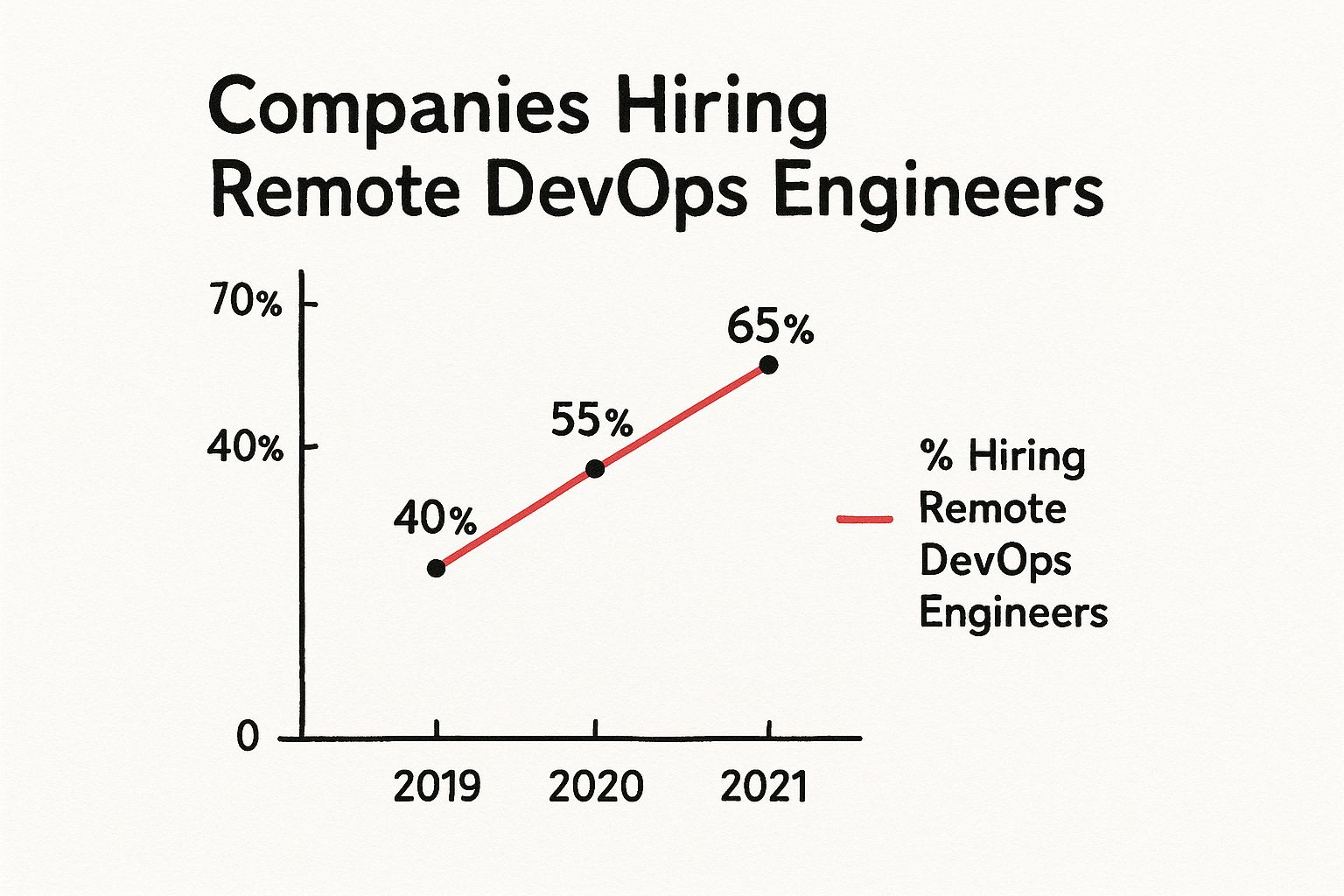

    Octopus Deploy offers a free tier for small teams, with paid plans scaling based on the number of deployment targets and users. You can learn more and get started at the Octopus Deploy website.

    11. Spacelift

    Spacelift establishes itself as a sophisticated management layer for Infrastructure as Code (IaC), extending beyond traditional configuration management. It provides a collaborative and policy-driven platform that supports a diverse toolset, including Terraform, Pulumi, Kubernetes, and Ansible. This makes it a powerful orchestration hub for teams managing complex, multi-tool environments rather than just a standalone configuration tool.

    Spacelift

    The platform excels at creating auditable, repeatable workflows with advanced features like drift detection, automated remediation, and stack dependencies. By centralizing control, it enables organizations to enforce granular policies (e.g., "no public S3 buckets") using Open Policy Agent (OPA) before any terraform apply is executed. This proactive governance is a critical aspect for maintaining compliance and stability at scale.

    Key Considerations

    • Best Use Case: Ideal for organizations using multiple IaC tools that require a unified control plane for policy enforcement, collaboration, and CI/CD integration. It's particularly effective for managing complex inter-stack dependencies.
    • Pros: Its vendor-agnostic approach provides high flexibility. Powerful policy-as-code capabilities using Open Policy Agent (OPA) and automated drift detection are significant advantages.
    • Cons: The platform's extensive feature set and focus on workflow orchestration can introduce a learning curve, especially for teams new to policy-as-code concepts like Rego.

    Spacelift offers a free tier for small teams and custom-priced business and enterprise plans. For more details on its capabilities and pricing, visit Spacelift.io.

    12. Tripwire Enterprise

    Tripwire Enterprise carves out its niche among the best configuration management tools by prioritizing security and compliance. Unlike traditional CM tools focused primarily on infrastructure provisioning, Tripwire provides security configuration management (SCM) to maintain system integrity. It establishes secure baseline configurations and then monitors systems in real time for any unauthorized changes, making it invaluable for organizations in highly regulated industries.

    Tripwire Enterprise

    The platform offers deep system visibility and automates the collection of compliance evidence for standards like PCI DSS, NERC CIP, and CIS Benchmarks. When a file or registry key is altered, Tripwire creates a detailed report showing who made the change, what was changed, and when, offering a different, yet critical, dimension to configuration management for security-conscious teams.

    Key Considerations

    • Best Use Case: Ideal for enterprises requiring stringent security compliance, continuous integrity monitoring (FIM), and automated audit evidence generation across hybrid cloud environments.
    • Pros: Its strength lies in automating compliance reporting and providing deep visibility into security configurations. The platform excels at supporting complex hybrid environments, ensuring consistent policy enforcement everywhere.
    • Cons: The comprehensive feature set and security-centric approach can introduce a learning curve. It is primarily a detection and reporting tool, not a remediation engine like Puppet or Ansible.

    Tripwire Enterprise is a commercial product with pricing available upon request. For organizations where security hardening and compliance are paramount, it provides an essential layer of control. You can get more details directly from the Tripwire Enterprise website.

    Top 12 Configuration Management Tools Comparison

    Tool Core Features User Experience / Quality Value Proposition Target Audience Unique Selling Points Price Points
    Ansible by Red Hat Agentless, YAML playbooks, module library Easy to learn, large community Simple, procedural automation Beginners, SMBs Agentless design, vast modules Free (open source)
    Puppet Model-driven, module ecosystem, compliance Steeper learning curve, strong support Scalable, declarative automation Enterprises, large infra Compliance & audit capabilities Commercial/licensed
    Chef Infra by Progress IaC with Ruby DSL, compliance, multi-platform For complex apps, strong testing Code-driven, procedural config Complex app environments Test-driven development support Commercial/licensed
    Terraform by HashiCorp Multi-cloud, IaC, state management Requires HCL knowledge, strong community Cloud-agnostic provisioning Cloud engineers, enterprises Multi-cloud & state management Free / Paid tiers
    SaltStack (Salt) Event-driven, real-time updates, scalable Complex setup, community support Scalable, event-driven automation Large dynamic infra Real-time config updates via ZeroMQ Free (open source)
    CFEngine Lightweight agent, declarative, scalable Steeper learning curve, high performance High efficiency, scalability High-performance environments Minimal resource use, C-based agent Commercial/licensed
    Rudder Drift detection, compliance, scalable User-friendly web interface Infrastructure automation & compliance Medium-large infra Compliance focus, strong reporting Open source / Paid
    ManageEngine ServiceDesk Plus Incident, asset, change management, ITIL User-friendly, some outdated UI Full ITSM suite IT departments, SMBs CMDB-centric ITSM Commercial/licensed
    SysAid CMDB, asset discovery, service catalog Strong automation, UI a bit outdated Centralized ITSM & config ITSM teams Workflow integration Commercial/licensed
    Octopus Deploy Env-specific config, version control, multi-env Initial setup needed, strong integrations Reliable CD pipelines DevOps teams Release promotion model Commercial/licensed
    Spacelift Multi-IaC support, stack dependencies, drift Learning curve for new users Flexible IaC workflow management DevOps teams Policy-as-code (OPA), drift remediation Commercial/licensed
    Tripwire Enterprise Real-time detection, security visibility Time to ramp up, automated compliance Security config & compliance Security teams, enterprises File Integrity Monitoring (FIM) Commercial/licensed

    From Configuration Chaos to Engineered Infrastructure

    The journey from manual, error-prone administration to a state of automated, version-controlled infrastructure is a defining characteristic of modern DevOps maturity. Throughout this guide, we've dissected twelve of the industry's leading platforms, moving beyond surface-level feature lists to provide a technical deep-dive into what makes each one unique. From the agentless simplicity and procedural power of Ansible to the model-driven, declarative rigor of Puppet and the infrastructure-as-code dominance of Terraform, it's clear there is no single "best" configuration management tool. Instead, the optimal choice is a function of your specific technical and business context.

    The tools covered, including Chef's code-driven flexibility, Salt's high-speed event-driven automation, and the battle-tested stability of CFEngine, represent different philosophies for solving the same fundamental problem: eliminating configuration drift and building resilient, repeatable systems. Your decision-making process must be a deliberate technical evaluation, not a popularity contest.

    How to Choose the Right Tool for Your Stack

    To navigate this complex landscape and select the right platform, your team must conduct a thorough internal audit. Consider the following critical factors:

    • Procedural vs. Declarative: Does your team prefer writing explicit, step-by-step instructions (procedural, like Ansible playbooks), or defining a desired end-state and letting the tool determine the steps (declarative, like Puppet or Terraform)? This choice deeply influences workflow and maintainability.
    • Agent vs. Agentless: The need for a persistent agent (like Puppet or Chef) versus an agentless, push-based model (like Ansible) has significant implications for security, initial setup complexity, and network overhead. Agent-based systems offer real-time enforcement, while agentless models are often easier to roll out on existing infrastructure.
    • Learning Curve and Team Skillset: Evaluate your team's existing expertise. A Python-savvy team might gravitate towards Salt or Ansible, while a team with a strong Ruby background could quickly adopt Chef. The investment in training is a real cost that cannot be overlooked.
    • Ecosystem and Integration: A tool's value is magnified by its ecosystem. Consider the availability of pre-built modules (Ansible Galaxy, Puppet Forge), API robustness, and how well it integrates with your existing CI/CD pipelines, cloud providers, and monitoring systems.
    • Scope: Provisioning vs. Management: Is your primary goal to provision new infrastructure (Terraform's core strength) or to manage the state of existing machines (Puppet/Chef/Ansible's focus)? While many tools blur these lines, understanding their primary design intent is key. For many organizations, the answer involves using a combination, such as Terraform for provisioning and Ansible for configuration.

    From Tool Selection to Successful Implementation

    Choosing a tool is only the first step. Successful adoption requires a strategic approach. Transitioning from configuration chaos to an engineered infrastructure often involves implementing effective client management strategies, ensuring consistent configuration and security across all endpoints. Start with a small, non-critical project to build expertise and establish best practices. Document everything, from coding standards for your configuration files to your branching strategy for infrastructure code. By embracing one of these powerful platforms with a methodical implementation plan, you empower your team to engineer resilience, accelerate delivery, and finally put an end to the pervasive and costly problem of configuration drift.


    Managing complex cloud infrastructure and multiple configuration tools can be overwhelming. OpsMoon provides a unified platform to find and hire elite, pre-vetted freelance DevOps, SRE, and Platform Engineers who are experts in tools like Ansible, Terraform, and Puppet. Build your dream infrastructure team on-demand by visiting OpsMoon to see how we connect you with the talent you need to scale effectively.

  • A Practical Guide to Load Balancing Configuration

    A Practical Guide to Load Balancing Configuration

    A precise load balancing configuration isn't just a "nice-to-have"—it's the foundational bedrock of any high-performance application architecture. It is the intelligent traffic director standing between your users and your servers, engineered to guarantee uptime, enforce performance, and prevent catastrophic failure.

    This is about more than just spreading out requests. It's a deliberate strategy to guarantee high availability and peak performance by algorithmically distributing network traffic across your backend server pool.

    Why Your Load Balancing Configuration Matters

    Think of your load balancer as a Layer 4/Layer 7 traffic controller for your application's network packets. Without it, a sudden flood of requests—perhaps from a marketing campaign or viral post—would hammer a single server's network interface and CPU, causing unacceptable latency or, even worse, a complete service outage.

    A well-designed load balancing configuration is your first line of defense. It intelligently routes incoming requests to healthy servers, ensuring no single node in your infrastructure becomes a bottleneck. This isn't just about preventing downtime; it's about engineering a seamless user experience. A subtle misconfiguration in your setup can inject latency, trigger intermittent application errors, or even create a cascading failure across your entire system.

    On the flip side, a correct and optimized configuration delivers tangible improvements in reliability and application speed.

    The Impact on Availability and Performance

    The primary technical objectives here are to maximize availability and minimize response times. By distributing traffic, you are architecting redundancy directly into your system's design.

    If one of your servers goes offline due to hardware failure, a deployment error, or routine maintenance, the load balancer's health checks will detect the failure and instantly redirect traffic to the remaining healthy servers in the pool. From the end-user's perspective, the application remains fully operational. This is the core principle of building fault-tolerant systems that can withstand real-world component failures.

    The infographic below quantifies the direct benefits of a properly implemented load balancing setup.

    Image

    You can see clear increases in uptime percentages and decreases in average response time—metrics that directly impact user satisfaction and business KPIs.

    Optimizing Costs and Scaling Efficiently

    Beyond ensuring high availability, a strategic configuration is critical for managing infrastructure costs. It enables horizontal scaling—adding more smaller, commodity servers as demand grows, instead of being forced into expensive, monolithic vertical scaling. This approach provides far greater elasticity and more efficient resource utilization.

    It's no surprise that the global load balancer market hit an estimated $6.2 billion in 2024 and continues to grow, driven by the relentless expansion of web traffic. For a deeper dive into the core concepts, I highly recommend this What Is Network Load Balancing? An Essential Technical Guide.

    A deliberate load balancing configuration is your first line of defense against outages and your most direct path to a scalable, cost-effective, and resilient application architecture. It moves your infrastructure from a reactive state to a proactive one.

    When you need a high-performance, flexible, and resource-efficient software load balancer, NGINX is an industry-standard choice. It is lightweight yet incredibly powerful, capable of serving as a reverse proxy, web server, and, for our purposes, a top-tier software load balancer.

    Let's dive into the technical implementation by editing the nginx.conf file to build a practical, production-ready configuration.

    Image

    The core logic of NGINX load balancing is defined within the upstream block. This is where you declare a named pool of backend servers for NGINX to proxy traffic to. It’s a beautifully simple construct for defining your application's server farm.

    Defining Your Backend Server Pool

    Let’s start with a foundational nginx.conf structure. You'll work inside the http context, first defining your upstream group and then instructing a server block to use it via the proxy_pass directive.

    Here’s a minimal example that creates a pool named backend_servers and populates it with two application servers.

    http {
        # Define the group of backend servers
        upstream backend_servers {
            server 10.0.1.10:8080; # Your first application server IP and port
            server 10.0.1.11:8080; # Your second application server IP and port
        }
    
        server {
            listen 80;
    
            location / {
                # Pass all incoming requests to the upstream group
                proxy_pass http://backend_servers;
            }
        }
    }
    

    This configuration uses the default load balancing algorithm: Round Robin. It’s as straightforward as it sounds. Requests are distributed sequentially to each server in the list. The first request goes to 10.0.1.10, the second to 10.0.1.11, the third cycles back to the first, and so on.

    Influencing Traffic with Server Weights

    Round Robin assumes that all backend servers are identical in capacity. However, in heterogeneous environments, you might have one server with more CPU and RAM. To handle this, you can assign a weight to each server, influencing the Round Robin algorithm's distribution.

    A higher weight means that a server will receive a proportionally larger share of the traffic. This is a simple but powerful way to optimize resource utilization across a non-uniform server fleet.

    Consider this modified configuration where one server has double the capacity of the others.

    upstream backend_servers {
        server 10.0.1.10:8080 weight=2; # This server gets twice the traffic
        server 10.0.1.11:8080;          # Default weight is 1
        server 10.0.1.12:8080;          # Default weight is 1
    }
    

    In this setup, for every four incoming requests, 10.0.1.10 will handle two, while the other two servers each handle one. This allows you to fine-tune your load balancing configuration to match the actual hardware capabilities of your servers.

    Choosing the Right Load Balancing Method

    While weighted Round Robin is versatile, it isn't always the optimal choice. For applications with long-lived connections—such as file downloads, WebSocket communication, or intensive API calls—the Least Connections (least_conn) method is often a superior fit.

    This algorithm intelligently forwards new requests to the server with the fewest active connections. This is highly effective at preventing one server from becoming saturated with slow, resource-heavy requests while others remain idle.

    Implementing it requires a single directive within your upstream block.

    upstream backend_servers {
        least_conn; # Use the Least Connections algorithm
        server 10.0.1.10:8080;
        server 10.0.1.11:8080;
        server 10.0.1.12:8080;
    }
    

    This one-line change can significantly improve performance for certain application workloads by distributing the active workload more evenly, not just the raw number of requests.

    Implementing Active Health Checks

    A non-negotiable component of any production-ready load balancing configuration is health checks. You must configure NGINX to automatically detect when a backend server is unresponsive or offline and temporarily remove it from the load balancing rotation.

    While NGINX Plus offers advanced, active health checks, you can still build a highly reliable system with open-source NGINX by using parameters on the server directive.

    • max_fails: The number of consecutive failed connection attempts before NGINX marks a server as down. The default is 1.
    • fail_timeout: The duration for which the server will be considered down after max_fails has been reached.

    Here’s how you would implement this in practice:

    upstream backend_servers {
        server 10.0.1.10:8080 max_fails=3 fail_timeout=30s;
        server 10.0.1.11:8080 max_fails=3 fail_timeout=30s;
    }
    

    With this configuration, if NGINX fails to establish a connection with a server three consecutive times, it will take that server out of rotation for 30 seconds. After the timeout expires, it will gracefully attempt to send traffic again. This simple mechanism is a fundamental building block for a resilient system that can automatically recover from transient backend failures.

    Now, let's level up your traffic management capabilities with HAProxy.

    While NGINX is an excellent general-purpose tool, there are scenarios where you need a more specialized instrument. When raw performance and surgical control over traffic routing are paramount, HAProxy is the tool of choice for many DevOps engineers. It's purpose-built for high-availability environments, and its performance and efficiency are legendary.

    We will now construct a production-grade load balancing configuration using HAProxy. The heart of this operation is a single configuration file: haproxy.cfg. It is broken down into logical sections that are highly intuitive once you understand their purpose.

    The Core Building Blocks of haproxy.cfg

    All HAProxy behavior is defined in the haproxy.cfg file. It's structured into four primary sections. Mastering these is key to unlocking HAProxy's full potential.

    • global: This is the master control panel, holding settings that affect the entire HAProxy process. This includes performance tuning parameters (e.g., maxconn), security settings (e.g., chroot), and logging configurations.
    • defaults: This section promotes a DRY (Don't Repeat Yourself) configuration. You can define common timeout settings and other parameters here that will be inherited by all subsequent frontend and backend blocks.
    • frontend: A frontend defines a public-facing listener. It specifies the IP addresses and ports where HAProxy accepts incoming traffic and defines rules for how to process those connections.
    • backend: This is your pool of application servers. A frontend block routes traffic to a backend block, which then executes the load balancing algorithm to distribute requests among the defined servers. This is also where you configure health checks and session persistence.

    This strict separation of concerns is what makes HAProxy so powerful, allowing for complex routing logic without creating a convoluted configuration file.

    Building a Smart Frontend with ACLs

    Let's configure a frontend to handle standard HTTP traffic. While a basic block could simply listen on a port and forward all traffic to a single backend, the real power of HAProxy lies in using Access Control Lists (ACLs).

    An ACL is a rule that evaluates a specific condition within a request. You can inspect virtually any part of the traffic, including the URL path, an HTTP header, the source IP address, and more. You then use these ACLs to make intelligent routing decisions.

    Consider a common architectural pattern: you want to route all API traffic (requests beginning with /api) to a dedicated cluster of API servers, while all other requests go to your main web servers.

    Here’s the implementation in haproxy.cfg:

    frontend http_in
        bind *:80
    
        # This ACL evaluates to true if the URL path begins with /api
        acl is_api_request path_beg /api
    
        # If the ACL is true, use the api_servers backend
        use_backend api_servers if is_api_request
    
        # This is the fallback for all other traffic
        default_backend web_servers
    

    This is a fundamental technique for building a flexible load balancing configuration. It creates a powerful routing layer that can be easily extended. Need to route /admin traffic to a separate backend? Simply add another ACL and a use_backend rule.

    Defining Backends with Health Checks and Sticky Sessions

    Having defined how to route traffic in the frontend, we now need to define the backend server pools themselves. A backend is more than a list of IP addresses; it's where you define the load balancing algorithm, monitor server health, and manage user session state.

    Let’s implement the two backends referenced in our frontend: web_servers and api_servers.

    backend web_servers
        balance roundrobin
        # We will check the /health endpoint every 5 seconds.
        # It takes 2 successful checks to mark a server as 'up', and 3 failures to mark it 'down'.
        option httpchk GET /health
        server web1 10.0.1.10:80 check inter 5s rise 2 fall 3
        server web2 10.0.1.11:80 check inter 5s rise 2 fall 3
    
    backend api_servers
        balance leastconn
        # For our API, we're enabling cookie-based sticky sessions.
        cookie SERVERID insert indirect nocache
        option httpchk GET /api/health
        server api1 10.0.1.20:8080 check cookie api1
        server api2 10.0.1.21:8080 check cookie api2
    

    We've implemented several critical features here. Both backends use custom application health checks (option httpchk) that poll a specific health endpoint on the servers. The check parameter on each server line provides fine-grained control over the health check timing and failure thresholds.

    The key feature in the api_servers backend is sticky sessions. The cookie SERVERID insert line instructs HAProxy to set a cookie on the user's first response. On all subsequent requests from that user, HAProxy will read that cookie and ensure the user is routed to the same backend server (api1 or api2). This is absolutely critical for stateful applications that must maintain session context across multiple requests.

    Setting Up Cloud Load Balancers in AWS

    When you move your load balancing configuration into the cloud, you gain access to managed services that offer immense scalability and simplified operational overhead. AWS Elastic Load Balancing (ELB) is the dominant service in this space, offering a suite of load balancers for nearly any use case. For most modern, HTTP/HTTPS-based applications, the Application Load Balancer (ALB) is the optimal choice.

    This represents a paradigm shift from self-hosting tools like NGINX or HAProxy. With on-premise solutions, you are responsible for the servers, the software, patching, and high availability. With AWS ELB, AWS manages the underlying hardware and software. This allows your team to focus exclusively on the routing logic: how traffic is directed, how health is monitored, and how security policies are applied.

    Image

    Choosing Your AWS Load Balancer

    Before beginning a configuration, you must select the correct tool for your workload. Choosing the wrong ELB type can introduce performance bottlenecks or unnecessary complexity.

    Here is a technical breakdown of the ELB family:

    • Application Load Balancer (ALB): This operates at the application layer (Layer 7). It is "content-aware," meaning it can inspect HTTP headers, URL paths, hostnames, and query string parameters to make sophisticated routing decisions. This is the standard choice for microservices, containerized applications (ECS/EKS), and any web application requiring flexible, path-based, or host-based routing.
    • Network Load Balancer (NLB): The NLB operates at the transport layer (Layer 4) and is engineered for extreme performance and ultra-low latency. It is capable of handling millions of requests per second with minimal delay. It routes traffic based on TCP/UDP protocol data, making it ideal for high-throughput TCP workloads, gaming servers, or any application where raw network performance is the primary concern.
    • Gateway Load Balancer (GWLB): This is a specialized service for deploying, scaling, and managing third-party virtual network appliances like firewalls, intrusion detection/prevention systems, and deep packet inspection systems. It functions at Layer 3 (the network layer) and provides a transparent "bump-in-the-wire" for inspecting traffic flows.

    For the vast majority of web application workloads, the ALB provides the ideal balance of powerful features and excellent performance. Let's proceed with a step-by-step configuration.

    Configuring an Application Load Balancer

    We'll walk through setting up an ALB using the AWS Management Console. The entire configuration is based on three core components: the load balancer itself, listeners, and target groups.

    Think of the relationship this way: a target group is a logical grouping of your backend resources (e.g., EC2 instances, Lambda functions) that process requests. The listener is the entry point; it checks for incoming connections on a specific port and protocol, and then uses a set of rules you define to forward that traffic to the appropriate target group.

    Here is the practical workflow:

    1. Create a Target Group: Your first step is to define a target group. You will specify the target type (e.g., Instances), protocol, and port your backend is listening on (e.g., HTTP on port 80). Crucially, you will also configure health checks. Best practice is to create a dedicated /health endpoint in your application that returns a 200 OK status code only when the application is fully healthy.
    2. Register Your Targets: With the group created, you register your EC2 instances (or other resources) with it. As soon as a target is registered, the ALB's health checking system begins polling its health check path to determine its status.
    3. Create the ALB and Listener: Now, create the Application Load Balancer. You will assign it a name, select its scheme (internal or internet-facing), associate it with your VPC, and choose its subnets. Pro-tip: for high availability, you must select subnets in at least two different Availability Zones. Concurrently, you will configure a listener—a standard configuration for web traffic would be for HTTPS on port 443.
    4. Define Listener Rules: This is where the ALB's Layer 7 intelligence shines. You configure rules for your listener. For example, a default rule might forward all traffic to a web-servers target group. You can then add a rule with a higher priority: if the URL path is /api/*, forward that traffic to a separate api-servers target group. This content-based routing is essential for modern microservice architectures.

    Integrating SSL/TLS for Security

    No production load balancing configuration is complete without end-to-end encryption. The ALB simplifies this dramatically through its native integration with AWS Certificate Manager (ACM).

    With SSL/TLS Termination, the ALB handles the computationally expensive process of decrypting incoming HTTPS traffic and encrypting responses back to the client. This offloads the cryptographic workload from your backend EC2 instances, freeing up their CPU cycles to focus on executing your application logic.

    When you configure your listener, you simply select "HTTPS" as the protocol. AWS will then prompt you to select an SSL certificate from ACM. If you don't already have one, ACM can provision a free, publicly trusted certificate for your domain and will handle the automatic renewal process, eliminating a common source of operational toil and outages. For organizations seeking to implement these workflows with maximum efficiency and security, engaging expert cloud infrastructure management services can ensure best practices are applied from day one.

    Once you have a functional load balancing configuration, the next phase is optimization. This involves moving beyond default settings to engineer a system that is not just operational, but genuinely resilient, performant, and secure. This fine-tuning is what separates a standard setup from a professionally optimized one, regardless of whether you're using NGINX, HAProxy, or a cloud-native solution.

    Image

    These advanced strategies are not theoretical; they are battle-tested techniques used to make applications faster, more reliable, and more secure. We will explore several impactful techniques, including session persistence, SSL/TLS offloading, and implementing intelligent health monitoring.

    Mastering Session Persistence

    Session persistence, often called "sticky sessions," is critical for stateful applications. Consider an e-commerce shopping cart. If a user adds an item to their cart and their next HTTP request is routed to a different server that has no knowledge of their session, the cart will appear empty—a catastrophic user experience.

    Sticky sessions solve this by ensuring a user is consistently routed to the same backend server for the duration of their session. Most load balancers implement this by setting a cookie. On the user's first visit, the load balancer selects a server and issues a session cookie. For all subsequent requests, the load balancer reads this cookie and forwards the traffic to the specified server.

    However, this creates a single point of failure for that user's session. If that specific server fails, the user's session data is lost. For this reason, modern architectures advocate for designing stateless applications. By externalizing session state to a shared data store, like a Redis or Memcached cluster, you decouple the user session from any individual application server, making the entire architecture more robust and scalable.

    Key Takeaway: Use sticky sessions as a tactical solution for legacy stateful applications. For all new development, architect for statelessness. This maximizes resilience and simplifies your load balancing configuration.

    The Power of SSL/TLS Termination

    Handling HTTPS traffic is computationally expensive. The cryptographic operations involved in encrypting and decrypting TLS traffic consume significant CPU cycles on your backend servers—cycles that could be better utilized running your application code. This is the problem that SSL/TLS termination solves.

    By configuring your load balancer to terminate SSL/TLS, you offload this entire computational burden. The process is as follows:

    1. A client establishes a secure HTTPS connection to your load balancer's public IP.
    2. The load balancer decrypts the incoming traffic.
    3. It then forwards the now-unencrypted HTTP traffic to the appropriate backend server over your secure, private network.

    This strategy yields two major benefits. First, it frees up your application servers, improving their performance and capacity. Second, it centralizes certificate management. Instead of managing TLS certificates and private keys on every backend server, you manage them in a single, secure location: the load balancer.

    Implementing Smarter Health Checks

    A basic health check that simply tests TCP connectivity on a port is insufficient. It doesn't tell the whole story. A server can be responsive to a TCP ping while the application running on it is hung, crashed, or unable to connect to its database. A truly robust load balancing configuration requires deep, application-aware health checks.

    You must configure your load balancer to poll a dedicated health check endpoint, such as /healthz or /status, that is specifically designed to validate the application's operational readiness. This endpoint's logic should verify its own critical dependencies—such as database connectivity or the availability of a downstream microservice—before returning a 200 OK status code. If any of these internal checks fail, the endpoint must return a non-200 status (e.g., 503 Service Unavailable). This provides an unambiguous signal to the load balancer to immediately and automatically remove that unhealthy instance from the rotation.

    The field of load balancing configuration is continually evolving. By 2024, advanced teams are exploring machine learning-driven predictive load balancing, which adjusts traffic distribution based on real-time server metrics and historical trends. There is also a major trend towards integrating API gateways directly with load balancers to provide enhanced security, rate limiting, and observability for microservice architectures. You can dive deeper into these market shifts in this detailed report on the load balancer market.

    Continuously iterating and improving these configurations is a hallmark of a high-maturity DevOps team. If you are assessing your team's capabilities, a structured framework like this DevOps maturity assessment can provide invaluable insights.

    Troubleshooting Common Configuration Problems

    Despite meticulous planning, production systems fail. A load balancing configuration that appears perfect in staging can encounter real-world conditions that trigger unexpected behavior. This section is a technical field guide for systematically diagnosing and resolving common load balancer issues.

    We will cover the most frequent failure modes: misconfigured health checks, the notorious 504 Gateway Timeout error, and session persistence failures.

    The key to effective troubleshooting is a systematic approach. Abandon guesswork. Instead, analyze the specific symptoms and trace them back to their probable root causes using logs and metrics. This methodology allows you to restore service quickly and reliably.

    Diagnosing Unhealthy Backend Servers

    This is a classic operational scenario: you receive an alert that your load balancer has marked a backend server as 'unhealthy', yet manual inspection shows the server is running. More often than not, the issue lies with an overly aggressive health check configuration.

    If your check interval is too short or your failure threshold is too low (e.g., 1 failed check), any transient event—a momentary network blip or a brief CPU spike due to garbage collection—can cause a health check to fail, tricking the load balancer into taking a perfectly healthy instance out of rotation.

    Here’s the diagnostic procedure:

    • Analyze Load Balancer Logs: Your load balancer's access and error logs are your primary source of truth. Look for patterns. Is one specific server "flapping" (repeatedly cycling between healthy and unhealthy states)? This almost always indicates a configuration problem, not a server failure.
    • Verify the Network Path and Security Groups: Can the load balancer's nodes actually reach the backend server on the specified health check port? Check your firewall rules and security groups. A simple curl or telnet from a machine within the same subnet as the load balancer can verify connectivity.
    • Tune Health Check Parameters: Loosen your health check thresholds to be more tolerant of transient issues. In HAProxy, this means increasing the fall count. In an AWS ALB, increase the UnhealthyThresholdCount. This gives a server a chance to recover from a temporary problem before being removed from service.

    Resolving 504 Gateway Timeout Errors

    The 504 Gateway Timeout error is an explicit message from the load balancer stating: "I forwarded a request to a backend server, but it did not respond within my configured timeout period." This is not an application error; it is a timeout at the load balancer or proxy layer.

    The most frequent cause is a timeout mismatch.

    Imagine your application requires 45 seconds to generate a complex report, but your load balancer’s idle timeout is configured for 30 seconds. At the 30.01-second mark, the load balancer will give up, terminate the connection to the backend, and return a 504 error to the client—even though your application server was still processing the request correctly.

    To resolve this, you must ensure your load balancer's timeout value is set to be slightly higher than the maximum expected response time of your application for any given workload. This synchronization is a critical element of a stable load balancing configuration.

    Fixing Broken Sticky Sessions

    When sticky sessions fail, they introduce some of the most frustrating, difficult-to-reproduce bugs, such as users being randomly logged out or losing their shopping cart contents.

    This failure can be traced to several root causes. The persistence cookie might be misconfigured, expired, or stripped by an intermediate proxy. The user might switch networks (e.g., from Wi-Fi to cellular), changing their source IP if IP-based persistence is used. Most commonly, the specific backend server to which the user was "stuck" has failed its health check, forcing the load balancer to re-route the user to a new server that has no context for their session.

    Resolving this requires robust monitoring and often a shift in architectural thinking. Digging into application performance optimization can provide deeper strategies for tracking down these user-facing issues. By correlating server health events with user session logs, you can pinpoint the exact cause of the persistence failure.


    At OpsMoon, we turn complex infrastructure challenges into streamlined, reliable systems. Our elite DevOps engineers can help you build and manage a robust load balancing configuration that scales with your business. Start with a free work planning session today!