Author: opsmoon

  • A Technical Guide to DevOps Resource Allocation Optimization

    A Technical Guide to DevOps Resource Allocation Optimization

    Resource allocation optimization is the engineering discipline of assigning and managing computational assets—CPU, memory, storage, and network I/O—to achieve specific performance targets with maximum cost efficiency. The objective is to leverage data-driven strategies, algorithms, and automation to dynamically adjust resource provisioning, ensuring applications receive the precise resources required at any given moment, eliminating both performance bottlenecks and financial waste.

    The Technical Challenge of DevOps Resource Allocation

    In a high-velocity DevOps environment, managing infrastructure resources is a complex orchestration problem. Applications are ephemeral workloads, each with unique resource consumption profiles, dependencies, and performance SLOs. The core challenge is to allocate finite infrastructure capacity to meet these demands without creating contention or leaving expensive resources idle.

    Misallocation results in two critical failure modes:

    • Under-provisioning: Insufficient resource allocation leads to CPU throttling, OOMKilled events, high application latency, and potential cascading failures as services fail to meet their SLOs.
    • Over-provisioning: Allocating excess resources "just in case" results in significant financial waste, with idle CPU cycles and unutilized memory directly translating to a higher cloud bill. This is a direct hit to gross margins.

    This continuous optimization problem is the central focus of resource allocation optimization.

    The Failure of Static Allocation Models

    Legacy static allocation models—assigning a fixed block of CPU and memory to an application at deployment—are fundamentally incompatible with modern CI/CD pipelines and microservices architectures. Workloads are dynamic and unpredictable, subject to fluctuating user traffic, asynchronous job processing, and A/B testing rollouts.

    A static model cannot adapt to this volatility. It forces a constant, untenable trade-off: risk performance degradation and SLO breaches or accept significant and unnecessary operational expenditure.

    This isn't just an engineering problem; it's a strategic liability. According to one study, 83% of executives view resource allocation as a primary lever for strategic growth. You can analyze the business impact in more detail via McKinsey's research on resource allocation and operational intelligence at akooda.co.

    Effective resource management is not a cost-saving tactic; it is a strategic imperative for engineering resilient, high-performance, and scalable distributed systems.

    A New Framework for Efficiency

    To escape this cycle, engineers require a framework grounded in observability, automation, and a continuous feedback loop. This guide provides actionable, technical strategies for moving beyond theoretical concepts. We will cover the implementation details of predictive autoscaling, granular cost attribution using observability data, and the cultural shifts required to master resource allocation and transform it from an operational burden into a competitive advantage.

    Understanding Core Optimization Concepts

    To effectively implement resource allocation optimization, you must master the technical mechanisms that control system performance and cost. These are not just abstract terms; they are the fundamental building blocks for engineering an efficient, cost-effective infrastructure that remains resilient under load. The primary goal is to optimize for throughput, utilization, and cost simultaneously.

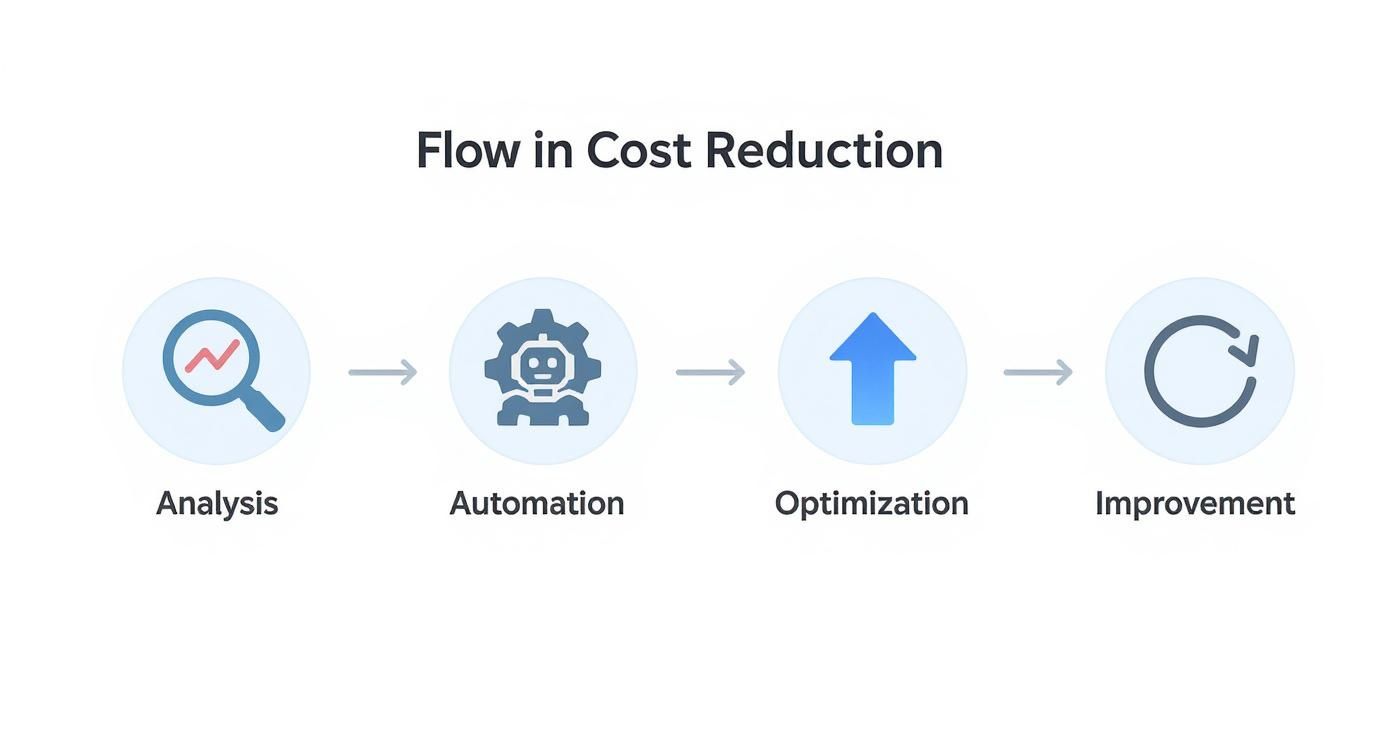
    This diagram illustrates the primary objectives that should guide all technical optimization efforts.

    Image

    Every implemented strategy is an attempt to improve one of these metrics without negatively impacting the others. It's a multi-objective optimization problem.

    To provide a clear technical comparison, let's analyze how these concepts interrelate. Each plays a distinct role in constructing a highly efficient system.

    Key Resource Allocation Concepts Compared

    Concept Primary Goal Mechanism Technical Implementation
    Rightsizing Cost Efficiency Match instance/container specs to actual workload demand by analyzing historical utilization metrics. Adjusting resource.requests and resource.limits in Kubernetes or changing cloud instance types (e.g., m5.xlarge to t3.large).
    Autoscaling Elasticity & Availability Automatically add/remove compute resources based on real-time metrics (CPU, memory, custom metrics like queue depth). Implementing Kubernetes Horizontal Pod Autoscaler (HPA) or cloud-native autoscaling groups.
    Bin Packing Utilization & Density Optimize scheduling of workloads onto existing nodes to maximize resource usage and minimize idle capacity. Leveraging the Kubernetes scheduler's algorithm or custom schedulers to place pods on nodes with the least available resources that still fit.

    This table provides a high-level technical summary. Now, let's examine their practical application.

    Rightsizing Your Workloads

    The most fundamental optimization technique is rightsizing: aligning resource allocations with the observed needs of a workload. This practice directly combats over-provisioning by eliminating payment for unused CPU cycles and memory.

    Effective rightsizing is a continuous process requiring persistent monitoring and analysis of key performance indicators.

    • CPU/Memory Utilization: Track P95 and P99 utilization over a meaningful time window (e.g., 7-14 days) to identify the true peak requirements, ignoring transient spikes.
    • Request vs. Limit Settings: In Kubernetes, analyze the delta between resources.requests and resources.limits. A large, consistently unused gap indicates a prime candidate for rightsizing.
    • Throttling Metrics: Monitor CPU throttling (container_cpu_cfs_throttled_seconds_total in cAdvisor) to ensure rightsizing efforts are not negatively impacting performance.

    By systematically adjusting resource configurations based on this telemetry, you ensure you pay only for the capacity your application genuinely consumes.

    Autoscaling for Dynamic Demand

    While rightsizing establishes an efficient baseline, autoscaling addresses the dynamic nature of real-world demand. It automates the addition and removal of compute resources in response to load, ensuring SLOs are met during traffic spikes while minimizing costs during lulls.

    Autoscaling transforms resource management from a static, manual configuration task into a dynamic, closed-loop control system that adapts to real-time application load.

    There are two primary scaling dimensions:

    1. Horizontal Scaling (Scaling Out): Adding more instances (replicas) of an application. This is the standard for stateless services, distributing load across multiple compute units. It is the foundation of resilient, highly available architectures.

    2. Vertical Scaling (Scaling Up): Increasing the resources (CPU, memory) of existing instances. This is typically used for stateful applications like databases or monolithic systems that cannot be easily distributed.

    For containerized workloads, mastering these techniques is essential. For a deeper technical implementation guide, see our article on autoscaling in Kubernetes.

    Efficiently Packing Your Nodes

    Scheduling and bin packing are algorithmic approaches to maximizing workload density. If your nodes are containers and your pods are packages, bin packing is the process of fitting as many packages as possible into each container. The objective is to maximize the utilization of provisioned hardware, thereby reducing the total number of nodes required.

    An intelligent scheduler evaluates the resource requests of pending pods and selects the node with the most constrained resources that can still accommodate the pod. This strategy, known as "most-allocated," prevents the common scenario of numerous nodes operating at low (10-20%) utilization. Effective bin packing directly reduces infrastructure costs by minimizing the overall node count.

    Actionable Strategies to Optimize Resources

    Image

    Let's transition from conceptual understanding to technical execution. Implementing specific, data-driven strategies will yield direct improvements in both system performance and cloud expenditure.

    We will deconstruct three powerful, hands-on techniques for immediate implementation within a DevOps workflow. These are not high-level concepts but specific methodologies supported by automation and quantitative analysis, addressing optimization from predictive scaling to granular cost attribution.

    Predictive Autoscaling Ahead of Demand

    Standard autoscaling is reactive, triggering a scaling event only after a performance metric (e.g., CPU utilization) has already crossed a predefined threshold. Predictive autoscaling inverts this model, provisioning resources before an anticipated demand increase. It employs time-series forecasting models (like ARIMA or LSTM) on historical metrics to predict future load and preemptively scale the infrastructure.

    Reactive scaling often introduces latency—the time between metric breach and new resource availability. Predictive scaling eliminates this lag. By analyzing historical telemetry from a monitoring system like Prometheus, you can identify cyclical patterns (e.g., daily traffic peaks, seasonal sales events) and programmatically trigger scaling events in advance.

    Technical Implementation Example:
    A monitoring tool with forecasting capabilities, such as a custom operator using Facebook Prophet or a commercial platform, analyzes Prometheus data. It learns that http_requests_total for a service consistently increases by 300% every weekday at 9:00 AM. Based on this model, an automated workflow can be configured to increase the replica count of the corresponding Kubernetes Deployment from 5 to 15 at 8:55 AM, ensuring capacity is available before the first user hits the spike.

    Granular Cost Visibility Through Tagging

    Effective optimization is impossible without precise measurement. Granular cost visibility involves meticulously tracking cloud expenditure and attributing every dollar to a specific business context—a team, a project, a feature, or an individual microservice. This transforms an opaque, monolithic cloud bill into a detailed, queryable dataset.

    The foundational technology for this is a disciplined tagging and labeling strategy. These are key-value metadata attached to every cloud resource (EC2 instances, S3 buckets) and Kubernetes object (Deployments, Pods).

    A robust tagging policy is the technical prerequisite for FinOps. It converts infrastructure from an unmanageable cost center into a transparent system where engineering teams are accountable for the financial impact of their software.

    Implement this mandatory tagging policy for all provisioned resources:

    • team: The owning engineering squad (e.g., team: backend-auth).
    • project: The specific initiative or service (e.g., project: user-profile-api).
    • environment: The deployment stage (prod, staging, dev).
    • cost-center: The business unit for financial allocation.

    With these tags consistently enforced (e.g., via OPA Gatekeeper policies), you can leverage cost management platforms to generate detailed reports, enabling you to precisely answer questions like, "What is the month-over-month infrastructure cost of the q4-recommendation-engine project?" For deeper insights, review our guide on effective cloud cost optimization strategies.

    Automated Rightsizing for Continuous Efficiency

    Automated rightsizing operationalizes the process of matching resource allocation to workload demand. It utilizes tools that continuously analyze performance telemetry and either recommend or automatically apply optimized resource configurations, eliminating manual toil and guesswork.

    These tools monitor application metrics over time to establish an accurate resource utilization profile, then generate precise recommendations for requests and limits. To accelerate validation during development, integrating parallel testing strategies can help quickly assess the performance impact of new configurations under load.

    Consider this technical example using a Kubernetes Vertical Pod Autoscale (VPA) manifest. The VPA controller monitors pod resource consumption and automatically adjusts their resource requests to align with observed usage.

    apiVersion: "autoscaling.k8s.ioio/v1"
    kind: VerticalPodAutoscaler
    metadata:
      name: my-app-vpa
    spec:
      targetRef:
        apiVersion: "apps/v1"
        kind:       Deployment
        name:       my-app
      updatePolicy:
        updateMode: "Auto"
      resourcePolicy:
        containerPolicies:
          - containerName: '*'
            minAllowed:
              cpu: 100m
              memory: 256Mi
            maxAllowed:
              cpu: 2
              memory: 4Gi
    

    Here, the VPA's updateMode: "Auto" instructs it to automatically apply its recommendations by evicting and recreating pods with optimized resource requests. This creates a self-tuning system where applications are continuously rightsized for maximum efficiency without human intervention.

    Choosing Your Optimization Toolchain

    A robust resource allocation strategy requires a carefully selected toolchain to automate and enforce optimization policies. The market offers a wide range of tools, which can be categorized into three primary types, each addressing a different layer of the optimization stack.

    The optimal tool mix depends on your infrastructure stack (e.g., VMs vs. Kubernetes), team expertise, and the required depth of analysis.

    Cloud-Native Solutions

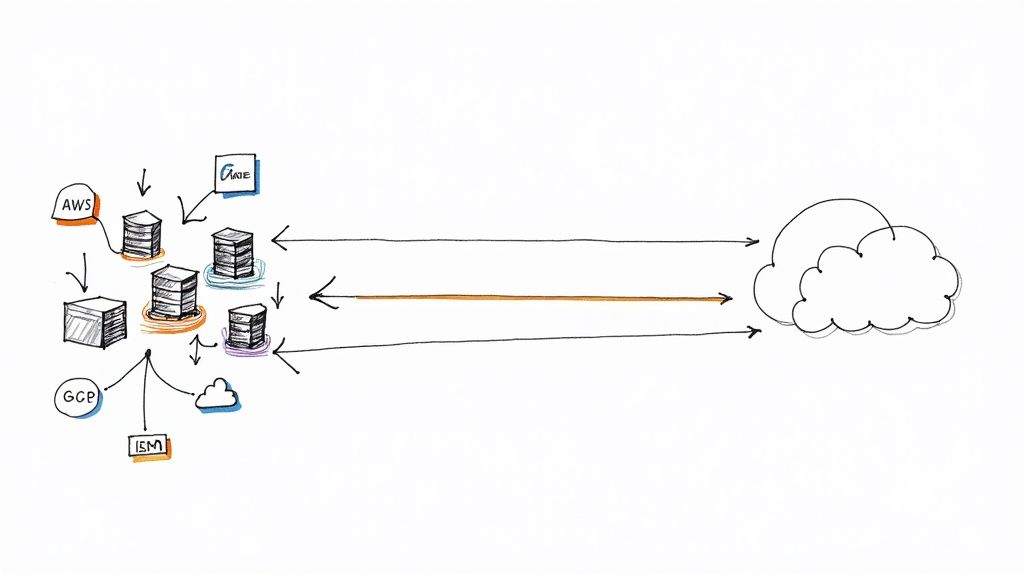
    Major cloud providers (AWS, Azure, GCP) offer built-in tools for foundational resource optimization. Services like AWS Compute Optimizer, Azure Advisor, and GCP Recommender serve as a first-pass optimization layer. They analyze usage patterns and provide straightforward recommendations, such as rightsizing instances, identifying idle resources, or adopting cost-saving purchasing models (e.g., Spot Instances).

    Their primary advantage is seamless integration and zero-cost entry. For example, AWS Compute Optimizer might analyze a memory-intensive workload running on a general-purpose m5.2xlarge instance and recommend a switch to a memory-optimized r6g.xlarge, potentially reducing the instance cost by up to 40%.

    However, these tools typically provide a high-level, infrastructure-centric view and often lack the application-specific context required for deep optimization, particularly within complex containerized environments.

    Container Orchestration Platforms

    For workloads running on Kubernetes, the platform itself is a powerful optimization engine. Kubernetes provides a rich set of native controllers and scheduling mechanisms designed for efficient resource management.

    Key native components include:

    • Horizontal Pod Autoscaler (HPA): Dynamically scales the number of pod replicas based on observed metrics like CPU utilization or custom metrics from Prometheus (e.g., requests per second). When CPU usage exceeds a target like 70%, the HPA controller increases the replica count.
    • Vertical Pod Autoscaler (VPA): Analyzes the historical CPU and memory consumption of pods and adjusts their resource.requests to match actual usage, preventing waste and OOMKilled errors.
    • Custom Schedulers: For advanced use cases, you can implement custom schedulers to enforce complex placement logic, such as ensuring high-availability by spreading pods across failure domains or co-locating data-intensive pods with specific hardware.

    Mastering these native Kubernetes capabilities is fundamental for any container-based resource optimization strategy.

    Third-Party Observability and FinOps Platforms

    While cloud-native and Kubernetes tools are powerful, they often operate in silos. Third-party platforms like Kubecost, Datadog, and Densify integrate disparate data sources into a single, unified view, correlating performance metrics with granular cost data.

    These platforms address complex challenges that native tools cannot:

    For instance, they can aggregate cost and usage data from multiple cloud providers (AWS, Azure, GCP) and on-premises environments into a single dashboard, providing essential visibility for hybrid and multi-cloud architectures.

    They also offer advanced AI-driven analytics and "what-if" scenario modeling for capacity planning and budget forecasting. For a detailed comparison of available solutions, see our guide on the best cloud cost optimization tools.

    This screenshot from Kubecost illustrates a cost breakdown by Kubernetes primitives like namespaces and deployments.

    This level of granularity—attributing cloud spend directly to an application, team, or feature—is the cornerstone of a functional FinOps culture. It empowers engineers with direct financial feedback on their architectural decisions, a capability not available in standard cloud billing reports.

    Building a Culture of Continuous Optimization

    Advanced tooling and automated strategies are necessary but insufficient for achieving sustained resource efficiency. Lasting optimization is the result of a cultural transformation—one that establishes resource management as a continuous, automated, and shared responsibility across the entire engineering organization.

    Technology alone cannot solve systemic over-provisioning. Sustainable efficiency requires a culture where every engineer is accountable for the cost and performance implications of the code they ship. This is the essence of a FinOps culture.

    Fostering a FinOps Culture

    FinOps is an operational framework and cultural practice that brings financial accountability to the variable spending model of the cloud. It establishes a collaborative feedback loop between engineering, finance, and business units to collectively manage the trade-offs between delivery speed, cost, and quality.

    In a FinOps model, engineering teams are provided with the data, tools, and autonomy to own their cloud expenditure. This direct ownership incentivizes the design of more efficient and cost-aware architectures from the outset.

    A mature FinOps culture reframes the discussion from "How much was the cloud bill?" to "What business value did we generate per dollar of cloud spend?" Cost becomes a key efficiency metric, not merely an expense.

    This shift is critical at scale. A fragmented, multi-national organization can easily waste millions in unoptimized cloud resources due to a lack of centralized visibility and accountability. Data fragmentation can lead to $50 million in missed optimization opportunities annually, as detailed in this analysis of resource allocation for startups at brex.com.

    Integrating Optimization into Your CI/CD Pipeline

    To operationalize this culture, you must embed optimization checks directly into the software development lifecycle. The CI/CD pipeline is the ideal enforcement point for resource efficiency standards, providing immediate feedback to developers.

    Implement these automated checks in your pipeline:

    • Enforce Resource Request Ceilings: Configure pipeline gates to fail any build that defines Kubernetes resource requests exceeding a predefined, reasonable maximum (e.g., cpu: 4, memory: 16Gi). This forces developers to justify exceptionally large allocations.
    • Identify Idle Development Resources: Run scheduled jobs that query cloud APIs or Kubernetes clusters to identify and flag resources in non-production environments (dev, staging) that have been idle (e.g., <5% CPU utilization) for an extended period (e.g., >48 hours).
    • Integrate "Cost-of-Change" Reporting: Use tools that integrate with your VCS (e.g., GitHub) to post the estimated cost impact of infrastructure changes as a comment on pull requests. This makes the financial implications of a merge explicit to both the author and reviewers.

    Creating a Unified Multi-Cloud Strategy

    In multi-cloud and hybrid environments, optimization complexity increases exponentially. Each cloud has distinct services, pricing models, and APIs, making a unified governance and visibility strategy essential.

    Establish a central "Cloud Center of Excellence" (CCoE) or platform engineering team. This team is responsible for defining and enforcing cross-platform standards for tagging, security policies, and resource allocation best practices. Their role is to ensure that workloads adhere to the same principles of efficiency and accountability, regardless of whether they run on AWS, Azure, GCP, or on-premises infrastructure.

    Your Technical Go-Forward Plan

    Image

    It is time to transition from theory to execution.

    Sustained resource optimization is not achieved through reactive, ad-hoc cost-cutting measures. It is the result of engineering a more intelligent, efficient, and resilient system that accelerates innovation. This is your technical blueprint.

    Effective optimization is built on three pillars: visibility, automation, and culture. Visibility provides the data to identify waste. Automation implements the necessary changes at scale. A robust FinOps culture ensures these practices become ingrained in your engineering DNA. The end goal is to make efficiency an intrinsic property of your software delivery process.

    The competitive advantage lies in treating resource management as a core performance engineering discipline. An optimized system is not just cheaper to operate—it is faster, more reliable, and delivers a superior end-user experience.

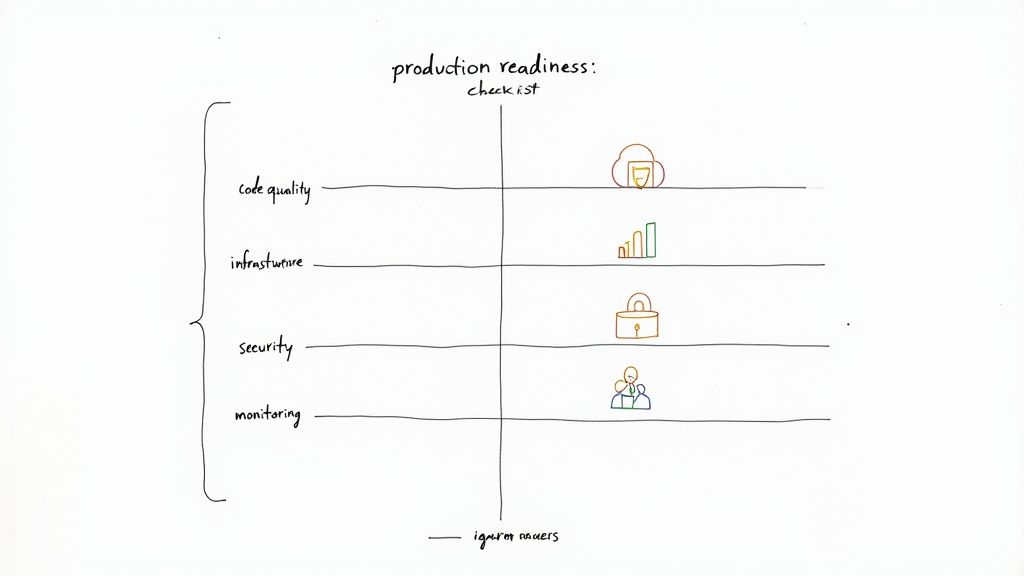
    This checklist provides concrete, actionable first steps to build immediate momentum.

    Your Initial Checklist

    1. Conduct a Resource Audit on a High-Spend Service: Select a single, high-cost application. Over a 7-day period, collect and analyze its P95 and P99 CPU and memory utilization data. Compare these observations to its currently configured resource.requests to identify the precise magnitude of over-provisioning.
    2. Implement a Mandatory Tagging Policy: Define a minimal, mandatory tagging policy (team, project, environment) and use a policy-as-code tool (e.g., OPA Gatekeeper) to enforce its application on all new resource deployments. This is the first step to cost attribution.
    3. Deploy HPA on a Pilot Application: Select a stateless, non-critical service and implement a Horizontal Pod Autoscaler (HPA). Configure it with a conservative CPU utilization target (e.g., 75%) and observe its behavior under varying load. This builds operational confidence in automated scaling.

    Executing these technical steps will transform optimization from an abstract concept into a measurable engineering practice that improves both your bottom line and your development velocity.

    Technical FAQ on Resource Optimization

    This section addresses common technical questions encountered during the implementation of resource allocation optimization strategies.

    How Do I Choose Between Vertical and Horizontal Scaling?

    The decision between horizontal and vertical scaling is primarily dictated by application architecture and statefulness.

    Horizontal scaling (scaling out) increases the replica count of an application. It is the standard for stateless services (e.g., web frontends, APIs) that can be easily load-balanced. It is the architectural foundation for building resilient, highly available systems that can tolerate individual instance failures.

    Vertical scaling (scaling up) increases the resources (CPU, memory) allocated to a single instance. This method is typically required for stateful applications that are difficult to distribute, such as traditional relational databases (e.g., PostgreSQL) or legacy monolithic systems.

    In modern Kubernetes environments, a hybrid approach is common: use a Horizontal Pod Autoscaler (HPA) for reactive scaling of replicas and a Vertical Pod Autoscaler (VPA) to continuously rightsize the resource requests of individual pods.

    What Are the Biggest Mistakes When Setting Kubernetes Limits?

    Three common and critical errors in configuring Kubernetes resource requests and limits lead to significant instability and performance degradation.

    • Omitting limits entirely: This is the most dangerous practice. A single pod with a memory leak or a runaway process can consume all available resources on a node, triggering a cascade of pod evictions and causing a node-level outage.
    • Setting limits equal to requests: This assigns the pod a Guaranteed Quality of Service (QoS) class but prevents it from using any temporarily idle CPU on the node (burstable capacity). This can lead to unnecessary CPU throttling and reduced performance even when node resources are available.
    • Setting limits too low: This results in persistent performance issues. For memory, it causes frequent OOMKilled events. For CPU, it leads to severe application throttling, manifesting as high latency and poor responsiveness.

    The correct methodology is to set requests based on observed typical utilization (e.g., P95) and limits based on an acceptable peak (e.g., P99 or a hard ceiling). This provides a performance buffer while protecting cluster stability. These values should be determined through rigorous performance testing, not guesswork.

    Can Optimization Negatively Impact Performance?

    Yes, improperly executed resource allocation optimization can severely degrade performance.

    Aggressive or data-ignorant rightsizing leads to resource starvation (under-provisioning), which manifests as increased application latency, higher error rates, and system instability. Forcing a workload to operate with insufficient CPU or memory is a direct path to violating its Service Level Objectives (SLOs).

    To mitigate this risk, every optimization decision must be data-driven.

    1. Establish a performance baseline using observability tools before making any changes.
    2. Introduce changes incrementally, beginning in non-production environments.
    3. Continuously monitor key performance indicators (latency, saturation, errors) after each adjustment.

    True optimization finds the equilibrium point where sufficient resources are allocated for excellent performance without wasteful over-provisioning. It is a performance engineering discipline, not merely a cost-cutting exercise.


    At OpsMoon, we specialize in implementing the advanced DevOps strategies that turn resource management into a competitive advantage. Our top-tier engineers can help you build a cost-effective, high-performance infrastructure tailored to your needs. Start with a free work planning session to map out your optimization roadmap. Find your expert at opsmoon.com.
  • A Deep Dive CICD Tools Comparison

    A Deep Dive CICD Tools Comparison

    Choosing the right CI/CD tool is a critical engineering decision. It often comes down to a classic trade-off: do you want the complete, low-level control of a self-hosted tool like Jenkins, or the streamlined, integrated experience of SaaS platforms like GitLab CI/CD, CircleCI, and GitHub Actions? There's no single right answer. The best choice depends entirely on your team's existing workflow, technical stack, required deployment velocity, and infrastructure strategy. This guide will provide a deep, technical analysis of these top contenders to help you make an informed decision.

    Understanding the CI/CD Landscape

    Image

    Selecting a CI/CD tool is a strategic decision that dictates the architecture of your entire software delivery lifecycle. As DevOps practices mature from a trend to an industry standard, the market for these tools is expanding rapidly. To make an optimal choice, you need a firm grasp of the underlying technical principles, such as those covered in understanding Continuous Deployment.

    Market data underscores this shift. The global market for Continuous Integration tools was valued at over USD 8.82 billion in 2025 and is projected to skyrocket to approximately USD 43.13 billion by 2035, growing at a compound annual growth rate of roughly 17.2%. This growth reflects the industry-wide imperative to automate software delivery to increase release frequency and reduce lead time for changes.

    Core Pillars of a Modern CI/CD Tool

    Any robust CI/CD platform is built on several fundamental technical pillars. These are the non-negotiable requirements that determine its effectiveness and scalability for your engineering organization.

    • Automation: The primary function is to automate the build, test, and deploy stages of the software development lifecycle, minimizing manual intervention and the risk of human error. This is achieved through scripted pipelines that execute in response to triggers, like a git push.
    • Integration: The tool must integrate seamlessly with your existing toolchain. This includes deep integration with version control systems (e.g., Git), artifact repositories (e.g., Artifactory, Nexus), container registries (e.g., Docker Hub, ECR), and cloud infrastructure providers (e.g., AWS, GCP, Azure).
    • Feedback Loops: When a build or test fails, the tool must provide immediate, context-rich feedback to developers. This includes detailed logs, test failure reports, and status checks directly on pull requests, enabling rapid debugging and resolution. For more detail, see our guide on what is Continuous Integration.

    A modern CI/CD tool serves as the orchestration engine for your DevOps workflow. It doesn't just execute scripts; it manages the entire flow of value from a developer's local commit to a fully deployed application in a production environment.

    Initial Comparison of Leading Tools

    Before we perform a deep technical analysis, let's establish a high-level overview of the four tools under comparison. This table outlines their core architectural philosophies and primary use cases, setting the stage for the detailed breakdown to follow.

    Tool Primary Philosophy Hosting Model Typical Use Case
    Jenkins Extensibility & Control Primarily Self-Hosted Teams requiring maximum customization for complex or legacy workflows, with the resources to manage infrastructure.
    GitLab CI/CD All-in-One DevOps Platform SaaS & Self-Hosted Organizations seeking a single, unified platform for the entire SDLC, from planning and SCM to CI/CD and monitoring.
    CircleCI Performance & Speed Primarily SaaS Performance-critical projects where build speed and fast feedback loops are the highest priority.
    GitHub Actions VCS-Integrated Automation Primarily SaaS Teams deeply embedded in the GitHub ecosystem who want native, event-driven CI/CD and repository automation.

    A Technical Showdown of Core Architecture

    The core architecture of a CI/CD tool—how it defines pipelines, executes jobs, and manages workflows—is its most critical differentiator. This foundation directly impacts developer experience, scalability, and maintenance overhead. Let's dissect the architectural models of Jenkins, GitLab CI/CD, CircleCI, and GitHub Actions.

    Pipeline definition is the starting point. Jenkins, the long-standing incumbent, utilizes the Jenkinsfile, which is a script written in a Domain-Specific Language (DSL) based on Groovy—a Turing-complete language. This provides immense power, allowing for dynamic pipeline generation, complex conditional logic, and programmatic control flow directly within the pipeline definition. However, this power introduces significant complexity, a steep learning curve, and the potential for unmaintainable, overly imperative pipeline code.

    Conversely, GitLab CI/CD, CircleCI, and GitHub Actions have standardized on declarative YAML. This approach prioritizes simplicity, readability, and a clear separation of concerns by defining what the pipeline should do, rather than how. For most teams, YAML is far more approachable than Groovy, leading to faster adoption and more maintainable pipelines. The trade-off is that complex logic often needs to be abstracted into external scripts (e.g., Bash, Python) that are invoked from the YAML, as YAML itself is not a programming language.

    Execution Models: A Head-to-Head Comparison

    The job execution model is a key architectural differentiator. Jenkins employs a classic main/agent (formerly master/slave) architecture. A central Jenkins controller orchestrates jobs and dispatches them to a fleet of agents, which can be bare-metal servers, VMs, or containers. This provides maximum control over the build environment but saddles the user with the significant operational burden of managing, scaling, securing, and patching the agent fleet.

    GitLab CI/CD uses a similar but more modernized approach with its GitLab Runners. While you can self-host runners for granular control, GitLab's SaaS offering also provides a fleet of shared, auto-scaling runners, abstracting away the infrastructure management. This hybrid model offers a compelling balance between control and convenience.

    CircleCI was architected with a container-first philosophy. Every job executes in a clean, ephemeral container or VM, ensuring a consistent, isolated environment for every run. This model is excellent for performance and eliminates the "dependency hell" that can plague persistent build agents. While self-hosted runners are an option, CircleCI's primary value proposition lies in its highly optimized cloud execution environment.

    GitHub Actions introduces an event-driven model. Workflows are triggered by a wide array of events within a GitHub repository—such as a push, a pull_request creation, a comment on an issue, or even a scheduled cron job. This tight coupling with the VCS enables powerful, context-aware automations that extend far beyond traditional CI/CD, transforming the repository into a programmable automation platform.

    To crystallize these architectural differences, here is a summary table.

    Architectural and Feature Comparison

    Attribute Jenkins GitLab CI/CD CircleCI GitHub Actions
    Pipeline Definition Groovy DSL (Jenkinsfile) Declarative YAML (.gitlab-ci.yml) Declarative YAML (.circleci/config.yml) Declarative YAML (.github/workflows/*.yml)
    Execution Model Main/Agent (self-managed) Shared/Self-Hosted Runners Container/VM-First (SaaS-first) Event-Driven (SaaS & self-hosted runners)
    Primary Strength Unparalleled plugin ecosystem Fully integrated DevOps platform Build performance & developer experience Deep GitHub integration & community marketplace
    Learning Curve High Low-to-Medium Low Low

    This table illustrates how the foundational design choices of each tool result in distinct operational characteristics and developer experiences.

    Critical Differentiators in Practice

    Let's examine how these architectural decisions manifest in code and features.

    The infographic below highlights key metrics like integrations and performance, which are direct outcomes of each tool's underlying architecture.

    Image

    As shown, a tool's design directly impacts its extensibility and the velocity at which it can deliver software.

    For Jenkins, the defining feature is its massive plugin ecosystem. If you need to integrate with an obscure, legacy, or proprietary system, a Jenkins plugin likely exists. This is its greatest strength but also its Achilles' heel; managing dozens of plugins, their dependencies, and security vulnerabilities can become a significant maintenance burden.

    GitLab CI/CD's primary advantage is its seamless integration into the broader GitLab platform. Features like a built-in container registry, integrated security scanning (SAST, DAST, dependency scanning), and Review Apps are available out-of-the-box. This creates a cohesive, single-vendor DevOps platform. Consider this .gitlab-ci.yml snippet that enables SAST:

    include:
      - template: Security/SAST.gitlab-ci.yml
    
    sast:
      stage: test
    

    This single include line leverages a managed template to run a sophisticated security job. Replicating this functionality in Jenkins would require manually installing, configuring, and maintaining multiple plugins.

    Finally, GitHub Actions excels with its concept of reusable workflows and the extensive Actions Marketplace. Teams can create and share composite actions, reducing boilerplate code and enforcing organizational best practices. A complex deployment workflow can be encapsulated into a single action and invoked with just a few lines of YAML, promoting modularity and consistency across hundreds of repositories.

    Comparing Hosting Models and Deployment Strategies

    The choice of hosting model—self-managed on-premise/private cloud versus a fully managed SaaS solution—is a critical architectural decision. It directly influences operational overhead, security posture, scalability, and total cost of ownership (TCO). Each model presents a distinct set of trade-offs that must be evaluated against your organization's technical and compliance requirements.

    Historically, on-premise solutions were dominant, particularly in large, regulated enterprises. As of 2024, on-prem deployments still account for a substantial 65% market share, driven by sectors like finance and healthcare with stringent data sovereignty and privacy requirements. However, the cloud deployment segment is growing at an accelerated rate of around 20% through 2029, signaling a clear industry trajectory. You can discover more insights about the continuous integration tools market on Mordor Intelligence.

    Self-Hosted Dominance: Jenkins and GitLab

    Jenkins is the quintessential self-hosted powerhouse. Its core strength is the complete, granular control it provides. You manage the underlying hardware, operating system, Java runtime, and every plugin. This is ideal for scenarios requiring deep customization, air-gapped secure environments, or builds on specialized hardware like GPUs or ARM-based architectures.

    However, this control comes with significant maintenance overhead. You are responsible for everything: patching vulnerabilities, scaling build agents, resolving plugin compatibility issues, and securing the entire installation. This model demands a dedicated infrastructure team or a significant portion of engineering time, effectively making your CI/CD platform another critical service to manage.

    Similarly, GitLab offers a powerful self-managed edition, allowing you to run its entire DevOps platform on your own infrastructure. This is the preferred solution for organizations that require GitLab's comprehensive feature set but are precluded from using public cloud services due to data sovereignty or security policies. It provides the same unified experience as the SaaS version, but the operational responsibility for uptime, scaling, and updates rests entirely with your team.

    The Cloud-Native Approach: CircleCI and GitHub Actions

    CircleCI is a cloud-native SaaS platform designed from the ground up to abstract away infrastructure management. Its primary focus is on delivering a high-performance, managed build environment that is ready to use. For organizations that require a self-hosted solution, CircleCI also offers a server installation, allowing them to maintain control over their environment while leveraging CircleCI's platform features.

    GitHub Actions is fundamentally a cloud-first service, deeply integrated into the GitHub ecosystem. It provides managed runners that are automatically provisioned and scaled by GitHub. For open-source projects and teams starting with private repositories, this model is extremely convenient, offering zero-setup CI/CD with a generous free tier.

    The key advantage of the GitHub Actions hosting model is its hybrid flexibility. You can register your own self-hosted runners—your own VMs, bare-metal servers, or Kubernetes pods—to execute jobs. This is a crucial feature for teams needing specialized hardware (e.g., macOS for iOS builds), access to resources within a private network (VPC), or stricter security controls. It effectively blends the convenience of a SaaS orchestrator with the power of on-premise execution.

    This hybrid approach allows teams to optimize for cost, security, and performance. You can run standard, non-sensitive jobs on GitHub's managed infrastructure while routing specialized or high-security jobs to your own hardware. To fully leverage these tools, an understanding of modern deployment patterns is essential. Our guide on what is blue-green deployment explores how these strategies integrate into a CI/CD pipeline.

    Benchmarking Performance and Scalability

    Image

    The performance of a CI/CD tool is not merely about raw build speed. It's a deeper function of its concurrency model, resource utilization efficiency, and ability to scale under load. A platform's architecture for handling heavy workloads directly impacts developer productivity and your organization's ability to ship features quickly.

    This section provides a technical benchmark of how the leading tools perform under pressure, focusing on the implementation details of caching, parallelization, and runner architecture. These are the core components that dictate build times, cost, and scalability.

    Advanced Caching Strategies Compared

    Effective caching is a critical optimization for accelerating pipelines by reusing dependencies and build artifacts. However, the implementation details vary significantly between platforms.

    CircleCI is widely recognized for its advanced caching capabilities, particularly its native layer caching for Docker images. By intelligently caching individual layers, it can dramatically accelerate subsequent image builds by only rebuilding changed layers. For container-centric workflows, this is a significant performance advantage.

    GitLab CI/CD provides a flexible, key-based caching mechanism. You explicitly define cache keys and paths in your .gitlab-ci.yml file. This offers fine-grained control but requires careful management to avoid issues like cache poisoning, where a corrupted cache breaks subsequent builds.

    GitHub Actions offers a versatile cache action that works across different runner operating systems. It uses a key-based system similar to GitLab's, restoring a cache if an exact key match is found or falling back to a partial match (restore-keys). It is effective for dependencies but lacks the specialized Docker layer caching that CircleCI provides natively.

    A well-architected caching strategy can reduce build times by over 50% for dependency-heavy projects (e.g., those using npm, Maven, or pip). The optimal choice depends on which tool's caching model best aligns with your primary build artifacts, be they Node.js modules, Java packages, or Docker layers.

    Parallelization and Concurrency Models

    As test suites grow, sequential execution becomes a major bottleneck. Parallelization—splitting tests across multiple concurrent runners—is the solution for reducing execution time.

    • CircleCI Test Splitting: CircleCI offers first-class support for test splitting. It can automatically divide test files across parallel containers based on historical timing data, ensuring that each parallel job finishes at roughly the same time for maximum efficiency.
    • GitLab Parallel Keyword: GitLab provides a simple parallel keyword in its configuration. This allows you to easily spin up multiple instances of a single job, making it straightforward to parallelize test suites or other distributable tasks.
    • GitHub Actions Matrix Builds: GitHub Actions uses matrix strategies to run jobs in parallel. While primarily designed for testing across different language versions, operating systems, or architectures, a matrix can be creatively used to shard tests across parallel jobs.

    For ultimate control, a scripted Jenkins pipeline allows you to use Groovy to dynamically generate parallel stages based on arbitrary logic—a level of programmatic flexibility not easily achieved with declarative YAML.

    Runner Architecture and Resource Management

    The architecture of your build agents ("runners") directly impacts scalability, cost, and security. Self-hosted options like Jenkins agents or GitLab Runners provide total control but necessitate full operational ownership.

    Cloud-native platforms manage this for you. CircleCI's model, where each job runs in a clean, ephemeral container, provides maximum isolation and reproducibility, effectively eliminating "works on my machine" issues.

    GitHub Actions offers a hybrid model with both managed and self-hosted runners. The managed runners are auto-scaling and fully maintained by GitHub. However, the ability to use self-hosted runners provides a critical escape hatch for jobs that require specialized hardware (e.g., GPUs for ML model training), access to internal networks, or have specific compliance requirements. This hybrid architecture offers an optimal balance for organizations with diverse needs.

    Evaluating Ecosystems and Extensibility

    A CI/CD tool's true power is often measured not by its built-in features, but by its ability to integrate with the broader DevOps toolchain. A robust ecosystem of plugins and integrations prevents platform lock-in and saves significant engineering effort, allowing the tool to adapt to your existing stack.

    This is a critical factor in any tool comparison. How a platform integrates with source control, artifact repositories, security scanners, and cloud providers directly determines its utility. Let's analyze the distinct extensibility models of Jenkins, GitLab, CircleCI, and GitHub Actions.

    Jenkins: The Unrivaled Plugin Library

    In terms of sheer integration volume, Jenkins is unparalleled. Its open-source community has developed an extensive library of over 1,800 community-contributed plugins. If you need to connect to a niche, legacy, or proprietary third-party system, a Jenkins plugin almost certainly exists.

    This vast library provides incredible flexibility for automating virtually any workflow. However, this strength comes with a significant trade-off: maintenance overhead. Managing dozens of plugins, their dependencies, security vulnerabilities, and frequent updates can become a full-time administrative task.

    GitLab: The All-in-One Platform

    GitLab CI/CD adopts the opposite philosophy. Instead of relying on a vast ecosystem of external plugins, it aims to be an all-in-one DevOps platform by integrating most required functionalities directly into its core product. Features such as a container registry, advanced security scanning (SAST, DAST), and package management are available natively.

    This tightly integrated model simplifies the toolchain and ensures that components work together seamlessly. The trade-off is that you are adopting the "GitLab way." If your organization is already standardized on external tools like Artifactory for artifact management or SonarQube for code analysis, integrating them can be less straightforward than with a plugin-first tool like Jenkins.

    For organizations looking to consolidate their toolchain and reduce vendor sprawl, GitLab’s integrated ecosystem presents a compelling value proposition. It offers a single source of truth for the entire software development lifecycle, enhancing traceability and simplifying administration.

    CircleCI Orbs and GitHub Actions Marketplace

    CircleCI and GitHub Actions have adopted modern, package-based extensibility models that combine flexibility with a superior user experience.

    • CircleCI Orbs: These are reusable, shareable packages of YAML configuration. Orbs encapsulate commands, jobs, and executors into a single, parameterizable unit, drastically reducing boilerplate in config.yml files. An Orb can simplify complex tasks like deploying to AWS, running security scans, or sending Slack notifications into a single line of code.

    • GitHub Actions Marketplace: This is a vibrant ecosystem where the community and vendors can publish and share pre-built Actions. Thousands of Actions are available for nearly any task, from setting up a specific version of Node.js to deploying an application to a Kubernetes cluster.

    Both Orbs and the Actions Marketplace strike a balance between the power of Jenkins plugins and the simplicity of GitLab's built-in features. They promote code reuse and best practices, enabling teams to construct complex pipelines efficiently without the administrative burden of managing underlying plugin infrastructure.

    Total Cost of Ownership and Pricing Models

    Image

    Evaluating a CI/CD platform requires looking beyond the sticker price to the Total Cost of Ownership (TCO). This includes "hidden" costs such as infrastructure, ongoing maintenance, and the engineering hours required to operate the system. These indirect costs can significantly alter the financial analysis of what initially appears to be the most economical option.

    The CI/CD tools market is experiencing significant growth—it was valued at USD 9.41 billion in 2025 and is projected to reach USD 33.63 billion by 2034, with a CAGR of approximately 15.19%. This level of investment underscores the importance of making a financially sound, long-term decision.

    The Hidden Costs of Open Source

    "Free" open-source tools like Jenkins carry substantial operational costs. When calculating the TCO of a self-hosted Jenkins instance, you must account for several factors:

    • Infrastructure Provisioning: You are responsible for provisioning, configuring, and scaling all server resources—both for the central controller and the entire fleet of build agents.
    • Maintenance and Upgrades: This is a continuous effort, involving patching the core application and its plugins, managing the Java runtime, and resolving compatibility issues after updates.
    • Dedicated Engineering Time: This is often the largest hidden cost. A significant amount of engineering time is diverted from product development to maintaining the CI/CD system. It’s crucial to think through evaluating total cost, ROI, and risk for open-source versus paid options before making a commitment.

    Dissecting SaaS Pricing Models

    SaaS platforms like CircleCI and GitHub Actions offer more predictable pricing but require careful monitoring to avoid unexpected costs. Their models typically scale based on usage, metered by a few common metrics.

    A common pitfall is underestimating the growth of build-minute consumption. A small team may operate comfortably within a free tier, but as test suites expand and deployment frequency increases, costs can escalate rapidly.

    These platforms utilize several pricing levers:

    • Build Minutes: The core metric, representing the raw compute time consumed by your pipelines.
    • User Seats: The number of active developers with access to the platform.
    • Concurrency: The number of jobs that can be run simultaneously. Higher concurrency reduces pipeline wait times but increases cost.

    GitLab employs a tiered pricing model for both its SaaS and self-managed offerings. Each tier—Free, Premium, and Ultimate—unlocks a progressively richer feature set, such as advanced security scanning or compliance management capabilities. This model requires you to align your feature requirements with the appropriate pricing level. To manage these expenses effectively, it is beneficial to apply cloud cost optimization strategies, ensuring you only pay for the resources and features you actively use.

    Answering Your CI/CD Tool Questions

    Selecting a platform is a major engineering decision, and several key questions frequently arise during the evaluation process. Let's address them directly to provide a clear path forward.

    Which CI/CD Tool Is Best for a Small Startup?

    For most startups, GitHub Actions or CircleCI are the recommended starting points. Both offer robust free tiers, use straightforward YAML configuration, and, most importantly, abstract away infrastructure management. This is a significant advantage for small teams with limited operational capacity.

    If your source code is hosted on GitHub, Actions is the natural choice. Its native integration provides a seamless developer experience from commit to deployment with zero initial setup. Alternatively, CircleCI is renowned for its superior build performance and excellent debugging features, such as the ability to SSH into a running job to inspect its state. For agile teams where development velocity is paramount, these features can be a decisive factor.

    How Complex Is Migrating from Jenkins?

    Migrating from Jenkins is a common but non-trivial undertaking. The primary technical challenge is translating imperative Jenkinsfile Groovy scripts into the declarative YAML format used by modern CI/CD tools.

    The most significant hurdle is not the script conversion itself, but replicating the functionality of deeply embedded, and often obscure, Jenkins plugins. A successful migration is less about a line-for-line translation and more about re-architecting your delivery process using modern, cloud-native principles.

    A typical migration project involves several phases:

    • Runner/Agent Configuration: You must set up and configure new execution environments, such as GitLab Runners or GitHub Actions self-hosted runners, to mirror the build dependencies and tools available on your Jenkins agents.
    • Secure Secrets Migration: All credentials, API keys, and environment variables must be securely migrated from Jenkins's credential store to the target platform's secrets management system (e.g., GitHub Secrets, GitLab CI/CD variables).
    • Phased Project Migration: Do not attempt a "big bang" migration. Start with a small, non-critical application to establish a migration pattern and create a playbook. Use this initial project to iron out the process before tackling mission-critical services.

    What Is the Key Advantage of a Platform-Integrated Tool?

    The primary advantage of using a platform-integrated tool like GitLab CI or GitHub Actions is the creation of a unified DevOps platform. This significantly reduces the complexity associated with stitching together and maintaining a disparate set of point solutions.

    When your source code management, CI/CD pipelines, package registries, and security scanning all reside within a single platform, you eliminate context-switching for developers and simplify administration. This deep integration provides end-to-end traceability, from the initial commit to a production deployment, creating a single source of truth for the entire development lifecycle and dramatically improving collaboration and visibility.


    Ready to build out a powerful CI/CD strategy but could use an expert guide? At OpsMoon, we connect you with the top 0.7% of remote DevOps engineers to build, scale, and fine-tune your pipelines. Start with a free work planning session today and let's map out your path to automated, reliable software delivery.

  • A Technical Guide on How to Scale Microservices

    A Technical Guide on How to Scale Microservices

    To scale microservices effectively, you must build on a solid architectural foundation. This isn't about reactively throwing more servers at a problem; it's about proactively designing for elasticity with stateless services and asynchronous communication. Nailing these core principles transforms a rigid, fragile system into one that can dynamically adapt to load.

    Building a Foundation for Scalable Microservices

    Before configuring autoscaling rules or deploying a service mesh, you must scrutinize your system's core design. Bypassing this step means any attempt to scale will only amplify existing architectural flaws, forcing you into a reactive cycle of firefighting instead of building a resilient, predictable system.

    A truly scalable architecture is one where adding capacity is a deterministic, automated task, not a high-stakes manual intervention. The primary objective is to create an environment where services are loosely coupled and operate independently, allowing you to scale one component without triggering cascading failures across the entire system.

    Designing for Statelessness

    A stateless service is the cornerstone of a horizontally scalable system. The principle is straightforward: the service instance does not store any client session data between requests. Each incoming request is treated as an atomic, independent transaction, containing all the necessary context for its own processing.

    This architectural pattern is a game-changer for elasticity. Because no instance holds unique state, you can:

    • Programmatically add or remove instances based on real-time metrics.
    • Distribute traffic across all available instances using simple load-balancing algorithms like round-robin.
    • Achieve high availability, as another instance can immediately process the next request if one fails. No session data is lost.

    Of course, applications require state, such as user session details or shopping cart contents. The solution is to externalize this state to a dedicated, high-throughput data store like Redis or Memcached. This creates a clean separation of concerns: your application logic (the microservice) is decoupled from the state it operates on, allowing you to scale each layer independently.

    The core benefit of statelessness is treating your service instances as ephemeral and completely disposable. When you can terminate and replace an instance at any moment without user impact, you have achieved true cloud-native elasticity.

    This is the key enabler for horizontal scaling, which is fundamentally superior to vertical scaling for modern distributed systems.

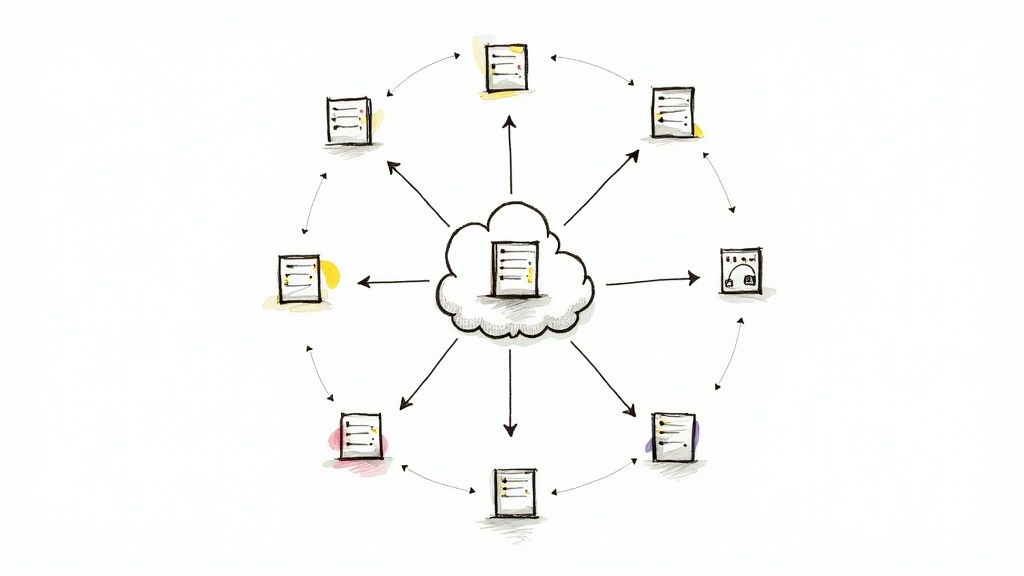
    Image

    As the diagram illustrates, horizontal scaling—unlocked by stateless design—is the definitive strategy for building cost-effective, fault-tolerant systems designed for high-concurrency workloads.

    Decoupling with Asynchronous Communication

    The second foundational pillar is the communication pattern between services. Tightly coupled, synchronous request/response calls (e.g., Service A makes a REST call to Service B and blocks until it gets a response) create a brittle chain of dependencies. If the Payment service experiences high latency, the Order service is left waiting, consuming resources and risking a timeout. This is a classic recipe for cascading failures.

    Asynchronous communication, implemented via a message broker like Kafka or RabbitMQ, severs this direct dependency.

    Instead of a blocking call, the Order service publishes a PaymentRequested event to a message queue. The Payment service, as a consumer, processes messages from that queue at its own pace. This creates a temporal decoupling and acts as a buffer, absorbing traffic spikes and allowing services to operate independently. For a deeper technical dive into these concepts, explore various https://opsmoon.com/blog/microservices-architecture-design-patterns.

    This architectural shift is a major industry trend. The microservices orchestration market was valued at USD 4.7 billion in 2024 and is projected to reach USD 72.3 billion by 2037, growing at a 23.4% CAGR. This reflects a global move towards building distributed systems designed for resilience and scale.

    Finally, a scalable architecture demands a clean codebase. It's critical to implement strategies to reduce technical debt, as unmanaged complexity will inevitably impede your ability to scale, regardless of the underlying infrastructure.

    Implementing Effective Autoscaling Strategies

    Image

    Effective autoscaling is not merely about increasing instance counts when CPU utilization exceeds a threshold. That is a reactive, lagging indicator of load. A truly effective scaling strategy is intelligent and proactive, responding to metrics that directly reflect business activity and service health.

    This requires configuring your system to scale based on application-specific metrics. For a video transcoding service, the key metric might be the number of jobs in a RabbitMQ queue. For a real-time bidding API, it could be p99 latency. The objective is to align resource allocation directly with the workload, ensuring you scale precisely when needed.

    Moving Beyond Basic CPU Metrics

    Relying solely on CPU-based scaling is a common but flawed approach. A service can be completely saturated with requests while its CPU utilization remains low if it is I/O-bound, waiting on a database or a downstream API call. To scale effectively, you must leverage custom, application-aware metrics.

    Here are several more effective scaling triggers:

    • Queue Length: For services that process tasks from a message queue like RabbitMQ or AWS SQS, the number of messages awaiting processing is a direct measure of backlog. When SQS's ApproximateNumberOfMessagesVisible metric surpasses a defined threshold, it is an unambiguous signal to scale out consumer instances.
    • Request Latency: Scaling based on p99 latency directly protects the user experience. For example, if the 99th percentile response time for a critical /api/v1/checkout endpoint exceeds a 500ms Service Level Objective (SLO), an autoscaling event can be triggered to add capacity and reduce latency.
    • Active Connections: For services managing stateful connections, such as a WebSocket-based chat service, the number of active connections per instance is a direct and accurate measure of load.

    Using these application-specific metrics enables more intelligent and responsive scaling decisions that are directly tied to user-perceived performance.

    Configuring the Kubernetes Horizontal Pod Autoscaler

    The Kubernetes Horizontal Pod Autoscaler (HPA) is the primary tool for implementing these strategies. A naive configuration using only minReplicas and maxReplicas is insufficient. Strategic configuration is what distinguishes a fragile system from a resilient one.

    Consider this practical HPA manifest for a service processing messages from a custom queue, exposed via a Prometheus metric:

    apiVersion: autoscaling/v2
    kind: HorizontalPodAutoscaler
    metadata:
      name: message-processor-hpa
    spec:
      scaleTargetRef:
        apiVersion: apps/v1
        kind: Deployment
        name: message-processor
      minReplicas: 3
      maxReplicas: 20
      metrics:
      - type: Pods
        pods:
          metric:
            name: queue_messages_per_pod
          target:
            type: AverageValue
            averageValue: "10"
    

    In this configuration, the HPA targets an average of 10 messages per pod. If the total queue length jumps to 100, the HPA will scale the deployment up to 10 pods to process the backlog efficiently. This is far more responsive than waiting for CPU utilization to increase. For a more detailed walkthrough, consult our guide on autoscaling in Kubernetes.

    Pro Tip: Set minReplicas to handle baseline traffic to ensure availability. The maxReplicas value should be a hard ceiling determined not just by budget, but also by the capacity of downstream dependencies like your database connection pool.

    Preventing Thrashing and Getting Proactive

    A common autoscaling anti-pattern is "thrashing," where the autoscaler rapidly scales pods up and down in response to oscillating metrics. This is inefficient and can destabilize the system. To prevent this, configure cooldown periods, or stabilization windows.

    The Kubernetes HPA includes configurable scaling behaviors. For instance, you can define a scaleDown stabilization window of 5 minutes (stabilizationWindowSeconds: 300). This instructs the HPA to wait five minutes after a scale-down event before considering another, preventing overreactions to transient dips in load.

    For predictable traffic patterns, such as a holiday sales event, reactive scaling is insufficient. This is where predictive scaling becomes valuable. Tools like AWS Auto Scaling can use machine learning models trained on historical data to forecast future demand and provision capacity before the traffic surge occurs. This shifts the system from being merely reactive to truly proactive, ensuring resources are ready the moment users need them.

    Mastering Service Discovery and Load Balancing

    Image

    As you scale out, service instances become ephemeral, with IP addresses changing constantly. Hardcoding network locations is therefore impossible. This is the problem that service discovery solves, acting as a dynamic, real-time registry for your entire architecture.

    Without a robust service discovery mechanism, autoscaled services are unable to communicate. Once discoverable, the next challenge is distributing traffic intelligently to prevent any single instance from becoming a bottleneck. This is the role of load balancing, which works in concert with service discovery to build a resilient, high-performance system.

    Choosing Your Service Discovery Pattern

    There are two primary patterns for service discovery, and the choice has significant architectural implications.

    • Client-Side Discovery: The client service is responsible for discovering downstream service instances. It queries a service registry like Consul or Eureka, retrieves a list of healthy instances, and then applies its own client-side load-balancing logic to select one. This pattern provides granular control but increases the complexity of every client application.

    • Server-Side Discovery: This is the standard approach in modern container orchestration platforms like Kubernetes. The client sends its request to a stable virtual IP or DNS name (e.g., payment-service.default.svc.cluster.local). The platform intercepts the request and routes it to a healthy backend pod. The discovery logic is completely abstracted from the application code, simplifying development.

    For most modern applications, particularly those deployed on Kubernetes, server-side discovery is the pragmatic choice. It decouples the application from the discovery mechanism, resulting in leaner, more maintainable services. Client-side discovery is typically reserved for legacy systems or specialized use cases requiring custom routing logic not supported by the platform.

    Implementing Intelligent Load Balancing Algorithms

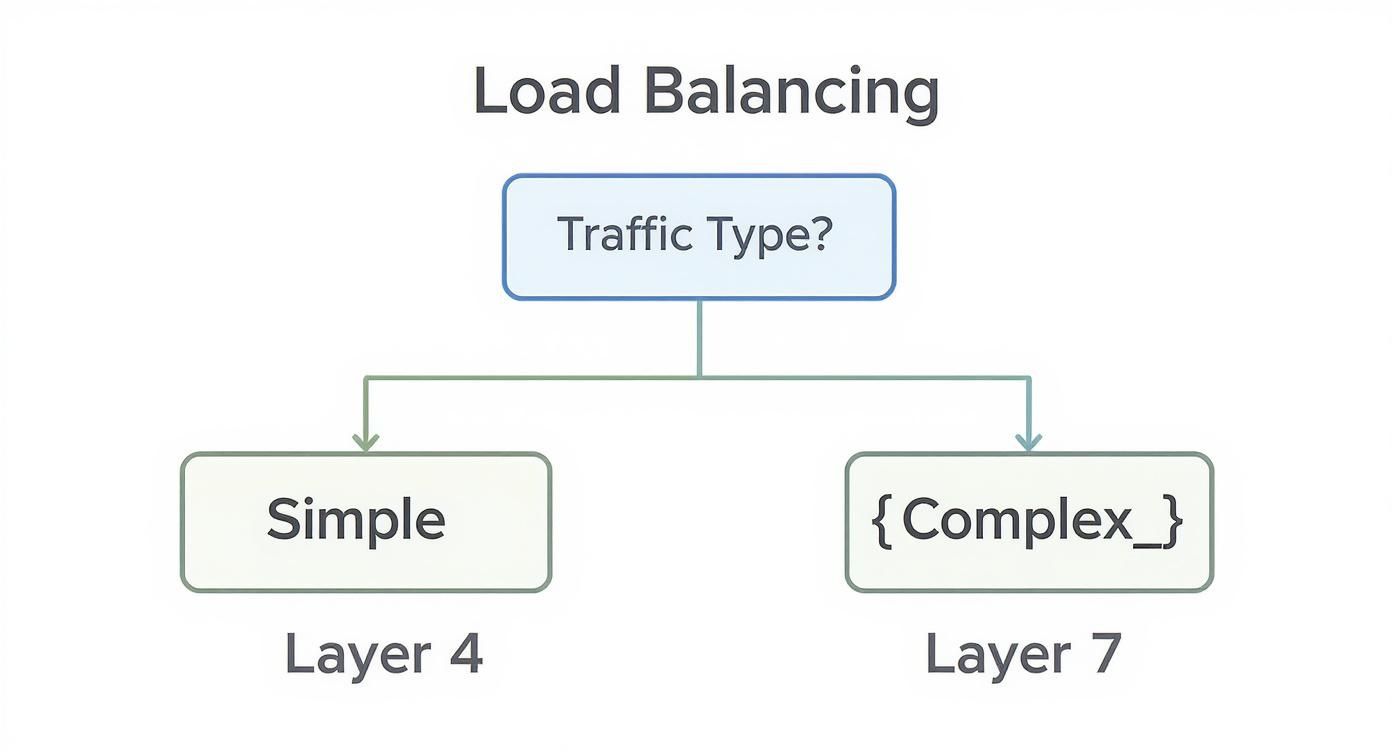
    Once a request is routed, a load balancer selects a specific backend instance. The default round-robin algorithm, while simple, is often suboptimal for real-world workloads.

    Different algorithms are suited for different use cases. A Least Connections algorithm is highly effective for services with long-lived connections. It directs new requests to the instance with the fewest active connections, ensuring a more even distribution of load.

    Another powerful technique is Weighted Routing. This allows you to distribute traffic across different service versions by percentage, which is fundamental for implementing canary releases. For example, you can route 95% of traffic to a stable v1.0 and 5% to a new v1.1 for production testing. Mastering these techniques is critical; you can explore hands-on tutorials in guides on load balancing configuration.

    A common mistake is applying a single load-balancing strategy across all services. A stateless API may perform well with round-robin, but a stateful, connection-intensive service requires a more intelligent algorithm like least connections or IP hashing to maintain session affinity.

    The adoption of these scalable architectures is a major market shift. The global cloud microservices market reached USD 1.84 billion in 2024 and is projected to grow to USD 8.06 billion by 2032. This is driven by the fact that 85% of enterprises are now leveraging microservices for increased agility. More data on this trend is available in this rapid market expansion on amraandelma.com.

    Using a Service Mesh for Advanced Scalability

    Image

    As your microservices architecture grows, inter-service communication becomes a complex web of dependencies where a single slow service can trigger a cascading failure. At this scale, managing network-level concerns like retries, timeouts, and mTLS within each application's code becomes an untenable source of boilerplate, inconsistency, and technical debt.

    A service mesh like Istio or Linkerd addresses this challenge by abstracting network communication logic out of your applications and into a dedicated infrastructure layer.

    It operates by injecting a lightweight network proxy, typically Envoy, as a "sidecar" container into each of your service's pods. This sidecar intercepts all inbound and outbound network traffic, enabling centralized control over traffic flow, resilience policies, and security without modifying application code.

    Offloading Resilience Patterns

    A primary benefit of a service mesh is offloading resilience patterns. Instead of developers implementing retry logic in the Order service for calls to the Payment service, you configure these policies declaratively in the service mesh control plane.

    During a high-traffic incident where the Inventory service becomes overloaded, the service mesh can automatically:

    • Implement Smart Retries: Retry failed requests with exponential backoff and jitter, giving the overloaded service time to recover without being overwhelmed by a thundering herd of retries.
    • Enforce Timeouts: Apply consistent, fine-grained timeouts to prevent a calling service from blocking indefinitely on a slow downstream dependency.
    • Trip Circuit Breakers: After a configured number of consecutive failures, the mesh can "trip a circuit," immediately failing subsequent requests to the unhealthy service instance for a cooldown period. This isolates the failure and prevents it from cascading.

    This provides a self-healing capability that is essential for maintaining stability in a complex production environment.

    By moving this logic to the infrastructure layer, you empower platform engineering teams to manage system-wide resilience policies. This allows application developers to focus exclusively on business logic, accelerating development velocity. This separation of concerns is fundamental to scaling engineering teams alongside your services.

    Implementing Canary Deployments with Precision

    Deploying new code in a large-scale distributed system carries inherent risk. A service mesh de-risks this process by enabling precise traffic management for canary deployments.

    When releasing a new recommendations-v2 service, you can use the service mesh's traffic-splitting capabilities to define routing rules with surgical precision.

    A typical canary release workflow would be:

    1. Route 99% of traffic to the stable recommendations-v1 and 1% to the new recommendations-v2.
    2. Monitor key performance indicators (KPIs) for v2, such as error rates and p99 latency, in a metrics dashboard.
    3. If KPIs remain within acceptable thresholds, incrementally increase the traffic percentage to v2—to 10%, then 50%, and finally 100%.

    If the new version exhibits any regressions, you can instantly revert traffic back to the stable version via a single configuration change. This level of control transforms deployments from high-risk events into routine, low-impact operations, enabling rapid and safe innovation at scale.

    Monitoring Your Scaled Microservices Performance

    Operating a scaled microservices architecture without deep observability is untenable. Without robust monitoring, you are guessing about performance and resource utilization. With hundreds of ephemeral instances, you require comprehensive visibility to diagnose issues effectively. This is achieved through the three pillars of observability: metrics, logs, and traces.

    Without this trifecta, debugging is a slow, painful process. A single user request may traverse numerous services, and pinpointing a latency bottleneck without proper tooling is nearly impossible. Effective monitoring transforms this chaos into a data-driven process for identifying and resolving issues.

    Beyond Averages: The Metrics That Matter

    Aggregate metrics like average CPU utilization are often misleading in a distributed system. A service can be failing for a specific subset of users while its overall CPU usage appears normal. You must track metrics that directly reflect service health and user experience.

    Tools like Prometheus excel at collecting these high-cardinality, application-level metrics:

    • p99 Latency: This tracks the response time for the slowest 1% of requests. While average latency may be acceptable, a high p99 latency indicates that a significant number of users are experiencing poor performance. It is a critical metric for defining and monitoring Service Level Objectives (SLOs).
    • Request Queue Saturation: For asynchronous services, this measures the depth of the message queue. A persistently growing queue is a leading indicator that consumer services cannot keep pace with producers, signaling a need to scale out.
    • Error Rate per Endpoint: Do not rely on a single, system-wide error rate. Segment error rates by API endpoint. A spike in HTTP 500 errors on /api/checkout is a critical incident, whereas intermittent errors on a non-critical endpoint may be less urgent.

    The goal is to transition from reactive infrastructure monitoring ("the pod is down") to proactive application performance monitoring ("the checkout latency SLO is at risk"). When alerts are tied to user-impacting behavior, you can resolve problems before they become outages.

    To guide your monitoring strategy, here are essential metrics across the three pillars of observability.

    Key Metrics for Monitoring Scaled Microservices

    Observability Pillar Metric to Track Why It's Critical for Scaling Example Tool
    Metrics p99 Latency Reveals the worst-case user experience, which averages hide. Essential for SLOs. Prometheus
    Metrics Error Rate (per service/endpoint) Pinpoints specific functionalities that are failing as you add more load or instances. Grafana
    Metrics Saturation (e.g., Queue Depth) A leading indicator of a bottleneck; shows when a service can't keep up with demand. AWS CloudWatch
    Logging Log Volume & Error Count Spikes can indicate a widespread issue or a misbehaving service flooding the system. Kibana (ELK Stack)
    Logging Log Correlation (by trace_id) Groups all logs for a single request, making cross-service debugging possible. Logz.io
    Tracing Trace Duration Shows the end-to-end time for a request across all services involved. Jaeger
    Tracing Span Errors & Latency Drills down into the performance of individual operations within a service. Datadog
    Tracing Service Dependency Graph Visually maps how services interact, helping identify unexpected dependencies or bottlenecks. OpenTelemetry Collector

    This table provides a robust starting point for building dashboards that deliver actionable insights, not just noise.

    Making Sense of the Noise with Structured Logging

    In a scaled environment, logs are emitted from hundreds of ephemeral instances per second. Manual inspection via tail -f is impossible. Structured logging is essential for turning this high-volume data stream into a searchable, useful resource. Services must emit logs in a machine-readable format like JSON, not unstructured text.

    A well-formed structured log entry includes key-value pairs:

    {
      "timestamp": "2024-10-27T10:00:05.123Z",
      "level": "error",
      "service": "payment-service",
      "trace_id": "a1b2c3d4-e5f6-7890-1234-567890abcdef",
      "message": "Credit card processor timeout",
      "duration_ms": 2500,
      "customer_id": "cust-9876"
    }
    

    This format enables a centralized logging platform like the ELK Stack (Elasticsearch, Logstash, Kibana) to index the data. You can then execute powerful queries, such as "Show me all error logs from the payment-service where duration_ms > 2000." This transforms logging from a passive data store into an active diagnostic tool.

    Pinpointing Bottlenecks with Distributed Tracing

    Distributed tracing is the definitive tool for debugging performance in a microservices architecture. It allows you to visualize the entire lifecycle of a request as it propagates through multiple services. This is typically implemented using tools like Jaeger and open standards like OpenTelemetry.

    When a user reports that a page is slow, a trace provides a waterfall diagram showing the time spent in each service and at each "span" (a single operation). You can immediately see how much time was spent in the API Gateway, the Auth Service, the Order Service, and the database. You might discover that the Order Service is fast, but it spends 90% of its time waiting for a slow response from a downstream Product Service. The bottleneck is instantly identified.

    This level of insight is non-negotiable for effectively operating microservices at scale. It's why companies using this architecture report performance improvements of 30-50%, according to McKinsey. With 74% of organizations using microservices in 2024, the ability to debug them efficiently is a key differentiator. More data is available on microservices market trends on imarcgroup.com. Without tracing, you are not debugging; you are guessing.

    Frequently Asked Questions About Scaling Microservices

    Even with a solid plan, scaling microservices introduces complex challenges. Here are technical answers to some of the most common questions that arise.

    https://www.youtube.com/embed/TS6MaeK1w9w

    How Do You Handle Database Scaling?

    Database scaling is often the primary bottleneck in a microservices architecture. While stateless services can scale horizontally with ease, the stateful database layer requires a more deliberate strategy.

    Initially, vertical scaling ("scaling up") by adding more CPU, RAM, or faster storage to the database server is a common first step. This approach is simple but has a finite ceiling and creates a single point of failure.

    For true scalability, you must eventually pursue horizontal scaling ("scaling out").

    Key horizontal scaling strategies include:

    • Read Replicas: This is the first and most impactful step for read-heavy workloads. You create read-only copies of your primary database. Write operations go to the primary, while read operations (often 80-90% of traffic) are distributed across the replicas. This significantly reduces the load on the primary database instance.
    • Sharding: This is the strategy for massive-scale applications. Data is partitioned horizontally across multiple, independent databases (shards). For example, a customers table could be sharded by customer_id ranges or by region. Each shard is a smaller, more manageable database, enabling near-infinite horizontal scaling. The trade-off is a significant increase in application logic complexity and operational overhead.
    • CQRS (Command Query Responsibility Segregation): This advanced architectural pattern separates the models for writing data (Commands) and reading data (Queries). You might use a normalized relational database for writes and a separate, denormalized read model (e.g., in Elasticsearch) optimized for specific query patterns. This allows you to scale and optimize the read and write paths independently.

    Database scaling is an evolutionary process. Start with read replicas to handle initial growth. Only adopt the complexity of sharding or CQRS when your data volume and write throughput absolutely demand it.

    What Is the Difference Between Horizontal and Vertical Scaling?

    This distinction is fundamental to microservices architecture.

    Vertical scaling ("scaling up") means increasing the resources of a single machine (e.g., more CPU cores, more RAM). It is simple to implement as it requires no application code changes, but it is limited by the maximum size of a single server and is not fault-tolerant.

    Horizontal scaling ("scaling out") means adding more machines or instances to a resource pool. This is the core principle behind cloud-native design. Stateless services are designed specifically for this, allowing you to add identical instances to handle increased load. This approach provides near-limitless scalability and inherent fault tolerance.

    When Should You Implement a Service Mesh?

    A service mesh is a powerful but complex tool. It should not be adopted on day one. Implement a service mesh like Istio or Linkerd only when the problems it solves are more painful than the operational complexity it introduces.

    It's time to consider a service mesh when:

    • Observability becomes unmanageable: You can no longer easily trace a request across your 10+ services to diagnose latency issues. A service mesh provides this visibility out of the box.
    • Security becomes a major concern: You need to enforce mTLS (mutual TLS) between all services, and managing certificates and configurations manually has become brittle and error-prone.
    • You require advanced traffic control: You need to implement canary releases, A/B testing, or circuit breakers without embedding that complex logic into every application.

    A service mesh is a tool for managing complexity at scale. For smaller systems, the native capabilities of an orchestrator like Kubernetes are often sufficient.


    At OpsMoon, we specialize in designing, building, and managing the robust infrastructure required to scale microservices effectively. Our DevOps experts can help you implement a scalable architecture, set up advanced observability, and automate your deployments to ensure your system is prepared for growth. Get in touch with us at opsmoon.com for a free work planning session and let's engineer your path to scale.

  • What Is Continuous Integration? A Technical Guide for Developers

    What Is Continuous Integration? A Technical Guide for Developers

    Continuous Integration (CI) is a software development practice where developers frequently merge their code changes into a central version control repository. Following each merge, an automated build and test sequence is triggered. The primary goal is to provide rapid feedback by catching integration errors as early as possible. This practice avoids the systemic issues of "integration hell," where merging large, divergent feature branches late in a development cycle leads to complex conflicts and regressions.

    Every git push to the main or feature branch initiates a pipeline that compiles the code, runs a suite of automated tests (unit, integration, etc.), and reports the results. This automated feedback loop allows developers to identify and fix bugs quickly, often within minutes of committing the problematic code.

    What Continuous Integration Really Means

    Technically, CI is a workflow automation strategy designed to mitigate the risks of merging code from multiple developers. Without CI, developers might work in isolated feature branches for weeks. When the time comes to merge, the git merge or git rebase operation can result in a cascade of conflicts that are difficult and time-consuming to resolve. The codebase may enter a broken state for days, blocking further development.

    CI fundamentally changes this dynamic. Developers integrate small, atomic changes frequently—often multiple times a day—into a shared mainline, typically main or develop.

    The moment a developer pushes code to a shared repository like Git, a CI server (e.g., Jenkins, GitLab Runner, GitHub Actions runner) detects the change via a webhook. It then executes a predefined pipeline script. This script orchestrates a series of jobs: it spins up a clean build environment (often a Docker container), clones the repository, installs dependencies (npm install, pip install -r requirements.txt), compiles the code, and runs a battery of tests. If any step fails, the pipeline halts and immediately notifies the team.

    The Power Of The Feedback Loop

    The immediate, automated feedback loop is the core technical benefit of CI. A developer knows within minutes if their latest commit has introduced a regression. Because the changeset is small and the context is fresh, debugging and fixing the issue is exponentially faster than dissecting weeks of accumulated changes. This disciplined practice is engineered to achieve specific technical goals:

    • Reduce Integration Risk: Merging small, atomic commits dramatically reduces the scope and complexity of code conflicts, making them trivial to resolve.
    • Improve Code Quality: Automated test suites act as a regression gate, catching bugs the moment they are introduced and preventing them from propagating into the main codebase.
    • Increase Development Velocity: By automating integration and testing, developers spend less time on manual debugging and merge resolution, freeing them up to focus on building features.

    To implement CI effectively, teams must adhere to a set of core principles that define the practice beyond just the tooling.

    Core Principles Of Continuous Integration At A Glance

    Principle Description Technical Goal
    Maintain a Single Source Repository All source code, build scripts (Dockerfile, Jenkinsfile), and infrastructure-as-code definitions (terraform, ansible) reside in a single version control system. Establish a canonical source of truth, enabling reproducible builds and auditable changes for the entire system.
    Automate the Build The process of compiling source code, linking libraries, and packaging the application into a deployable artifact (e.g., a JAR file, a Docker image) is fully scripted and repeatable. Ensure build consistency across all environments and eliminate "works on my machine" issues.
    Make the Build Self-Testing The build script is instrumented to automatically execute a comprehensive suite of tests (unit, integration, etc.) against the newly built artifact. Validate the functional correctness of every code change and prevent regressions from being merged into the mainline.
    Commit Early and Often Developers integrate their work into the mainline via short-lived feature branches and pull requests multiple times per day. Minimize the delta between branches, which keeps integrations small, reduces conflict complexity, and accelerates the feedback loop.
    Keep the Build Fast The entire CI pipeline, from code checkout to test completion, should execute in under 10 minutes. Provide rapid feedback to developers, allowing them to remain in a productive state and fix issues before context-switching.
    Everyone Can See the Results The status of every build is transparent and visible to the entire team, typically via a dashboard or notifications in a chat client like Slack. Promote collective code ownership and ensure that a broken build (red status) is treated as a high-priority issue for the whole team.

    These principles create a system where the main branch is always in a stable, passing state, ready for deployment at any time.

    Why CI Became an Essential Practice

    To understand the necessity of Continuous Integration, one must consider the software development landscape before its adoption—a state often referred to as "merge hell." In this paradigm, development teams practiced branch-based isolation. A developer would create a long-lived feature branch (feature/new-checkout-flow) and work on it for weeks or months.

    This isolation led to a high-stakes, high-risk integration phase. When the feature was "complete," merging it back into the main branch was a chaotic and unpredictable event. The feature branch would have diverged so significantly from main that developers faced a wall of merge conflicts, subtle logical bugs, and broken dependencies. Resolving these issues was a manual, error-prone process that could halt all other development activities for days.

    This wasn't just inefficient; it was technically risky. The longer the branches remained separate, the greater the semantic drift between them, increasing the probability of a catastrophic merge that could destabilize the entire application.

    The Origins of a Solution

    The concept of frequent integration has deep roots in software engineering, but it was crystallized by the Extreme Programming (XP) community. While Grady Booch is credited with first using the term in 1994, it was Kent Beck and his XP colleagues who defined CI as the practice of integrating multiple times per day to systematically eliminate the "integration problem." For a deeper dive, you can explore a comprehensive history of CI to see how these concepts evolved.

    They posited that the only way to make integration a non-event was to make it a frequent, automated, and routine part of the daily workflow.

    A New Rule for Rapid Feedback

    One of the most impactful heuristics to emerge from this movement was the "ten-minute build," championed by Kent Beck. His reasoning was pragmatic: if the feedback cycle—from git push to build result—takes longer than about ten minutes, developers will context-switch to another task. This delay breaks the flow of development and defeats the purpose of rapid feedback. A developer who has already moved on is far less efficient at fixing a bug than one who is notified of the failure while the code is still fresh in their mind.

    This principle forced teams to optimize their build processes and write efficient test suites. Continuous Integration was not merely a new methodology; it was a pragmatic engineering solution to a fundamental bottleneck in collaborative software development. It transformed integration from a feared, unpredictable event into a low-risk, automated background process.

    Anatomy of a Modern CI Pipeline

    Let's dissect the technical components of a modern CI pipeline. This automated workflow is a sequence of stages that validates source code and produces a tested artifact. While implementations vary, the core architecture is designed for speed, reliability, and repeatability.

    The process is initiated by a git push command from a developer's local machine to a remote repository hosted on a platform like GitHub or GitLab.

    This push triggers a webhook, an HTTP POST request sent from the Git hosting service to a predefined endpoint on the CI server. The webhook payload contains metadata about the commit (author, commit hash, branch name). The CI server (Jenkins, GitLab CI, GitHub Actions) receives this payload, parses it, and queues a new pipeline run based on a configuration file checked into the repository (e.g., Jenkinsfile, .gitlab-ci.yml, .github/workflows/main.yml).

    The Build and Test Sequence

    The CI runner first provisions a clean, ephemeral environment for the build, typically a Docker container specified in the pipeline configuration. This isolation ensures that each build is reproducible and not contaminated by artifacts from previous runs.

    The runner then executes the steps defined in the pipeline script:

    1. Compile and Resolve Dependencies: The build agent compiles the source code into an executable artifact. Concurrently, it fetches all required libraries and packages from a repository manager like Nexus or Artifactory (or public ones like npm or Maven Central) using a dependency manifest (package.json, pom.xml). This step fails if there are compilation errors or missing dependencies.
    2. Execute Unit Tests: This is the first validation gate, designed for speed. The pipeline executes unit tests using a framework like JUnit or Jest. These tests run in memory and validate individual functions and classes in isolation, providing feedback on the core logic in seconds. A code coverage tool like JaCoCo or Istanbul is often run here to ensure test thoroughness.
    3. Perform Static Analysis: The pipeline runs static analysis tools (linters) like SonarQube, ESLint, or Checkstyle. These tools scan the source code—without executing it—to detect security vulnerabilities (e.g., SQL injection), code smells, stylistic inconsistencies, and potential bugs. This stage provides an early quality check before more expensive tests are run.

    This visual breaks down the core stages—building, testing, and integrating—that form the backbone of any solid CI pipeline.

    As you can see, each stage acts as a quality gate. A failure at any stage halts the pipeline and reports an error, preventing defective code from progressing.

    The Verdict: Green or Red

    If the code passes these initial stages, the pipeline proceeds to more comprehensive testing. Integration tests are executed next. These tests verify the interactions between different components or services. For example, they might spin up a test database in a separate container and confirm that the application can correctly read and write data.

    The entire pipeline operates on a binary outcome. If every stage—from compilation to the final integration test—completes successfully, the build is marked as 'green' (pass). This signals that the new code is syntactically correct, functionally sound, and safe to merge into the mainline.

    Conversely, if any stage fails, the pipeline immediately stops and the build is flagged as 'red' (fail). The CI server sends a notification via Slack, email, or other channels, complete with logs and error messages that pinpoint the exact point of failure.

    This immediate, precise feedback is the core value proposition of CI. It allows developers to diagnose and fix regressions within minutes. To optimize this process, it's crucial to follow established CI/CD pipeline best practices. This rapid cycle ensures the main codebase remains stable and deployable.

    Best Practices for Implementing Continuous Integration

    Effective CI implementation hinges more on disciplined engineering practices than on specific tools. Adopting these core habits transforms your pipeline from a simple build automator into a powerful quality assurance and development velocity engine.

    It begins with a single source repository. All assets required to build and deploy the project—source code, Dockerfiles, Jenkinsfiles, Terraform scripts, database migration scripts—must be stored and versioned in one Git repository. This practice eliminates ambiguity and ensures that any developer can check out a single repository and reproduce the entire build from a single, authoritative source.

    Next, the build process must be fully automated. A developer should be able to trigger the entire build, test, and package sequence with a single command on their local machine (e.g., ./gradlew build). The CI server simply executes this same command. Any manual steps in the build process introduce inconsistency and are a primary source of "works on my machine" errors.

    Make Every Build Self-Testing

    A build artifact that has been compiled but not tested is an unknown quantity. It might be syntactically correct, but its functional behavior is unverified. For this reason, every automated build must be self-testing. This means embedding a comprehensive suite of automated tests directly into the build script.

    A successful green build should be a strong signal of quality, certifying that the new code not only compiles but also functions as expected and does not introduce regressions. This test suite is the safety net that makes frequent integration safe.

    Commit Frequently and Keep Builds Fast

    To avoid "merge hell," developers must adopt the practice of committing small, atomic changes to the main branch at least daily. This ensures that the delta between a developer's local branch and the main branch is always small, making integrations low-risk and easy to debug.

    This workflow is only sustainable if the feedback loop is fast. A build that takes an hour to run encourages developers to batch their commits, defeating the purpose of CI. The target for the entire pipeline execution time should be under 10 minutes. Achieving this requires careful optimization of test suites, parallelization of build jobs, and effective caching of dependencies and build layers. Explore established best practices for continuous integration to learn specific optimization techniques.

    A broken build on the main branch is a "stop-the-line" event. It becomes the team's highest priority. No new work should proceed until the build is fixed. This collective ownership prevents the accumulation of technical debt and ensures the codebase remains in a perpetually stable state.

    As software architect Martin Fowler notes, the effort required for integration is non-linear. Merging a change set that is twice as large often requires significantly more than double the effort to resolve. Frequent, small integrations are the key to managing this complexity. You can dig deeper into his thoughts on the complexities of software integration and how CI provides a direct solution.

    Choosing Your Continuous Integration Tools

    Selecting the right CI tool is a critical architectural decision that directly impacts developer workflow and productivity. The market offers a wide range of solutions, from highly customizable self-hosted servers to managed SaaS platforms. The optimal choice depends on factors like team size, technology stack, security requirements, and operational capacity.

    CI tools can be broadly categorized as self-hosted or Software-as-a-Service (SaaS). A self-hosted tool like Jenkins provides maximum control over the build environment, security policies, and network configuration. This control is essential for organizations with strict compliance needs but comes with the operational overhead of maintaining, scaling, and securing the CI server and its build agents.

    In contrast, SaaS solutions like GitHub Actions or CircleCI abstract away the infrastructure management. Teams can define their pipelines and let the provider handle the provisioning, scaling, and maintenance of the underlying build runners.

    Self-Hosted Power vs. SaaS Simplicity

    A significant technical differentiator is the pipeline configuration method. Legacy CI tools often relied on web-based UIs for configuring build jobs. This "click-ops" approach is difficult to version, audit, or replicate, making it a brittle and opaque way to manage CI at scale.

    Modern CI systems have standardized on "pipeline as code." This paradigm involves defining the entire build, test, and deployment workflow in a declarative YAML or groovy file (e.g., .gitlab-ci.yml, Jenkinsfile) that is stored and versioned alongside the application code in the Git repository. This makes the CI process transparent, version-controlled, and easily auditable.

    The level of integration with the source code management (SCM) system is another critical factor. Solutions like those from platforms like GitLab or GitHub Actions offer a seamless experience because the CI/CD components are tightly integrated with the SCM. This native integration simplifies setup, permission management, and webhook configuration, reducing the friction of getting started.

    This integration advantage is a key driver of tool selection. A study on CI tool adoption trends revealed that the project migration rate between CI tools peaked at 12.6% in 2021, with many teams moving to platforms that offered a more integrated SCM and CI experience. This trend continues, with a current migration rate of approximately 8% per year, highlighting the ongoing search for more efficient, developer-friendly workflows.

    Comparison of Popular Continuous Integration Tools

    This table provides a technical comparison of the leading CI platforms, highlighting their core architectural and functional differences.

    Tool Hosting Model Configuration Key Strength
    Jenkins Self-Hosted UI or Jenkinsfile (Groovy) Unmatched plugin ecosystem for ultimate flexibility and extensibility. Can integrate with virtually any tool or system.
    GitHub Actions SaaS YAML Deep, native integration with the GitHub ecosystem. A marketplace of reusable actions allows for composing complex workflows easily.
    GitLab CI SaaS or Self-Hosted YAML A single, unified DevOps platform that covers the entire software development lifecycle, from issue tracking and SCM to CI/CD and monitoring.
    CircleCI SaaS YAML High-performance build execution with advanced features like parallelism, test splitting, and sophisticated caching mechanisms for fast feedback.

    Ultimately, the "best" tool is context-dependent. A startup may benefit from the ease of use and generous free tier of GitHub Actions. A large enterprise with bespoke security needs may require the control and customizability of a self-hosted Jenkins instance. The objective is to select a tool that aligns with your team's technical requirements and operational philosophy.

    How CI Powers the DevOps Lifecycle

    Continuous Integration is not an isolated practice; it is the foundational component of a modern DevOps toolchain. It serves as the entry point to the entire software delivery pipeline. Without a reliable CI process, subsequent automation stages like Continuous Delivery and Continuous Deployment are built on an unstable foundation.

    CI's role is to connect development with operations by providing a constant stream of validated, integrated software artifacts. It is the bridge between the "dev" and "ops" sides of the DevOps methodology.

    It's crucial to understand the distinct roles CI and CD play in the automation spectrum.

    Continuous Integration is the first automated stage. Its sole responsibility is to verify that code changes from multiple developers can be successfully merged, compiled, and tested. The output of a successful CI run is a versioned, tested build artifact (e.g., a Docker image, a JAR file) that is proven to be in a "good state."

    From Integration to Delivery

    Once CI produces a validated artifact, the Continuous Delivery/Deployment (CD) stages can proceed with confidence.

    • Continuous Integration (CI): Automates the build and testing of code every time a change is pushed to the repository. The goal is to produce a build artifact that has passed all automated quality checks.

    • Continuous Delivery (CD): This practice extends CI by automatically deploying every validated artifact from the CI stage to a staging or pre-production environment. The artifact is always in a deployable state, but the final promotion to the production environment requires a manual trigger (e.g., a button click). This allows for final manual checks like user acceptance testing (UAT).

    • Continuous Deployment (CD): This is the ultimate level of automation. It extends Continuous Delivery by automatically deploying every change that passes all automated tests directly to the production environment without any human intervention. This enables a high-velocity release cadence where changes can reach users within minutes of being committed.

    The progression is logical and sequential. You cannot have reliable Continuous Delivery without a robust CI process that filters out faulty code. CI acts as the critical quality gate, ensuring that only stable, well-tested code enters the deployment pipeline, making the entire software delivery process faster, safer, and more predictable.

    Common Questions About Continuous Integration

    As development teams adopt continuous integration, several technical and practical questions consistently arise. Clarifying these points is essential for a successful implementation.

    So, What's the Real Difference Between CI and CD?

    CI and CD are distinct but sequential stages in the software delivery pipeline.

    Continuous Integration (CI) is the developer-facing practice focused on merging and testing code. Its primary function is to validate that new code integrates correctly with the existing codebase. The main output of CI is a proven, working build artifact. It answers the question: "Is the code healthy?"

    Continuous Delivery/Deployment (CD) is the operations-facing practice focused on releasing that artifact.

    • Continuous Delivery takes the artifact produced by CI and automatically deploys it to a staging environment. The code is always ready for release, but a human makes the final decision to deploy to production. It answers the question: "Is the code ready to be released?"
    • Continuous Deployment automates the final step, pushing every passed build directly to production. It fully automates the release process.

    In short: CI builds and tests the code; CD releases it.

    How Small Should a Commit Actually Be?

    There is no strict line count, but the guiding principle is atomicity. Each commit should represent a single, logical change. For example, "Fix bug #123" or "Add validation to the email field." A good commit is self-contained and has a clear, descriptive message explaining its purpose.

    The technical goal is to create a clean, reversible history and simplify debugging. If a CI pipeline fails, an atomic commit allows a developer to immediately understand the scope of the change that caused the failure. When a commit contains multiple unrelated changes, pinpointing the root cause becomes significantly more difficult.

    Committing large, multi-day work bundles in a single transaction is an anti-pattern that recreates the problems CI was designed to solve.

    Can We Do CI Without Automated Tests?

    Technically, you can set up a server that automatically compiles code on every commit. However, this is merely build automation, not Continuous Integration.

    The core value of CI is the rapid feedback on code correctness provided by automated tests. A build that passes without tests only confirms that the code is syntactically valid (it compiles). It provides no assurance that the code functions as intended or that it hasn't introduced regressions in other parts of the system.

    Implementing a CI pipeline without a comprehensive, automated test suite is not only missing the point but also creates a false sense of security, leading teams to believe their codebase is stable when it may be riddled with functional bugs.


    At OpsMoon, we specialize in designing and implementing high-performance CI/CD pipelines that accelerate software delivery while improving code quality. Our DevOps experts can help you implement these technical best practices from the ground up.

    Ready to build a more efficient and reliable delivery process? Let's talk. You can book a free work planning session with our team.

  • What is Event Driven Architecture? A Technical Deep-Dive

    What is Event Driven Architecture? A Technical Deep-Dive

    At its core, event-driven architecture (EDA) is a software design pattern where decoupled services communicate by producing and consuming events. An event is an immutable record of a state change that has occurred—a UserRegistered event, an InventoryUpdated notification, or a PaymentProcessed signal.

    This paradigm facilitates the creation of asynchronous and loosely coupled systems, designed to react to state changes in real-time rather than waiting for direct, synchronous commands.

    Shifting from Synchronous Requests to Asynchronous Reactions

    The traditional request-response model is synchronous. A client makes a request to a server (e.g., a GET /user/123 HTTP call) and blocks, waiting for a response. The entire interaction is a single, coupled transaction. If the server is slow or fails, the client is directly impacted. This tight coupling creates bottlenecks and points of failure in distributed systems.

    Event-driven architecture fundamentally inverts this model. Instead of direct commands, services broadcast events to an intermediary known as an event broker. An event producer generates an event and sends it to the broker, then immediately continues its own processing without waiting for a response. Downstream services, known as event consumers, subscribe to specific types of events and react to them asynchronously when they arrive.

    This asynchronous flow is the key to EDA's power. Services are decoupled; they don't need direct knowledge of each other's APIs, locations, or implementation details. One service simply announces a significant state change, and any other interested services can react independently.

    A New Communication Paradigm

    This shift from direct, synchronous remote procedure calls (RPCs) to an asynchronous, message-based model creates loose coupling. The event producer is concerned only with emitting a fact; it has no knowledge of the consumers. Consumers are only concerned with the event payload and its schema, not the producer.

    This decoupling is what grants EDA its exceptional flexibility and resilience. To fully appreciate how these services operate within a larger system, it helps to understand the foundational principles. For a deeper technical exploration, our guide on understanding distributed systems provides critical context on how these components fit together at scale.

    Event-driven architecture is less about services asking "What should I do now?" via imperative commands, and more about them reacting to "Here's a fact about what just happened." This reactive nature is fundamental to building scalable, real-time applications.

    Event Driven vs Request-Response Architecture

    To clarify the technical trade-offs, let's compare the two models directly. The contrast highlights why modern, distributed systems increasingly favor an event-driven approach for inter-service communication.

    Attribute Request-Response Architecture Event Driven Architecture
    Coupling Tightly Coupled: Services require direct knowledge of each other's APIs and network locations. Loosely Coupled: Services are independent, communicating only through the event broker.
    Communication Synchronous: The client blocks and waits for a response, creating temporal dependency. Asynchronous: The producer emits an event and moves on, eliminating temporal dependency.
    Scalability Limited: Scaling a service often requires scaling its direct dependencies due to synchronous blocking. High: Services can be scaled independently based on event processing load.
    Resilience Brittle: Failure in one service can cascade, causing failures in dependent client services. Fault-Tolerant: If a consumer is offline, events are persisted by the broker for later processing.

    The choice is use-case dependent. However, for building complex, scalable, and fault-tolerant distributed systems, the architectural benefits of EDA are compelling.

    Breaking Down the Core Components of EDA

    To understand event-driven architecture from an implementation perspective, we must analyze its fundamental components. Every EDA system is built upon three technical pillars that enable asynchronous, decoupled communication: event producers, event consumers, and the event broker.

    This structure functions like a highly efficient, automated messaging backbone. Each component has a distinct responsibility, and their interaction creates a system that is far more resilient and scalable than direct service-to-service communication.

    The diagram below illustrates the logical separation and data flow, showing how an event travels from its origin (producer) to its destinations (consumers) via the broker.

    Image

    As you can see, the producer and consumer are completely decoupled. Their only point of interaction is the event broker, which acts as a durable intermediary.

    Event Producers: Where It All Begins

    An event producer (also called a publisher or source) is any component within your system—a microservice, an API gateway, a database trigger—that detects a state change. Its sole responsibility is to construct an event message capturing that change and publish it to the event broker.

    The producer's job ends there. It operates on a "fire-and-forget" principle, with no knowledge of which services, if any, will consume the event. This allows the producer to remain simple and focused on its core domain logic.

    Here are a few concrete examples:

    • An e-commerce OrderService publishes an OrderCreated event to a specific topic (e.g., orders) after successfully writing the new order to its database.
    • A UserService emits a UserProfileUpdated event containing the changed fields whenever a user modifies their profile.
    • An IoT sensor in a factory publishes a TemperatureThresholdExceeded event with sensor ID and temperature reading to a high-throughput data stream.

    The producer's only contract is the event's schema. It is not concerned with downstream workflows, which is the cornerstone of a truly decoupled system.

    Event Consumers: The Ones That Listen and Act

    On the other side of the broker is the event consumer (or subscriber). This is any service that has a business need to react to a specific type of event. It subscribes to one or more event topics or streams on the broker and waits for new messages to arrive.

    When a relevant event is delivered, the consumer executes its specific business logic. Critically, the consumer operates independently and has no knowledge of the event's producer.

    A single event can have zero, one, or many consumers. For example, a PaymentProcessed event could be consumed by a ShippingService to initiate order fulfillment, a NotificationService to send a receipt, and an AnalyticsService to update financial dashboards—all processing in parallel.

    This one-to-many, or fan-out, pattern is a key advantage of EDA. New functionality can be added to the system simply by deploying a new consumer that subscribes to an existing event stream, requiring zero changes to the original producer code.

    Event Broker: The Central Nervous System

    The event broker (also known as a message broker or event stream platform) is the durable, highly available middleware that connects producers and consumers. It is the system's asynchronous communication backbone, responsible for reliably routing events from source to destination.

    Technically, the broker performs several critical functions:

    • Ingestion: Provides endpoints (e.g., topics, exchanges) for producers to send events.
    • Filtering and Routing: Examines event metadata (like a topic name or header attributes) to determine which consumers should receive a copy.
    • Delivery: Pushes the event to all subscribed consumers. Most brokers provide persistence, writing events to disk to guarantee delivery even if a consumer is temporarily offline. This durability prevents data loss and enhances system resilience.

    Industry-standard technologies like Apache Kafka and RabbitMQ, along with managed cloud services like AWS EventBridge, fulfill this role. They each have different trade-offs in terms of performance, consistency guarantees, and routing capabilities, but their fundamental purpose is to enable decoupled, asynchronous communication.

    Implementing Common EDA Patterns

    Understanding the components is the first step. The next is to apply proven design patterns to structure event flows in a scalable and resilient manner. These patterns are the architectural blueprints for a successful event-driven system.

    Let's dissect some of the most critical patterns, from basic message routing to advanced state management.

    Event Bus Pattern

    The Event Bus is the simplest implementation. It acts as a central channel where producers broadcast events, and all interested subscribers receive a copy. This pattern is often implemented within a single process or a tightly-coupled set of services.

    The bus itself typically has minimal logic; it simply facilitates the fan-out of events to listeners. It's a lightweight publish-subscribe mechanism.

    • Best For: In-process communication, simple notifications, and broadcasting state changes within a monolithic application or a small set of microservices.
    • Drawback: Lacks persistence and delivery guarantees. If a consumer is offline when an event is published, it misses the message permanently. It also lacks sophisticated routing or queuing capabilities.

    Event Broker Pattern

    The Event Broker pattern introduces a dedicated, intelligent middleware component. This is not just a passive bus but an active manager of event flow, providing durability, complex routing, and delivery guarantees.

    Tools like Apache Kafka and RabbitMQ are canonical examples. They persist events to disk, ensuring that if a consumer goes down, messages are queued and delivered once it comes back online. They also support topic-based routing and consumer groups, making them the backbone for large-scale, distributed microservice architectures where reliable, asynchronous communication is paramount. For a deeper look at this context, our guide on microservices architecture design patterns is an essential resource.

    The key distinction is state and intelligence. An Event Bus is a stateless broadcast channel, while an Event Broker is a stateful manager that provides the reliability and features necessary for distributed systems.

    Event Sourcing

    Event Sourcing is a paradigm-shifting pattern that changes how application state is stored. Instead of storing only the current state of an entity in a database, you store the full, immutable sequence of events that led to that state.

    Consider a user's shopping cart. Instead of storing the final list of items in a database table, you would store an ordered log of events: CartCreated, ItemAdded(product_id: A), ItemAdded(product_id: B), ItemRemoved(product_id: A). The current state of the cart is derived by replaying these events in order.

    This pattern offers powerful technical benefits:

    • Complete Audit Trail: You have a perfect, immutable log of every state change, which is invaluable for debugging, auditing, and business intelligence.
    • Temporal Queries: You can reconstruct the state of any entity at any point in time by replaying events up to that timestamp.
    • Decoupled Read Models: Different services can consume the same event stream to build their own optimized read models (e.g., using CQRS), without impacting the write model.

    Change Data Capture (CDC)

    Event Sourcing is ideal for new systems, but what about legacy applications with existing relational databases? Change Data Capture (CDC) is a pattern for integrating these systems into an EDA without modifying their application code.

    CDC works by monitoring the database's transaction log (e.g., the write-ahead log in PostgreSQL). Specialized tools read this log, and every INSERT, UPDATE, or DELETE operation is converted into a structured event and published to an event broker.

    For example, an UPDATE statement on the customers table is transformed into a CustomerUpdated event, containing both the old and new state of the row. This is an incredibly effective way to "stream" a database, turning a legacy system into a real-time event producer.

    This adoption is not coincidental; it represents a fundamental shift in system design. EDA has become a dominant architectural style, with approximately 85% of organizations having adopted it. You can discover more insights about CDC and EDA adoption trends to see how these patterns are shaping modern data infrastructure.

    The Real-World Wins of an Event-Driven Approach

    Adopting an event-driven architecture is a strategic engineering decision that yields tangible benefits in system flexibility, scalability, and resilience. These advantages stem directly from the core principle of loose coupling.

    In an EDA, services are not aware of each other's existence. The UserService, for example, publishes a UserCreated event without any knowledge of which downstream services—if any—will consume it. This isolates services from one another.

    This decoupling allows development teams to work on services in parallel. A team can update, refactor, or completely replace a consumer service without any impact on the producer, as long as the event schema contract is honored. This autonomy accelerates development cycles and significantly reduces the risk of deployment-related failures.

    Image

    Scaling and Resilience on Demand

    Loose coupling directly enables superior scalability and resilience. During a high-traffic event like a Black Friday sale, an e-commerce platform will experience a massive spike in OrderCreated events. With EDA, you can independently scale the number of consumer instances for the OrderProcessingService to handle this load, without needing to scale unrelated services like ProductCatalogService.

    This granular scalability is far more cost-effective than scaling a monolithic application. It allows you to provision resources precisely where they are needed.

    Approximately 68% of IT leaders are investing more heavily in EDA specifically to achieve this kind of component-level scalability. By leveraging asynchronous communication, the system can absorb load spikes by queuing events, providing a buffer that prevents cascading failures under pressure.

    A Masterclass in Fault Tolerance

    EDA provides a robust model for handling partial system failures. In a tightly-coupled, request-response system, the failure of a single downstream service (e.g., billing) can block the entire user-facing transaction.

    In an event-driven model, this is not the case. If a consumer service fails, the event broker persists the events in its queue. For example, if the NotificationService goes offline, OrderShipped events will simply accumulate in the queue.

    Once the service is restored, it can begin processing the backlog of events from the broker, picking up exactly where it left off. The producer and all other consumers remain completely unaware and unaffected by this temporary outage. This is how you build truly resilient systems that can tolerate failures without data loss or significant user impact.

    Ultimately, the technical benefits of loose coupling, independent scalability, and enhanced fault tolerance translate directly into business agility. EDA is the architectural foundation for the highly responsive, real-time experiences that modern users expect, making it a critical competitive advantage.

    Seeing Event-Driven Architecture in the Wild

    Abstract principles become concrete when viewed through real-world applications. EDA is the technical backbone for many of the systems we interact with daily, from e-commerce platforms to global financial networks.

    Let's examine a few technical use cases to see how a single event can trigger a complex, coordinated, yet decoupled workflow.

    E-commerce and Retail Operations

    E-commerce is a prime example where reacting to user actions in real-time is critical. When a customer places an order, it is not a single, monolithic transaction but the start of a distributed business process.

    An OrderPlaced event, containing the order ID and customer details, is published to an event broker. This single event is then consumed in parallel by multiple, independent services:

    • The InventoryService subscribes to this event and decrements the stock count for the purchased items.
    • The ShippingService creates a new shipment record and begins the logistics workflow.
    • The NotificationService sends a confirmation email to the customer.
    • A FraudDetectionService asynchronously analyzes the transaction details for risk signals.

    Each of these services operates independently. A delay in sending the email does not block the inventory update. This decoupling ensures the system remains responsive and resilient, even if one component experiences a problem.

    Internet of Things (IoT) Systems

    IoT ecosystems generate massive streams of time-series data from distributed devices. EDA is the natural architectural fit for ingesting, processing, and reacting to this data in real-time.

    Consider a smart factory floor. A sensor on a piece of machinery publishes a VibrationAnomalyDetected event. This event is consumed by multiple systems:

    • A PredictiveMaintenanceService logs the event and updates its model to schedule future maintenance.
    • An AlertingService immediately sends a notification to a floor manager's device.
    • A DashboardingService updates a real-time visualization of machine health.

    This architecture allows for immediate, automated responses and is highly extensible. Adding a new analytical service simply involves creating a new consumer for the existing event stream.

    The Communication Backbone for Microservices

    Perhaps the most common use of EDA today is as the communication layer for a microservices architecture. Using direct, synchronous HTTP calls between microservices creates tight coupling and can lead to a "distributed monolith," where the failure of one service cascades to others.

    EDA provides a far more resilient alternative. Services communicate by emitting and consuming events through a central broker. This asynchronous interaction breaks temporal dependencies, allowing services to be developed, deployed, and scaled independently. For example, a UserService can publish a UserAddressChanged event, and any other service that needs this information (e.g., ShippingService, BillingService) can consume it without the UserService needing to know about them.

    This pattern is fundamental to modern cloud-native application development, enabling the creation of robust, scalable, and maintainable systems.

    Navigating the Common Hurdles of EDA

    While powerful, event-driven architecture introduces a new set of technical challenges. Moving from a synchronous, centralized model to a distributed, asynchronous one requires a shift in mindset and tooling to maintain reliability and consistency.

    The most significant conceptual shift is embracing eventual consistency. In a distributed system, there is an inherent delay as an event propagates from a producer to its consumers. For a brief period, different parts of the system may have slightly different views of the same data.

    Applications must be designed to tolerate this temporary state. This involves implementing strategies like using correlation IDs to trace a single logical transaction across multiple asynchronous events, or building idempotent consumers to handle duplicate message delivery without causing data corruption.

    Handling Errors and Building for Reliability

    In a synchronous API call, failure is immediate and obvious. In an EDA, debugging is more complex, as a single action can trigger a long chain of asynchronous events. Identifying where a failure occurred in that chain can be challenging.

    A robust error-handling strategy is therefore non-negotiable. The dead-letter queue (DLQ) pattern is essential. If a consumer repeatedly fails to process a message after a configured number of retries, the event broker automatically moves the problematic message to a separate DLQ.

    This prevents a single malformed or problematic message from blocking the processing of all subsequent messages in the queue. Engineers can then analyze the messages in the DLQ to diagnose the root cause without halting the entire system. It is a critical pattern for building fault-tolerant systems.

    Furthermore, consumers must be designed to be idempotent. In a distributed system, network issues or broker behavior can lead to a message being delivered more than once. An idempotent consumer is one that can process the same message multiple times with the same outcome as if it were processed only once. For example, a consumer processing a CreateUser event should first check if a user with that ID already exists before attempting the database insert.

    Keeping Order Amid the Chaos

    As an event-driven system grows, the number and variety of events can explode, creating a risk of "schema drift" and integration chaos. Without strict governance, services can become tightly coupled to implicit, undocumented event structures.

    Establishing a formal event schema and versioning strategy is crucial from the outset. Using a schema registry with technologies like Apache Avro or Protobuf enforces a clear contract for every event type. This ensures that producers and consumers agree on the data structure and provides a safe mechanism for evolving schemas over time without breaking existing integrations. A comprehensive monitoring and observability platform is also essential for tracing event flows and understanding system behavior.

    Common Questions About Event-Driven Architecture

    When adopting EDA, engineers and architects frequently encounter a few key questions. Let's address the most common ones to clarify the practical application of these concepts.

    How Is EDA Different From Microservices?

    This is a critical distinction. They are related but orthogonal concepts.

    Microservices is an architectural style for structuring an application as a collection of small, independently deployable services. Event-driven architecture is a communication pattern that defines how these (or any) services interact with each other.

    You can have a microservices architecture that uses synchronous, request-response communication (e.g., REST APIs). However, combining microservices with EDA is where the full benefits of loose coupling, resilience, and scalability are realized. EDA provides the asynchronous, non-blocking communication backbone that allows microservices to be truly independent.

    What Are the Best Technologies for an EDA?

    The choice of event broker is central to any EDA implementation. The ideal technology depends on specific requirements for throughput, latency, persistence, and routing complexity.

    There is no single "best" tool, but several are industry standards:

    • Apache Kafka: The de facto standard for high-throughput, distributed event streaming. It is built as a distributed, immutable log and excels at data pipelines, real-time analytics, and systems requiring massive scale.
    • RabbitMQ: A mature and flexible message broker that implements protocols like AMQP. It provides advanced routing capabilities and is excellent for complex workflows requiring fine-grained message delivery logic.
    • Cloud-Native Solutions: Managed services like AWS EventBridge, Google Cloud Pub/Sub, and Azure Event Grid offer serverless, auto-scaling event bus implementations. They reduce operational overhead and are ideal for cloud-native applications.

    When Should I Not Use Event-Driven Architecture?

    EDA is a powerful tool, but it is not a silver bullet. Applying it in the wrong context can introduce unnecessary complexity.

    The primary contraindication for EDA is any workflow that requires a synchronous, immediate, and strongly consistent response. For example, processing a user's credit card payment requires an immediate success or failure confirmation. A "fire-and-forget" event is inappropriate here; a direct, synchronous request-response API call is the correct and simpler pattern.

    Additionally, for small, simple applications or monolithic systems without complex inter-service communication needs, the overhead of setting up and managing an event broker, handling eventual consistency, and debugging asynchronous flows often outweighs the benefits.


    Ready to build a resilient, scalable system with event-driven principles? The expert engineers at OpsMoon can help you design and implement a robust architecture tailored to your specific needs. Get started with a free work planning session and map out your path to a modern infrastructure.

  • A Technical Guide to Software Development Team Structures

    A Technical Guide to Software Development Team Structures

    A software development team structure isn't just an organizational chart; it's the architectural blueprint that dictates how your engineering teams build, deploy, and maintain software. It defines role-based access controls, establishes communication protocols, and dictates the workflow from git commit to production release. The right structure directly impacts key engineering metrics like deployment frequency, change failure rate, and mean time to recovery (MTTR).

    Your Blueprint for High-Performance Development

    Choosing a software development team structure is a foundational engineering decision with long-term consequences. This isn't a one-size-fits-all problem. The optimal model is a function of your project's technical complexity, the business objectives, your existing tech stack, and the engineering culture you want to foster.

    Think of it as designing a system's architecture. A flawed team structure creates communication bottlenecks and process friction, just as a flawed system design leads to performance issues and technical debt. This guide provides a practical framework for architecting and evolving a team structure that directly supports your technical and business goals.

    Why Structure Is a Technical Imperative

    In modern software engineering, organizational design is a strategic imperative, not an administrative task. This guide will dissect the core tension between traditional hierarchical models and contemporary agile frameworks to help you engineer teams that are optimized for high-velocity, high-quality output.

    The pressure to optimize is significant. The global shortage of software engineers is projected to reach 3.5 million positions by 2025, demanding maximum efficiency from existing talent.

    Furthermore, with 78% of software engineering teams operating in distributed environments, maintaining code quality and minimizing communication latency are critical challenges. Data shows that companies who successfully implement effective team structures in these contexts report a 42% higher sprint completion rate and a 35% improvement in code quality metrics like lower cyclomatic complexity and higher test coverage. For a deeper analysis of this impact, FullScale.io offers a detailed write-up on how team structure affects distributed work.

    A suboptimal team architecture inevitably leads to technical failures:

    • Communication Bottlenecks: Information gets trapped in silos, blocking asynchronous decision-making and causing sprint delays.
    • Reduced Velocity: Ambiguous ownership and complex handoffs between teams (e.g., dev-to-QA-to-ops) increase feature cycle times.
    • Technical Debt Accumulation: Without clear domain ownership and accountability for non-functional requirements, teams prioritize features over maintenance, leading to a brittle codebase.
    • Decreased Innovation: Rigid structures stifle autonomy, preventing engineers from experimenting with new technologies or architectural patterns that could improve the system.

    A well-architected team structure acts as a force multiplier for engineering talent. It aligns individual expertise with project requirements, clarifies code and system ownership, and establishes communication protocols that enable rapid, high-quality, and secure software delivery.

    Ultimately, your team structure is the engine driving your technical strategy. It dictates how work is decomposed, how technical decisions are ratified, and how value is delivered to end-users, making it a cornerstone of any high-performing engineering organization.

    To provide a concrete starting point, let's categorize the common models. This table offers a high-level overview of primary team structures, their core operating principles, and their ideal use cases.

    Key Software Development Team Structures at a Glance

    Model Type Core Principle Best For
    Generalist (Startup) A small, multi-skilled team where engineers are T-shaped and handle tasks across the stack. Early-stage products or MVPs requiring high flexibility and rapid prototyping over architectural purity.
    Functional (Siloed) Teams are organized by technical discipline (e.g., Backend API, Frontend Web, Mobile iOS, QA Automation). Large organizations with stable, monolithic systems where deep, specialized expertise is paramount for risk mitigation.
    Cross-Functional (Agile) Self-sufficient teams containing all necessary roles (dev, QA, UX, product) to ship a feature end-to-end. Agile and DevOps environments focused on rapid, iterative delivery of vertical slices of product functionality.
    Pod/Squad (Product-Aligned) Autonomous, cross-functional teams aligned to specific product domains or business capabilities (e.g., "Checkout Squad"). Scaling agile organizations aiming to minimize inter-team dependencies and maximize ownership as they grow.

    Each of these models presents a distinct set of technical trade-offs, which we will now explore in detail. Understanding these nuances is the first step toward architecting a team that is engineered to succeed.

    Breaking Down Foundational Team Models

    Before architecting an advanced team structure, it's essential to understand the two foundational philosophies every model is built upon: the Generalist model and the Specialist model. These aren't abstract concepts; they are the architectural patterns that dictate communication flows, innovation velocity, and where system bottlenecks are likely to emerge.

    Each approach comes with a specific set of technical trade-offs. Choosing between them is a critical architectural decision that requires matching your team's design to the specific technical and business problems you need to solve.

    Image

    Let's dissect each model with practical, technical examples to illustrate their real-world implementation.

    The Generalist Model for Speed and Adaptability

    The Generalist (or Egalitarian) model is the default for most early-stage startups and R&D teams operating in high-uncertainty environments. This structure is composed of a small team of T-shaped engineers where titles are fluid and responsibilities are shared across the stack.

    Consider a fintech startup building an MVP for a new payment processing application. The requirements are loosely defined, market validation is pending, and the primary objective is shipping a functional prototype—fast. A typical Generalist team here would consist of three to five full-stack engineers, a product-minded designer, and a founder acting as the product owner.

    Communication is high-bandwidth, informal, and constant, often facilitated by daily stand-ups and a shared Slack channel. There is no rigid hierarchy; technical leadership is situational. The engineer with the most context on a specific problem—be it optimizing a database query or debugging a React component—takes the lead.

    The technical advantages are significant:

    • High Velocity: Minimal process overhead and zero hand-offs between specialized roles allow for extremely rapid feature development and deployment.
    • Flexibility: Team members can context-switch between backend API development, frontend UI implementation, and basic infrastructure tasks, eliminating idle time and resource bottlenecks.
    • Shared Ownership: Every engineer feels accountable for the entire application, fostering a strong culture of collective code ownership and proactive problem-solving.

    However, this model has inherent technical risks. Without dedicated architectural oversight, the codebase can suffer from architectural drift. This occurs when a series of localized, tactical decisions leads to an accumulation of inconsistent patterns and technical debt, resulting in a system that is difficult to maintain and scale. The "move fast and break things" ethos can quickly produce a brittle, monolithic application.

    The Specialist Model for Complexity and Stability

    At the opposite end of the spectrum is the Specialist (or Hierarchical) model, designed for large-scale, complex systems where domain expertise and risk mitigation are paramount. This structure organizes engineers into functional silos based on their technical discipline—backend, frontend, database administration, QA automation, etc.

    Imagine a global financial institution re-architecting its core transaction processing engine. This is a mission-critical system with high complexity, stringent security requirements (e.g., PCI DSS compliance), and deep integrations with legacy mainframe systems. Success here demands precision, stability, and adherence to rigorous standards.

    The team structure is formal and hierarchical. A software architect defines the high-level design, which is then implemented by specialized teams. You might have a team of Java engineers building backend microservices, a dedicated frontend team using Angular, and a separate QA team developing comprehensive automated test suites. Communication is formalized through project managers and team leads, with JIRA tickets serving as the primary interface between teams.

    This hierarchical approach prioritizes depth over breadth. By creating teams of deep domain experts, organizations can manage immense technical complexity and mitigate the risks associated with mission-critical systems.

    The primary benefits of this software development team structure are:

    • Deep Expertise: Specialists develop mastery in their domain, leading to highly optimized, secure, and robust software components.
    • Clear Accountability: With well-defined roles, ownership of specific parts of the system is unambiguous, simplifying bug triage and maintenance.
    • Scalability and Standards: This model excels at enforcing consistent coding standards, architectural patterns, and security protocols across a large engineering organization.

    The most significant technical drawback is the creation of knowledge silos. When expertise is compartmentalized, cross-functional collaboration becomes slow and inefficient. A simple feature requiring a change to both the backend API and the frontend UI can become stalled in a queue of inter-team dependencies and hand-offs, crippling delivery velocity and innovation.

    How Agile and DevOps Reshape Team Architecture

    The transition from traditional, waterfall-style development to modern engineering practices is not merely a process adjustment; it's a paradigm shift that fundamentally re-architects the software development team structure. Agile and DevOps are not just buzzwords; they are cultural frameworks that mandate new team designs optimized for speed, collaboration, and end-to-end ownership.

    These methodologies demolish the functional silos that separate roles and responsibilities. The linear, assembly-line model—where work passes from one specialized team to the next—is replaced by small, autonomous, cross-functional teams capable of delivering value independently. This is the foundational principle for any organization committed to accelerating its software delivery lifecycle.

    Image

    Agile and the Rise of the Cross-Functional Team

    Agile's most significant contribution to team design is the cross-functional team. This is an autonomous unit possessing all the necessary skills to deliver a complete, vertical slice of functionality. Every member has deep expertise in one area (e.g., backend development, UI/UX design, test automation) but collaborates fluidly to achieve a shared sprint goal.

    This model is a direct solution to the bottlenecks created by functional silos. Instead of a developer filing a JIRA ticket and waiting for a separate database team to approve a schema migration, the database expert is embedded within the development team. This co-location of skills reduces feedback loops and decision-making latency from days to minutes.

    Agile teams are characterized by a flat structure, self-organization, and the breakdown of traditional silos. This design fosters deep collaboration across all functions—product management, development, and testing. For a practical look at this structure, review this insightful article from Relevant.software.

    A typical Agile Scrum team is built around three core roles:

    • The Product Owner: Acts as the interface to the business, owning the what. They are responsible for managing the product backlog, defining user stories with clear acceptance criteria, and prioritizing work based on business value.
    • The Scrum Master: A servant-leader and facilitator, not a project manager. Their role is to remove impediments, protect the team from external distractions, and ensure adherence to Agile principles and practices.
    • The Development Team: A self-managing group of engineers, designers, and QA professionals who collectively own the how. They have the autonomy to make technical decisions, from architectural design to testing strategies, to best meet the sprint goals.

    This structure's success hinges on high-bandwidth communication and shared context, enabling the rapid, iterative delivery that is the hallmark of Agile methodologies.

    DevOps and the "You Build It, You Run It" Culture

    DevOps extends Agile's collaborative principles to encompass the entire software lifecycle, from development to production operations. It dismantles the "wall of confusion" that has traditionally existed between development teams (incentivized to ship features quickly) and operations teams (incentivized to maintain stability).

    The goal is to create a single, unified team that owns an application's entire lifecycle—from coding and testing to deployment, monitoring, and incident response.

    At its core, DevOps is defined by the philosophy: "You build it, you run it." This principle dictates that developers are not only responsible for writing code but also for its operational health, including its reliability, security, and performance in production.

    This shift in ownership has profound implications for team structure and required skill sets. A DevOps-oriented team must possess expertise across a broad range of modern engineering practices and tools.

    Essential technical capabilities for a DevOps team include:

    • CI/CD Pipelines: The team must be able to architect, build, and maintain automated pipelines for continuous integration and delivery using tools like Jenkins, GitLab CI, or GitHub Actions.
    • Infrastructure as Code (IaC): Developers must be proficient in provisioning and managing infrastructure declaratively using tools like Terraform or AWS CloudFormation. This practice eliminates manual configuration drift and ensures environment consistency.
    • Automated Observability: The team is responsible for implementing comprehensive monitoring, logging, and tracing solutions (e.g., Prometheus and Grafana, or the ELK Stack) to gain deep, real-time insights into application performance and system health.

    This model fosters a culture of accountability where feedback from production—such as error rates and latency metrics—is piped directly back into the development process. It is the definitive structure for organizations targeting elite-level deployment frequency and operational stability. To understand the evolution of this model, explore our analysis of platform engineering vs DevOps.

    Analyzing the Technical Trade-Offs of Each Model

    Every decision in designing a software development team structure involves engineering trade-offs. There is no universally optimal solution; the goal is to select the model whose compromises are most acceptable for your specific context. Let's move beyond generic pros and cons to analyze the concrete technical consequences of each structural choice.

    A traditional hierarchical structure excels at creating deep specialization and clear lines of accountability, which is critical when managing complex, high-risk legacy systems. The trade-off is that its rigid communication pathways often become performance bottlenecks. A simple API change might require JIRA tickets and formal approvals across multiple siloed teams (e.g., backend, security, DBA), extending delivery timelines from days to weeks.

    Conversely, a flat Agile structure is optimized for velocity and innovation, empowering cross-functional teams to pivot rapidly. However, without strong, centralized technical governance, it can lead to significant technical debt. Multiple teams might solve similar problems in divergent ways, resulting in architectural fragmentation and increased operational complexity (e.g., supporting multiple databases or caching layers).

    Development Velocity vs. System Stability

    A primary trade-off is between the speed of delivery and the stability of the system. Agile and DevOps models are explicitly designed to maximize development velocity by using small, autonomous teams to shorten feedback loops and accelerate code deployment.

    This relentless focus on speed can compromise stability if not properly managed. The pressure to meet sprint deadlines can lead to inadequate testing, poor documentation, and the deferral of non-functional requirements, introducing fragility into the system.

    In contrast, a hierarchical or specialist model prioritizes stability and correctness. Its formal code review processes, stage-gated release cycles, and dedicated QA teams ensure that every change is rigorously vetted. This approach produces highly robust systems but at the cost of slower innovation, making it unsuitable for markets that demand rapid adaptation.

    Creative Autonomy vs. Architectural Coherence

    Another critical tension exists between granting teams creative autonomy and maintaining a cohesive system architecture. A highly autonomous, product-aligned squad fosters a strong sense of ownership and is incentivized to innovate within its domain. Teams are free to select the optimal tools and technologies for their specific problem space.

    The inherent risk is architectural fragmentation. One team might build a new microservice using Python and PostgreSQL, while another chooses Node.js and MongoDB. While both decisions may be locally optimal, the organization now must support, monitor, and secure two distinct technology stacks, increasing cognitive load and operational overhead.

    A common mitigation strategy is to establish a centralized platform engineering team or an architectural review board. This group defines a "paved road" of approved technologies, patterns, and libraries. This provides teams with autonomy within established guardrails, balancing innovation with long-term maintainability.

    The structure of your teams directly impacts project outcomes. Research shows that factors like team size, communication latency, and psychological safety are critical. Cross-functional teams with tight feedback loops demonstrate higher rates of innovation, whereas overly hierarchical teams struggle to adapt to changing requirements. You can delve deeper into how these organizational choices affect technical outcomes in this detailed analysis from Softjourn.com.

    The infographic below visualizes the operational differences between Agile and the traditional Waterfall model.

    Image

    It starkly contrasts Agile’s short, iterative cycles with Waterfall’s rigid, sequential phases.

    Short-Term Delivery vs. Long-Term Maintainability

    Finally, every structural decision impacts the total cost of ownership of your software. A generalist team may be highly effective at rapidly delivering an MVP, but they may lack the deep expertise required to optimize a database for performance at scale, leading to expensive refactoring efforts later.

    The specialist model, while initially slower, builds components designed for longevity. A dedicated database team ensures that schemas are properly normalized and queries are optimized from the outset. This upfront investment reduces long-term maintenance costs and improves system performance.

    To help you navigate these trade-offs, the following table compares the models across key technical dimensions.

    Comparative Analysis of Team Structure Trade-Offs

    This table provides a direct comparison of hierarchical, agile, and DevOps models across critical technical and business attributes to facilitate an informed decision.

    Attribute Hierarchical Model Agile Model DevOps Model
    Speed of Delivery Slow; gated approvals create delays. Fast; optimized for rapid iteration. Very Fast; automation removes friction.
    System Stability High; rigorous vetting and QA. Variable; depends on discipline. High; "you build it, you run it" culture.
    Innovation Low; discourages experimentation. High; encourages rapid learning. High; fosters experimentation safely.
    Architectural Coherence High; centrally managed. Low; risk of fragmentation. Medium; managed via platforms/patterns.
    Team Autonomy Low; top-down control. High; team-level decision making. High; autonomy within guardrails.
    Operational Overhead High; manual handoffs. Medium; shared responsibilities. Low; high degree of automation.
    Long-Term Maintainability High; built by specialists. Variable; risk of tech debt. High; focus on operability.

    Ultimately, selecting the right software development team structure requires a rigorous assessment of these trade-offs, aligning your team's architecture with your specific business and technical imperatives.

    A Framework for Picking Your Team Structure

    Choosing a software development team structure is a critical architectural decision that has a direct impact on your codebase, deployment pipelines, and overall product quality. The right model can act as an accelerator, while the wrong one introduces friction and impedes progress.

    Rather than adopting a popular model without analysis, use this diagnostic framework to make an informed decision based on your specific context. By evaluating your project, company, and team through these four lenses, you can move from guesswork to a well-reasoned architectural choice. When in doubt, applying effective decision-making frameworks can help clarify the optimal path.

    Evaluate Project Type and Complexity

    The nature of the work is the most critical factor. The team required to build a new product from the ground up is structurally different from one needed to maintain a critical legacy monolith.

    For a greenfield project, such as a new SaaS application, the primary goal is rapid iteration to achieve product-market fit. This scenario is ideal for a cross-functional Agile or squad model. A self-sufficient team with all necessary skills (backend, frontend, QA, product) can build, test, and deploy features independently, minimizing external dependencies.

    Conversely, consider the task of refactoring a mission-critical legacy system. This requires surgical precision and deep, specialized knowledge. A specialist or hierarchical model is a more appropriate choice. You need dedicated experts in specific technologies (e.g., COBOL, Oracle databases) to carefully deconstruct and modernize the system without disrupting business operations.

    Ask these technical questions:

    • New build or maintenance? Greenfield projects favor flexible Agile structures. Legacy system maintenance often requires the deep expertise of specialist teams.
    • What is the level of technical uncertainty? High uncertainty necessitates a cross-functional team that can quickly iterate and adapt to new information.
    • What is the degree of system coupling? Tightly coupled, monolithic systems may require a more coordinated, top-down approach to manage integration complexity.

    Analyze Company Scale and Culture

    Your company's size and engineering culture establish the constraints within which your team structure must operate. A five-person startup functions differently from a multinational corporation with thousands of developers and stringent compliance requirements.

    In a small startup, the culture prioritizes speed and autonomy. A flat, generalist structure is a natural fit, minimizing administrative overhead and empowering engineers to contribute across the stack—from writing backend services to deploying infrastructure.

    In a large, regulated enterprise (e.g., finance, healthcare), the culture is built on stability, security, and auditability. This context necessitates a more formal, specialist structure. Clear roles, documented processes, and formal handoffs between development, QA, security, and operations are essential for compliance and risk management. Your organization's current operational maturity is a key factor; assess where you stand by reviewing DevOps maturity levels and how they influence team design.

    The optimal structure is one that aligns with your company's risk tolerance and communication patterns. Forcing a flat, autonomous squad model onto a rigid, hierarchical culture will result in failure.

    Consider the Product Lifecycle Stage

    Engineering priorities evolve as a product moves through its lifecycle. The team structure that was effective during the R&D phase will become a bottleneck during the growth and maturity phases.

    During the initial R&D or MVP stage, the objective is rapid learning and validation. A flexible, Agile team with a strong product owner is ideal. This team can quickly incorporate user feedback and iterate on the product in short cycles.

    Once a product reaches the mature, stable stage, the focus shifts to optimization, scalability, and reliability. At this point, forming a dedicated DevOps or Site Reliability Engineering (SRE) team becomes crucial. This team's mission is to ensure the system's operational health as it scales, allowing feature teams to continue delivering value. For a product in decline or "maintenance mode," a small, focused team of specialists is often sufficient.

    Map Your Team's Skill Matrix

    Finally, you must conduct a realistic assessment of your team's existing talent. The most well-designed team structure will fail if you lack the necessary skills to implement it. The distribution of senior, mid-level, and junior engineers on your team dictates which models are viable.

    A senior-heavy team can thrive in a highly autonomous, flat structure like a squad model. These engineers are capable of self-organization, making sound architectural decisions, and mentoring one another without direct supervision. They possess the experience to manage technical debt and maintain a high standard of quality.

    Conversely, a team with a higher proportion of junior or mid-level engineers requires more structure and support. A more hierarchical model with a designated tech lead or a well-defined Agile process with an active Scrum Master provides necessary guardrails. This structure ensures mentorship, enforces code quality standards, and prevents junior developers from introducing significant architectural flaws.

    Implementing and Evolving Your Team Design

    A software team structure is not a static artifact; it is a living system that must adapt to new technical challenges, evolving business objectives, and the changing dynamics of your team. Implementing a new design requires a deliberate and strategic approach, while its long-term success depends on your ability to measure, analyze, and iterate.

    The initial rollout is a critical phase. Success hinges on clarity and preparation. It requires more than just a new org chart; you must define clear ownership boundaries, information flows, and the toolchains that will support the new operational model. A solid understanding of effective change management processes is essential for a smooth transition and universal buy-in.

    Setting Up for Success

    To successfully operationalize your new structure, focus on these three pillars:

    • Crystal-Clear Role Definitions: Author detailed documents outlining the technical responsibilities, decision-making authority, and key performance indicators (KPIs) for each role. This eliminates ambiguity and empowers individuals.
    • Well-Defined Communication Lines: Establish explicit protocols for both synchronous (e.g., stand-ups, planning sessions) and asynchronous communication. For remote or distributed teams, this is non-negotiable. Our guide on remote team collaboration tools can help you select the right platforms.
    • Purpose-Built Toolchains: Your tools must reflect your team structure. For an Agile model, this means well-configured boards in Jira or Azure DevOps. For a DevOps team, it requires robust CI/CD pipelines and shared observability platforms that provide a single source of truth for system health.

    Monitoring and Iterating with Engineering Metrics

    Ultimately, organizational design is about agility. Your team structure should be data-driven. To determine if your structure is effective, you must continuously track key engineering metrics that provide an objective assessment of your development lifecycle's health and velocity.

    A team structure is a hypothesis about the optimal way to deliver value. Like any engineering hypothesis, it must be validated with empirical data. Without metrics, you are operating on assumptions.

    Begin by closely monitoring these essential DORA metrics:

    1. Cycle Time: The time from first commit to production deployment. A decreasing cycle time indicates that your new structure is effectively removing bottlenecks.
    2. Deployment Frequency: How often you release code to production. High-performing DevOps teams deploy on-demand, a clear indicator of an efficient structure and a highly automated toolchain.
    3. Change Failure Rate: The percentage of deployments that result in a production failure. A low rate signifies that your team structure promotes quality and stability.
    4. Mean Time to Recovery (MTTR): The time it takes to restore service after a production failure. A low MTTR demonstrates that your team can collaborate effectively to diagnose and resolve incidents under pressure.

    Use this data to inform regular retrospectives focused specifically on team structure and process. Solicit feedback from engineers, analyze the metrics, and make small, iterative adjustments. This continuous feedback loop ensures your software development team structure evolves into a durable competitive advantage.

    A Few Common Questions

    What Is the Ideal Size for a Software Development Team?

    The generally accepted best practice is Amazon's "two-pizza rule"—if a team cannot be fed by two pizzas, it is too large. This typically translates to a team size of five to nine members.

    This size is optimal because it is large enough to encompass a diverse skill set but small enough to minimize communication overhead, as described by Brooks's Law. For large-scale projects, it is more effective to create multiple small, autonomous teams that coordinate their efforts rather than a single large team.

    Can a Company Use Multiple Team Structures at Once?

    Yes, and in larger organizations, a hybrid approach is often necessary and indicative of organizational maturity. Different parts of the business have different needs, and the team structure should reflect that.

    For example, an organization might use nimble, cross-functional teams for developing new, innovative products while employing a more traditional, specialist team to maintain a mission-critical legacy system. The key is to avoid a one-size-fits-all mentality and instead match the team structure to the specific technical and business context of the work.

    How Does Remote Work Impact Team Structure Choice?

    Remote work necessitates a more deliberate and explicit approach to team structure. Models that rely on informal, high-context communication (e.g., overhearing conversations in an office) are less effective.

    Structures common in Agile and DevOps—which emphasize clear documentation, asynchronous communication protocols, and well-defined roles—tend to be more successful in remote environments. To succeed with a distributed team, you must invest heavily in project management tools, documentation practices, and a culture that prioritizes clear, intentional communication.


    Ready to build an elite DevOps team that accelerates your delivery and improves reliability? OpsMoon connects you with the top 0.7% of remote engineering talent. Get started with a free work planning session to map your DevOps roadmap today at https://opsmoon.com.

  • Mastering Understanding Distributed Systems: A Technical Guide

    Mastering Understanding Distributed Systems: A Technical Guide

    Understanding distributed systems requires picturing multiple, autonomous computing nodes that appear to their users as a single coherent system. Instead of a single server handling all computation, the workload is partitioned and coordinated across a network. This architectural paradigm is the backbone of modern scalable services like Netflix, Google Search, and AWS, which handle massive concurrent user loads without failure.

    What Are Distributed Systems, Really?

    In a distributed system, individual components—often called nodes—are distinct computers with their own local memory and CPUs. These nodes communicate by passing messages over a network to coordinate their actions and achieve a common goal. When you execute a search query on Google, you don't interact with a single monolithic server. Instead, your request is routed through a complex network of specialized services that find, rank, and render the results, all within milliseconds. To the end-user, the underlying complexity is entirely abstracted away.

    The core objective is to create a system where the whole is greater than the sum of its parts—achieving levels of performance, reliability, and scale that are impossible for a single machine.

    The Paradigm Shift: From Monolithic to Distributed

    Historically, applications were built as a single, indivisible unit—a monolith. The entire codebase, encompassing the user interface, business logic, and data access layers, was tightly coupled and deployed as a single artifact on one server. While simple to develop initially, this architecture presents significant scaling limitations. If one component fails, the entire application crashes. To handle more load, you must add more resources (CPU, RAM) to the single server, a strategy known as vertical scaling, which has diminishing returns and becomes prohibitively expensive.

    Distributed systems fundamentally invert this model by decomposing the application into smaller, independently deployable services. This brings several critical advantages:

    • Scalability: When load increases, you add more commodity hardware nodes to the network (horizontal scaling). This is far more cost-effective and elastic than vertical scaling.
    • Fault Tolerance: The system is designed to withstand node failures. If one node goes down, its workload is redistributed among the remaining healthy nodes, ensuring continuous operation. This is a prerequisite for high-availability systems.
    • Concurrency: Independent components can process tasks in parallel, maximizing resource utilization and minimizing latency.

    This architectural shift is not a choice but a necessity for building applications that can operate at a global scale and meet modern availability expectations.

    A global e-commerce platform can process millions of concurrent transactions because the payment, inventory, and shipping services are distributed across thousands of servers worldwide. The failure of a server in one region has a negligible impact on the overall system's availability.

    Now, let's delineate the technical distinctions between these architectural approaches.

    Key Differences Between Distributed and Monolithic Systems

    The following table provides a technical comparison of the architectural and operational characteristics of distributed versus monolithic systems.

    Attribute Distributed System Approach Monolithic System Approach
    Architecture Composed of small, independent, and loosely coupled services (e.g., microservices). Communication happens via well-defined APIs (REST, gRPC). A single, tightly coupled application where components are interdependent and communicate via in-memory function calls.
    Scalability Horizontal scaling is the norm. You add more machines (nodes) to a cluster to handle increased load. Vertical scaling is the primary method. You increase resources (CPU, RAM) on a single server, which has hard physical and cost limits.
    Deployment Services are deployed independently via automated CI/CD pipelines, allowing for rapid, targeted updates. The entire application must be redeployed for any change, leading to infrequent, high-risk release cycles.
    Fault Tolerance High. Failure in one service is isolated and can be handled gracefully (e.g., via circuit breakers), preventing cascading failures. Low. A single point of failure (e.g., an unhandled exception or memory leak) can crash the whole application.
    Development Teams can develop, test, and deploy services in parallel using heterogeneous technology stacks (polyglot persistence/programming). A single, large codebase enforces a unified technology stack and creates tight coupling between development teams.
    Complexity High operational complexity. Requires sophisticated solutions for service discovery, load balancing, distributed tracing, and data consistency. Simpler to develop and deploy initially due to a unified codebase and the absence of network communication overhead.

    Choosing between these two is a critical engineering decision that dictates not just the application's technical capabilities but also the organizational structure required to support it.

    Mastering the Core Principles of System Design

    To engineer robust distributed systems, you must move beyond high-level concepts and master the fundamental trade-offs that govern their behavior. These principles are not suggestions; they are the laws of physics for distributed computing.

    The most critical of these is the CAP Theorem. Formulated by Eric Brewer, it states that any distributed data store can only provide two of the following three guarantees simultaneously: Consistency, Availability, and Partition Tolerance. A network partition occurs when a communication break between nodes splits the system into multiple subgroups.

    Let's analyze these guarantees in the context of a distributed database:

    • Consistency: Every read operation receives the most recent write or an error. All nodes see the same data at the same time. In a strongly consistent system, once a write completes, any subsequent read will reflect that write.
    • Availability: Every request receives a (non-error) response, without the guarantee that it contains the most recent write. The system remains operational for reads and writes even if some nodes are down.
    • Partition Tolerance: The system continues to operate despite an arbitrary number of messages being dropped (or delayed) by the network between nodes.

    In any real-world distributed system, network failures are inevitable. Therefore, Partition Tolerance (P) is a mandatory requirement. The CAP theorem thus forces a direct trade-off between Consistency and Availability during a network partition.

    • CP (Consistency/Partition Tolerance): If a partition occurs, the system sacrifices availability to maintain consistency. It may block write operations or return errors until the partition is resolved to prevent data divergence. Example: A banking system that cannot afford to process a transaction based on stale data.
    • AP (Availability/Partition Tolerance): If a partition occurs, the system sacrifices consistency to maintain availability. It continues to accept reads and writes, risking data conflicts that must be resolved later (e.g., through "last write wins" or more complex reconciliation logic). Example: A social media platform where showing a slightly outdated post is preferable to showing an error.

    The map below visualizes these core trade-offs.

    Image

    This decision between CP and AP is one of the most fundamental architectural choices an engineer makes when designing a distributed data system.

    Scaling and Reliability Strategies

    Beyond theory, several practical strategies are essential for building scalable and reliable systems.

    • Vertical Scaling (Scaling Up): Increasing the resources (CPU, RAM, SSD) of a single node. This approach is simple but faces hard physical limits and exponential cost increases. It is often a poor choice for services expecting significant growth.
    • Horizontal Scaling (Scaling Out): Distributing the load across multiple commodity machines. This is the cornerstone of modern cloud-native architecture, offering near-limitless scalability and better cost efficiency. The entire system is designed to treat nodes as ephemeral resources.

    Horizontal scaling necessitates robust reliability patterns like replication and fault tolerance.

    Fault tolerance is the ability of a system to continue operating correctly in the event of one or more component failures. This is achieved by designing for redundancy and eliminating single points of failure.

    A common technique to achieve fault tolerance is data replication, where multiple copies of data are stored on physically separate nodes. If the primary node holding the data fails, the system can failover to a replica, ensuring both data durability and service availability.

    Designing for Failure

    The cardinal rule of distributed systems engineering is: failure is not an exception; it is the normal state. Networks will partition, disks will fail, and nodes will become unresponsive.

    A resilient system is one that anticipates and gracefully handles these failures. A deep dive into core system design principles reveals how to architect for resilience from the ground up.

    This engineering mindset is driving massive industry investment. As businesses migrate to decentralized architectures, the distributed computing market continues to expand. The global distributed control systems market is projected to reach approximately $29.37 billion by 2030. A critical aspect of this evolution is modularity; exploring concepts like modularity in Web3 system design illustrates how these principles are being applied at the cutting edge.

    Choosing the Right Architectural Pattern

    With a firm grasp of the core principles, the next step is to select an architectural blueprint. These patterns are not just academic exercises; they are battle-tested solutions that provide a structural framework for building scalable, maintainable, and resilient applications.

    Image

    Microservices: The Modern Standard

    The Microservices architectural style has emerged as the de facto standard for building complex, scalable applications. The core principle is to decompose a large monolithic application into a suite of small, independent services, each responsible for a specific business capability.

    Consider a ride-sharing application like Uber, which is composed of distinct microservices:

    • User Service: Manages user profiles, authentication (e.g., JWT generation/validation), and authorization.
    • Trip Management Service: Handles ride requests, driver matching algorithms, and real-time location tracking via WebSockets.
    • Payment Service: Integrates with payment gateways (e.g., Stripe, Adyen) to process transactions and manage billing.
    • Mapping Service: Provides routing data, calculates ETAs using graph algorithms, and interacts with third-party map APIs.

    Each service is independently deployable and scalable. If the mapping service experiences a surge in traffic, you can scale only that service by increasing its replica count in Kubernetes, without impacting any other part of the system. For a deeper technical dive, you can explore various microservices architecture design patterns like the Saga pattern for distributed transactions or the API Gateway for request routing.

    A key advantage of microservices is technological heterogeneity. The payments team can use Java with the Spring Framework for its robust transaction management, while the mapping service team might opt for Python with libraries like NumPy and SciPy for heavy computation—all within the same logical application.

    However, this autonomy introduces significant operational complexity, requiring robust solutions for service discovery, inter-service communication (e.g., gRPC vs. REST), and distributed data management.

    Foundational and Niche Architectures

    While microservices are popular, other architectural patterns remain highly relevant and are often superior for specific use cases.

    Service-Oriented Architecture (SOA)
    SOA was the precursor to microservices. It also structures applications as a collection of services, but it typically relies on a shared, centralized messaging backbone known as an Enterprise Service Bus (ESB) for communication. SOA services are often coarser-grained than microservices and may share data schemas, leading to tighter coupling. While considered more heavyweight, it laid the groundwork for modern service-based design.

    Client-Server
    This is the foundational architecture of the web. The Client-Server model consists of a central server that provides resources and services to multiple clients upon request. Your web browser (the client) makes HTTP requests to a web server, which processes them and returns a response. This pattern is simple and effective for many applications but can suffer from a single point of failure and scaling bottlenecks at the server.

    Peer-to-Peer (P2P)
    In a P2P network, there is no central server. Each node, or "peer," functions as both a client and a server, sharing resources and workloads directly with other peers. This decentralization provides extreme resilience and censorship resistance, as there is no central point to attack or shut down.

    P2P architecture is crucial for:

    • Blockchain and Cryptocurrencies: Bitcoin and Ethereum rely on a global P2P network of nodes to validate transactions and maintain the integrity of the distributed ledger.
    • File-Sharing Systems: BitTorrent uses a P2P protocol to enable efficient distribution of large files by allowing peers to download pieces of a file from each other simultaneously.
    • Real-Time Communication: Some video conferencing tools use P2P connections to establish direct media streams between participants, reducing server load and latency.

    The choice of architectural pattern must be driven by the specific functional and non-functional requirements of the system, including scalability needs, fault-tolerance guarantees, and team structure.

    Navigating Critical Distributed System Challenges

    Transitioning from architectural theory to a production environment exposes the harsh realities of distributed computing. Many design failures stem from the Eight Fallacies of Distributed Computing—a set of erroneous assumptions engineers often make, such as "the network is reliable" or "latency is zero." Building resilient systems means architecting with the explicit assumption that these fallacies are false.

    The Inevitability of Network Partitions

    A network partition is one of the most common and challenging failure modes. It occurs when a network failure divides a system into two or more isolated subgroups of nodes that cannot communicate.

    For instance, a network switch failure could sever the connection between two racks in a data center, or a transatlantic cable cut could isolate a European data center from its US counterpart. During a partition, the system is forced into the CAP theorem trade-off: sacrifice consistency or availability. A well-designed system will have a predefined strategy for this scenario, such as entering a read-only mode (favoring consistency) or allowing divergent writes that must be reconciled later (favoring availability).

    Concurrency and the Specter of Race Conditions

    Concurrency allows for high performance but introduces complex failure modes. A race condition occurs when multiple processes access and manipulate shared data concurrently, and the final outcome depends on the unpredictable timing of their execution.

    Consider a financial system processing withdrawals from an account with a $100 balance:

    • Process A reads the $100 balance and prepares to withdraw $80.
    • Process B reads the $100 balance and prepares to withdraw $50.

    Without proper concurrency control, both transactions could be approved, resulting in an overdraft. To prevent this, systems use concurrency control mechanisms:

    • Pessimistic Locking: A process acquires an exclusive lock on the data, preventing other processes from accessing it until the transaction is complete.
    • Optimistic Concurrency Control (OCC): Processes do not acquire locks. Instead, they read a version number along with the data. Before committing a write, the system checks if the version number has changed. If it has, the transaction is aborted and must be retried.

    Concurrency bugs are notoriously difficult to debug as they are often non-deterministic. They can lead to subtle data corruption that goes unnoticed for long periods, causing significant business impact. Rigorous testing and explicit concurrency control are non-negotiable.

    Securing a system also involves implementing robust data security best practices to protect data integrity from both internal bugs and external threats.

    The Nightmare of Data Consistency

    Maintaining data consistency across geographically distributed replicas is arguably the most difficult problem in distributed systems. When data is replicated to improve performance and fault tolerance, a strategy is needed to keep all copies synchronized.

    Engineers must choose a consistency model that aligns with the application's requirements:

    • Strong Consistency: Guarantees that any read operation will return the value from the most recent successful write. This is the easiest model for developers to reason about but often comes at the cost of higher latency and lower availability.
    • Eventual Consistency: Guarantees that, if no new updates are made to a given data item, all replicas will eventually converge to the same value. This model offers high availability and low latency but requires developers to handle cases where they might read stale data.

    For an e-commerce shopping cart, eventual consistency is acceptable. For a financial ledger, strong consistency is mandatory.

    Common Challenges and Mitigation Strategies

    The table below summarizes common distributed system challenges and their technical mitigation strategies.

    Challenge Technical Explanation Common Mitigation Strategy
    Network Partition A network failure splits the system into isolated subgroups that cannot communicate. Implement consensus algorithms like Raft or Paxos to maintain a consistent state machine replica. Design for graceful degradation.
    Race Condition The outcome of an operation depends on the unpredictable sequence of concurrent events accessing shared resources. Use locking mechanisms (pessimistic locking), optimistic concurrency control with versioning, or software transactional memory (STM).
    Data Consistency Replicated data across different nodes becomes out of sync due to update delays or network partitions. Choose an appropriate consistency model (Strong vs. Eventual). Use distributed transaction protocols (e.g., Two-Phase Commit) or compensatory patterns like Sagas.
    Observability A single request can traverse dozens of services, making it extremely difficult to trace errors or performance bottlenecks. Implement distributed tracing with tools like Jaeger or OpenTelemetry. Centralize logs and metrics in platforms like Prometheus and Grafana.

    Mastering distributed systems means understanding these problems and their associated trade-offs, and then selecting the appropriate solution for the specific problem domain.

    Applying DevOps and Observability

    Designing a distributed system is only half the battle; operating it reliably at scale is a distinct and equally complex challenge. This is where DevOps culture and observability tooling become indispensable. Without a rigorous, automated approach to deployment, monitoring, and incident response, the complexity of a distributed architecture becomes unmanageable.

    Image

    DevOps is a cultural philosophy that merges software development (Dev) and IT operations (Ops). It emphasizes automation, collaboration, and a shared responsibility for the reliability of the production environment. This tight feedback loop is critical for managing the inherent fragility of distributed systems.

    Safe and Frequent Deployments with CI/CD

    In a monolithic architecture, deployments are often large, infrequent, and high-risk events. In a microservices architecture, the goal is to enable small, frequent, and low-risk deployments of individual services. This is achieved through a mature Continuous Integration/Continuous Deployment (CI/CD) pipeline.

    A typical CI/CD pipeline automates the entire software delivery process:

    1. Build: Source code is compiled, and a deployable artifact (e.g., a Docker container image) is created.
    2. Test: A comprehensive suite of automated tests (unit, integration, contract, and end-to-end tests) is executed to validate the change.
    3. Deploy: Upon successful testing, the artifact is deployed to production using progressive delivery strategies like canary releases (directing a small percentage of traffic to the new version) or blue-green deployments (deploying to a parallel production environment and then switching traffic).

    This automation minimizes human error and empowers teams to deploy changes confidently multiple times per day. If a deployment introduces a bug, it is isolated to a single service and can be quickly rolled back without affecting the entire system.

    Understanding System Behavior with Observability

    When a single user request traverses multiple services, traditional monitoring (e.g., checking CPU and memory) is insufficient for debugging. Observability provides deeper insights into a system's internal state by analyzing its outputs. It is built upon three core pillars:

    Observability is the practice of instrumenting code to emit signals that allow you to ask arbitrary questions about your system's behavior without needing to ship new code to answer them. It's how you debug "unknown unknowns."

    • Logs: Timestamped, immutable records of discrete events. Structured logging (e.g., JSON format) is crucial for efficient parsing and querying.
    • Metrics: A numerical representation of data measured over time intervals (e.g., request latency, error rates, queue depth). Metrics are aggregated and stored in a time-series database for dashboarding and alerting.
    • Traces: A representation of the end-to-end journey of a single request as it propagates through multiple services. A trace is composed of spans, each representing a single unit of work, allowing engineers to pinpoint performance bottlenecks and sources of error.

    Together, these pillars provide a comprehensive, multi-faceted view of the system's health and behavior. To go deeper, explore the essential site reliability engineering principles that formalize these practices.

    Ensuring Consistency with Infrastructure as Code

    Manually configuring the infrastructure for hundreds of services is error-prone and unscalable. Infrastructure as Code (IaC) is the practice of managing and provisioning infrastructure through machine-readable definition files, rather than physical hardware configuration or interactive configuration tools.

    Tools like Terraform, Ansible, or AWS CloudFormation allow you to define your entire infrastructure—servers, load balancers, databases, and network rules—in declarative code. This code is stored in version control, just like application code.

    The benefits are transformative:

    • Repeatability: You can deterministically create identical environments for development, staging, and production from the same source code.
    • Consistency: IaC eliminates "configuration drift," ensuring that production environments do not diverge from their intended state over time.
    • Auditability: Every change to the infrastructure is captured in the version control history, providing a clear and immutable audit trail.

    This programmatic control is fundamental to operating complex distributed systems. The reliability and automation provided by IaC are major drivers of adoption, with the market for distributed control systems in industrial automation reaching about $20.46 billion in 2024 and continuing to grow.

    Your Next Steps in System Design

    We have covered a significant amount of technical ground, from the theoretical limits defined by the CAP Theorem to the operational realities of CI/CD and observability. The single most important takeaway is that every decision in distributed systems is a trade-off. There is no universally correct architecture, only the optimal architecture for a given set of constraints and requirements.

    The most effective way to deepen your understanding is to combine theoretical study with hands-on implementation. Reading the seminal academic papers that defined the field provides the "why," while working with open-source tools provides the "how."

    Essential Reading and Projects

    To bridge the gap between theory and practice, start with these foundational resources.

    • Google's Foundational Papers: These papers are not just historical artifacts; they are the blueprints for modern large-scale data processing. The MapReduce paper introduced a programming model for processing vast datasets in parallel, while the Spanner paper details how Google built a globally distributed database with transactional consistency.
    • Key Open-Source Projects: Reading about a concept is one thing; implementing it is another. Gain practical experience by working with these cornerstone technologies.
      • Kubernetes: The de facto standard for container orchestration. Set up a local cluster using Minikube or Kind. Deploy a multi-service application and experiment with concepts like Service Discovery, ConfigMaps, and StatefulSets. This will provide invaluable hands-on experience with managing distributed workloads.
      • Apache Kafka: A distributed event streaming platform. Build a simple producer-consumer application to understand how asynchronous, event-driven communication can decouple services and improve system resilience.

    The goal is not merely to learn the APIs of Kubernetes or Kafka. It is to understand the fundamental problems they were designed to solve. Why does Kubernetes require an etcd cluster? Why is Kafka's core abstraction an immutable, replicated commit log? Answering these questions signifies a shift from a user to an architect.

    Applying Concepts in Your Own Work

    You don't need to work at a large tech company to apply these principles. Start with your current projects.

    The next time you architect a feature, explicitly consider failure modes. What happens if this database call times out? What is the impact if this downstream service is unavailable? Implement a simple retry mechanism with exponential backoff or add a circuit breaker. This mindset of "designing for failure" is the first and most critical step toward building robust, production-ready distributed systems.

    Frequently Asked Questions

    Image

    As you delve into distributed systems, certain conceptual hurdles frequently appear. Here are clear, technical answers to some of the most common questions.

    What Is the Difference Between Distributed Systems and Microservices?

    This is a frequent point of confusion. The relationship is one of concept and implementation.

    A distributed system is a broad computer science term for any system in which components located on networked computers communicate and coordinate their actions by passing messages to one another.

    Microservices is a specific architectural style—an approach to developing a single application as a suite of small services, each running in its own process and communicating with lightweight mechanisms, often an HTTP resource API.

    Therefore, a microservices-based application is, by definition, a distributed system. However, not all distributed systems follow a microservices architecture (e.g., a distributed database like Cassandra or a P2P network).

    How Do Systems Stay Consistent Without a Central Clock?

    Synchronizing state without a single, global source of time is a fundamental challenge. Physical clocks on different machines drift, making it impossible to rely on wall-clock time to determine the exact order of events across a network.

    To solve this, distributed systems use logical clocks, such as Lamport Timestamps or Vector Clocks. These algorithms do not track real time; instead, they generate a sequence of numbers to establish a partial or total ordering of events based on the causal relationship ("happened-before") between them.

    For state machine replication—ensuring all nodes agree on a sequence of operations—systems use consensus algorithms. Protocols like Paxos or its more understandable counterpart, Raft, provide a mathematically proven mechanism for a cluster of nodes to agree on a value or a state transition, even in the presence of network delays and node failures.

    Key Takeaway: Distributed systems achieve order and consistency not through synchronized physical clocks, but through logical clocks that track causality and consensus protocols that enable collective agreement on state.

    When Should I Not Use a Distributed System?

    While powerful, a distributed architecture introduces significant complexity and operational overhead. It is often the wrong choice in the following scenarios:

    • You're at small-scale or building an MVP. A monolithic application is vastly simpler to develop, test, deploy, and debug. Don't prematurely optimize for a scale you don't have.
    • Your application requires complex ACID transactions. Implementing atomic, multi-step transactions across multiple services is extremely difficult and often requires complex patterns like Sagas, which provide eventual consistency rather than the strict atomicity of a relational database.
    • Your team lacks the necessary operational expertise. Managing a distributed system requires a deep understanding of networking, container orchestration, CI/CD, and observability. A small team can easily be overwhelmed by the operational burden, distracting from core product development.

    Adopting a distributed architecture is a strategic decision. You are trading developmental simplicity for scalability, resilience, and organizational autonomy. Always evaluate this trade-off critically against your actual business and technical requirements.


    Feeling overwhelmed by the complexity of managing your own distributed systems? OpsMoon connects you with the world's top DevOps engineers to design, build, and operate scalable infrastructure. Get a free work planning session to map out your CI/CD, Kubernetes, and observability needs. Find your expert at https://opsmoon.com.

  • 7 Top DevOps Consulting Companies to Hire in 2025

    7 Top DevOps Consulting Companies to Hire in 2025

    The DevOps landscape is complex, requiring a blend of strategic oversight and deep technical expertise. Selecting the right partner from a sea of DevOps consulting companies can be the difference between a stalled project and a high-velocity software delivery pipeline. This guide moves beyond surface-level comparisons to provide a technical, actionable framework for evaluation. We will dissect the core offerings, engagement models, and unique value propositions of the top platforms and marketplaces. Our focus is on empowering you to make an informed decision based on your specific technology stack, maturity level, and strategic goals.

    This roundup is designed for technical leaders, including CTOs, IT managers, and platform engineers, who need to find a partner capable of delivering tangible results. We dive into the specifics of what each company or platform offers, from Kubernetes cluster management and infrastructure-as-code (IaC) implementation with Terraform to CI/CD pipeline optimization using tools like Jenkins, GitLab CI, or GitHub Actions. Before engaging a DevOps partner, it's crucial to understand how to choose a cloud provider that best fits your business needs and long-term strategy, as this choice fundamentally influences your DevOps tooling and architecture.

    You will find a detailed, comparative overview of each option, complete with screenshots and direct links to help you navigate their services. We will explore platforms that offer access to pre-vetted senior engineers, marketplaces for official cloud partner services, and specialized consulting firms. This article equips you with the necessary information to choose a partner that not only understands your technical requirements but can also accelerate your software delivery, improve system reliability, and scale your operations effectively.

    1. OpsMoon

    OpsMoon stands out as a premier platform for businesses aiming to engage elite, remote DevOps talent. Rather than operating like a traditional agency, it functions as a specialized connector, bridging the gap between complex infrastructure challenges and the world's top-tier engineers. The platform's core strength lies in its rigorous vetting process and intelligent matching technology, ensuring clients are paired with experts perfectly suited to their technical stack and project goals.

    The engagement process begins with a complimentary, in-depth work planning session. This initial consultation is a critical differentiator, moving beyond a simple sales call to a strategic workshop where OpsMoon architects perform a technical discovery. They assess your existing DevOps maturity, clarify objectives, and collaboratively develop a technical roadmap, often producing an initial architectural diagram or a prioritized backlog of infrastructure tasks. This strategic foundation ensures every project kicks off with clear alignment and a precise plan of action.

    OpsMoon

    Core Strengths and Technical Capabilities

    OpsMoon’s primary value proposition is its exclusive access to the top 0.7% of global DevOps engineers, curated through its proprietary Experts Matcher technology. This system goes beyond keyword matching, analyzing deep technical expertise, project history, and problem-solving approaches to find the ideal fit. This precision makes OpsMoon an exceptional choice for companies needing highly specialized skills.

    The platform's service delivery is designed for technical leaders who demand both flexibility and transparency.

    • Versatile Engagement Models: OpsMoon adapts to diverse organizational needs, offering everything from high-level advisory and architectural design to full-scale, end-to-end project execution. For teams needing a temporary skill boost, the hourly capacity extension model provides a seamless way to integrate a senior engineer into an existing sprint to tackle a specific epic or technical debt.
    • Deep Technical Expertise: The talent pool possesses verifiable, hands-on experience across a modern, cloud-native stack. Key areas include advanced Kubernetes orchestration (including service mesh implementation with Istio or Linkerd), building scalable and repeatable infrastructure with Terraform (using modules and remote state management), optimizing CI/CD pipelines (e.g., Jenkins, GitLab CI, CircleCI), and implementing comprehensive observability stacks using tools like Prometheus, Grafana, and the ELK Stack.
    • Transparent Project Execution: Clients benefit from real-time progress monitoring through shared project boards (e.g., Jira, Trello) and inclusive free architect hours. This structure ensures that projects stay on track and that strategic guidance is always available without hidden costs, fostering a collaborative and trust-based partnership.

    Why It Stands Out in the DevOps Consulting Landscape

    What sets OpsMoon apart from other devops consulting companies is its unique blend of elite talent, strategic planning, and operational transparency. The platform effectively de-risks the process of hiring external DevOps expertise. The free work planning session provides immediate value and demonstrates capability before any financial commitment is made.

    Furthermore, its remote-first model offers a significant cost and talent-pool advantage over firms restricted to local markets. By removing geographical barriers, OpsMoon provides access to a global elite of engineers who are often inaccessible through traditional hiring channels. This makes it an ideal partner for startups, SaaS companies, and enterprises looking to build world-class infrastructure without the overhead of an on-premise team.

    Actionable Insight: To maximize your engagement with OpsMoon, prepare for the initial work planning session by documenting your current CI/CD pipeline (including tool versions and key plugins), listing your primary infrastructure pain points (e.g., "slow Terraform applies," "flaky integration tests"), and defining 3-4 key performance indicators (KPIs) you want to improve, such as deployment frequency or mean time to recovery (MTTR).

    Pros and Cons

    Pros Cons
    Access to the top 0.7% of global DevOps engineers via the proprietary Experts Matcher system. Pricing details are not publicly listed and require a direct consultation to obtain a custom quote.
    A complimentary, strategic work planning session develops a tailored roadmap before project kickoff. The remote-first model may not be a fit for organizations that require on-premise or co-located teams.
    Flexible engagement models (advisory, project-based, hourly) fit various business needs.
    Inclusive free architect hours and real-time progress monitoring provide exceptional transparency and value.
    Expertise across a wide range of modern technologies like Kubernetes, Terraform, CI/CD, and observability tools.

    For organizations ready to accelerate their software delivery lifecycle with proven, world-class talent, OpsMoon offers a powerful and efficient solution. To explore their specific service offerings in more detail, you can find more information about OpsMoon's DevOps consulting services.

    Website: https://opsmoon.com

    2. AWS Marketplace – Consulting and Professional Services for DevOps

    For organizations deeply integrated with the Amazon Web Services ecosystem, the AWS Marketplace offers a direct and efficient procurement channel for specialized DevOps consulting. It acts as a curated catalog where businesses can find, purchase, and deploy services from a wide range of AWS Partner Network (APN) members. This approach streamlines the often-complex vendor onboarding process, making it an excellent starting point for companies seeking to enhance their cloud-native operations with expert guidance.

    The key differentiator for AWS Marketplace is its seamless integration into existing AWS accounts. This allows for consolidated billing, where consulting fees appear alongside your regular cloud service charges, simplifying financial management and bypassing lengthy procurement cycles. This platform is particularly valuable for enterprises that have standardized on AWS and need to find pre-vetted DevOps consulting companies that are guaranteed to have deep expertise in AWS-specific services.

    Core Offerings and Technical Specializations

    AWS Marketplace lists a broad spectrum of professional services, directly addressing technical DevOps challenges. These are not just generic advisory services; they are often packaged as specific, outcome-driven engagements.

    • Infrastructure as Code (IaC) Implementation: Find partners specializing in AWS CloudFormation (including CDK) or Terraform to automate your infrastructure provisioning, ensuring consistent and repeatable environment creation.
    • Container Orchestration: Access experts for setting up and managing Amazon Elastic Kubernetes Service (EKS) or Amazon Elastic Container Service (ECS), including cluster design, security hardening with IAM Roles for Service Accounts (IRSA), and CI/CD integration.
    • CI/CD Pipeline Automation: Procure services to build robust delivery pipelines using tools like AWS CodePipeline, AWS CodeBuild, and Jenkins on EC2, integrating automated testing and security scanning with tools like SonarQube or Trivy.
    • DevSecOps Integration: Engage consultants to embed security into your pipeline using tools like AWS Security Hub, Amazon Inspector, and third-party solutions available through the Marketplace.

    How to Use AWS Marketplace Effectively

    Navigating the marketplace requires a strategic approach to find the right partner. The user interface allows for granular filtering by use case, partner tier (e.g., Advanced, Premier), and specific AWS competencies.

    To maximize its value, start by clearly defining your project scope. Instead of searching for "DevOps help," use specific technical search queries like "EKS migration assessment," "CloudFormation template refactoring," or "Implement AWS Control Tower." This will yield more relevant and actionable service listings. Many listings are for fixed-scope assessments or workshops, which serve as an excellent, low-risk entry point to evaluate a partner's capabilities before committing to a larger project. Furthermore, don't hesitate to use the "Request a Private Offer" feature to negotiate custom terms and pricing directly with a vendor for more complex, long-term engagements.

    Website: https://aws.amazon.com/marketplace

    3. Microsoft Azure Marketplace – Consulting Services (DevOps)

    For businesses committed to the Microsoft ecosystem, the Azure Marketplace serves as a centralized hub for discovering and engaging with vetted DevOps consulting services. It functions as a specialized catalog where organizations can find Microsoft Partners offering packaged solutions designed to accelerate their Azure adoption and operational maturity. This platform is ideal for companies looking to leverage expert guidance on Azure-native tools and hybrid cloud strategies, simplifying the vendor discovery and engagement process.

    The primary advantage of the Azure Marketplace is its direct alignment with Microsoft's technology stack and partner network. This ensures that the listed consulting companies possess certified expertise in Azure services. Unlike a general search, the marketplace presents structured offerings, often with predefined scopes and durations, allowing teams to procure specific, outcome-focused engagements such as a two-week pipeline assessment or a four-week Kubernetes implementation.

    Microsoft Azure Marketplace – Consulting Services (DevOps)

    Core Offerings and Technical Specializations

    Azure Marketplace consulting services are tailored to solve specific technical challenges within the Microsoft cloud. These are typically hands-on engagements rather than high-level advisory services, focusing on implementation and knowledge transfer.

    • CI/CD Pipeline Implementation: Find partners to architect and build robust CI/CD workflows using Azure Pipelines (with YAML pipelines), integrating with GitHub Actions, and automating deployments to various Azure services like App Service or Azure Functions.
    • Kubernetes Enablement: Access specialists for deploying, securing, and managing Azure Kubernetes Service (AKS) clusters. This includes GitOps implementation with tools like Flux or Argo CD and integrating AKS with Azure Monitor and Azure Policy.
    • Infrastructure as Code (IaC) Adoption: Procure services for creating and managing cloud infrastructure using Azure Bicep or Terraform. Engagements often focus on modularizing code, establishing best practices, and automating environment provisioning with deployment slots for zero-downtime releases.
    • DevSecOps Workshops: Engage experts for hands-on workshops to integrate security tooling into your Azure DevOps lifecycle, using services like Microsoft Defender for Cloud and third-party scanning tools like Snyk or Checkmarx. To learn more about how these services can be tailored, you can explore specialized Azure consulting offerings.

    How to Use Azure Marketplace Effectively

    To get the most out of the Azure Marketplace, a focused search strategy is crucial. The platform allows you to filter by service type (e.g., Assessment, Workshop, Implementation), duration, and partner credentials.

    Instead of a generic search for "DevOps," use precise technical terms like "AKS security assessment" or "Bicep module development." Many listings are for fixed-scope, fixed-price assessments or proof-of-concept projects. These are excellent low-risk options to evaluate a partner's technical depth and working style before committing to a larger initiative. While many offerings require a quote, using the "Contact Me" button initiates a direct line to the partner, where you can clarify the scope and receive a detailed proposal tailored to your specific environment and goals.

    Website: https://azuremarketplace.microsoft.com

    4. Google Cloud Partner Advantage – Find a Partner (DevOps Specialization)

    For organizations building on Google Cloud Platform (GCP), the Google Cloud Partner Advantage program is the authoritative directory for finding vetted and specialized DevOps consulting companies. It functions as a high-trust referral network rather than a direct marketplace, connecting businesses with partners that have demonstrated deep technical expertise and proven customer success specifically within the GCP ecosystem. This platform is indispensable for teams looking to leverage Google's powerful suite of DevOps tools, from Google Kubernetes Engine (GKE) to Cloud Build.

    The key value of the Partner Advantage directory is the assurance that comes with Google's official validation. Partners must earn Specializations, like the "DevOps" one, by meeting rigorous requirements, including certified technical staff (e.g., Professional Cloud DevOps Engineer) and documented, successful client projects. This pre-vetting process significantly de-risks the partner selection process. Unlike a transactional marketplace, the engagement model is direct; you use the directory to identify and contact potential partners, then negotiate contracts and pricing offline.

    Google Cloud Partner Advantage – Find a Partner (DevOps Specialization)

    Core Offerings and Technical Specializations

    Partners with the DevOps Specialization offer services centered on Google Cloud's opinionated and powerful toolchain, with a strong emphasis on Site Reliability Engineering (SRE) principles. Engagements are typically customized to the client's specific needs.

    • Site Reliability Engineering (SRE) Implementation: Engage experts to implement Google's SRE model, focusing on establishing Service Level Objectives (SLOs), error budgets, and building observability with Google Cloud's operations suite (formerly Stackdriver).
    • CI/CD on Google Cloud: Find consultants to design and build automated delivery pipelines using Cloud Build, Artifact Registry, and Cloud Deploy, integrating seamlessly with source control like GitHub or Cloud Source Repositories.
    • Kubernetes and GKE Excellence: Access top-tier expertise for designing, migrating to, and managing Google Kubernetes Engine (GKE) clusters, including Anthos for multi-cloud and hybrid environments, and implementing security best practices with Binary Authorization.
    • Infrastructure as Code (IaC) Automation: Procure services for managing GCP resources programmatically using Terraform (with Google Cloud's provider) or Cloud Deployment Manager, ensuring infrastructure is version-controlled and auditable.

    How to Use Google Cloud Partner Advantage Effectively

    To get the most out of the directory, use its filtering capabilities to your advantage. Start by selecting the "DevOps" Specialization to narrow down the list to only the most relevant providers. You can further refine your search by geography, industry, and partner tier (Partner or Premier). Premier partners represent the highest level of commitment and expertise within the Google Cloud ecosystem.

    When you identify a potential partner, review their profile carefully. Look for specific case studies and customer testimonials that align with your technical challenges or industry. Since the platform is a lead-generation tool, your next step is to initiate contact directly through the provided links. Be prepared with a clear problem statement or project scope, such as "We need to migrate our Jenkins pipelines to a serverless Cloud Build implementation" or "We require an SRE assessment to define SLOs for our GKE-based application." This focused approach will lead to more productive initial conversations and help you quickly evaluate if a partner is the right technical and cultural fit for your team.

    Website: https://cloud.google.com/partners

    5. Upwork – Hire DevOps Consultants/Freelancers

    For organizations needing targeted expertise without the long-term commitment of hiring a full-scale agency, Upwork provides a direct channel to a global talent pool of freelance DevOps engineers and small consultancies. This platform is exceptionally well-suited for businesses looking to supplement their existing teams, tackle specific technical debt, or execute well-defined projects with a clear scope and budget. It democratizes access to highly specialized skills, making it an excellent resource for startups and SMEs.

    Upwork's key differentiator is its model of direct engagement and transactional flexibility. You can hire an expert for a few hours to troubleshoot a specific CI/CD pipeline issue, or you can commission a fixed-price project to build out a complete Infrastructure as Code (IaC) setup from scratch. The platform’s built-in escrow system, time-tracking tools, and reputation management provide a layer of security and transparency that de-risks the process of engaging with individual contractors, making it a powerful tool for agile resource allocation.

    Upwork – Hire DevOps Consultants/Freelancers

    Core Offerings and Technical Specializations

    Upwork's strength lies in the breadth of specific, task-oriented skills available on demand. The platform’s "Project Catalog" often features pre-packaged services with clear deliverables and pricing tiers, simplifying procurement for common DevOps needs.

    • Cloud-Specific Automation: Find freelancers with deep, certified expertise in AWS CloudFormation, Azure Bicep, or Google Cloud Deployment Manager for targeted IaC tasks.
    • CI/CD Pipeline Triage and Optimization: Hire specialists to diagnose and fix bottlenecks in existing Jenkins, GitLab CI, or GitHub Actions pipelines, or to implement specific integrations like SonarQube for static analysis.
    • Containerization and Kubernetes Support: Engage experts for specific tasks like creating production-ready Dockerfiles, setting up a Helm chart for a complex application, or configuring monitoring and logging for a Kubernetes cluster using Prometheus and Grafana.
    • Scripting and Automation: Access a deep pool of talent for custom automation scripts using Python, Bash, or Go to solve unique operational challenges.

    How to Use Upwork Effectively

    Successfully finding top-tier DevOps consulting companies or freelancers on Upwork requires a methodical and diligent approach. The platform’s quality is variable, so effective vetting is critical.

    Start with a highly specific job post or project brief. Instead of "Need DevOps Engineer," define the task as "Configure AWS EKS cluster with Istio service mesh and integrate with existing GitLab CI pipeline." Use the platform's filters to narrow down candidates by specific skills (Terraform, Ansible, Prometheus), certifications (e.g., CKA, AWS DevOps Professional), and job success scores. For high-stakes projects, conduct a paid, small-scale trial task—such as writing a Terraform module or a small CI pipeline—to evaluate a freelancer’s technical proficiency, communication skills, and reliability before committing to a larger engagement. This approach mitigates risk and ensures you find a partner who can deliver tangible results.

    Website: https://www.upwork.com

    6. Toptal – Vetted Senior DevOps Engineers and Consulting

    For businesses that need to augment their teams with elite, pre-vetted senior DevOps talent rather than engaging a traditional consulting firm, Toptal offers a powerful alternative. Toptal operates as an exclusive network of top-tier freelance engineers, developers, and consultants, connecting companies directly with individuals who have passed a rigorous, multi-stage screening process. This model is ideal for organizations seeking to rapidly onboard a highly skilled DevOps specialist for a specific, technically demanding project without the overhead of a full-service agency.

    The platform's primary value proposition is its stringent vetting process, which it claims accepts only the top 3% of applicants. This curation significantly reduces the time and risk associated with hiring, ensuring that any matched consultant possesses deep, proven expertise. Unlike open marketplaces, Toptal provides a managed service, matching clients with suitable candidates in as little as 48 hours, making it one of the fastest ways to secure senior-level DevOps consulting expertise.

    Toptal – Vetted Senior DevOps Engineers and Consulting

    Core Offerings and Technical Specializations

    Toptal connects clients with individual consultants who specialize in outcome-driven DevOps engagements. The platform's talent pool covers a wide range of modern cloud-native technologies and practices.

    • Cloud Automation and Platform Engineering: Engage experts with deep experience in AWS, GCP, or Azure. Specialists are available for tasks like designing secure landing zones, automating multi-account governance, and building internal developer platforms (IDPs).
    • CI/CD Pipeline Optimization: Hire consultants to architect, build, or refactor complex CI/CD pipelines using tools like GitLab CI, GitHub Actions, CircleCI, or Jenkins, focusing on speed, security, and developer experience.
    • Kubernetes and Containerization: Access senior engineers for designing and managing production-grade Kubernetes clusters (EKS, GKE, AKS), implementing GitOps with Argo CD or Flux, and optimizing container security.
    • Observability and SRE: Onboard Site Reliability Engineers (SREs) to implement comprehensive observability stacks using Prometheus, Grafana, OpenTelemetry, and Datadog, defining SLOs/SLIs and establishing incident response protocols.

    How to Use Toptal Effectively

    To get the most out of Toptal, you must provide a detailed and precise project brief. Clearly articulate the technical challenges, required skills (e.g., "Terraform expert with GKE experience"), and desired outcomes. This allows Toptal’s matching team to find the perfect candidate quickly.

    Leverage the platform's no-risk trial period. Toptal allows you to work with a matched consultant for up to two weeks; if you're not completely satisfied, you won't be charged. This is an invaluable feature for validating technical skills and cultural fit before committing long-term. For organizations looking to fill skill gaps, it's also worth noting that many resources are available that explain the nuances of finding the right talent. For a deeper look, learn more about how to hire a remote DevOps engineer and the key qualifications to look for.

    Website: https://www.toptal.com

    7. Clutch – Directory of DevOps Consulting and Managed Services Firms

    For businesses seeking deep, qualitative insights before engaging a partner, Clutch serves as a comprehensive B2B directory of DevOps consulting companies. It moves beyond simple listings by providing verified client reviews, detailed service breakdowns, and project portfolio examples. This platform is particularly effective for organizations that prioritize third-party validation and want to understand a potential partner’s client management style and project outcomes before making contact.

    Clutch's primary value lies in its rich, review-driven data, which helps de-risk the vendor selection process. Unlike transactional marketplaces, Clutch provides a platform for former clients to leave in-depth, verified feedback, often including project scope, budget details, and direct quotes about their experience. This allows decision-makers, such as CTOs and IT managers, to gauge a firm’s technical proficiency, communication skills, and ability to deliver on promises, offering a layer of transparency not found on a company’s own marketing site.

    Clutch – Directory of DevOps Consulting and Managed Services Firms

    Core Offerings and Technical Specializations

    Clutch categorizes firms by their service focus, allowing users to find partners with specific technical expertise. The profiles often detail the percentage of the business dedicated to a particular service, helping you identify true specialists.

    • Cloud Platform Expertise: Filter for consultants with verified experience in AWS, Azure, or Google Cloud, often with client reviews detailing specific projects like multi-cloud deployments or cloud-native refactoring.
    • CI/CD Implementation Specialists: Identify firms focused on building and optimizing pipelines using tools like Jenkins, GitLab CI, CircleCI, or Azure DevOps. Reviews often mention the specific tools and methodologies used.
    • Containerization & Orchestration: Locate partners with a proven track record in Docker and Kubernetes. Look for case studies on their profiles detailing microservices architecture migrations or Kubernetes cluster management.
    • Managed DevOps Services: The platform has dedicated categories for finding firms that offer ongoing management, monitoring, and optimization of DevOps infrastructure, ideal for businesses without a large internal team.

    How to Use Clutch Effectively

    To get the most out of Clutch, you must leverage its advanced filtering and review analysis capabilities. Start by using the location filter to find onshore or nearshore talent, then narrow the results by budget, industry focus, and team size.

    Instead of just looking at the overall rating, dive into the individual reviews. Read the full-length interviews to understand the context of the project, the technical challenges involved, and the client's direct feedback on project management and outcomes. Pay close attention to reviews from companies of a similar size and industry to your own. While Clutch is a lead-generation platform requiring direct outreach for proposals, you can use the detailed information on profiles, like hourly rates and minimum project sizes, to create a highly qualified shortlist before you even make first contact. Be mindful of sponsored listings ("Top Placements") and ensure you evaluate them with the same rigor as organic results.

    Website: https://clutch.co

    Top 7 DevOps Consulting Providers Comparison

    Service/Platform Implementation Complexity Resource Requirements Expected Outcomes Ideal Use Cases Key Advantages
    OpsMoon Moderate to High Access to elite remote DevOps experts Accelerated software delivery, improved reliability Startups to large enterprises needing tailored DevOps solutions Top 0.7% talent, flexible models, real-time monitoring
    AWS Marketplace – Consulting and Professional Services Moderate Partner services procured via AWS billing AWS-focused DevOps expertise and implementations AWS-centric organizations needing vetted vendors Streamlined vendor onboarding, consolidated billing
    Microsoft Azure Marketplace – Consulting Services (DevOps) Moderate Azure-focused consultancies Azure-native DevOps enablement and workshops Companies invested in Azure ecosystems Microsoft partner credentials, clear scope & timelines
    Google Cloud Partner Advantage – Find a Partner (DevOps Specialization) Moderate Google-validated specialized partners GCP-aligned CI/CD, SRE, and platform engineering Teams standardizing on GCP and Kubernetes Validated expertise, strong GCP/Kubernetes focus
    Upwork – Hire DevOps Consultants/Freelancers Low to Moderate Freelancers of varied experience Quick start for targeted tasks or pilot projects Small budgets, short-term or task-specific needs Transparent pricing tiers, fast onboarding
    Toptal – Vetted Senior DevOps Engineers and Consulting Moderate to High Rigorous screening, senior talent High-quality, senior-level cloud automation Complex projects needing elite specialists Pre-vetted senior talent, rapid matching
    Clutch – Directory of DevOps Consulting and Managed Services Firms Moderate Diverse firms, client reviews available Well-informed vendor selection, verified references US buyers seeking detailed vendor data Rich qualitative data, regional filters

    Finalizing Your Choice: The Path to DevOps Excellence

    Navigating the landscape of DevOps consulting companies can feel overwhelming, but the right partner can fundamentally reshape your organization's velocity, reliability, and innovation capacity. This guide has dissected seven distinct avenues for sourcing DevOps expertise, from highly curated talent platforms and cloud provider marketplaces to broad freelancer networks and verified directories. The core takeaway is that there is no single "best" option; the optimal choice is deeply intertwined with your specific technical, operational, and business context.

    Your decision-making process should be a deliberate, multi-faceted evaluation, not just a line-item comparison of hourly rates. A successful partnership hinges on aligning a consultant's technical acumen with your strategic objectives. An early-stage startup with a nascent cloud infrastructure has vastly different needs than an enterprise managing a complex, multi-cloud environment with stringent compliance requirements.

    Synthesizing Your Options: A Practical Framework

    To move from analysis to action, consider your primary drivers. Are you seeking a long-term strategic partner to build a DevOps culture from the ground up, or do you need tactical, project-based expertise to unblock a specific CI/CD pipeline issue?

    • For Strategic, Roadmap-Driven Engagements: If your goal is a comprehensive DevOps transformation, platforms like OpsMoon excel. Their model, which often includes free initial planning sessions and a focus on pre-vetted, elite talent, is designed to deliver a clear, actionable roadmap before significant investment. This approach de-risks the engagement and ensures the consultant functions as a true strategic partner, not just a temporary contractor.
    • For Ecosystem-Integrated Solutions: If your organization is heavily invested in AWS, Azure, or Google Cloud, their respective marketplaces offer a streamlined path. The primary benefit is simplified procurement and billing, with consultants who are certified experts on that specific platform. However, be prepared to conduct your own in-depth vetting, as the level of curation can vary significantly compared to specialized talent platforms.
    • For Tactical, On-Demand Expertise: When you need a specific skill for a well-defined, short-term project, freelancer platforms like Upwork and Toptal provide immense value. Toptal's rigorous screening process offers a higher guarantee of quality, making it suitable for critical tasks, while Upwork provides a broader talent pool at various price points, ideal for more budget-conscious or less complex requirements.
    • For Comprehensive Due Diligence: Directories like Clutch are indispensable for gathering qualitative data. The detailed, verified client reviews offer candid insights into a firm's communication style, project management capabilities, and ability to deliver on promises. Beyond specialized DevOps directories such as Clutch, other broader software and service marketplaces like Capterra can also be valuable resources for identifying potential partners and cross-referencing reviews.

    Final Technical Considerations Before You Commit

    Before signing a contract with any of these DevOps consulting companies, ensure you have clarity on several critical technical and operational points:

    1. Knowledge Transfer Protocol: How will the consultant's expertise be documented and transferred to your internal team? Insist on comprehensive documentation (e.g., in Confluence or Notion), version-controlled IaC with clear READMEs, and paired programming or training sessions to avoid creating a knowledge silo.
    2. Tooling and Stack Alignment: Does the consultant have hands-on, production-grade experience with your specific technology stack (e.g., Kubernetes, Terraform, Ansible, Jenkins vs. GitLab CI)? A generalist may not be sufficient for a complex, customized environment. Request anonymized examples of previous work or a technical screening call.
    3. Security Integration (DevSecOps): How will security be embedded into the CI/CD pipeline? Ask potential partners about their experience with Static Application Security Testing (SAST), Dynamic Application Security Testing (DAST), Software Composition Analysis (SCA) tools, container security scanning (e.g., Trivy, Clair), and secrets management best practices (e.g., HashiCorp Vault, AWS Secrets Manager). A modern DevOps engagement must be a DevSecOps engagement.
    4. Measuring Success: Define clear, quantifiable metrics from the outset. These could include a reduction in Mean Time to Recovery (MTTR), an increase in deployment frequency, a lower change failure rate, or improved system availability (SLOs). A great consultant will help you define these KPIs and build the dashboards to track them.

    Ultimately, the journey to DevOps excellence is a strategic investment in your organization's future. The right consulting partner acts as a catalyst, accelerating your adoption of best practices, modern tooling, and a culture of continuous improvement. Choose a partner who invests time in understanding your business goals, challenges your assumptions, and empowers your team to own the transformation long after the engagement ends.


    Ready to move from theory to execution? OpsMoon connects you with a curated network of elite, pre-vetted DevOps consultants who specialize in building scalable, secure, and efficient infrastructure. Start your journey with a free, no-obligation planning session to map out your technical roadmap by visiting OpsMoon.

  • Top Cloud Infrastructure Automation Tools for DevOps 2025

    Top Cloud Infrastructure Automation Tools for DevOps 2025

    In modern software delivery, manual infrastructure management is a critical bottleneck. It introduces configuration drift, is prone to human error, and cannot scale with the demands of CI/CD pipelines. The solution is Infrastructure as Code (IaC), a practice that manages and provisions infrastructure through version-controlled, machine-readable definition files. This article serves as a comprehensive technical guide to the leading cloud infrastructure automation tools that enable this practice, helping you select the right engine for your DevOps stack.

    We move beyond surface-level feature lists to provide an in-depth analysis of each platform. You'll find detailed comparisons, practical use-case scenarios, and technical assessments of limitations to inform your decision-making process. This guide is designed for technical leaders, platform engineers, and DevOps professionals who need to make strategic choices about their infrastructure management, whether they are building a scalable startup or optimizing enterprise-level continuous delivery workflows.

    This resource specifically focuses on tools for provisioning and managing core infrastructure. For a broader overview of various solutions that cover the entire continuous delivery pipeline, from version control to monitoring, you can explore these Top DevOps Automation Tools for 2025.

    Here, we will dissect twelve powerful options, from declarative IaC frameworks like Terraform and Pulumi to configuration management giants like Ansible and Chef, and managed control planes like Upbound. Each entry includes direct links and screenshots to give you a clear, actionable understanding of its capabilities. Our goal is to equip you with the insights needed to choose the tool that best fits your team’s programming language preferences, cloud provider strategy, and operational complexity. Let’s dive into the core components that will automate and scale your cloud environment.

    1. IBM HashiCorp Cloud Platform (HCP Terraform / Terraform Cloud)

    HCP Terraform, formerly Terraform Cloud, is a managed service that provides a consistent workflow for teams to provision infrastructure as code across any cloud. As one of the most established cloud infrastructure automation tools, it excels at collaborative state management, policy enforcement, and integrating with version control systems like Git to trigger automated infrastructure deployments. Its primary strength lies in creating a centralized, auditable source of truth for your entire infrastructure lifecycle via a remote backend.

    This platform is ideal for enterprise teams standardizing on Terraform, offering features that enable scale and governance. The central state management prevents conflicts and state file corruption common when teams manually share terraform.tfstate files. Its policy-as-code framework, Sentinel, allows you to enforce fine-grained rules on infrastructure changes during the terraform plan phase, ensuring compliance with security baselines and cost-control policies before terraform apply is ever executed.

    Key Considerations

    The platform's user experience is streamlined for a GitOps workflow, where infrastructure changes are managed through pull requests that trigger speculative plans for review.

    Feature Analysis
    Pricing Model Usage-based pricing on resources under management (RUM). While flexible, it can be unpredictable for dynamic environments where resources are frequently created and destroyed.
    Deployment Options Available as a SaaS offering (HCP Terraform) or a self-managed version (Terraform Enterprise) for organizations requiring maximum control over their data and environment.
    Ecosystem & Integration Boasts the broadest provider support in the industry, enabling management of nearly any service. The public module registry significantly accelerates development.
    Licensing The shift from an open-source license to the Business Source License (BUSL 1.1) in 2023 for its core may be a factor for organizations with strict open-source software policies.

    Practical Tip: To manage costs effectively under the RUM model, implement strict lifecycle policies to automatically destroy temporary or unused resources, especially in development and testing environments. You can learn more about how to leverage HashiCorp's platform for scalable infrastructure management.

    Website: https://www.hashicorp.com/pricing

    2. Pulumi (IaC + Pulumi Cloud)

    Pulumi differentiates itself by enabling developers to define and manage cloud infrastructure using familiar, general-purpose programming languages like TypeScript, Python, and Go. This approach makes it one of the most developer-centric cloud infrastructure automation tools, allowing teams to leverage existing language features like loops, conditionals, and classes to build complex infrastructure. The managed Pulumi Cloud service acts as the control plane, providing state management, policy enforcement, and deployment visibility.

    Pulumi (IaC + Pulumi Cloud)

    This platform is particularly effective for teams looking to unify their application and infrastructure codebases. Instead of learning a separate domain-specific language (DSL), developers can use the same tools, IDEs, and testing frameworks for both application logic and the infrastructure it runs on. Pulumi Cloud enhances this with features like Pulumi Insights, which provides a searchable resource inventory for auditing, compliance checks, and cost analysis across all your cloud environments.

    Key Considerations

    Pulumi's user experience is designed to integrate seamlessly into a software development lifecycle, allowing for robust testing and abstraction patterns not easily achieved with DSL-based tools.

    Feature Analysis
    Pricing Model A generous free tier for individuals is available. Paid tiers are priced per-resource (Pulumi credits), which can be complex to forecast for highly dynamic or large-scale environments, requiring careful budget estimation.
    Deployment Options Offered primarily as a SaaS solution (Pulumi Cloud). A self-hosted Business Edition is available for enterprises needing to keep all state and operational data within their own network boundaries.
    Ecosystem & Integration Supports all major cloud providers and a growing number of services. Its ability to use any language package manager (e.g., npm, pip) allows for powerful code sharing and reuse, though its community module ecosystem is smaller than Terraform's.
    Licensing The core Pulumi SDK is open source under the Apache 2.0 license, which is a permissive and widely accepted license, making it a safe choice for most organizations.

    Practical Tip: Leverage your chosen programming language's testing frameworks (e.g., Jest for TypeScript, Pytest for Python) to write unit and integration tests for your infrastructure code. This helps catch errors before deployment, a significant advantage of Pulumi’s approach. You can find detailed implementation patterns by reviewing various infrastructure-as-code examples.

    Website: https://www.pulumi.com/pricing/

    3. AWS CloudFormation

    AWS CloudFormation is the native infrastructure as code (IaC) service for the Amazon Web Services ecosystem. As a foundational cloud infrastructure automation tool, it enables you to model, provision, and manage a collection of related AWS and third-party resources declaratively using templates. Its core strength is its unparalleled, deep integration with the AWS platform, providing day-one support for new services and features, ensuring a cohesive management experience.

    AWS CloudFormation

    This platform is the default choice for teams heavily invested in the AWS cloud who need reliable, integrated, and auditable infrastructure management. Features like change sets allow you to preview the impact of template modifications before execution, preventing unintended resource disruption. Furthermore, drift detection helps identify out-of-band changes, ensuring your deployed infrastructure state always matches the template's definition. StackSets extend this capability, allowing you to provision and manage stacks across multiple AWS accounts and regions from a single operation.

    Key Considerations

    CloudFormation templates, written in YAML or JSON, become the single source of truth for your AWS environment, integrating seamlessly with services like AWS CodePipeline for CI/CD automation.

    Feature Analysis
    Pricing Model There is no additional charge for CloudFormation itself when managing native AWS resources. You only pay for the AWS resources provisioned. However, charges apply for handler operations on third-party resources managed via the CloudFormation Registry after a generous free tier.
    Deployment Options A fully managed AWS service, tightly integrated with the AWS Management Console, CLI, and SDKs. There is no self-hosted option, as its functionality is intrinsically tied to the AWS control plane.
    Ecosystem & Integration Offers the most comprehensive support for AWS services. The CloudFormation Registry extends functionality to manage third-party resources and modules, including providers from Datadog, MongoDB Atlas, and others, although the ecosystem is less extensive than Terraform's.
    Licensing A proprietary service from AWS. While templates are user-owned, the underlying engine and service are not open-source, which can be a consideration for teams prioritizing open standards for multi-cloud portability.

    Practical Tip: Use CloudFormation StackSets to enforce standardized security and logging configurations (e.g., AWS Config rules, IAM roles, CloudTrail) across all accounts in your AWS Organization. This centralizes governance and ensures baseline compliance from a single template.

    Website: https://aws.amazon.com/cloudformation/pricing/

    4. Microsoft Azure Bicep (ARM)

    Azure Bicep is a domain-specific language (DSL) that serves as a transparent abstraction over Azure Resource Manager (ARM) templates. It simplifies the authoring experience for deploying Azure resources declaratively. As one of the native cloud infrastructure automation tools for the Azure ecosystem, it provides a cleaner syntax, strong typing, and modularity, which directly compiles to standard ARM JSON, ensuring immediate support for all new Azure services from day one.

    The platform is designed for teams deeply invested in the Microsoft cloud, offering a more readable and maintainable alternative to raw JSON. Bicep's core advantage is its state management model; unlike other tools that require a separate state file, Azure itself acts as the source of truth, simplifying operations and reducing the risk of state drift. This tight integration provides a seamless developer experience within tools like Visual Studio Code, with rich IntelliSense and validation.

    Microsoft Azure Bicep (ARM)

    Key Considerations

    Bicep enhances ARM's capabilities with a 'what-if' operation, allowing teams to preview changes before applying them, which is critical for preventing unintended modifications in production environments. While Bicep provides a declarative approach, imperative automation remains vital for specific tasks. For example, understanding programmatic control, such as provisioning Azure VMs with PowerShell, can complement a Bicep workflow for complex, multi-step deployments.

    Feature Analysis
    Pricing Model Completely free to use. Costs are incurred only for the Azure resources you provision and manage, with no additional licensing fees for the Bicep language or tooling itself.
    Deployment Options Bicep is not a hosted service; it is a language and a set of tools (CLI, VS Code extension) that you use to generate ARM templates for deployment via Azure CLI or PowerShell.
    Ecosystem & Integration Native integration with Azure DevOps and GitHub Actions for CI/CD pipelines. While the module ecosystem is growing, it is less extensive than Terraform's public registry.
    Vendor Lock-In Designed exclusively for the Azure platform. This single-cloud focus is a significant limitation for organizations operating in multi-cloud or hybrid environments.

    Practical Tip: Use Bicep's decompilation feature (az bicep decompile) on existing ARM templates exported from the Azure portal. This is an excellent way to learn the Bicep syntax and rapidly convert your existing JSON-based infrastructure into more maintainable Bicep code.

    Website: https://learn.microsoft.com/azure/azure-resource-manager/bicep/overview

    5. Google Cloud Infrastructure Manager (for Terraform)

    Google Cloud Infrastructure Manager is a managed service designed to automate and orchestrate Terraform deployments natively within the Google Cloud ecosystem. As a dedicated cloud infrastructure automation tool for GCP, it leverages familiar services like Cloud Build and Cloud Storage to provide a streamlined, GitOps-centric workflow. The service simplifies the process of managing GCP resources by providing a centralized and automated execution environment directly within the platform you are provisioning.

    Its core strength lies in its seamless integration with the GCP environment. It uses your existing IAM permissions, billing, and observability tools, eliminating the need to configure a separate, third-party platform. This native approach is ideal for teams deeply invested in Google Cloud who want to adopt infrastructure as code without introducing external dependencies or complex security configurations.

    Google Cloud Infrastructure Manager (for Terraform)

    Key Considerations

    The platform is purpose-built for GCP, meaning the user experience is tightly coupled with the Google Cloud Console and its associated services.

    Feature Analysis
    Pricing Model Follows a clear, pay-as-you-go model based on Cloud Build execution minutes and Cloud Storage usage. Costs are predictable and consolidated into your existing GCP bill.
    Deployment Options This is a fully managed SaaS offering within Google Cloud. There is no self-managed or on-premises version, as its value is derived from its native integration.
    Ecosystem & Integration Natively integrates with GCP services and IAM. While compatible with the broader Terraform ecosystem (providers, modules), its primary focus and automation triggers are GCP-centric.
    Licensing The service itself is proprietary to Google Cloud, but it executes standard, open-source Terraform, making it compatible with configurations using various license types.

    Practical Tip: To enhance security, leverage Infrastructure Manager's ability to use a service account for deployments. This allows you to grant fine-grained, least-privilege IAM permissions for Terraform runs, ensuring your infrastructure changes are executed within a controlled and auditable security context.

    Website: https://cloud.google.com/infrastructure-manager/pricing

    6. Red Hat Ansible Automation Platform

    Red Hat Ansible Automation Platform is an enterprise-grade solution that extends the power of open-source Ansible into a comprehensive framework for provisioning, configuration management, and application deployment. It stands out as one of the most versatile cloud infrastructure automation tools by combining an agentless architecture with a simple, human-readable YAML syntax. The platform excels at orchestrating complex workflows across hybrid cloud environments, from initial server provisioning to ongoing compliance and configuration drift management.

    This platform is particularly well-suited for organizations with significant investments in Linux and traditional IT infrastructure alongside their cloud-native services. Its strength lies in providing a unified automation language that bridges the gap between different teams and technology stacks. Features like the Automation Hub, with its certified and supported content collections, provide a secure and reliable way to scale automation efforts, while Event-Driven Ansible allows for proactive, self-healing infrastructure that responds to real-time events from monitoring tools.

    Red Hat Ansible Automation Platform

    Key Considerations

    The platform's focus on operational simplicity and its extensive module library make it a powerful tool for both infrastructure provisioning and day-two operations.

    Feature Analysis
    Pricing Model Quote-based and dependent on the number of managed nodes. This requires careful capacity planning and direct engagement with Red Hat sales to determine costs.
    Deployment Options Available as a self-managed installation for on-premises or private cloud, and also offered as a managed service on major cloud marketplaces like AWS, Azure, and Google Cloud.
    Ecosystem & Integration Boasts a massive ecosystem of modules and collections for managing everything from network devices and Linux servers to cloud services and Windows systems. Event-Driven Ansible integrates with sources like Kafka and cloud provider events.
    Learning Curve While Ansible's core syntax is easy to learn, mastering best practices for large-scale, idempotent playbook development and inventory management presents a steeper learning curve for advanced use cases.

    Practical Tip: Leverage the Automation Hub to use certified content collections. These pre-built, supported modules and roles reduce development time and ensure your automation is built on a stable, secure foundation, which is crucial for production environments.

    Website: https://www.redhat.com/en/technologies/management/ansible/pricing

    7. Puppet Enterprise

    Puppet Enterprise is an agent-based configuration management platform designed for automating, securing, and enforcing desired state configurations across large-scale infrastructure. While often categorized separately, it functions as one of the foundational cloud infrastructure automation tools, especially for managing the lifecycle of servers, applications, and services in complex, hybrid environments. Its strength lies in its model-driven approach, which abstracts away system-level details to provide a declarative way to manage systems at scale.

    This platform excels in regulated industries where continuous compliance and auditability are paramount. Puppet enforces a desired state, automatically remediating any configuration drift to ensure systems remain consistent and compliant with defined policies. Its robust reporting capabilities provide deep visibility into infrastructure changes, making it invaluable for security audits and operational stability in enterprise settings.

    Puppet Enterprise

    Key Considerations

    Puppet’s agent-based architecture ensures that every node continuously checks in and maintains its prescribed state, making it highly reliable for mission-critical systems.

    Feature Analysis
    Pricing Model Node-based licensing, where costs are tied to the number of managed nodes. This model requires careful capacity planning and can become expensive for highly elastic environments with ephemeral nodes.
    Deployment Options Primarily self-hosted, giving organizations complete control over their automation environment. This is ideal for air-gapped networks or environments with strict data residency requirements.
    Ecosystem & Integration Features a mature ecosystem with thousands of pre-built modules on the Puppet Forge, accelerating development for common technologies. It integrates well with CI/CD tools, cloud platforms, and other DevOps solutions.
    Use Case Focus Excels at configuration management and continuous compliance. It is often paired with provisioning tools like Terraform, where Terraform creates the infrastructure and Puppet configures and maintains it post-deployment.

    Practical Tip: Leverage the Role and Profile pattern to structure your Puppet code. This design pattern separates business logic (Roles) from technical implementation (Profiles), making your codebase more modular, reusable, and easier to manage as your infrastructure grows. You can explore how it compares to other tools and learn more about Puppet Enterprise on opsmoon.com.
    Website: https://www.puppet.com/downloads/puppet-enterprise

    8. Progress Chef (Chef Enterprise Automation Stack / Chef Infra)

    Progress Chef is a comprehensive policy-as-code platform that extends beyond basic provisioning to cover infrastructure configuration, continuous compliance, and application delivery automation. As one of the more mature cloud infrastructure automation tools, Chef excels in environments requiring strict, auditable policy enforcement from development through production. Its core strength lies in its "cookbook" and "recipe" model, which allows teams to define system states declaratively and enforce them consistently across hybrid and multi-cloud environments.

    Progress Chef (Chef Enterprise Automation Stack / Chef Infra)

    The platform is particularly well-suited for organizations that prioritize a test-driven approach to infrastructure. With Chef InSpec, its integrated compliance-as-code framework, teams can define security and compliance rules as executable tests. This enables continuous auditing against policies, ensuring that infrastructure remains in its desired state and meets regulatory requirements at all times. The Enterprise Automation Stack unifies these capabilities with SaaS dashboards and job orchestration for centralized management.

    Key Considerations

    Chef's agent-based architecture ensures that nodes continuously converge to their defined state, making it a powerful tool for managing large, complex server fleets.

    Feature Analysis
    Pricing Model Primarily node-based with tiered pricing available through AWS Marketplace. Official pricing is not transparent on their website, typically requiring a direct sales quote, which can be a hurdle for initial evaluation.
    Deployment Options Available as a fully managed SaaS platform (Chef SaaS) or a self-managed installation. Procurement directly through the AWS Marketplace simplifies purchasing for organizations already in that ecosystem.
    Ecosystem & Integration Integrates deeply with compliance and security workflows via Chef InSpec. The Chef Supermarket provides a vast repository of community and official cookbooks to accelerate development and reuse common configurations.
    Onboarding Experience The learning curve can be steeper compared to pure IaC tools like Terraform. Mastering its Ruby-based DSL and concepts like recipes, cookbooks, and run-lists requires a more significant initial investment from engineering teams.

    Practical Tip: Leverage the test-kitchen tool extensively in your local development workflow before pushing cookbooks to production. This allows you to test your infrastructure code in isolated environments, ensuring recipes are idempotent and behave as expected across different platforms.

    Website: https://www.chef.io/products/enterprise-automation-stack

    9. Salt Project (open source) / Tanzu Salt (enterprise)

    Salt Project is a powerful open-source platform specializing in event-driven automation, remote execution, and configuration management. Acquired by VMware and now part of the Tanzu portfolio for its enterprise offering, Salt stands out among cloud infrastructure automation tools for its high-speed data bus and ability to manage massive, distributed fleets of servers, from data centers to edge devices. Its core strength is managing infrastructure state and executing commands on tens of thousands of minions simultaneously.

    Salt Project (open source) / Tanzu Salt (enterprise)

    The platform is ideal for teams needing real-time infrastructure visibility and control, especially in hybrid or multi-cloud environments. Salt’s event-driven architecture allows it to react automatically to changes, making it excellent for self-healing systems and complex orchestration workflows. Unlike agentless tools that rely on SSH, Salt's persistent minion agent enables a fast and secure communication channel, providing immediate remote execution capabilities.

    Key Considerations

    Salt's YAML-based state files are declarative, but its architecture also supports imperative execution, offering a unique blend of control for complex tasks.

    Feature Analysis
    Pricing Model The core Salt Project is free and open source. The enterprise version, VMware Tanzu Salt, is commercially licensed, with pricing based on the number of managed nodes and support level.
    Deployment Options Primarily self-hosted, giving organizations complete control. Tanzu Salt provides enterprise binaries and support for on-premises or private cloud deployments.
    Ecosystem & Integration Integrates well with various cloud providers and infrastructure components. The "Salt Reactor" system can trigger actions based on events from third-party tools, creating a highly responsive automation fabric.
    Licensing Salt Project is licensed under Apache 2.0, a permissive open-source license. Tanzu Salt follows VMware's commercial licensing model.

    Practical Tip: Leverage Salt's event-driven "Reactor" and "Beacon" systems to build self-remediating infrastructure. For example, configure a beacon to monitor a critical service and a reactor to automatically restart it if it fails, reducing manual intervention.

    Website: https://saltproject.io/

    10. Upbound (Crossplane)

    Upbound is a commercial platform built upon the open-source Crossplane project, offering managed control planes for cloud-native platform engineering. It extends Kubernetes to manage and compose infrastructure from multiple vendors, solidifying its place among modern cloud infrastructure automation tools. Upbound's core strength is enabling platform teams to build their own internal cloud platforms with custom, high-level abstractions, providing developers with a self-service experience to provision the infrastructure they need without deep cloud-specific knowledge.

    This approach is ideal for organizations building "golden paths" for their development teams, abstracting away the complexity of underlying cloud services. By defining a custom set of APIs (Composite Resources), platform engineers can present developers with simple, policy-compliant infrastructure building blocks. This significantly reduces cognitive load on developers and enforces organizational standards for security, compliance, and cost management directly within the Kubernetes ecosystem.

    Upbound (Crossplane)

    Key Considerations

    The platform provides a UI, identity and RBAC layer, and a marketplace for official provider packages, streamlining the operational management of Crossplane.

    Feature Analysis
    Pricing Model Consumption-based, billed by managed resources. Different tiers (Community, Standard, Enterprise) offer varying levels of support and features.
    Deployment Options Offered as a fully managed SaaS platform. The underlying Crossplane project can be self-hosted, but Upbound provides the managed control plane experience.
    Ecosystem & Integration Leverages the Crossplane provider ecosystem, which is growing rapidly and supports all major clouds and many other cloud-native services.
    Learning Curve The control plane and Composition model is powerful but introduces new concepts. Teams familiar with Kubernetes will adapt faster, but it requires a shift in thinking.

    Practical Tip: Start by identifying one or two high-value, frequently provisioned resources (like a database or a Kubernetes cluster) to build your first Composite Resource Definition (XRD). This allows your team to learn the composition model with a tangible, useful abstraction before scaling it out to your entire infrastructure catalog.

    Website: https://www.upbound.io/pricing

    11. AWS Marketplace — Infrastructure as Code category

    AWS Marketplace serves as a centralized procurement hub, offering a curated catalog of third-party cloud infrastructure automation tools that can be deployed directly into an AWS environment. Instead of being a single tool, it's a discovery and purchasing platform where you can find, subscribe to, and manage solutions like Ansible Tower, Chef Automate, and various Terraform-adjacent platforms. Its primary value is streamlining the acquisition process by integrating billing directly into your existing AWS account.

    AWS Marketplace — Infrastructure as Code category

    This platform is ideal for organizations deeply embedded in the AWS ecosystem that want to simplify vendor management and leverage existing AWS Enterprise Discount Programs (EDP). It eliminates the need to set up separate contracts and billing relationships with each tool provider. For engineering leaders, this means faster access to necessary tools, allowing teams to experiment with and adopt new automation technologies without prolonged procurement cycles.

    Key Considerations

    The user experience focuses on discovery and one-click deployment, often providing pre-configured AMIs or CloudFormation templates to accelerate setup.

    Feature Analysis
    Pricing Model Varies by vendor. Options include free trials, bring-your-own-license (BYOL), hourly/annual subscriptions, and metered usage, all consolidated into a single AWS bill.
    Deployment Options Most listings are deployed as AMIs, CloudFormation stacks, or SaaS subscriptions directly from the marketplace, ensuring tight integration with the AWS environment.
    Ecosystem & Integration The catalog is extensive, featuring established vendors and niche solutions. It allows organizations to build a best-of-breed automation stack using pre-vetted software.
    Procurement Efficiency Standardized contracts and private offer capabilities simplify negotiation and purchasing, making it a powerful tool for enterprise procurement and finance teams.

    Practical Tip: Before subscribing, carefully evaluate each marketplace offering's support model and versioning. Some third-party listings may lag behind the latest official releases, which could impact access to new features or security patches. Always check the "Usage Information" and "Support" sections on the product page.

    Website: https://aws.amazon.com/marketplace/solutions/devops/infrastructure-as-code

    12. Azure Marketplace and consulting offers for IaC

    The Azure Marketplace serves as a centralized hub for organizations to discover, procure, and deploy software and services optimized for the Azure cloud. While not a standalone tool, it's a critical resource for finding pre-packaged cloud infrastructure automation tools, solutions, and expert consulting services. It simplifies the adoption of Infrastructure as Code (IaC) by offering ready-to-deploy Terraform and Bicep templates, along with professional services for custom implementations and workshops.

    This platform is ideal for teams deeply integrated into the Microsoft ecosystem. Its key advantage is procurement efficiency; purchases can often be applied toward an organization's Azure Consumption Commitment (MACC) and are consolidated into a single Azure bill. This streamlines vendor management and budgeting, making it easier to engage specialized partners for complex IaC projects without lengthy procurement cycles.

    Key Considerations

    The user experience is geared towards discovery and procurement, requiring users to filter through a mix of software listings and consulting offers to find the right fit.

    Feature Analysis
    Pricing Model Varies widely by listing. Includes free templates, BYOL (Bring Your Own License) software, and fixed-price or custom-quoted consulting engagements.
    Deployment Options Offers direct deployment of virtual machine images, applications, and IaC templates from the marketplace into your Azure environment.
    Ecosystem & Integration Tightly integrated with Azure services, billing, and identity management (Azure AD). Offers solutions from Microsoft partners and third-party vendors.
    Quality & Scope The quality and depth of consulting offers can differ significantly between partners, necessitating careful vetting of provider credentials and project scopes.

    Practical Tip: Use the "Consulting Services" filter and search for specific keywords like "Terraform" or "Bicep" to narrow down the listings. Always review the partner's case studies and request a detailed statement of work before committing to a private offer.

    Website: https://azuremarketplace.microsoft.com/en-us

    Cloud Infrastructure Automation Tools Comparison

    Solution Core Features User Experience & Quality Metrics Value Proposition Target Audience Price Points & Licensing
    IBM HashiCorp Cloud Platform (HCP Terraform) Managed Terraform, state mgmt, RBAC, policy Mature workflows, enterprise SSO, broad provider ecosystem Enterprise-grade Terraform standardization Large enterprise teams Usage-based (Resources Under Management), vendor-licensed core
    Pulumi (IaC + Pulumi Cloud) Multi-language IaC, state, policy, drift detection Developer-friendly, app stack integration Flexible IaC with general-purpose languages Developers integrating IaC Per-resource billing, generous free tier
    AWS CloudFormation AWS resource provisioning, drift detection Deep AWS integration, no extra AWS cost Native AWS IaC service with comprehensive resource support AWS users & teams No additional AWS cost, charges for 3rd-party hooks
    Microsoft Azure Bicep (ARM) DSL compiling to ARM templates, what-if planning Simpler syntax, state stored by Azure Free, tightly integrated Azure IaC Azure-focused teams Free tool, pay for Azure resources
    Google Cloud Infrastructure Manager (Terraform) Native Terraform on GCP, GitOps, policy Native GCP integration, clear cost model Managed Terraform runs on Google Cloud GCP users Cost based on Cloud Build minutes & storage
    Red Hat Ansible Automation Platform Automation Hub, certified content, cloud integrations Strong Linux heritage, event-driven automation Hybrid cloud automation & configuration management Enterprise Linux/infra teams Quote-based pricing, capacity estimate
    Puppet Enterprise Declarative config mgmt, compliance reporting Proven in regulated environments Large fleet config mgmt & compliance Large regulated orgs Node-based licensing, quote-based
    Progress Chef (Enterprise Automation Stack) Policy-as-code, compliance, SaaS/self-managed Mature policy tooling, SaaS dashboards Automation across infrastructure & apps Organizations standardizing compliance Tiered node-based pricing, quote required
    Salt Project / Tanzu Salt Remote execution, event-driven automation Highly flexible, active open-source community Open-source config mgmt with VMware support Open-source community & enterprises Free open-source, VMware subscription for enterprise
    Upbound (Crossplane) Multi-cloud control plane, RBAC, packages Platform engineering model, multi-cloud ready Managed self-service infrastructure platform Platform engineering teams Consumption-based by resources, multiple editions
    AWS Marketplace – IaC category Variety of IaC tools, private offers Simplified billing & procurement Centralized access to IaC solutions on AWS AWS customers & enterprise buyers Variable by vendor, consolidated AWS billing
    Azure Marketplace & consulting offers for IaC Software & consulting, Terraform/Bicep packages Consolidated billing, curated consulting Marketplace for IaC software & expert services Azure users & enterprises Mixed pricing; software plus consulting fees

    Synthesizing Your Strategy: From Tools to an Automated Ecosystem

    We have navigated the complex and dynamic landscape of modern cloud infrastructure automation tools, from declarative giants like Terraform and Pulumi to configuration management mainstays such as Ansible and Puppet. Each tool presents a unique philosophy, a distinct set of capabilities, and a specific position within the broader DevOps toolchain. The journey from manual infrastructure provisioning to a fully automated, scalable, and resilient ecosystem is not about picking a single "best" tool. Instead, it is about strategically assembling a complementary toolkit that aligns with your organization's technical stack, operational maturity, and strategic goals.

    The central theme emerging from our analysis is the convergence of Infrastructure as Code (IaC) and configuration management. Tools like Terraform and CloudFormation excel at provisioning the foundational resources-VPCs, subnets, Kubernetes clusters, and databases. In contrast, Ansible, Chef, and Salt specialize in the fine-grained configuration of those resources after they exist-installing software, managing user accounts, and enforcing security policies. A mature automation strategy recognizes this distinction and leverages the right tool for the right job, creating a seamless pipeline from bare metal (or its cloud equivalent) to a fully configured, application-ready environment.

    Key Takeaways and Strategic Considerations

    Moving forward, your selection process should be guided by a methodical evaluation of your specific context. Avoid the trap of choosing a tool based on popularity alone. Instead, consider these critical factors:

    • Declarative vs. Procedural: Do your teams prefer to define the desired end state (declarative, like Terraform or Pulumi) or to script the explicit steps to reach that state (procedural, like Ansible or Chef)? Declarative models are often better for managing complex, interdependent cloud resources, while procedural approaches can offer more granular control for server configuration.
    • Language and Skillset: The choice between a Domain-Specific Language (DSL) like HCL (Terraform) or Bicep versus a general-purpose programming language like Python, Go, or TypeScript (Pulumi) is fundamental. A general-purpose language lowers the barrier to entry for development teams and enables powerful abstractions, but a DSL provides a more focused, purpose-built syntax that can be easier for operations-focused teams to adopt.
    • State Management: How a tool tracks the state of your infrastructure is a crucial operational concern. Terraform's state file is both its greatest strength (providing a source of truth) and a potential bottleneck. Managed services like HCP Terraform Cloud or Pulumi Cloud abstract this complexity away, offering collaborative features that are essential for growing teams.
    • Ecosystem and Integration: No tool operates in a vacuum. Evaluate the provider ecosystem and community support. How well does the tool integrate with your chosen cloud provider (AWS, Azure, GCP), your CI/CD system (Jenkins, GitLab CI, GitHub Actions), and your observability stack? A rich ecosystem of modules, plugins, and integrations will significantly accelerate your automation efforts.

    Actionable Next Steps: Building Your Automation Roadmap

    Translating this knowledge into action requires a structured approach. Your immediate next steps should not be to rip and replace existing systems but to build a strategic roadmap for incremental adoption.

    1. Conduct a Technology Audit: Catalog your current infrastructure and identify the most painful, error-prone, and time-consuming manual processes. These are your prime candidates for initial automation projects.
    2. Define a Pilot Project: Select a small, non-critical service or environment. Use this pilot to build a proof-of-concept with one or two shortlisted cloud infrastructure automation tools. This hands-on experience is invaluable for understanding the real-world complexities and workflow implications.
    3. Invest in Team Enablement: Your tools are only as effective as the people who use them. Allocate time and resources for training, workshops, and creating internal documentation and best practices. Foster a culture of "everything as code" to ensure long-term success.
    4. Think in Layers: Design your automation strategy in layers. Use a foundational IaC tool (e.g., Terraform) for core infrastructure, a configuration management tool (e.g., Ansible) for application setup, and potentially a specialized tool like Crossplane to create a unifying platform API for developers.

    Ultimately, the goal is to build an integrated, automated ecosystem, not just a collection of disparate tools. By carefully selecting and combining these powerful solutions, you can create a robust, self-healing infrastructure that empowers your development teams, enhances security, and provides the scalable foundation needed to drive business innovation.


    Navigating the complexities of these cloud infrastructure automation tools and integrating them into a cohesive strategy can be a significant challenge. OpsMoon provides on-demand, expert DevOps and SRE talent to help you design, build, and manage your ideal automation ecosystem without the overhead of full-time hires. Accelerate your DevOps journey by connecting with our vetted freelance experts at OpsMoon.

  • What is Chaos Engineering? A Technical Guide to Building Resilient Systems

    What is Chaos Engineering? A Technical Guide to Building Resilient Systems

    Chaos engineering isn't about creating chaos. It’s the exact opposite. It's the disciplined, experimental practice of injecting precise, controlled failures into a system to expose latent weaknesses before they manifest as production catastrophes.

    Think of it like a vaccine for your software stack. You introduce a controlled stressor to build systemic immunity against real-world failures, preventing costly downtime and SLO breaches.

    Uncovering System Weaknesses Before They Strike

    At its core, chaos engineering is a proactive discipline. Instead of waiting for a PagerDuty alert at 3 a.m., you intentionally stress your system in a controlled environment to validate its behavior under turbulent conditions. This is how you discover hidden dependencies, misconfigured timeouts, flawed retry logic, and incorrect assumptions about inter-service communication.

    The goal is simple: gain empirical confidence that your distributed system can handle the unpredictable conditions of a production environment. It’s a fundamental shift from the reactive "break-fix" cycle to a proactive "break-to-fix" mindset.

    The Business Case for Controlled Chaos

    Why intentionally break production-like systems? The rationale is rooted in business continuity and financial risk mitigation. System downtime is brutally expensive. Recent research shows that for 98% of organizations, just a single hour of downtime costs over $100,000. For large enterprises, these figures escalate dramatically. British Airways, for example, suffered an estimated £80 million (~$102 million USD) loss from one major outage.

    By systematically injecting faults, engineering teams can find and remediate vulnerabilities before they become headline-making outages that crater revenue and erode customer trust.

    This proactive approach is non-negotiable in today's complex tech stacks:

    • Microservices Architectures: In a distributed system with hundreds of services, a single misconfigured timeout or resource limit can trigger a cascading failure that is impossible to predict through static analysis or unit testing.
    • Cloud-Native Infrastructure: The dynamic, ephemeral nature of cloud platforms like AWS, GCP, and Azure introduces failure modes—such as instance termination, network partitions, and API rate limiting—that traditional testing methodologies were not designed to handle.
    • Customer Expectations: Users today expect 24/7 availability. Any perceptible disruption can directly impact churn and customer lifetime value.

    Image

    More Than Just Testing

    It’s easy to confuse chaos engineering with simple fault injection, but it's a much deeper discipline. It’s an experimental methodology rooted in scientific principles, sharing significant DNA with Site Reliability Engineering (SRE). While it complements robust risk management frameworks, its unique value is in empirically validating their effectiveness against real-world, unpredictable scenarios.

    To understand the difference, let's compare chaos engineering with traditional testing methods from a technical standpoint.

    Chaos Engineering vs Traditional Testing

    This table contrasts the proactive, experimental approach of chaos engineering with conventional testing methods, highlighting its unique value in complex systems.

    Concept Chaos Engineering Approach Traditional Testing Approach
    Primary Goal Build confidence in system resilience under unpredictable, real-world conditions. Verify that a component meets known, predefined functional requirements.
    Environment Production or a high-fidelity staging environment with real traffic patterns. Isolated test or QA environments, often with mocked dependencies.
    Methodology Experimental; forms a hypothesis, injects a real-world failure (e.g., packet loss), and measures the systemic impact. Scripted; follows predefined test cases with binary pass/fail outcomes.
    Scope Focuses on the emergent properties and unknown-unknowns of the entire distributed system. Focuses on specific functions, features, or components in isolation (unit, integration tests).
    Mindset "What happens if this dependency experiences 300ms of latency?" (Proactive exploration) "Does this function return the expected value for a given input?" (Reactive validation)

    As you can see, chaos engineering isn’t just about checking boxes; it's about asking tougher questions and preparing for the unknown.

    The core practice follows a simple scientific method:

    1. Establish a Baseline: Quantify the system's normal behavior through key performance indicators (KPIs) and service-level objectives (SLOs) to define a "steady state."
    2. Form a Hypothesis: State a falsifiable prediction about how the system will behave during a specific failure scenario.
    3. Inject a Fault: Introduce a precise, controlled variable, such as network latency or CPU pressure.
    4. Observe and Verify: Measure the deviation from the steady-state baseline and compare it against the hypothesis.

    Chaos engineering is the discipline of experimenting on a system in order to build confidence in the system's capability to withstand turbulent conditions in production.

    The real engineering value is derived from analyzing the delta between your expectations and the observed reality. This process leads to more resilient, predictable, and reliable software, empowering engineering teams with a deep, intuitive understanding of the complex distributed systems they build and maintain.

    The Netflix Origin Story of Chaos Engineering

    To truly grasp chaos engineering, you must understand its origins. This isn't just a history lesson; it's a technical case study in survival, born from a catastrophic failure that forced a paradigm shift in software architecture and reliability.

    The story begins in 2008 when a massive database corruption brought Netflix's entire DVD shipping operation to a halt for three full days. This painful, high-profile outage was a wake-up call. The engineering team realized that designing systems for perfect, ideal conditions was a losing strategy. They had to design systems that could fail—and fail gracefully.

    From Monolith to Microservices in the Cloud

    This new philosophy became a mandate when Netflix began its migration from on-premise data centers to the public cloud with Amazon Web Services (AWS) around 2010. Moving to a distributed, cloud-native architecture solved many single-point-of-failure problems but introduced a new universe of potential failure modes. EC2 instances could terminate without warning, network latency could spike unpredictably, and entire availability zones could become unreachable.

    How could you guarantee a smooth streaming experience when any piece of your infrastructure could vanish at any moment? The only path forward was to embrace failure proactively.

    This mindset shift was the genesis of chaos engineering. Instead of waiting for infrastructure to fail, Netflix engineers began to terminate it on purpose, in a controlled manner, to expose weaknesses before they caused customer-facing outages.

    The Birth of Chaos Monkey and the Simian Army

    This new approach led to the creation of their first chaos engineering tool in 2011: Chaos Monkey. Its function was brutally simple but incredibly effective: run in the production environment and randomly terminate EC2 instances. If a service went down because Chaos Monkey killed one of its instances, that service was, by definition, not resilient. This forced every engineering team to build redundancy and fault tolerance directly into their applications from day one.

    The diagram below illustrates the fundamental feedback loop of a Chaos Monkey-style experiment. A fault is intentionally injected to validate the system's resilience mechanisms.

    Image

    This loop—defining a steady state, injecting a fault, and analyzing the system's response—is the scientific method at the heart of the entire discipline.

    Chaos Monkey's success led to a whole suite of tools known as the Simian Army, each designed to simulate a different class of real-world failure:

    • Latency Monkey introduced artificial network delays to test service timeouts and retry logic.
    • Janitor Monkey identified and removed unused cloud resources to prevent resource leakage and configuration drift.
    • Chaos Gorilla elevated the scale by simulating the failure of an entire AWS Availability Zone.

    This evolution from a single, targeted tool to a formal engineering practice is what established chaos engineering as a critical discipline. For a deeper dive, you can explore the full timeline and technical evolution by reviewing the history of chaos testing on aqua-cloud.io. Netflix didn't just build a tool; they pioneered a culture of resilience that has fundamentally changed how modern software is architected and validated.

    Mastering the Principles of Chaos Engineering

    Chaos engineering is not about pulling random levers to see what sparks. It's a disciplined, scientific practice for discovering latent faults in your system before they trigger a catastrophic failure.

    The discipline is built on four core principles that form the scientific method for system reliability. Adhering to them is what separates chaos engineering from simply causing chaos. This structure transforms the vague idea of "testing for failure" into a concrete engineering workflow that quantifiably builds confidence in your system's resilience.

    This diagram illustrates the complete experimental loop. You begin by quantifying your system's "steady state," then introduce a controlled variable, and finally, measure the deviation to validate its resilience.

    Image

    It is a continuous feedback cycle: define normal, create a disruption, measure the impact, and use the findings to harden the system. Then, repeat.

    Step 1: Define Your System's Steady State

    Before you can introduce chaos, you must quantify "calm." This is your steady state—a measurable, data-driven baseline of your system's behavior under normal conditions. This is not a subjective assessment; it's a collection of technical and business metrics that represent system health.

    Defining this steady state requires a holistic view that directly correlates system health with user experience.

    • System-Level Metrics: These are the fundamental health indicators. Think p99 request latency, error rates (e.g., HTTP 5xx), queue depths, or resource utilization (CPU, memory). In a Kubernetes environment, this could include pod restart counts or CPU throttling events.
    • Business-Level Metrics: These are the key performance indicators (KPIs) that directly reflect business value. Examples include transactions completed per minute, successful user logins per second, or items added to a shopping cart. A deviation in these metrics is a direct indicator of customer impact.

    A robust steady state is represented by a collection of these metrics, typically visualized on an observability dashboard. This dashboard becomes your source of truth for the experiment.

    Step 2: Formulate a Hypothesis

    With your steady state defined, you must formulate an educated, falsifiable prediction. This is the "science" in the scientific method. You are not injecting faults randomly; you are forming a specific, testable hypothesis about how your system should handle a specific failure mode.

    A strong hypothesis is always an assertion of resilience. It is a confident statement that the system will maintain its steady state despite the introduction of a controlled fault.

    A Real-World Hypothesis: "If we inject 300ms of network latency between the checkout-service and the payment-gateway, the p99 latency for API requests will remain below 500ms, and the transaction success rate will not deviate by more than 1% from the baseline. We believe this because the service's retry logic and connection pool timeouts are configured to handle this level of degradation."

    This hypothesis is powerful because it is precise. It specifies the target, the fault type and magnitude, and the exact, measurable outcome you expect.

    Step 3: Inject Realistic Failures

    Now, you intentionally introduce a failure. The key is to do this in a controlled, precise manner that simulates a real-world problem. You are mimicking the kinds of infrastructure, network, and application-level failures that occur in production.

    Common fault injection types include:

    • Resource Exhaustion: Injecting CPU or memory pressure to validate auto-scaling policies and resource limits.
    • Network Partitioning: Using iptables or eBPF to drop packets between services to test timeout configurations and fallback mechanisms.
    • Latency Injection: Intentionally delaying network packets to verify how services react to dependency degradation.
    • Instance Termination: Killing pods, containers, or virtual machines to validate self-healing and failover mechanisms.

    The goal is to build confidence by methodically probing for weaknesses within a controlled experiment. Observing the system's response to stress allows you to quantify recovery times and validate its resilience. This methodical approach is crucial for modern distributed systems, and you can learn more about these operational readiness metrics on Wikipedia.

    Step 4: Analyze the Results and Try to Disprove the Hypothesis

    The final step is the moment of truth. You compare the observed outcome to your hypothesis. Did the system maintain its steady state as predicted? Especially in early experiments, the answer will likely be no. This is the desired outcome, as it represents a learning opportunity.

    If your hypothesis is disproven—for instance, the injected latency caused a cascading failure that your retry logic missed, leading to a 10% drop in transactions—you have discovered a latent vulnerability before it impacted customers. The delta between expectation and reality is an invaluable engineering insight.

    This is not a failure; it is a discovery. The analysis provides a clear, data-driven mandate to remediate the weakness, making the system more robust and truly resilient.

    Your Technical Toolkit for Chaos Engineering

    Theory and principles are insufficient for execution. To run chaos engineering experiments, you need a toolkit. The landscape offers a range of options, from open-source projects to enterprise-grade commercial platforms. Selecting the appropriate tool for your technology stack is the first step toward conducting meaningful experiments.

    The right tool provides a control plane for injecting precise, controlled failures while incorporating safety mechanisms to contain the "blast radius" of the experiment.

    Image

    Open-Source Tools for Kubernetes-Native Chaos

    For teams standardized on Kubernetes, several Cloud Native Computing Foundation (CNCF) projects have emerged as industry standards. These tools are "Kubernetes-native," meaning they leverage Custom Resource Definitions (CRDs). This allows you to define and manage experiments declaratively using YAML, integrating seamlessly with existing GitOps workflows.

    Chaos Mesh is a CNCF incubating project known for its comprehensive fault injection capabilities. Experiments are defined via simple YAML manifests, making it a natural fit for infrastructure-as-code practices.

    For example, to validate a deployment's self-healing capabilities, a Chaos Mesh experiment is just a few lines of YAML:

    apiVersion: chaos-mesh.org/v1alpha1
    kind: PodChaos
    metadata:
      name: pod-failure-example
      namespace: my-app
    spec:
      action: pod-failure
      mode: one
      duration: '60s'
      selector:
        labelSelectors:
          app: critical-service
    

    This manifest instructs Chaos Mesh to randomly terminate one pod with the label app: critical-service for a duration of 60 seconds. It's a quick, effective way to confirm that your deployment’s readiness probes and replica set controller are configured correctly.

    Another powerful option is LitmusChaos. Also a CNCF project, Litmus provides a large marketplace of pre-defined chaos experiments called the "ChaosHub." This accelerates adoption by providing ready-to-use templates for common scenarios like resource exhaustion, network latency, and pod deletion.

    Commercial Platforms for Enterprise-Grade Safety

    While open-source tools are powerful, commercial platforms like Gremlin add layers of safety, automation, and governance that enterprises require. Gremlin offers a polished UI, detailed reporting, and advanced safety features that help organizations scale their chaos engineering practice without risking accidental production outages.

    Commercial platforms typically excel with features like:

    • Automated Blast Radius Containment: These tools automatically limit an experiment's scope to a specific number of hosts or a percentage of traffic, preventing a test from escalating.
    • GameDay Automation: They provide workflows for orchestrating "GameDays"—planned events where teams collaborate on a series of chaos experiments to validate end-to-end system resilience.
    • Enterprise Safety Controls: An automated shutdown mechanism (the "dead man's switch") will halt an experiment immediately if it breaches predefined SLOs or negatively impacts key business metrics.

    The primary value of these platforms is their intense focus on safety and control. They provide the guardrails necessary to run experiments in production with high confidence, ensuring you are learning from controlled failures, not causing them.

    Of course, injecting faults is only half the process. You must observe the impact, which requires a robust observability stack. By integrating your chaos experiments with the best infrastructure monitoring tools, you can directly correlate an injected fault with changes in performance, error rates, and user experience. This provides a complete, data-driven picture of the system's response.

    A Technical Comparison of Chaos Engineering Tools

    Choosing a tool depends on your team’s maturity, target environment, and objectives. This table breaks down some key technical differences to guide your decision.

    Tool Type Primary Target Environment Key Technical Features
    Chaos Mesh Open-Source (CNCF) Kubernetes Declarative YAML experiments via CRDs, broad fault types (network, pod, I/O), visual dashboard.
    LitmusChaos Open-Source (CNCF) Kubernetes Extensive ChaosHub of pre-built experiments, GitOps-friendly, workflow-based experiment chaining.
    Gremlin Commercial Cloud (VMs, Kubernetes), On-Prem UI-driven and API-driven experiments, automated safety controls, GameDay scenarios, detailed reporting.

    Ultimately, the goal is to select a tool that empowers your team to begin experimenting safely. Whether you start with a simple pod-kill experiment using Chaos Mesh in staging or run a full-scale GameDay with Gremlin in production, the right toolkit is essential for putting chaos engineering theory into practice.

    How to Run Your First Experiment Safely

    Transitioning from chaos engineering theory to practice can be daunting. A foundational rule mitigates the risk: start small, start safely, and minimize the blast radius.

    Your first experiment is not intended to trigger a major outage. The objective is to build confidence in the process, validate your observability tooling, and establish a repeatable methodology for discovering and remediating weaknesses.

    The ideal starting point is a non-production environment, such as staging or development, that closely mirrors your production stack. This provides a safe sandbox to execute the entire experimental loop without any risk to real users.

    Let's walk through a concrete playbook for testing how a microservice handles database latency.

    Step 1: Select a Simple, Non-Critical Service

    For your initial experiment, select a low-risk, well-understood target. Avoid critical, user-facing components or complex systems with unknown dependencies.

    A suitable candidate might be an internal-facing API, a background job processor, or a non-essential service. For this example, we'll target the user-profile-service. It is important but not on the critical path for core business transactions, making it an ideal first target.

    Step 2: Define Its Steady-State Behavior

    Before injecting any fault, you must quantify "normal." This is your steady-state—a set of quantitative metrics that define the service's health, ideally aligned with your Service Level Objectives (SLOs).

    For our user-profile-service, the steady-state might be:

    • p99 Latency: The 99th percentile of API response times remains under 200ms.
    • Error Rate: The rate of HTTP 5xx server errors is below 0.1%.
    • Throughput: The service processes a baseline of 50 requests per second.

    This observability dashboard is now your source of truth. If these metrics remain within their defined thresholds during the experiment, you have validated the system's resilience to that specific failure mode.

    Step 3: Hypothesize Its Fallback Behavior

    Now, formulate a clear, falsifiable hypothesis about the system's reaction to a specific failure. A good hypothesis is a precise assertion of resilience.

    Hypothesis: "If we inject 300ms of latency on all outbound database connections from the user-profile-service for 60 seconds, the service will handle it gracefully. We expect its p99 latency to increase but remain under 400ms, with no significant increase in the error rate, because its connection pool timeouts are configured to 500ms."

    This is not a guess; it's a specific and measurable prediction. It clearly defines the fault, the target, and the expected outcome, leaving no ambiguity in the results.

    Step 4: Inject Latency and Monitor the Metrics

    With your hypothesis defined, execute the experiment. Using your chaos engineering tool, configure an attack to inject 300ms of network latency between the user-profile-service and its database. The experiment must be time-boxed and scoped.

    Crucially, you must have automated stop conditions. These are kill switches that immediately halt the experiment if your core SLOs are breached. For example, configure the tool to abort the test if the error rate exceeds 5%, preventing unintended consequences.

    Step 5: Analyze the Outcome and Remediate

    Once the 60-second experiment concludes, analyze the data. Compare the observed metrics against your hypothesis. Did the p99 latency remain below 400ms? Did the error rate hold steady?

    Imagine your observability platform shows that the p99 latency actually spiked to 800ms and the error rate climbed to 15%. Your hypothesis was disproven. This is a success. You have uncovered a latent vulnerability. The data indicates that the service's timeout configurations were not functioning as expected, leading to a cascading failure under moderate database degradation.

    This is where the engineering value is realized. You now have empirical evidence to create an actionable ticket for the development team to adjust connection pool settings, implement a circuit breaker pattern, or improve fallback logic. Your findings directly lead to a more robust system and better incident response best practices. Discovering these issues proactively is the core purpose of chaos engineering.

    Real-World Chaos Engineering Scenarios

    Once you have mastered the basics, chaos engineering becomes a powerful tool for solving complex, real-world reliability challenges. This involves moving beyond single-component failures and into testing the emergent behavior of your entire distributed system under duress.

    Let's review a playbook of technical scenarios. These are templates for hardening your infrastructure against common, high-impact outage patterns.

    Validating Kubernetes Auto-Scaling Resilience

    Kubernetes promises self-healing and auto-scaling, but are your Horizontal Pod Autoscaler (HPA) and cluster autoscaler configurations correct? Let's validate them empirically.

    • Problem Statement: An unexpected node failure terminates multiple pods in a critical microservice. Can the Kubernetes control plane react quickly enough to reschedule pods and scale up to handle the load without dropping user requests?

    • Experiment Design: Use a chaos engineering tool to execute a Pod Failure experiment. Terminate 50% of the pods in a target deployment for five minutes.

    • Expected Outcome: Your observability dashboards should show the HPA detecting the pod loss and scaling the deployment back to its desired replica count. Crucially, your user-facing metrics (p99 latency, error rate) should remain within their SLOs. If so, you have proven the system can absorb significant infrastructure failure without customer impact.

    This experiment is invaluable for validating that your pod resource requests and limits are correctly configured and that your application can handle the "thundering herd" of traffic that is redistributed to remaining pods while new ones are being provisioned.

    Uncovering a cascading failure during a controlled experiment is infinitely preferable to discovering it at 2 AM during a peak traffic event. These scenarios are designed to expose hidden dependencies that only surface under significant stress.

    Uncovering Cascading Failures with Network Latency

    In a microservices architecture, a single slow dependency can trigger a domino effect, leading to system-wide failure. Injecting network latency is the perfect method for discovering these latent time bombs.

    • Problem Statement: A critical downstream dependency, such as a payment gateway, experiences a sudden increase in response time. Do upstream services handle this gracefully with appropriate timeouts and circuit breakers, or do they block, exhaust their thread pools, and eventually crash?

    • Experiment Design: Inject 400ms of network latency between your checkout-service and its payment-gateway dependency for two minutes. This simulates a common and insidious real-world problem—performance degradation, not a full outage.

    • Expected Outcome: The checkout-service should rapidly detect the increased latency, causing its circuit breaker to trip. This would immediately stop new requests from piling up, allowing the service to fail fast and return a clean error to the user, thereby protecting the health of the overall system.

    By running these realistic failure simulations, you are not just hoping your system is resilient—you are building hard, evidence-based confidence that it can withstand the turbulent conditions of production.

    Answering Your Toughest Chaos Questions

    Even after understanding the core concepts, several key technical and procedural questions often arise. This section addresses the most common inquiries from engineering teams adopting chaos engineering.

    Is This Just Another Name for Breaking Production?

    No, it is the opposite. Chaos engineering is a disciplined, controlled practice designed to prevent production from breaking unexpectedly.

    It is not about random, reckless actions. Every chaos experiment is meticulously planned with a limited blast radius, a clear hypothesis, and automated safety controls like an emergency stop. The objective is to discover weaknesses in a safe, controlled manner so they can be remediated before they cause a customer-facing outage.

    How Is Chaos Engineering Different from Fault Injection?

    This is a critical distinction. Fault injection is a technique—the act of introducing an error into a system (e.g., terminating a process, dropping network packets). Chaos engineering is the scientific methodology that uses fault injection to conduct controlled experiments.

    The primary difference is the process. Chaos engineering is not just about breaking a component. It involves defining a system's "steady state," forming a falsifiable hypothesis, running a controlled experiment in a production or production-like environment, and analyzing the results to uncover systemic weaknesses.

    Where Should I Start Chaos Engineering?

    The universally accepted best practice is to start in a non-production environment. Begin in a development or staging environment that is a high-fidelity replica of your production stack. This allows your team to develop proficiency with the tools and methodology without any risk to customers.

    Select a non-critical, internal service with well-understood dependencies for your first experiments. As you build confidence and your systems become demonstrably more resilient, you can methodically and carefully begin running experiments in production, where the most valuable insights are found.


    Ready to build resilient systems without the guesswork? OpsMoon connects you with the top 0.7% of DevOps engineers who can implement chaos engineering and harden your infrastructure. Start with a free work planning session to map out your reliability roadmap today.