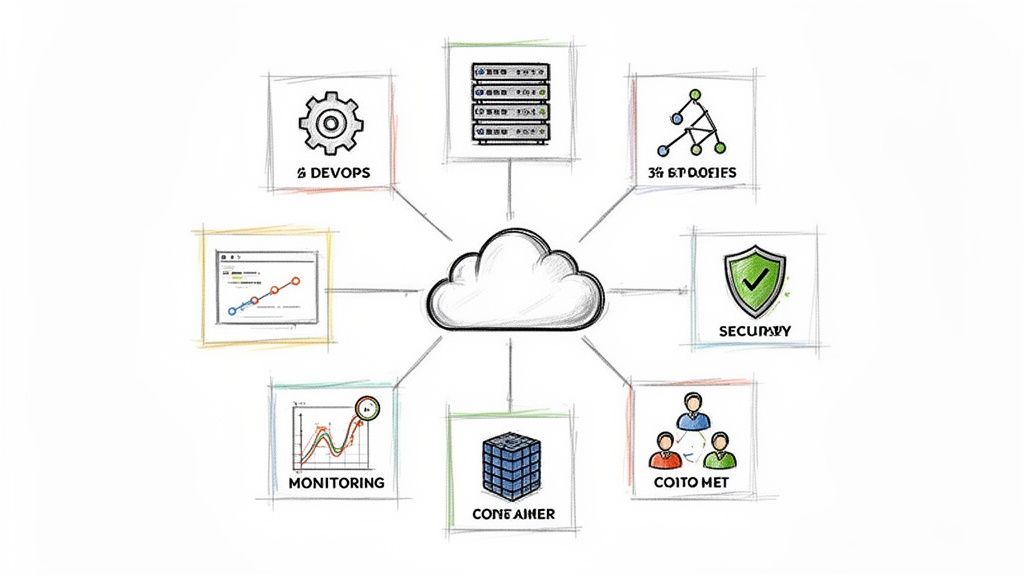
Navigating the ecosystem of DevOps service companies can feel like an overwhelming task. The right partner acts as a force multiplier for your engineering team, accelerating your CI/CD pipeline, optimizing cloud infrastructure, and embedding security best practices directly into your development lifecycle. Conversely, the wrong choice can lead to costly rework, technical debt, and a stalled product roadmap. The challenge lies in identifying a service model that aligns with your specific technical stack, team maturity, and business objectives, whether you're a startup needing foundational infrastructure as code or an enterprise seeking to scale complex multi-cloud deployments.
This definitive guide is engineered to cut through the noise. We provide a technical, in-depth analysis of the top platforms and marketplaces where you can find and engage expert DevOps talent. From hyperscaler marketplaces like AWS and Google Cloud to curated talent networks like Toptal and broad platforms like Upwork, we dissect the options that cater to different needs. Each profile includes a detailed breakdown of their engagement models, core specializations, ideal use cases, and pricing structures. Understanding the real-world evolution and impact of DevOps within organizations can provide valuable context when considering partnership, such as through insights from a journey in DevOps leadership and cloud infrastructure.
You won't find generic advice here. Instead, you'll get actionable information, including screenshots and direct links, to help you make a well-informed decision. We'll explore how to find vetted SREs for a high-stakes migration, source a team for a greenfield Kubernetes setup, or engage a consulting partner for a comprehensive FinOps strategy. This listicle is your go-to resource for evaluating and selecting the right DevOps partner to scale your operations efficiently and reliably.
1. OpsMoon
OpsMoon stands out among DevOps service companies by blending an elite talent platform with a structured, transparent delivery framework. It's designed specifically for engineering leaders who need to implement or scale sophisticated cloud-native infrastructure without the overhead of lengthy hiring cycles. The platform de-risks DevOps initiatives by starting every engagement with a free, in-depth work planning session where their architects assess your current state, define clear outcomes, and build a precise technical roadmap.
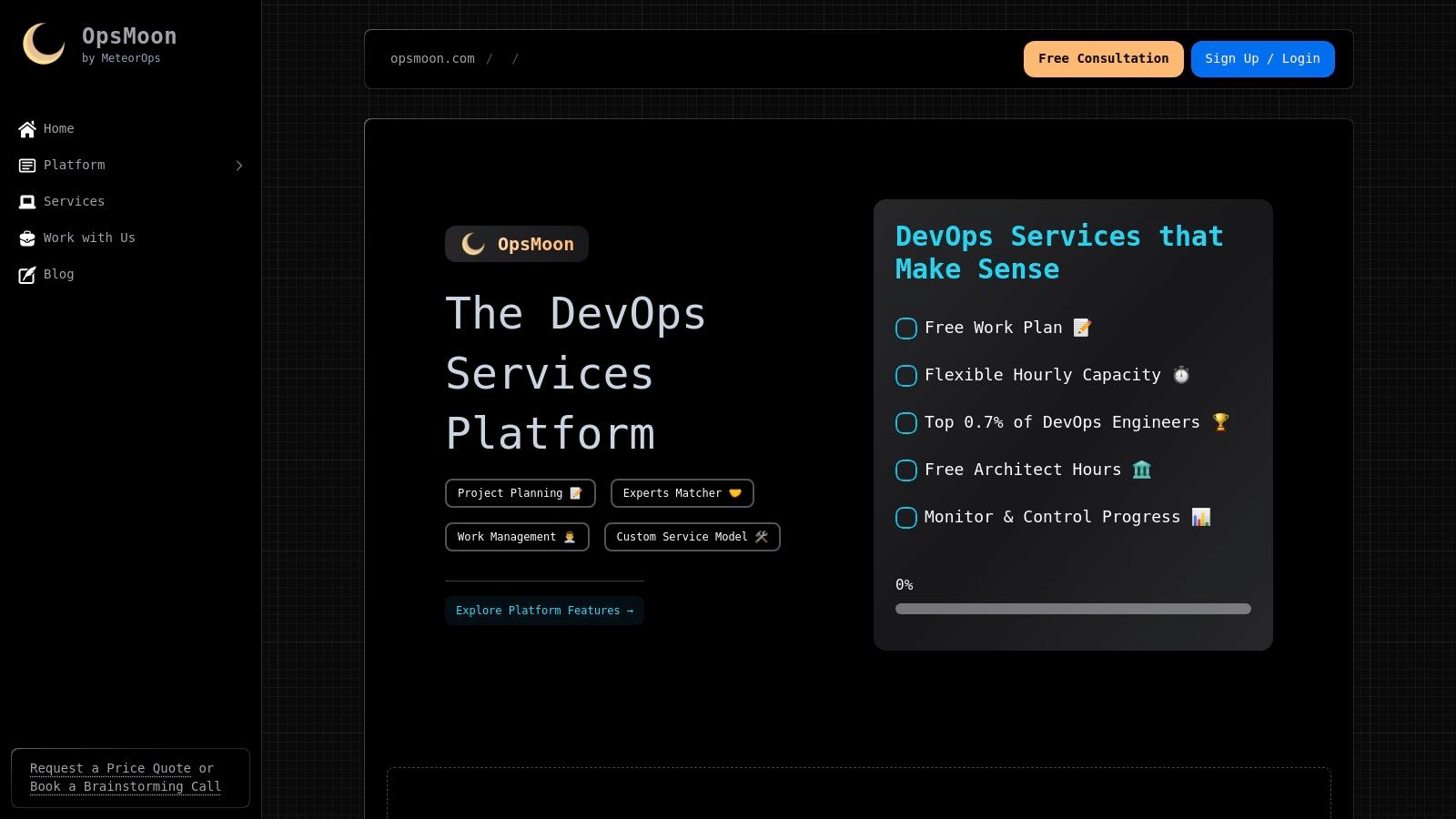
This initial investment in strategy ensures that when work begins, it's focused, aligned with business goals, and immediately impactful. This approach is particularly effective for startups needing to establish a robust CI/CD pipeline from scratch or for enterprises looking to migrate legacy systems to a modern Kubernetes-based architecture.
Key Differentiator: The Experts Matcher and Talent Pool
The core of OpsMoon’s value proposition is its proprietary Experts Matcher technology. The platform provides access to a highly vetted talent pool, claiming to source engineers from the top 0.7% globally. This isn't just about general availability; the system matches your project’s specific technical requirements-down to the version of Terraform or the complexity of your Helm charts-with an engineer who has proven, hands-on experience in that exact domain.
This precision matching solves a critical industry problem: finding specialized talent for complex, modern toolchains. Whether you need a specialist in GitOps with ArgoCD, an observability expert to build a Prometheus/Grafana/Loki stack, or a security professional to implement HashiCorp Vault, the platform aims to provide a perfect fit, eliminating the trial-and-error often associated with traditional outsourcing or consulting.
Engagement Models and Technical Execution
OpsMoon offers a spectrum of flexible engagement models tailored to different organizational needs, providing a more adaptable alternative to rigid, long-term contracts typical of larger DevOps service companies.
- Advisory & Consulting: Ideal for teams needing strategic guidance, architecture reviews, or a technical roadmap without committing to a full implementation team.
- End-to-End Project Delivery: A fully managed service where OpsMoon takes complete ownership of a defined project, like building a multi-stage CI/CD pipeline or architecting a scalable AWS EKS cluster.
- Hourly Capacity Extension: Augment your existing team with one or more specialized engineers to accelerate progress on a specific initiative or fill a temporary skills gap.
Once an engagement starts, all work is managed through the OpsMoon platform, which provides real-time progress monitoring, transparent communication channels, and a continuous improvement loop. This structured process, combined with free architect hours included in engagements, ensures projects stay on track and continuously align with best practices.
Practical Use Cases
| Scenario | How OpsMoon Helps | Key Technologies |
|---|---|---|
| Startup MVP Launch | Rapidly builds a production-ready, scalable infrastructure on AWS/GCP/Azure. | Terraform, Kubernetes (EKS/GKE), Docker, GitHub Actions, Helm |
| SaaS Platform Optimization | Implements a robust observability stack to reduce MTTR and improve system reliability. | Prometheus, Grafana, Loki, OpenTelemetry, Istio |
| Enterprise Modernization | Migrates monolithic applications to a microservices architecture running on Kubernetes. | Kubernetes, Vault, CI/CD Refactoring, GitOps (ArgoCD/Flux) |
| Cost Optimization | Audits and refactors cloud infrastructure using IaC to eliminate waste and optimize spend. | Terraform, Cloud Custodian, FinOps best practices |
Website: https://opsmoon.com
Best For: Startups, SMBs, and enterprise engineering teams seeking high-caliber, remote DevOps expertise with a structured, transparent, and flexible engagement model.
Pros:
- Elite Talent: The Experts Matcher provides access to the top 0.7% of global DevOps engineers, ensuring a precise skill-to-project fit.
- Risk-Free Kickoff: Free work planning sessions and architect hours create a clear roadmap before any financial commitment is made.
- Flexible Models: Engagements can be tailored as advisory, full-project, or hourly extensions to match budget and needs.
- Transparent Execution: The platform offers real-time project monitoring and a continuous improvement framework.
Cons:
- Custom Pricing: No public pricing or standard SLAs are available; costs are determined after the initial consultation.
- Remote-Only Model: May not be suitable for organizations that require a consistent on-site presence for security or compliance reasons.
2. AWS Marketplace (Professional Services/Consulting)
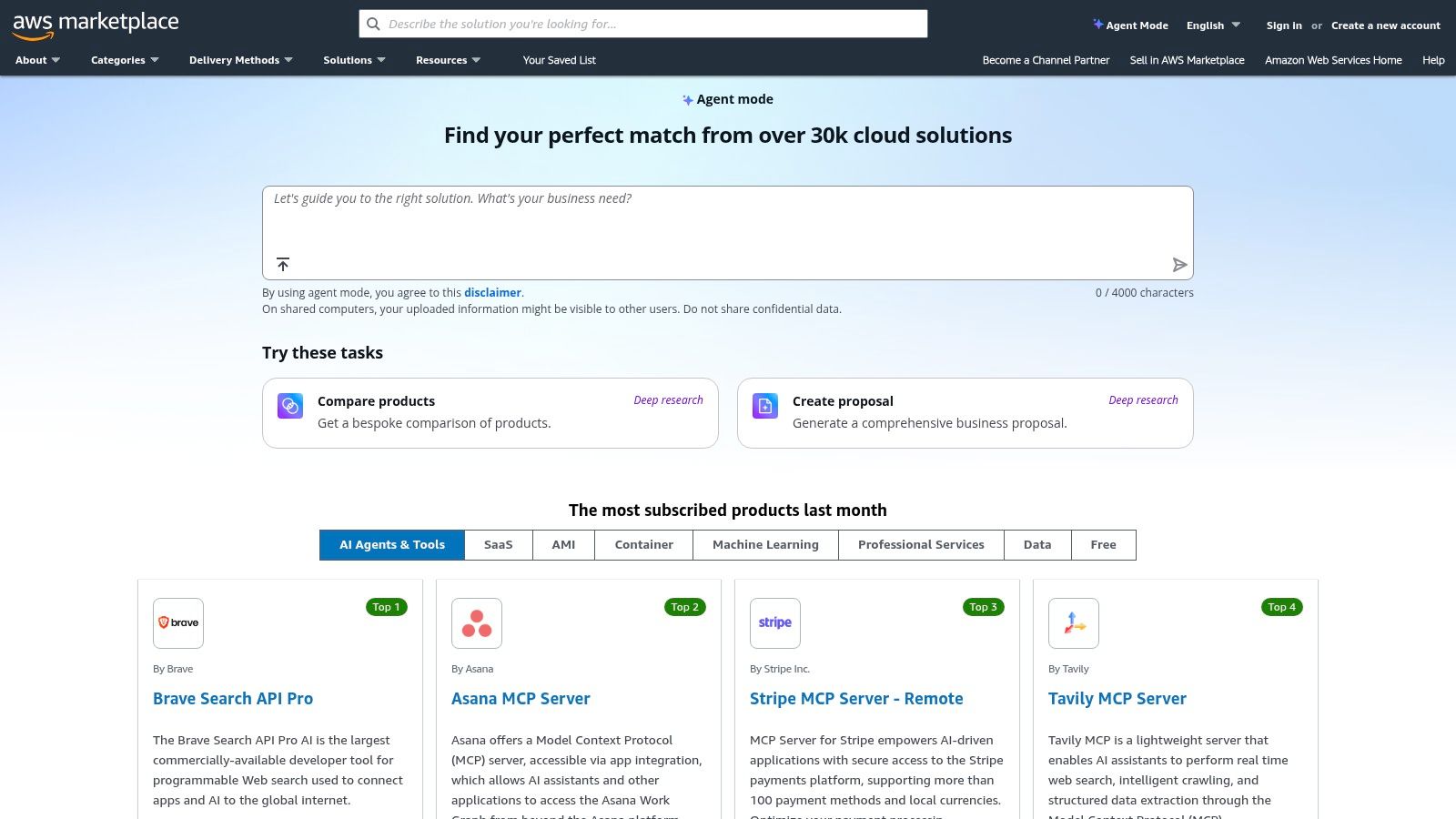
The AWS Marketplace is more than just a software catalog; it's a comprehensive platform where organizations can discover, procure, and deploy third-party software, data, and professional services. For businesses seeking DevOps expertise, the Professional Services section acts as a curated directory of vetted AWS Partners, transforming it into a strategic procurement tool for finding top-tier devops service companies that specialize in the AWS ecosystem.
What makes the AWS Marketplace unique is its direct integration with your existing AWS account and billing infrastructure. This simplifies the often complex and lengthy procurement cycles associated with engaging consulting firms. Instead of navigating separate contracts and payment systems, you can purchase pre-defined service packages or negotiate custom offers directly through the Marketplace, with charges appearing on your consolidated AWS bill. For enterprises with an AWS Enterprise Discount Program (EDP) or other spend commitments, many Marketplace purchases can even help you meet those targets.
Core Offerings and Engagement Models
The platform provides a wide array of service listings tailored to specific DevOps needs. You can find everything from strategic assessments to hands-on implementation projects.
- Specific Service Packages: Many partners offer fixed-scope, fixed-price packages like a "CI/CD Pipeline Quickstart" or a "Kubernetes Readiness Assessment." These are ideal for well-defined, short-term projects.
- Block-of-Hours: Some vendors sell blocks of consulting hours (e.g., 40, 80, or 160 hours) that you can use for various tasks, from architectural reviews to incident response support. This offers flexibility for evolving requirements.
- Custom Private Offers: For larger, more complex engagements, you can engage a partner through the Marketplace to create a custom "Private Offer." This allows for tailored scopes of work and negotiated pricing, while still leveraging the streamlined AWS billing and contracting framework.
Why It Stands Out
The key advantage of the AWS Marketplace is procurement velocity and governance. By consolidating vendor management within the AWS ecosystem, it eliminates significant administrative overhead. All listed professional service providers are registered AWS Partners, many holding advanced competencies in areas like DevOps, Migration, or Security, which provides a baseline level of trust and expertise. The platform's direct link to AWS billing is a major benefit for finance and procurement teams.
Actionable Tip: When evaluating a partner on the AWS Marketplace, filter for the AWS DevOps Competency designation. This is a rigorous, third-party audited validation of their technical proficiency and proven customer success. Request specific, anonymized architectures and Terraform/CloudFormation samples from past projects that mirror your technical challenges before committing to a private offer.
While many listings require you to request a private offer for final pricing, the platform offers a transparent and efficient way to engage with a broad spectrum of AWS DevOps consulting partners. It's an indispensable resource for any organization deeply invested in the AWS cloud.
Website: https://aws.amazon.com/marketplace
3. Google Cloud Marketplace (including Professional Services)
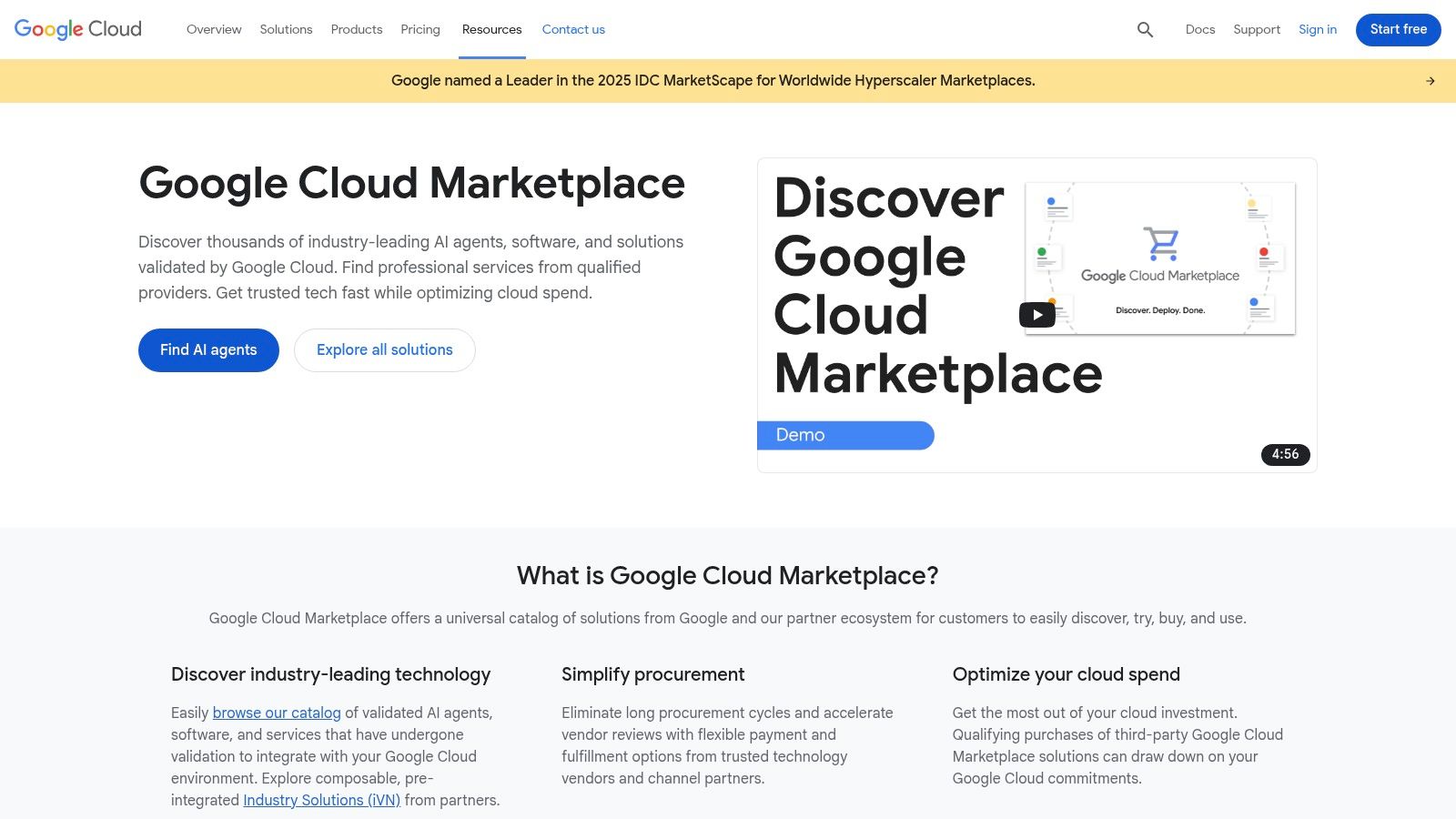
The Google Cloud Marketplace serves as a centralized hub for discovering, purchasing, and managing third-party software, datasets, and professional services that integrate with Google Cloud Platform (GCP). For organizations building their infrastructure on GCP, its professional services catalog is a critical resource for finding vetted devops service companies that specialize in the Google Cloud ecosystem, including areas like Google Kubernetes Engine (GKE), CI/CD, and Site Reliability Engineering (SRE).
Similar to its AWS counterpart, the Google Cloud Marketplace streamlines the procurement process by integrating directly with your Google Cloud account. This model eliminates the friction of separate contracts and invoicing, allowing you to purchase services and have the costs consolidated into your monthly GCP bill. This is particularly advantageous for enterprises with committed use discounts or other spending agreements, as Marketplace purchases often count toward those commitments, optimizing cloud spend.
Core Offerings and Engagement Models
The platform features a diverse range of service offerings from Google Cloud Partners, designed to meet specific technical and strategic objectives. Engagement models are flexible to accommodate projects of varying scales and complexities.
- Fixed-Price Assessments and Implementations: Many partners list defined-scope services, such as a "GKE Security Assessment" or a "Cloud Build CI/CD Pipeline Setup." These are perfect for targeted projects with clear deliverables.
- Custom Consulting Engagements: For more intricate needs like a full-scale SRE practice implementation or a complex migration, you can work with a partner to create a custom private offer. This provides a tailored scope of work and negotiated pricing, all managed through the Marketplace.
- Managed Services: Some providers offer ongoing managed services for DevOps functions, like "Managed GKE Operations" or "24/7 SRE Support," which can be procured and billed monthly through the platform.
Why It Stands Out
The primary benefit of using the Google Cloud Marketplace is procurement efficiency and governance within the GCP ecosystem. It centralizes vendor discovery and management, ensuring that all listed service providers are validated Google Cloud Partners. This provides a strong foundation of trust and expertise. For organizations standardized on GCP, the ability to manage service contracts and billing through the familiar Google Cloud Console simplifies administration and enhances cost visibility and control.
Actionable Tip: Prioritize partners holding Google Cloud's DevOps Services Specialization. This certification requires demonstrating deep technical expertise and customer success in areas like CI/CD automation with Cloud Build, IaC with Terraform, and operational monitoring with Google Cloud's operations suite. Ask potential partners to walk you through their standard GKE cluster architecture, including their approach to workload identity, network policies, and cost allocation.
While the depth of DevOps service providers might be perceived as narrower than on AWS for certain niche domains, the platform offers a highly curated and effective way to connect with experts deeply skilled in Google's cloud-native technologies. It's an essential tool for any team looking to maximize its investment in GCP.
Website: https://cloud.google.com/marketplace
4. Microsoft Azure Marketplace and Partner Finder
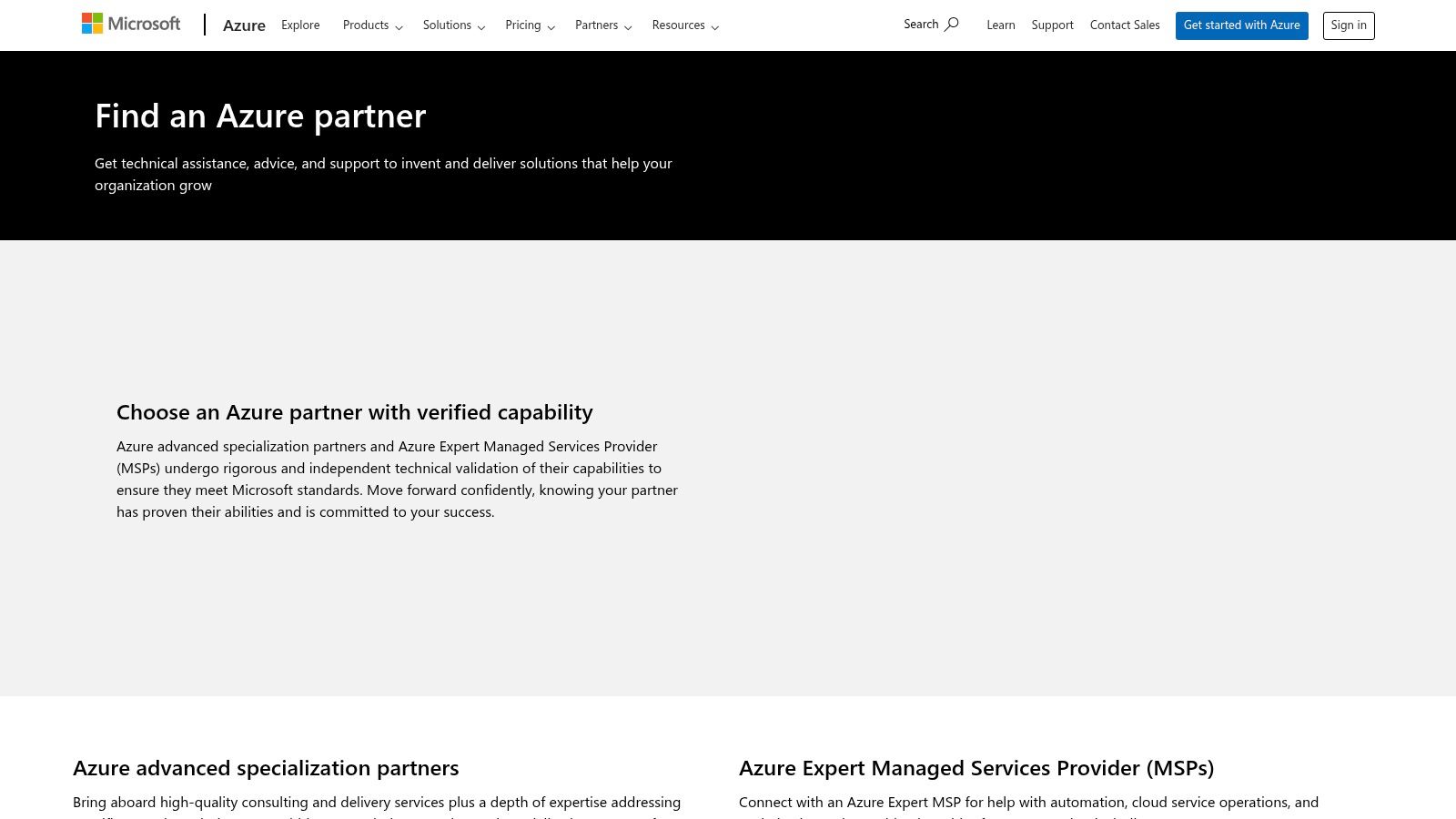
For organizations building on the Microsoft cloud, the combination of the Azure Partner Finder and the Azure Marketplace offers two complementary routes to engage with top-tier devops service companies. The Partner Finder serves as a comprehensive directory to locate Azure-verified consulting and managed service providers, while the Marketplace provides a transactional platform for purchasing specific, pre-scoped consulting offers, workshops, and managed services focused on Azure-native tooling.
This dual approach allows businesses to find partners for both strategic, long-term relationships and tactical, project-based needs. Whether you need a full-scale migration managed by an Azure Expert MSP or a focused workshop to optimize your Azure Kubernetes Service (AKS) cluster, Microsoft provides a curated ecosystem to connect you with credentialed experts. The primary benefit is the strong alignment with Azure-native tools like Azure DevOps and a clear verification system for partner credentials.
Core Offerings and Engagement Models
The platform caters to a wide spectrum of DevOps requirements, from initial assessments to ongoing operational management, with a clear distinction between discovery (Partner Finder) and procurement (Marketplace).
- Fixed-Scope Workshops & Assessments: The Marketplace lists numerous fixed-price consulting engagements, such as a "DevOps with GitHub & Azure Assessment" or an "AKS Well-Architected Review." These are excellent for getting expert analysis and a clear action plan for a specific technical challenge.
- Consulting Engagements: For more customized projects, partners list broader consulting services. While these often require a "Contact me" flow for a custom quote, they provide a starting point for engaging on topics like infrastructure as code (IaC) implementation with Bicep or Terraform.
- Managed Services: Many partners, particularly Azure Expert MSPs, offer comprehensive managed DevOps and cloud operations services. These are long-term engagements where the partner takes responsibility for managing, monitoring, and optimizing your Azure environment.
Why It Stands Out
The key differentiators for the Azure ecosystem are verification and specialization. Microsoft’s partner program includes rigorous certification levels like "Azure Advanced Specialization" and the elite "Azure Expert MSP" designation. These credentials are not just marketing badges; they signify that a partner has passed a demanding third-party audit of their technical skills, processes, and customer success, providing a high degree of confidence in their capabilities.
The platform excels at connecting customers with partners who have deep, proven expertise specifically in the Microsoft stack. This is invaluable for organizations committed to Azure DevOps, GitHub Actions, AKS, and other Azure-native services. While pricing visibility varies and often requires direct contact, the robust credentialing system significantly de-risks the partner selection process.
Actionable Tip: Use the Partner Finder to filter for providers with the "Modernization of Web Applications to Microsoft Azure" Advanced Specialization. This identifies partners with audited expertise in containerization (AKS), CI/CD (Azure DevOps/GitHub Actions), and IaC (ARM/Bicep). During evaluation, ask for their standardized approach to YAML pipeline structure and environment promotion strategies.
Website: https://azure.microsoft.com/en-us/partners/
5. Upwork (US-focused DevOps talent and project services)
Upwork is a vast freelance marketplace that connects businesses with independent professionals and agencies across thousands of skills. For companies seeking DevOps expertise, it serves as a powerful talent sourcing engine, enabling them to quickly find and hire skilled engineers for specific, hands-on tasks. It is particularly effective for augmenting an existing team with specialized skills, such as building a new CI/CD pipeline, authoring complex Terraform modules, or managing Kubernetes cluster operations on an hourly or project basis.
The platform's strength lies in its self-serve model and direct access to a global talent pool, which can be filtered to find US-based engineers specifically. Businesses can post a detailed job description and invite qualified freelancers to apply, or they can proactively search for talent based on skills, work history, and client feedback. Upwork provides the underlying infrastructure for the engagement, including escrow for fixed-price projects, automated time-tracking for hourly work, and a built-in dispute resolution system, which adds a layer of security to the hiring process.
Core Offerings and Engagement Models
Upwork supports a flexible, task-oriented approach to engaging with devops service companies and individual contractors, catering to both short-term needs and longer-term support.
- Fixed-Price Projects: This model is ideal for well-defined, milestone-driven tasks like "Migrate Jenkins Pipeline to GitHub Actions" or "Configure AWS EKS Cluster with Istio." You agree on a total price upfront, and funds are held in escrow and released upon milestone completion.
- Hourly Contracts: For ongoing support, operations management, or projects with evolving scopes, hourly contracts are the standard. Freelancers log their time using Upwork's desktop app, which provides employers with a work diary, including screenshots, for verification.
- Direct Talent Sourcing: The platform's powerful search filters allow you to pinpoint engineers with specific expertise in AWS, GCP, Azure, Kubernetes, Terraform, Ansible, and more. You can directly invite top-rated talent to your project, bypassing the public job post process.
Why It Stands Out
Upwork's key advantage is its speed and flexibility for tactical execution. Unlike traditional consulting firms, you can often find, vet, and hire a qualified DevOps engineer within days. The transparency of freelancer profiles, complete with verified work histories, client ratings, and stated hourly rates, allows for rapid evaluation. This makes it an excellent choice for startups and SMBs needing to solve immediate technical challenges without the commitment of a full-time hire or a large-scale consulting engagement.
Actionable Tip: To filter for high-quality candidates, use the "Job Success Score" (90%+) and "Top Rated" or "Top Rated Plus" filters. In your job post, require applicants to provide a link to a public Git repository showcasing their IaC (Terraform, CloudFormation, Bicep) or automation scripts (Ansible, Bash). This provides an immediate, tangible code quality signal before the first interview.
While the quality of talent can vary and requires careful vetting, Upwork provides unparalleled access to a diverse pool of DevOps professionals. It excels at filling skill gaps for hands-on, well-defined tasks, offering a practical way to hire remote DevOps engineers for targeted projects.
Website: https://www.upwork.com/hire/devops-engineers/us/
6. Toptal (Vetted DevOps/SRE/Platform engineers; managed delivery option)
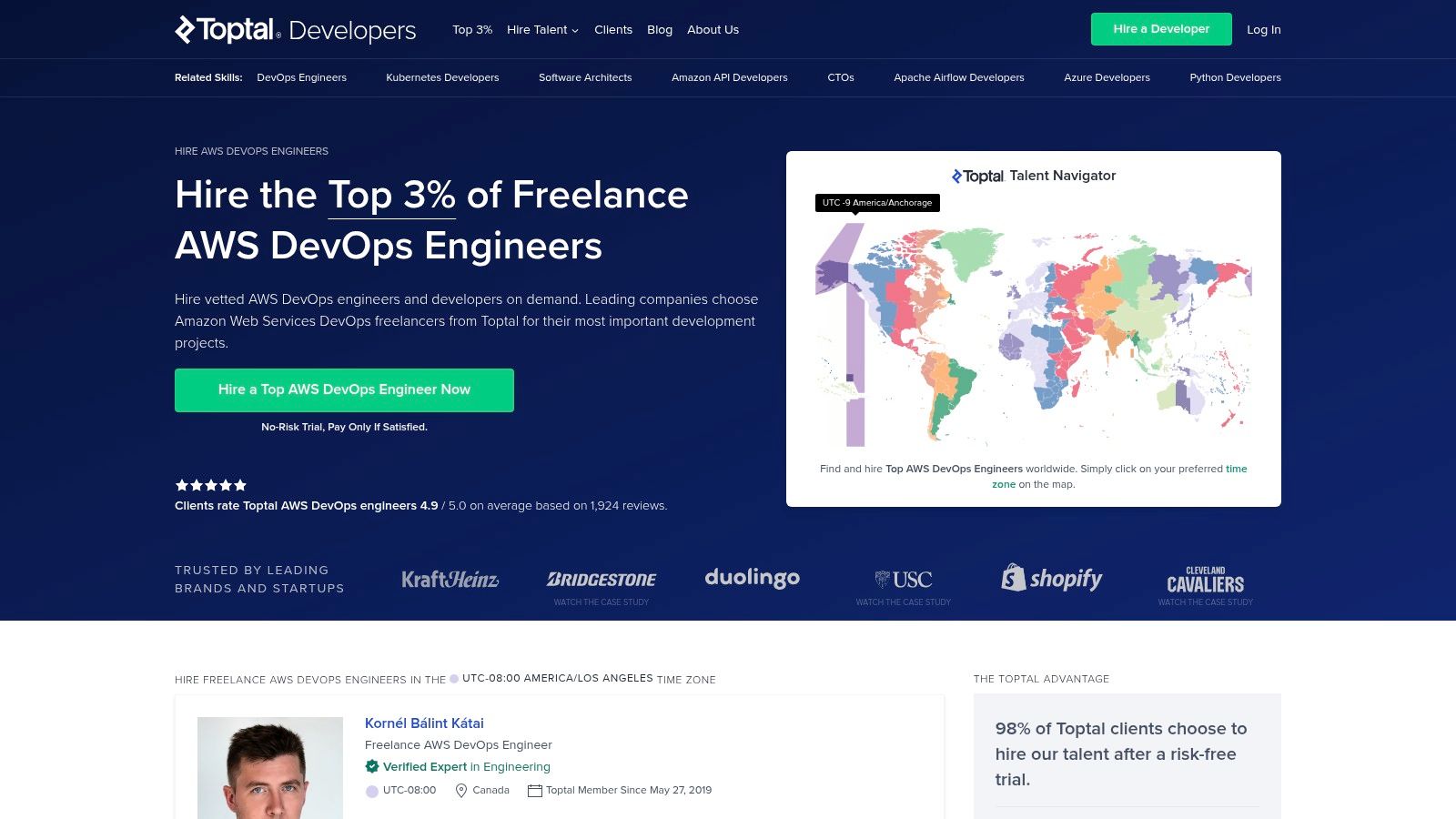
Toptal is an exclusive network of freelance talent, connecting businesses with the top 3% of software developers, designers, finance experts, and project managers. For organizations needing elite DevOps expertise, Toptal serves as a high-signal platform for sourcing senior-level DevOps, SRE, and platform engineers. It is not a traditional agency but a curated marketplace that handles the rigorous vetting process, allowing companies to engage highly skilled professionals for specific, mission-critical projects.
What distinguishes Toptal is its intense, multi-stage screening process that filters for technical excellence, professionalism, and communication skills. This dramatically reduces the hiring and screening burden for clients. Instead of sifting through countless resumes on open platforms, companies are matched with a shortlist of pre-vetted candidates, often within 48 hours. This model is ideal for companies that need to augment their teams with proven talent quickly, without the long-term commitment of a full-time hire.
Core Offerings and Engagement Models
Toptal’s model is built on flexibility, catering to a range of technical leadership and execution needs. The platform supports several engagement types, making it a versatile option among devops service companies.
- Individual Freelancers: Engage a single, senior DevOps or SRE expert on an hourly, part-time, or full-time basis. This is perfect for filling a specific skills gap, leading a new infrastructure initiative, or providing temporary backfill for a critical role.
- Managed Teams: For larger projects, Toptal can assemble and manage an entire team of specialists. A dedicated Toptal director ensures the project stays on track, handling all administrative and operational overhead.
- No-Risk Trial Period: A key feature is the initial trial period. Clients can work with a Toptal expert for up to two weeks. If they are not completely satisfied, they won’t be billed, and Toptal will help them find a better match.
Why It Stands Out
Toptal's primary advantage is its guarantee of senior-level talent and speed of placement. The platform’s reputation is built on the quality of its network, which saves clients significant time and resources in the sourcing and vetting process. The premium pricing reflects this quality assurance. While more expensive than open marketplaces, the value lies in accessing proven experts who can onboard quickly and deliver immediate impact on complex technical challenges like infrastructure automation, observability stack implementation, or security hardening.
Actionable Tip: Treat the Toptal engagement as hiring a fractional technical lead. Provide the matched engineer with your highest-priority architectural challenge during the trial period. For example, "Design a canary deployment strategy for our microservices on Kubernetes using Istio." Their proposed solution, questions, and communication style during this trial are the best indicators of their long-term value.
Toptal is an excellent choice for businesses that prioritize expertise and speed over cost. It’s particularly effective for high-stakes projects where a senior, hands-on leader is needed to drive results from day one.
Website: https://www.toptal.com/developers/aws-devops-engineers
7. Fiverr (DevOps Services Category)
Fiverr has evolved from a platform for creative gigs into a robust marketplace for technical services, including a surprisingly deep category for DevOps. It functions as a catalog-style platform where businesses can instantly purchase predefined service packages, or "gigs," from individual freelance professionals. For companies needing to solve a specific, well-defined technical problem, Fiverr provides a direct path to engaging specialized devops service companies and freelancers without the overhead of a traditional consulting engagement.
What makes Fiverr's model distinct is its productized approach to technical services. Instead of lengthy consultations and custom quotes for every task, freelancers list their offerings with clear deliverables, fixed prices, and set delivery times. This "gig" format is ideal for discrete tasks like setting up a GitLab CI/CD pipeline, writing a specific Terraform module for Azure, or configuring Prometheus and Grafana for a small application cluster. The platform handles all transactions, communication, and dispute resolution, providing a layer of security and structure.
Core Offerings and Engagement Models
Fiverr’s DevOps category is built around transactional, task-based engagements. The structure is transparent, allowing buyers to compare offerings easily.
- Fixed-Price Gigs: The primary model is the "gig," a service with a defined scope and price. Examples include "I will set up your EKS cluster with Terraform" or "I will dockerize your Python application." Gigs are often tiered (Basic, Standard, Premium) with increasing levels of complexity, support, or features.
- Gig Add-ons: Sellers can offer optional add-ons for an extra fee, such as expedited 24-hour delivery, extra configuration revisions, or a post-delivery support session via video call. This allows for some customization within the fixed-scope model.
- Custom Offers: For tasks that don't fit a predefined gig, buyers can contact a seller directly to request a custom offer. This is useful for slightly larger but still well-scoped projects, allowing for a negotiated price and timeline while remaining within the platform's escrow system.
Why It Stands Out
The key advantages of Fiverr are transactional speed and cost transparency. It excels at providing on-demand expertise for tactical, clearly-scoped technical challenges. For a startup needing a proof-of-concept CI/CD pipeline or a team needing a one-off Ansible playbook written, Fiverr can be faster and more cost-effective than engaging a full-service consultancy. The public review and rating system provides a valuable layer of social proof, helping buyers vet potential freelancers based on past performance.
Actionable Tip: Before purchasing a gig, send the seller a direct message with a concise but technical specification. For example: "I need a GitHub Actions workflow that builds a Docker image, pushes it to ECR, and triggers a deployment to an existing EKS cluster using a Kustomize overlay. Do you have experience with AWS IAM roles for service accounts (IRSA)?" The quality and technical accuracy of their response is a critical vetting step.
While it is not designed for complex, strategic digital transformation projects, Fiverr is an excellent resource for augmenting an in-house team with specialized skills for short-term tasks. It effectively democratizes access to DevOps talent for organizations of all sizes.
Website: https://www.fiverr.com/gigs/devops
7-Point Comparison of DevOps Service Providers
| Provider | Implementation complexity | Resource requirements | Expected outcomes | Ideal use cases | Key advantages |
|---|---|---|---|---|---|
| OpsMoon | Low–Medium: guided kickoff, matched engineers shorten discovery | Internal PM time, budget for engagement; remote collaboration tools | Roadmap + implemented DevOps (K8s, IaC, CI/CD, observability) and ongoing improvements | Startups, SMBs, SaaS teams seeking scalable remote DevOps delivery | Elite talent matcher (top 0.7%), free planning/architect hours, live project monitoring |
| AWS Marketplace (Professional Services) | Medium: catalog browsing + vendor contracting or private offer | AWS account, procurement approvals, budget; possible AWS spend commitments | Purchased consulting engagements, AWS-native implementations and block hours | Enterprises or teams standardized on AWS needing governed procurement | Consolidated billing, broad provider selection, enterprise procurement controls |
| Google Cloud Marketplace (Professional Services) | Medium: select validated listings, vendor engagement via GCP console | Google Cloud account, procurement governance, budget | Validated GCP-integrated solutions and consulting, consolidated billing | Teams standardized on Google Cloud seeking pre-integrated services | Streamlined procurement, private marketplace, GCP validation and integration |
| Microsoft Azure Marketplace & Partner Finder | Medium: partner discovery and Azure commerce or direct contracting | Azure account or partner engagement, verify partner credentials, budget | Azure-native implementations, workshops, and managed services (AKS, Azure DevOps) | Organizations focused on Azure needing certified partners and governance | Verified partner credentials, alignment with Azure tooling, mix of workshops and managed offers |
| Upwork (US-focused) | Low: post job and hire quickly, buyer-led screening/PM | Internal screening and project management, escrow; hourly or fixed budget | Quick hires for hands‑on tasks, hourly support, discrete deliverables | Short-term tasks, hourly support, rapid staffing needs, US talent preference | Fast turnaround, large talent pool, transparent profiles and rates |
| Toptal | Low–Medium: curated matching with advisor support and trial period | Higher budget expectations, minimal screening effort by buyer | Senior-vetted engineers, potential managed delivery or long-term hires | High-stakes projects needing experienced leads or fractional senior talent | Rigorous vetting, rapid match, initial trial reduces hiring risk |
| Fiverr (DevOps category) | Low: instant gig purchases for well-scoped work | Small budgets for fixed-price gigs, clear scoping from buyer | Fixed-price deliverables for discrete tasks or proofs‑of‑concept | Small, well-scoped tasks, quick POCs, and one-off configurations | Price transparency, instant purchase, large catalog of specific gigs |
From Evaluation to Engagement: Your Actionable Roadmap
Navigating the landscape of DevOps service companies can feel like architecting a complex system from scratch. You're presented with a multitude of components, each with its own interface, performance characteristics, and integration costs. Throughout this guide, we've deconstructed the leading platforms and marketplaces-from the comprehensive ecosystems of AWS, Google Cloud, and Azure to the specialized talent networks of Toptal and Upwork, and the project-based offerings on Fiverr. The goal was to move beyond a simple list and provide a technical framework for your decision-making process.
The core takeaway is that the "best" DevOps partner is not a one-size-fits-all solution. Instead, it's a function of your specific technical debt, architectural maturity, compliance requirements, and desired operational velocity. A startup with a greenfield serverless application on AWS will have vastly different needs than a large enterprise migrating legacy monolithic applications to a Kubernetes-based microservices architecture on Azure. Your choice directly impacts your ability to ship code, maintain uptime, and control operational expenditure.
Synthesizing Your Selection Criteria
To translate evaluation into a concrete decision, it's crucial to distill your requirements into a structured checklist. This moves the process from subjective preference to objective analysis. Before engaging any of the listed DevOps service companies, your internal team should have clear, documented answers to the following technical and operational questions.
- Technology Stack Alignment: Does the provider demonstrate deep, certified expertise in your specific stack? Look beyond logos. Ask for anonymized case studies or architectural diagrams involving technologies like Terraform, Ansible, Kubernetes (and specific distributions like EKS, GKE, or OpenShift), Prometheus, Grafana, and your CI/CD tooling (e.g., Jenkins, GitLab CI, GitHub Actions).
- Engagement Model vs. Project Scope: How does the nature of your need map to the provider's model?
- Strategic Overhaul (e.g., platform re-architecture): A long-term engagement with a dedicated team from a platform like Toptal or a top-tier AWS Premier Consulting Partner might be necessary.
- Specific Task (e.g., setting up a CI/CD pipeline for a new microservice): A well-defined, fixed-scope project on Upwork or Fiverr could be more efficient and cost-effective.
- Staff Augmentation (e.g., adding an SRE to your team for 6 months): This points directly toward talent-focused platforms that vet individual skills.
- Security and Compliance Posture: What are your regulatory obligations (e.g., SOC 2, HIPAA, GDPR)? The major cloud marketplaces often feature partners with pre-verified compliance specializations. When evaluating independent contractors, you must conduct this due diligence yourself, inquiring about their experience with tools like HashiCorp Vault, Falco for runtime security, or static analysis security testing (SAST) tools.
Your Tactical Next Steps
Once you've shortlisted 2-3 potential partners, the engagement process should be treated like a technical interview combined with a proof-of-concept. Don't rely solely on sales presentations.
- Define a Pilot Project: Scope a small but meaningful task. Examples include automating the provisioning of a specific piece of infrastructure with IaC, containerizing a single legacy service, or implementing a centralized logging solution with an ELK stack. This provides a low-risk way to evaluate their technical competency, communication style, and delivery process.
- Conduct a Technical Deep Dive: Arrange a call between your engineering lead and their proposed technical lead. The goal is to move past high-level discussion and into specifics. Ask them how they would approach a current challenge you're facing. Listen for their problem-solving methodology, the tools they suggest, and the trade-offs they identify.
- Review the Statement of Work (SOW) Meticulously: The SOW is your contract. It should explicitly define deliverables, timelines, acceptance criteria, and communication protocols (e.g., daily stand-ups, access to a shared Slack channel, Jira board integration). Vague SOWs are a red flag and often lead to scope creep and budget overruns.
Choosing the right partner from the many DevOps service companies available is a strategic engineering decision, not just a procurement one. The right partnership accelerates your roadmap, hardens your infrastructure, and empowers your development teams. The wrong one introduces friction, technical debt, and operational risk. By applying a rigorous, technically-grounded evaluation process, you can ensure your investment yields a true multiplier effect on your engineering organization's capabilities.
Ready to bypass the complexities of vetting and managing freelance talent? OpsMoon provides a managed platform connecting you with elite, pre-vetted DevOps, SRE, and Platform engineers for project-based engagements. We handle the administrative overhead so you can focus on building, with transparent pricing and guaranteed results. Explore our service and start your project today.
Leave a Reply